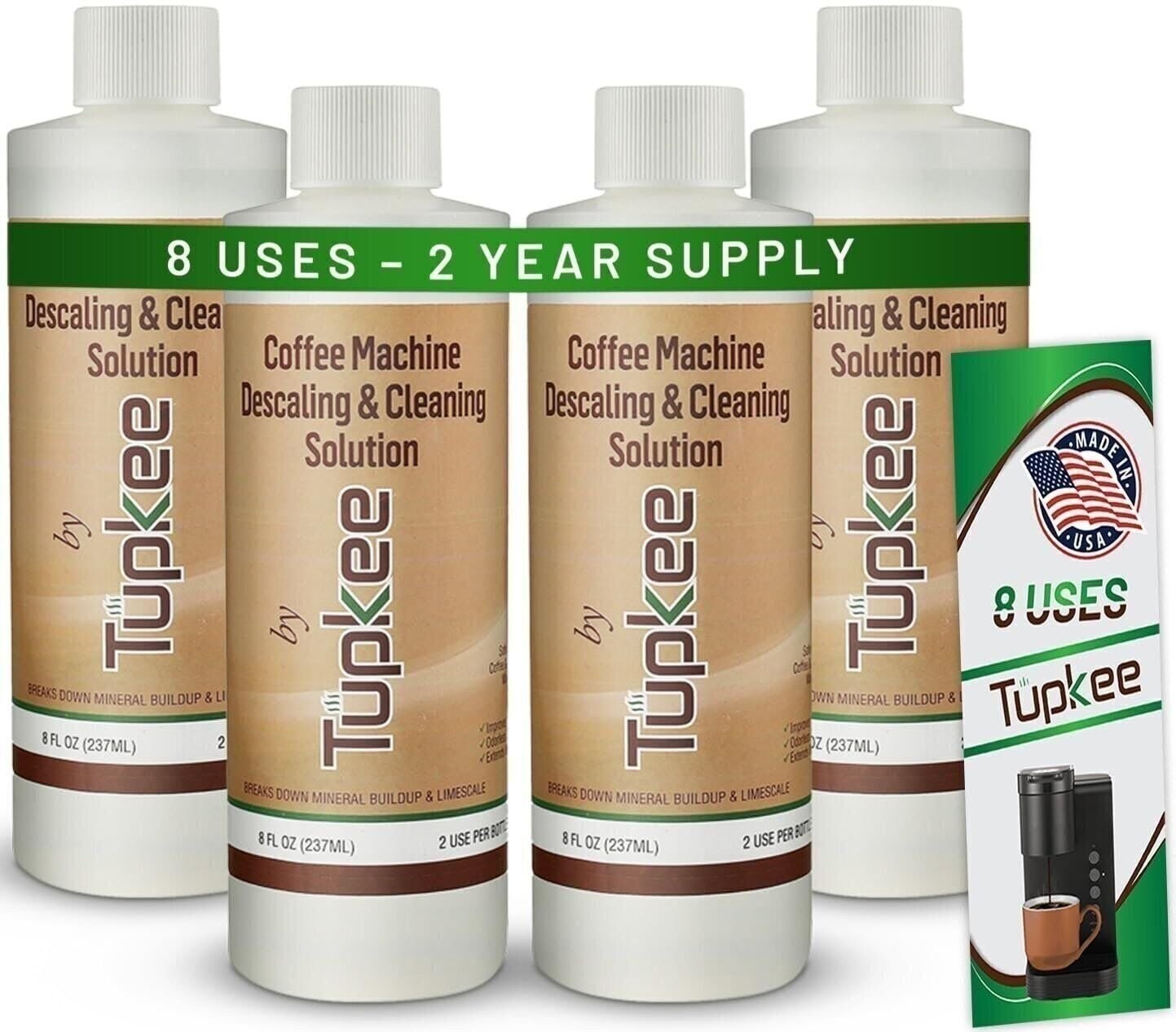

Photos from current listings. Actual item, color, and included accessories may vary.
Descaling Solution Buying Guide
Descaling solution is a concentrated acid blend (citric, lactic, or sulfamic) that dissolves calcium and magnesium scale from coffee and espresso machine boilers, thermoblocks, and steam wands. The core trade-off is acid strength versus material compatibility: strong mineral acids strip scale fast but attack aluminum and brass, while milder organic acids are safer but need longer dwell and more frequent use. The decision rule is simple: match the acid type to your machine's metal internals and hardness of your water, and prefer pre-mixed, rinse-verified formulas over generic vinegar.
Key takeaways
- Citric-acid formulas are mild and aluminum-safe, ideal for thermoblock and entry-level espresso machines; they need 20–30 minute dwell and thorough rinsing.
- Lactic/sulfamic blends dissolve scale faster in high-hardness water but are incompatible with aluminum and uncoated brass—check boiler material before use.
- Pre-mixed liquid solutions dose reliably (often 2 uses per bottle); powders require accurate dilution and risk over-concentration that damages seals.
At a glance
- Category
- Coffee Cleaning & Accessories
- Last updated
- Nov 28, 2026
Current offers
Highlights
- Citric-acid formulas are mild and aluminum-safe, ideal for thermoblock and entry-level espresso machines; they need 20–30 minute dwell and thorough rinsing.
- Lactic/sulfamic blends dissolve scale faster in high-hardness water but are incompatible with aluminum and uncoated brass—check boiler material before use.
- Pre-mixed liquid solutions dose reliably (often 2 uses per bottle); powders require accurate dilution and risk over-concentration that damages seals.
- Descaling frequency scales with water hardness: soft water every 3–6 months, hard water every 4–8 weeks, or whenever the machine's descale indicator triggers.
Best use cases
- Best fit: thermoblock espresso machines and drip coffee makers in soft-to-medium water—choose a citric-acid pre-mixed solution and descale every 3 months.
- Best fit: high-hardness water areas (over 180 ppm) with stainless-steel boilers—pick a lactic-acid blend and descale every 4–6 weeks to prevent element fouling.
- Wrong fit: aluminum-boiler or brass-valve machines with sulfamic or strong mineral-acid descalers—skip these and use only aluminum-safe citric formulas.
- Wrong fit: using white vinegar as a substitute—its acetic acid degrades rubber gaskets and leaves odor; choose a purpose-formulated descaler instead.
Buying tips
- Match acid to metal: citric acid for aluminum/thermoblock; lactic or sulfamic only for stainless steel and copper boilers.
- Choose pre-mixed liquid over powder when your machine has a fixed descale cycle—dose accuracy prevents seal damage.
- Buy multi-use bottles sized to your descale frequency: 2-use bottles suit quarterly maintenance; single-use sachets suit occasional deep cleans.
- Confirm the solution is rinse-verified and food-safe; residual acid in the boiler taints espresso and corrodes seals over time.
Specs
| Acid Type | Citric / Lactic / Sulfamic |
|---|---|
| Compatibility | Aluminum-safe vs Stainless-only |
| Form | Pre-mixed liquid vs Powder |
| Uses Per Unit | 2–8 descale cycles |
Related searches
What to check before buying
- Identify your boiler/thermoblock material from the manual—aluminum requires citric-acid-only descalers.
- Test your water hardness with a strip; above 180 ppm means monthly descaling and a stronger lactic-acid formula.
- Confirm your machine's descale cycle volume (often 0.5–1 L) so the bottle size covers a full cycle without dilution error.
- Check that the descaler is compatible with your machine's steam wand and automatic descale program—some require specific proprietary solutions.
FAQ
Data sources: eBay / Amazon listings and product attribute feeds. Updated Nov 28, 2026.
Some links on this page are affiliate links. If you buy after clicking one, we may earn a commission at no extra cost to you. This does not change which products appear here or their order. Affiliate disclosure.