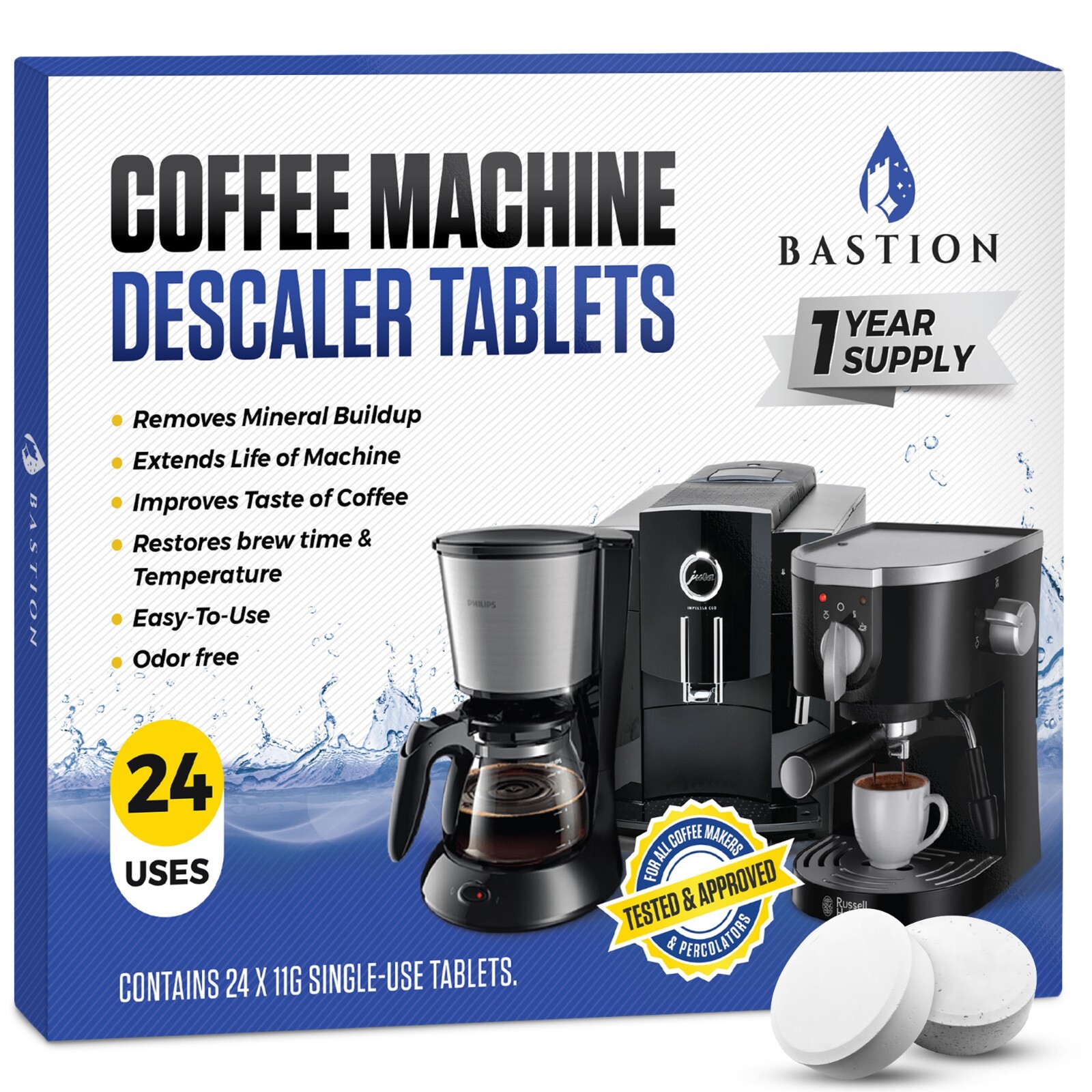

Photos from current listings. Actual item, color, and included accessories may vary.
Nespresso Machine Cleaner Buying Guide
Nespresso machine cleaners fall into two distinct chemical classes: descaling solutions (citric or lactic acid) that dissolve limescale in the thermoblock and water path, and cleaning capsules or tablets that flush coffee oils and residue from the brewing chamber. The trade-off is formulation strength versus material compatibility: strong acids can damage silicone seals and aluminum components if over-concentrated or left too long, while mild formulas may not fully dissolve hard-water scale. The clear decision rule is to match the cleaner type to your water hardness and machine architecture—descaling liquid or powder for hard water and thermoblock machines, cleaning capsules for oil residue in Vertuo or OriginalLine brew chambers—and avoid single-product 'all-in-one' tablets when your machine manual specifies separate descaling and cleaning cycles.
Key takeaways
- Descaling chemistry splits into citric-acid powders (gentler, slower, suitable for aluminum thermoblocks) versus lactic-acid liquids (faster scale dissolution, common in Nespresso-brand descaler).
- Cleaning capsules are single-dose pods filled with food-grade detergent that run through a brew cycle; they target coffee oil buildup, not limescale, and are not a descaling substitute.
- Tablet format (effervescent descaling tablets) requires full dissolution in a water tank before running the machine; undissolved grit can clog the thermoblock inlet on compact Nespresso models.
At a glance
- Category
- Coffee Cleaning & Accessories
- Last updated
- Nov 28, 2026
Current offers
Highlights
- Descaling chemistry splits into citric-acid powders (gentler, slower, suitable for aluminum thermoblocks) versus lactic-acid liquids (faster scale dissolution, common in Nespresso-brand descaler).
- Cleaning capsules are single-dose pods filled with food-grade detergent that run through a brew cycle; they target coffee oil buildup, not limescale, and are not a descaling substitute.
- Tablet format (effervescent descaling tablets) requires full dissolution in a water tank before running the machine; undissolved grit can clog the thermoblock inlet on compact Nespresso models.
- Nespresso OriginalLine and Vertuo machines have different descaling cycle prompts and rinse volumes; using a cleaner formulated for drip coffee makers can void the manufacturer's water-path warranty.
Best use cases
- Best fit: households with hard water (above 120 ppm TDS) using an OriginalLine or Vertuo machine should buy a citric-acid descaling powder or Nespresso-compatible liquid descaler and run it at the machine's prompted interval—skip cleaning capsules for scale removal.
- Best fit: daily espresso drinkers noticing bitter or rancid notes from the brew head should use cleaning capsules or a dedicated coffee-oil detergent tablet every 1–2 months—skip descaling liquids, which do not remove oil films.
- Wrong fit: buying a single '24-pack tablet' product marketed for Keurig, Nespresso, and Breville simultaneously—these universal tablets are typically mild citric acid blends that underperform on hard scale and lack the rinse-volume guidance Nespresso machines require; pick a Nespresso-specific descaler instead.
- Best fit: travel or office use with a Nespresso Inissia or Essenza Mini should choose single-dose liquid descaler sachets sized for the 0.6L tank—skip bulk powders that require measuring and storage of open chemicals.
Buying tips
- Match the cleaner to the machine's descaling prompt: Nespresso machines blink an orange or red descale light based on flow-meter counts, not calendar time—buy a descaler with a rinse-cycle instruction that matches your model's tank volume (0.6L for Inissia/Essenza, 1.0L for Vertuo Next).
- For water above 180 ppm hardness, use a lactic-acid liquid descaler quarterly; citric-acid powders at the same interval may leave calcium citrate residue that clogs the thermoblock outlet.
- Cleaning capsules are dose-fixed at one pod per cycle; buy a pack sized to your monthly brew count (e.g., 10 capsules for 2–3 cups/day households running a monthly clean) rather than a bulk 24-pack that expires before use.
- Never combine descaling and cleaning steps in one cycle: acid descaler followed immediately by alkaline detergent can neutralize both and leave salt deposits—rinse with fresh water between treatments.
Specs
| Cleaner Type | Descaling liquid vs cleaning capsules |
|---|---|
| Active Chemistry | Citric acid vs lactic acid |
| Machine Compatibility | OriginalLine / Vertuo / both |
| Dose Format | Single-serve sachet / bulk powder / tablet |
Related searches
What to check before buying
- Confirm your Nespresso model's water tank volume (0.6L OriginalLine vs 1.0L Vertuo) so the descaler dose matches the dilution ratio on the label—over-concentration can etch aluminum thermoblocks.
- Check your water hardness with a test strip: above 120 ppm means descale every 3 months; below 60 ppm means every 6 months, and cleaning capsules remain monthly regardless.
- Verify the cleaner is labeled for aluminum and silicone compatibility—Nespresso thermoblocks use aluminum and EPDM seals that strong phosphoric or hydrochloric acid cleaners can corrode.
- Have a rinse-water container and access to a sink ready: descaling requires 2–3 full tank rinse cycles, and Vertuo machines need a separate rinse of the centrifusion brew chamber.
FAQ
Data sources: eBay / Amazon listings and product attribute feeds. Updated Nov 28, 2026.
Some links on this page are affiliate links. If you buy after clicking one, we may earn a commission at no extra cost to you. This does not change which products appear here or their order. Affiliate disclosure.