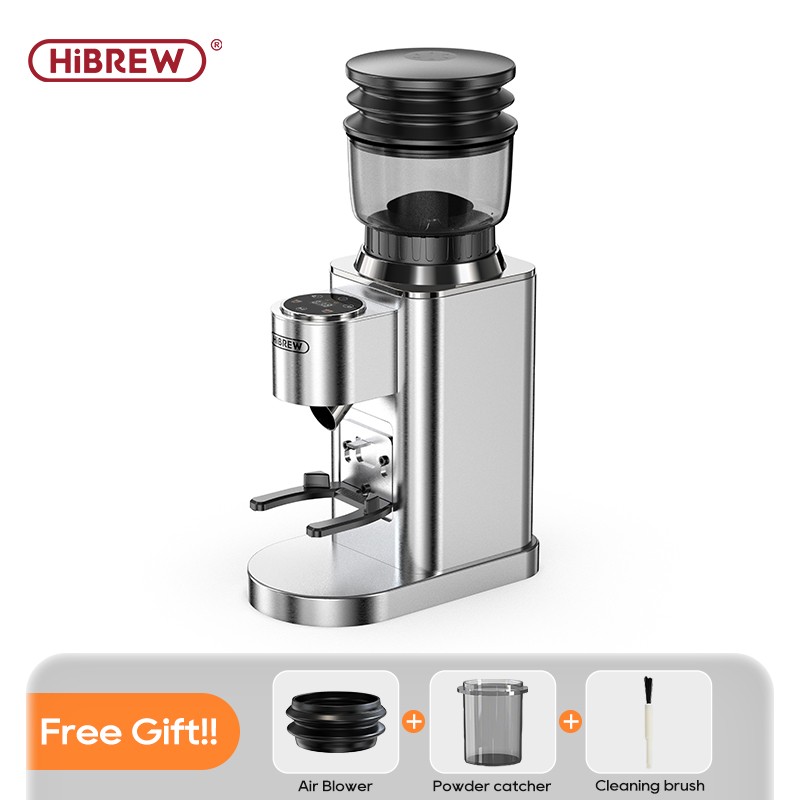

Photos from current listings. Actual item, color, and included accessories may vary.
Automatic Coffee Grinder Buying Guide
Automatic coffee grinders use a motor and timer to deliver consistent grounds without manual cranking, with the core trade-off being burr quality versus motor power and digital control. Durable options use conical or flat steel burrs with low-RPM gear reduction, while compromises rely on high-speed blade choppers or undersized motors that heat and stall. The decision rule: pick a true burr grinder with clearly stated burr material and at least 30 adjustable steps if you want repeatable espresso-to-pour-over results.
Key takeaways
- Burr geometry matters more than motor wattage: conical steel burrs at 48 steps or more allow espresso-fine to French-press-coarse adjustment without shimming.
- Low-RPM gear-reduction motors (under 500 RPM) preserve aroma by limiting heat transfer, while direct-drive high-speed motors scorch oils at fine settings.
- Digital timers with 0.1-second resolution enable repeatable dose-by-time dosing, but only if the chute and burr carrier have low retention (under 1 g).
At a glance
- Category
- Coffee Grinders
- Last updated
- Nov 28, 2026
Current offers
Highlights
- Burr geometry matters more than motor wattage: conical steel burrs at 48 steps or more allow espresso-fine to French-press-coarse adjustment without shimming.
- Low-RPM gear-reduction motors (under 500 RPM) preserve aroma by limiting heat transfer, while direct-drive high-speed motors scorch oils at fine settings.
- Digital timers with 0.1-second resolution enable repeatable dose-by-time dosing, but only if the chute and burr carrier have low retention (under 1 g).
- Anti-static and de-clumping features (ionizers or grounded chutes) determine whether fine espresso grounds scatter or flow cleanly into the basket.
Best use cases
- Best fit for espresso dialing: choose a stepless or 40+ step conical burr grinder with a metal burr carrier and digital timer; skip blade choppers and stepped grinders with fewer than 20 settings.
- Best fit for drip and pour-over: a 30-48 step flat or conical burr grinder with a wide coarse range and low retention works; skip espresso-only grinders with narrow micro-adjustment that cannot reach coarse enough.
- Best fit for multi-method households: pick 48+ step automatic burr grinders with removable burr assemblies for switching between espresso and cold brew; skip single-purpose hopper-integrated units that are hard to clean between methods.
- Wrong fit for high-volume café use: domestic automatic grinders with plastic burr carriers and 100 W motors overheat and drift; commercial flat-burr grinders with metal carriers and thermal protection are required.
Buying tips
- Match burr type to brew method: conical steel burrs excel at espresso micro-adjustment, flat steel burrs give more uniform coarse grinds for filter; avoid ceramic burrs for espresso because they chip under fine settings.
- Use step count as a proxy for adjustability: 48 steps or more (or stepless worm gear) is needed to dial espresso; 30 steps is adequate for drip and pour-over, and fewer than 20 steps forces dose and tamp compensation.
- Check motor and gear architecture: look for a gear-reduction motor rated under 500 RPM with metal internal gears; direct-drive high-speed motors with plastic gears wear out quickly at fine espresso settings.
- Verify burr diameter and material: 38-40 mm steel burrs are the minimum for consistent espresso; 48-64 mm flat burrs improve throughput and uniformity for filter, and any “stainless steel” claim should specify hardened steel rather than coated mild steel.
Specs
| Burr Type | Conical steel / Flat steel / Ceramic |
|---|---|
| Grind Adjustment | Stepless / 30-60 steps / <20 steps |
| Motor RPM | Low-RPM gear reduction <500 RPM |
| Dosing Control | Digital timer 0.1s / Manual / Weight-based |
Related searches
What to check before buying
- Measure your counter clearance and hopper height: automatic grinders with 250 g hoppers often exceed 40 cm tall and will not fit under standard upper cabinets; confirm the grinder fits with the hopper installed.
- Confirm your brew method's grind range: espresso requires fine adjustment down to 200-300 microns, while cold brew and French press need 800-1200 microns; ensure the grinder's stated range covers both if you switch methods.
- Check electrical compatibility: most automatic grinders are 110-120 V for North America or 220-240 V for Europe; a voltage mismatch without a step-up transformer will damage the motor.
- Plan for retention and cleaning: removable burr carriers and a brush-friendly chute reduce stale-ground buildup; models with sealed hoppers and no burr access require disassembly for cleaning.
FAQ
Data sources: eBay / Amazon listings and product attribute feeds. Updated Nov 28, 2026.
Some links on this page are affiliate links. If you buy after clicking one, we may earn a commission at no extra cost to you. This does not change which products appear here or their order. Affiliate disclosure.