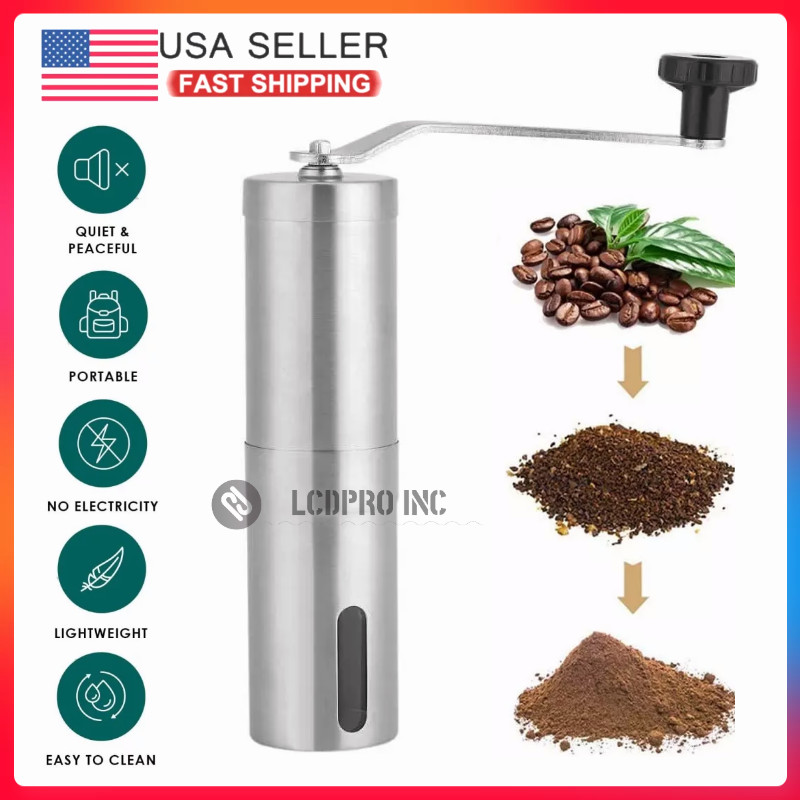

Photos from current listings. Actual item, color, and included accessories may vary.
Coffee Bean Grinder Espresso Buying Guide
Espresso-focused coffee bean grinders fall into hand crank ceramic burr, entry electric flat/conical burr, and commercial-grade electric burr tiers, with the key trade-off being burr geometry and motor/step-less adjustment precision for repeatable fine grinds. Durable espresso grinders use hardened steel burrs, low-retention paths, and step-less or micro-step adjustment; compromises use ceramic burrs or stepped plastic detents that drift at espresso fineness.
Median $35.49
Key takeaways
- Hand grinders with ceramic burrs suit filter and moka, but hardened steel conical burrs hold espresso fineness without cracking or wearing flat.
- Electric espresso grinders need step-less or micro-step adjustment; stepped detents often jump too far for dialing in a 18-20g dose.
- Commercial milling units pair high-torque motors with large flat burrs (typically 60mm+) for cafe volume and consistent particle distribution.
At a glance
- Category
- Coffee Grinders
- Last updated
- Nov 28, 2026
Current offers
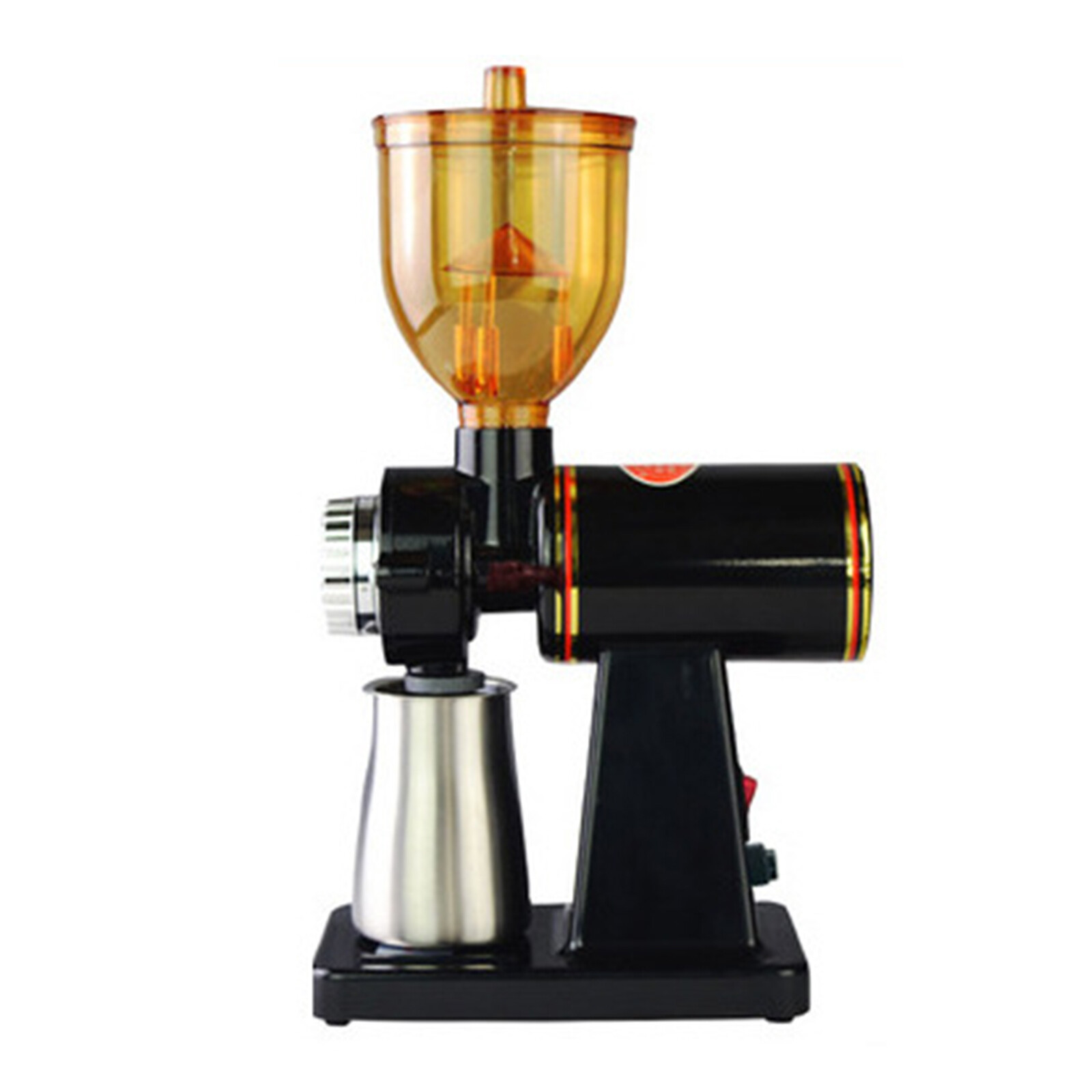
Highlights
- Hand grinders with ceramic burrs suit filter and moka, but hardened steel conical burrs hold espresso fineness without cracking or wearing flat.
- Electric espresso grinders need step-less or micro-step adjustment; stepped detents often jump too far for dialing in a 18-20g dose.
- Commercial milling units pair high-torque motors with large flat burrs (typically 60mm+) for cafe volume and consistent particle distribution.
- Low-retention single-dose designs (vertical burr path, anti-static chutes) reduce stale grounds and make espresso dial-in repeatable.
Best use cases
- Pick a hand grinder with steel conical burrs and step-less adjustment only for travel or low-volume single shots; skip ceramic hand mills for daily espresso.
- Pick an electric conical/flat burr grinder with micro-step adjustment for home espresso on a 58mm or 54mm portafilter; skip blade grinders and stepped-only models.
- Pick a commercial-grade flat burr grinder with high-torque motor for cafe or high-volume hosting; skip it for small kitchens where noise and counter space matter.
- Skip any hand grinder for back-to-back milk drinks or 20g+ doses; the crank time and inconsistent RPM make dialing in espresso impractical.
Buying tips
- Match burr material: hardened steel or coated steel for espresso; ceramic is durable but brittle and better left to coarse brew grinding.
- Look for step-less or at least 30+ micro-steps across the espresso range; fewer steps make 1-2 second shot-time changes impossible.
- Check burr diameter: 38-48mm conical is home-espresso adequate; 60mm+ flat burrs cut faster and give more uniform fines for cafe volume.
- Confirm the grinder supports 18-20g single-dose espresso without retention pockets; horizontal burr paths and long chutes trap stale grounds.
Specs
| Burr Type | Conical vs Flat / Steel vs Ceramic |
|---|---|
| Adjustment | Step-less vs Micro-step vs Stepped |
| Burr Size | 38-48mm home / 60mm+ commercial |
| Power Tier | Manual crank vs 100-250W vs 300W+ |
Related searches
What to check before buying
- Measure counter depth and height clearance: electric espresso grinders with hoppers need 30-40cm depth and 40-50cm height.
- Confirm voltage and plug standard for your region; commercial grinders are often 220-240V and may need a dedicated circuit.
- Check portafilter compatibility: most espresso grinders dose into 51mm, 54mm, or 58mm baskets; a dosing cup covers all sizes.
- Verify burr replacement availability and whether the burr set is user-serviceable before committing to a tier.
FAQ
Data sources: eBay / Amazon listings and product attribute feeds. Updated Nov 28, 2026.
Some links on this page are affiliate links. If you buy after clicking one, we may earn a commission at no extra cost to you. This does not change which products appear here or their order. Affiliate disclosure.