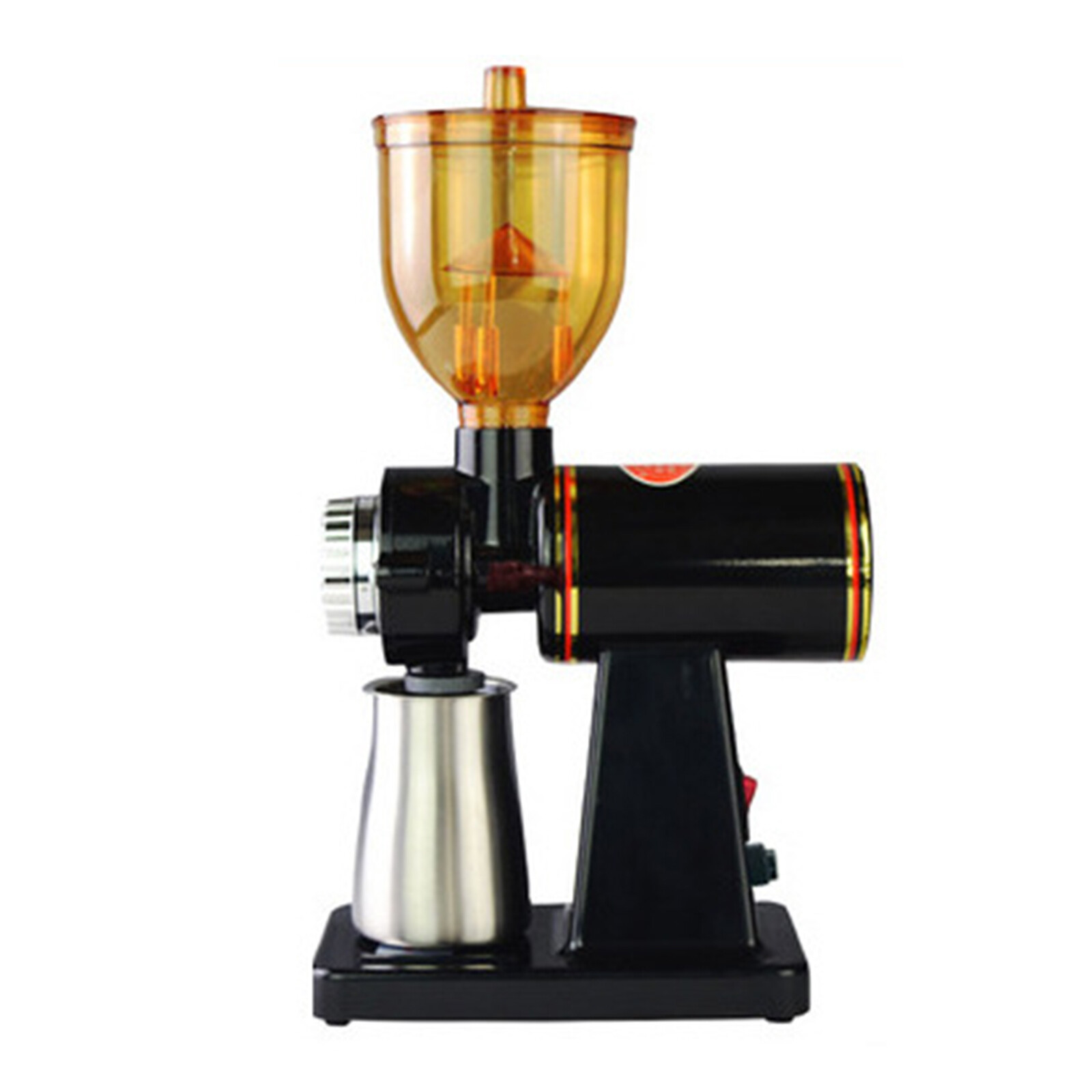

Photos from current listings. Actual item, color, and included accessories may vary.
Electric Coffee Bean Grinder Buying Guide
An electric coffee bean grinder is a motorized mill that converts whole beans into a consistent particle size for brewing, and the primary trade-off is burr type versus motor/blade construction: conical or flat burrs deliver uniform grind for repeatable extraction, while blade and low-torque motors produce uneven particles and heat. The decision rule is simple: buy a burr grinder with a metal burr set and a motor rated for continuous duty if you brew daily, and skip blade grinders or plastic-burr units unless you only need coarse chopping for occasional French press.
Key takeaways
- Burr geometry drives consistency: conical burrs feed by gravity for even wear, while flat burrs produce a narrower particle distribution favored for espresso.
- Blade grinders chop unevenly and generate friction heat that volatilizes aromatics, so they suit coarse brewing only and never espresso.
- Motor duty rating separates tiers: continuous-duty motors with metal gearboxes handle daily espresso grinding, while intermittent-duty motors overheat and stall on fine settings.
At a glance
- Category
- Coffee Grinders
- Last updated
- Nov 28, 2026
Current offers
Highlights
- Burr geometry drives consistency: conical burrs feed by gravity for even wear, while flat burrs produce a narrower particle distribution favored for espresso.
- Blade grinders chop unevenly and generate friction heat that volatilizes aromatics, so they suit coarse brewing only and never espresso.
- Motor duty rating separates tiers: continuous-duty motors with metal gearboxes handle daily espresso grinding, while intermittent-duty motors overheat and stall on fine settings.
- Grind adjustment mechanism matters: stepless collar or micro-click rings hold calibration under vibration, while plastic detents drift and lose espresso-range resolution.
Best use cases
- Daily espresso and drip brewing: pick a conical or flat burr grinder with stepless or 30+ click adjustment and a continuous-duty motor; skip blade grinders entirely.
- French press and cold brew only: a coarse-capable burr grinder or a heavy-duty blade grinder is acceptable, but avoid fine-grind-focused espresso models with narrow ranges.
- High-volume home or small cafe use: choose a commercial-style burr grinder with metal burrs and a thermally protected motor; skip consumer plastic-body units rated for intermittent use.
- Travel or occasional single-cup use: a compact hand or low-wattage electric burr grinder works, but skip large-hopper commercial units that retain stale grounds.
Buying tips
- Match burr material to use: hardened steel or ceramic burrs hold edges through hundreds of pounds of beans, while plastic or coated burrs wear and produce inconsistent grinds within months.
- Check the motor duty cycle: continuous-duty ratings handle back-to-back espresso doses; intermittent ratings (e.g., 30 seconds on, 2 minutes off) stall and overheat under daily fine grinding.
- Prioritize stepless or micro-click adjustment for espresso: each click should move the burr by under 0.05 mm so you can dial in extraction; coarse detents cannot hold espresso range.
- Size the hopper and retention to your habit: small hoppers under 250 g suit single-origin rotation, while large hoppers retain stale grounds unless you single-dose.
Specs
| Burr Type | Conical / Flat / Blade |
|---|---|
| Burr Material | Hardened steel / Ceramic / Plastic |
| Motor Duty | Continuous vs Intermittent |
| Grind Adjustment | Stepless / 30+ clicks / Coarse steps |
Related searches
What to check before buying
- Measure counter clearance and outlet height: burr grinders with tall hoppers need 16–18 inches of vertical space, and the catch cup must fit under your brew setup.
- Confirm voltage and plug standard for your region: 110–120 V for North America, 220–240 V elsewhere, and a grounded plug for metal-body commercial units.
- Check burr replacement availability: standard burr sizes (e.g., 38 mm, 64 mm) with published replacement part numbers remain serviceable for years.
- Verify the grind range covers your brew method: espresso needs fine micro-adjustment near zero, while French press needs a coarse setting that most espresso-focused grinders still provide.
FAQ
Data sources: eBay / Amazon listings and product attribute feeds. Updated Nov 28, 2026.
Some links on this page are affiliate links. If you buy after clicking one, we may earn a commission at no extra cost to you. This does not change which products appear here or their order. Affiliate disclosure.