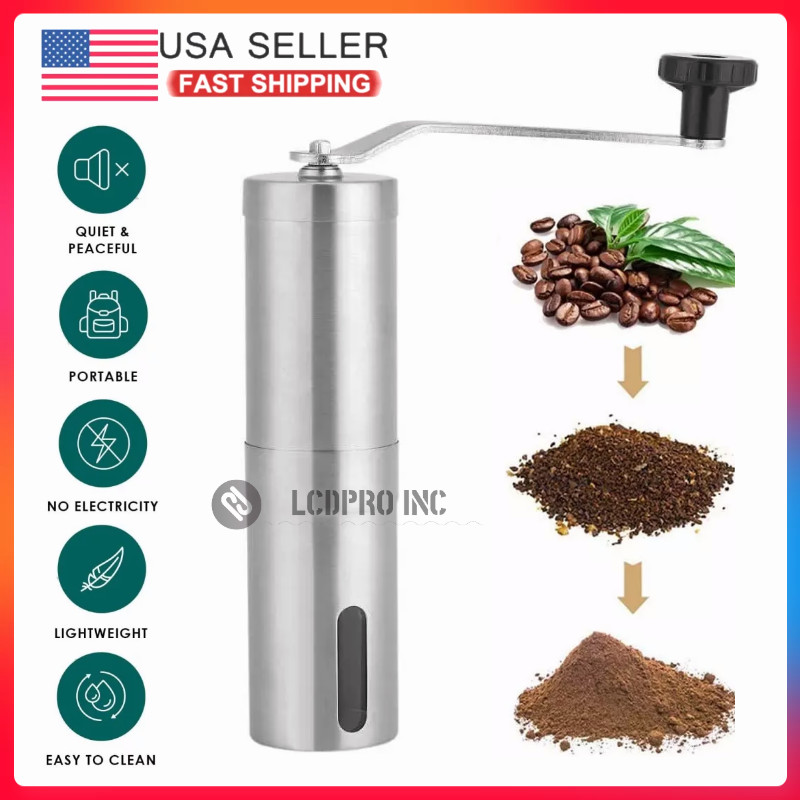

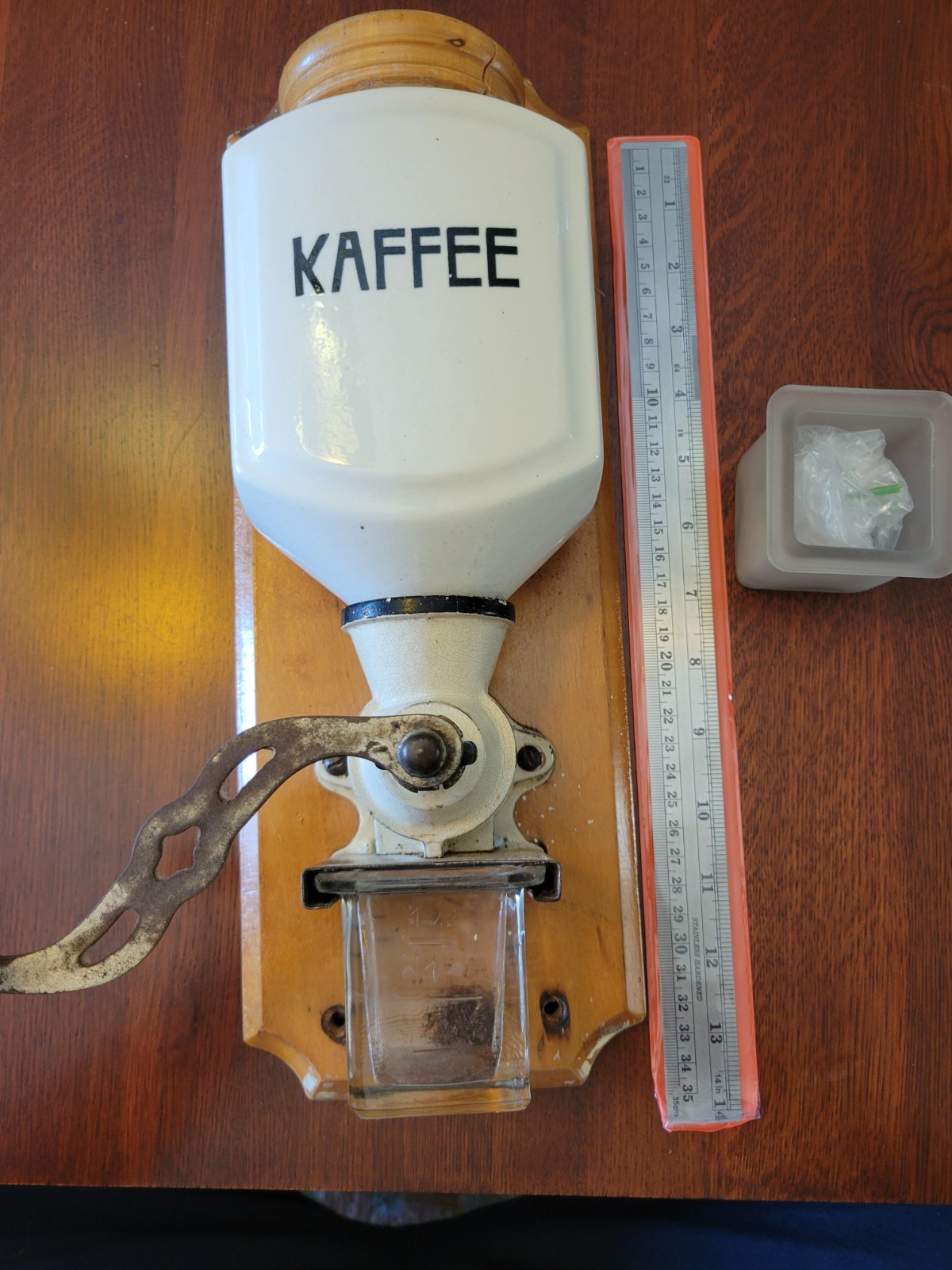
Photos from current listings. Actual item, color, and included accessories may vary.
Hand Burr Grinder Buying Guide
A hand burr grinder is a manual, crank-driven mill that uses a rotating conical or flat burr set to crush coffee beans into a consistent particle size for brewing. The primary trade-off is burr material and geometry versus body rigidity: ceramic burrs resist heat and wear but chip on hard beans, while hardened steel burrs cut faster and hold alignment, and the axle and bearing design determine whether the grind stays uniform across settings. The decision rule is simple: buy a grinder with a dual-bearing or pinned axle and a hardened steel burr set if you brew daily, and skip any single-point plastic-hub ceramic mill with no adjustability.
Median $111.27 · Pre-owned listings
Key takeaways
- Burr material split: ceramic (alumina) burrs stay sharp on medium roasts but fracture on light, dense beans; hardened stainless or tool-steel burrs cut faster and hold edges longer under daily use.
- Axle and bearing architecture is the real durability signal: a dual-bearing shaft or pinned collar keeps the burr concentric, while a single plastic bushing lets the burr wobble and produces mixed grind sizes.
- Adjustment mechanism tiers: stepless collar with detents or a numbered click ring gives repeatable espresso-to-French-press range; a simple screw-lock or spinning nut only offers coarse feed control.
At a glance
- Category
- Coffee Grinders
- Last updated
- Nov 28, 2026
Current offers
Highlights
- Burr material split: ceramic (alumina) burrs stay sharp on medium roasts but fracture on light, dense beans; hardened stainless or tool-steel burrs cut faster and hold edges longer under daily use.
- Axle and bearing architecture is the real durability signal: a dual-bearing shaft or pinned collar keeps the burr concentric, while a single plastic bushing lets the burr wobble and produces mixed grind sizes.
- Adjustment mechanism tiers: stepless collar with detents or a numbered click ring gives repeatable espresso-to-French-press range; a simple screw-lock or spinning nut only offers coarse feed control.
- Body and hopper construction: anodized aluminum or stainless bodies resist flex and static, while thin plastic hoppers and crank arms crack at the handle thread under torque.
Best use cases
- Best fit for pour-over, AeroPress, and French press: a steel-burr mill with 30-40 click setting range and a dual-bearing axle; skip ceramic single-bushing mills because their coarse settings drift and produce fines.
- Best fit for espresso on a manual lever or small pump machine: a stepless or micro-click collar with at least 15 clicks per revolution and a rigid crank; skip any grinder with a free-spinning nut adjuster since it cannot hold a repeatable espresso setting.
- Best fit for travel and office: a compact aluminum-body grinder with a captive crank arm and a sealed catch cup; skip open-top hoppers and plastic catch jars that spill in a bag.
- Wrong fit for high-volume daily brewing or multi-person households: hand mills require 2-4 minutes of cranking per 20 g dose; a 20 g dose at medium grind takes roughly 100-150 turns, so an electric burr grinder is the practical pick.
Buying tips
- Match burr material to roast level: choose hardened steel for light and medium roasts (higher density, more cutting force), and ceramic only if you exclusively brew dark roasts and want to avoid metallic wear.
- Check the axle spec before buying: a dual-bearing or pinned central shaft is the minimum for uniform grind; single plastic bushings are the most common failure point on cheap mills.
- Count adjustment clicks or steps: 30+ distinct settings with detents cover Turkish to French press, while 15-20 stepped settings are espresso-capable only if the steps are fine enough per revolution.
- Size the catch cup to your dose: a 20 g capacity suits single-cup pour-over, while 30-40 g cups are needed for a 2-cup brew; undersized cups force you to grind in batches and lose consistency.
Specs
| Burr Material | Hardened steel vs ceramic (alumina) |
|---|---|
| Axle / Bearing Type | Dual-bearing or pinned vs single bushing |
| Adjustment Range | Stepless or 30-40 clicks (espresso to press) |
| Body & Catch Cup | Aluminum/stainless vs plastic, 20-40 g capacity |
Related searches
What to check before buying
- Measure your brew dose: weigh your typical dry coffee dose (15-30 g) and confirm the catch cup and hopper hold it in one fill without overflow.
- Check handle and crank clearance: ensure the crank arm swings freely above your counter or mug, and that the grinder body diameter fits your hand grip during 100+ turns.
- Confirm burr access for cleaning: the burr set should be removable with a simple twist or two screws so you can brush out chaff and stale oils weekly.
- Verify thread and material compatibility: stainless or aluminum body with a metal catch-cup thread; plastic threads strip after repeated opening and cross-threading.
FAQ
Data sources: eBay / Amazon listings and product attribute feeds. Updated Nov 28, 2026.
Some links on this page are affiliate links. If you buy after clicking one, we may earn a commission at no extra cost to you. This does not change which products appear here or their order. Affiliate disclosure.