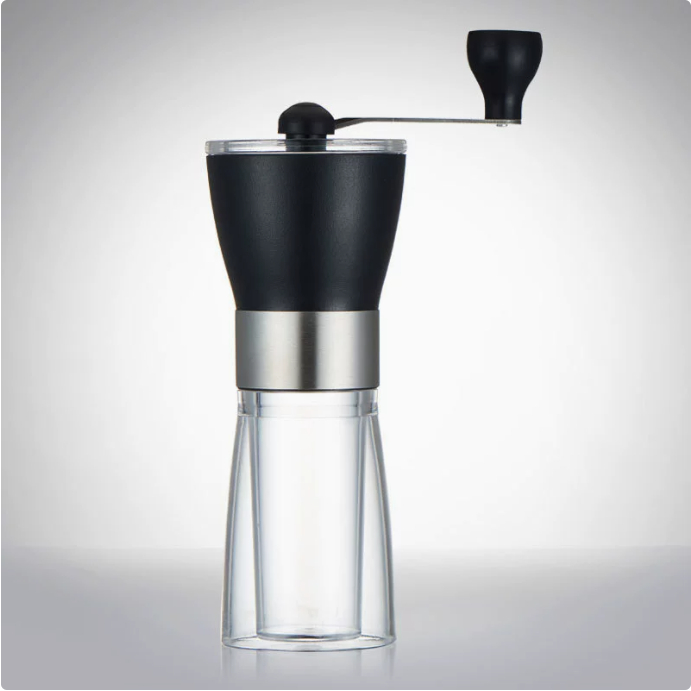

Photos from current listings. Actual item, color, and included accessories may vary.
Home Coffee Grinder Espresso Buying Guide
Espresso grinding demands a narrow, consistent particle distribution that most all-purpose grinders cannot deliver, so the burr set and stepless adjustment mechanism matter more than brand or wattage. Buyers commonly overspend on features like built-in scales while underspending on burr geometry, or pick a stepped grinder that cannot dial in a 25-second shot. This guide covers the burr architectures and adjustment tiers that actually determine espresso quality at home.
Median $38.00
Key takeaways
- Flat burrs (typically 64–83 mm) produce a unimodal grind profile favored for light-roast espresso clarity; conical burrs (38–63 mm) run cooler and suit medium-dark roasts and single dosing.
- Stepless adjustment is essential for espresso: micro-metric collar or worm-gear designs hold a setting across shots, while stepped grinders jump in increments too coarse to dial in.
- Burr material and hardness decide longevity: hardened steel or coated (TiN/DLC) burrs hold an edge for hundreds of kilograms, while soft stainless wears and drifts out of calibration.
At a glance
- Category
- Coffee Grinders
- Last updated
- Nov 28, 2026
Current offers
Highlights
- Flat burrs (typically 64–83 mm) produce a unimodal grind profile favored for light-roast espresso clarity; conical burrs (38–63 mm) run cooler and suit medium-dark roasts and single dosing.
- Stepless adjustment is essential for espresso: micro-metric collar or worm-gear designs hold a setting across shots, while stepped grinders jump in increments too coarse to dial in.
- Burr material and hardness decide longevity: hardened steel or coated (TiN/DLC) burrs hold an edge for hundreds of kilograms, while soft stainless wears and drifts out of calibration.
- Low-retention single-dose designs (near-zero exchange, sub-0.1 g retention) prevent stale grounds from contaminating the next shot, whereas hopper-fed grinders trade retention for convenience.
Best use cases
- Best fit: a single-dose flat-burr grinder with stepless adjustment for a home barista pulling 1–3 espresso shots daily and switching beans often.
- Best fit: a conical-burr stepless grinder with a small hopper for medium-dark roast drinkers who value durability and low static over ultimate clarity.
- Wrong fit: a stepped all-purpose grinder or blade grinder for espresso — the particle spread will channel and sour the shot regardless of machine quality.
- Wrong fit: a large commercial flat-burr grinder for a single daily shot — retention and counter footprint outweigh the marginal clarity gain.
Buying tips
- Prioritize stepless or micro-adjustable burr carriers over stepped detents; espresso dial-in requires sub-10-micron changes that stepped grinders cannot repeat.
- Choose burr size and geometry by roast level: 64 mm+ flat burrs for light roasts, 38–50 mm conical burrs for medium-dark and milk drinks.
- Verify burr material and replacement availability — coated steel burrs last longer and replacement sets should be stocked for the model you buy.
- Inspect retention design: single-dose grinders with low exchange suit bean-switching; hopper grinders suit repeat single-origin drinkers who grind the same dose daily.
Specs
| Burr Type | Flat vs Conical |
|---|---|
| Burr Size | 38–83 mm |
| Adjustment | Stepless vs Stepped |
| Retention | Single-dose vs Hopper |
Related searches
What to check before buying
- Measure counter depth and height clearance under upper cabinets; espresso grinders with tall hoppers often exceed 40 cm and need open space above.
- Confirm your espresso machine accepts a standard 58 mm portafilter basket, since grinder dosing cups and funnels are sized to that standard.
- Check electrical: most home espresso grinders run 110–120 V in North America and 220–240 V elsewhere; plug type and voltage must match your outlet.
- Plan for a dosing cup or portafilter fork if single-dosing; confirm the grinder includes the companion part rather than assuming it is bundled.
FAQ
Data sources: eBay / Amazon listings and product attribute feeds. Updated Nov 28, 2026.
Some links on this page are affiliate links. If you buy after clicking one, we may earn a commission at no extra cost to you. This does not change which products appear here or their order. Affiliate disclosure.