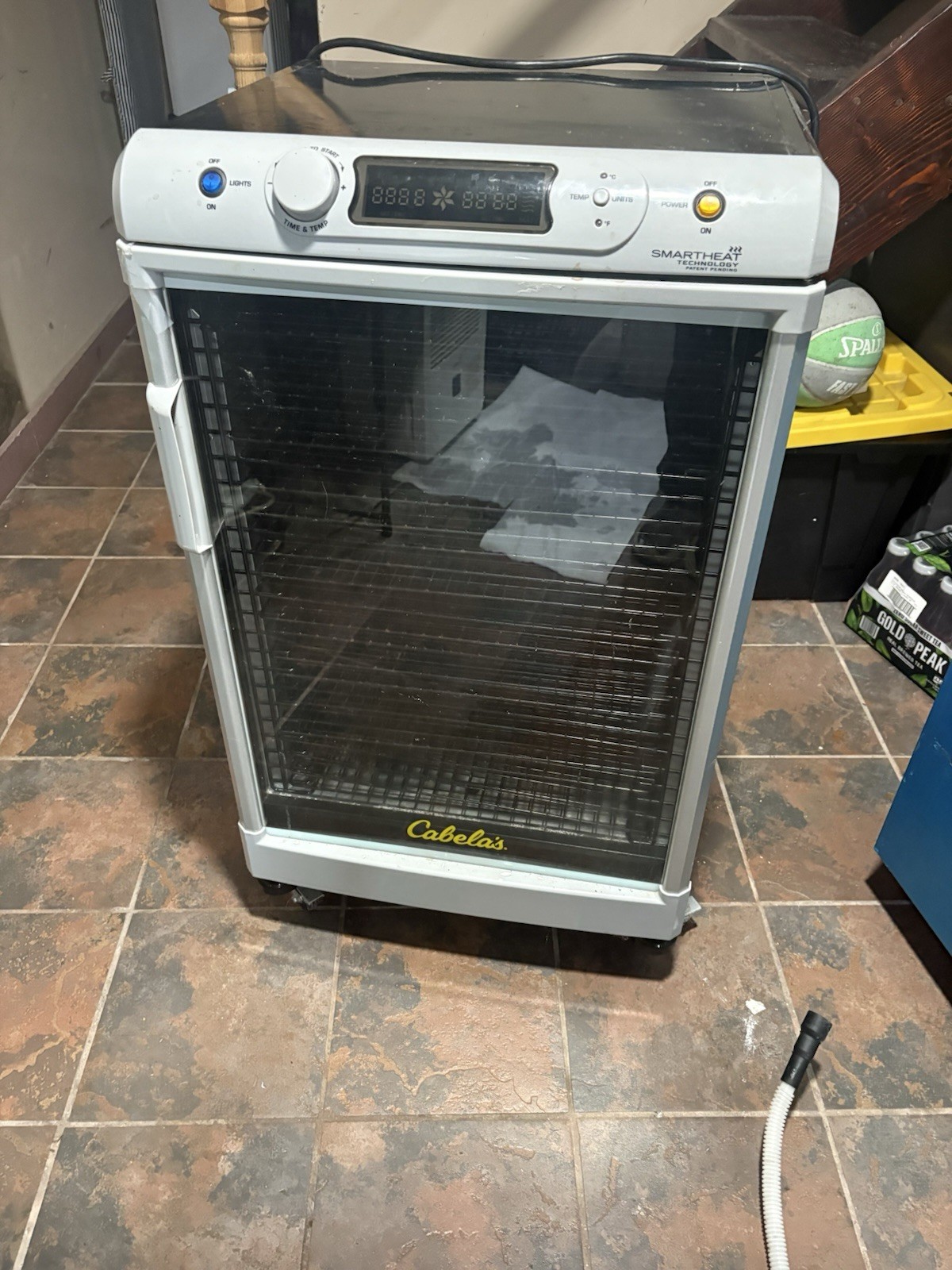

Photos from current listings. Actual item, color, and included accessories may vary.
Commercial Dehydrator Buying Guide
Commercial dehydrators are high-capacity, continuous-duty machines built for batch production of jerky, fruit leather, herbs, and pet treats, not occasional home use. The core trade-off is between stainless-steel cabinet construction with true horizontal airflow and reinforced racks (durable, even drying) versus thin-walled, vertical-flow boxes that develop hot spots and warp under daily loads. The decision rule: buy only if the unit specifies all-stainless or powder-coated steel interior, a rated continuous-run motor, and rack capacity in square feet—skip any model that lists capacity only in vague 'trays' without dimensions or material grade.
Key takeaways
- Cabinet-grade units use 304 stainless steel interiors and doors; cheaper models use painted cold-rolled steel that chips and rusts under humid drying cycles.
- Horizontal airflow with rear-mounted blowers and adjustable baffles dries evenly across all racks; vertical-flow (bottom-up) designs require rotating trays and cause edge overdrying.
- Continuous-duty motors are rated for 24-48 hour runs; consumer-grade shaded-pole motors overheat and seize when run beyond 8-10 hours.
At a glance
- Category
- Food Dehydrators
- Last updated
- Nov 28, 2026
Current offers
Highlights
- Cabinet-grade units use 304 stainless steel interiors and doors; cheaper models use painted cold-rolled steel that chips and rusts under humid drying cycles.
- Horizontal airflow with rear-mounted blowers and adjustable baffles dries evenly across all racks; vertical-flow (bottom-up) designs require rotating trays and cause edge overdrying.
- Continuous-duty motors are rated for 24-48 hour runs; consumer-grade shaded-pole motors overheat and seize when run beyond 8-10 hours.
- Rack spacing and tray count determine real capacity: commercial cabinets typically offer 10-24 trays at 1-2 inch spacing, with total drying area measured in square feet.
Best use cases
- Best fit: a small jerky or pet-treat business running 10+ lb batches weekly needs a stainless cabinet with horizontal airflow and 15+ square feet of tray area.
- Wrong fit: a home user drying a few herb bunches monthly should skip commercial units—their higher wattage, noise, and footprint are wasted, and a 6-tray home dehydrator suffices.
- Best fit: a farm or hunting operation processing seasonal game and produce needs a high-wattage (1000W+) unit with thermostat to 160°F+ and metal racks for heavy loads.
- Wrong fit: a raw-foods vegan operation drying below 115°F needs precise low-temperature control; many commercial units overshoot at low settings, so prioritize models with PID or digital thermostat accuracy.
Buying tips
- Size by drying area, not tray count: multiply tray width × depth × number of trays; 10 sq ft suits small batches, 20+ sq ft suits daily production.
- Choose 304 stainless steel racks and interior over chrome-plated or plastic; 304 resists acidic foods and sanitizing, and won't off-gas at high temperatures.
- Match wattage to batch load: 600-800W handles 10-15 sq ft; 1000W+ is needed for 20+ sq ft or dense foods like jerky at 160°F.
- Confirm the motor is rated for continuous duty and the thermostat reaches at least 160°F; lower max temps prevent proper jerky safety (160°F internal).
Specs
| Interior Material | 304 stainless vs painted steel |
|---|---|
| Airflow Direction | Horizontal vs vertical |
| Tray Area | 10-25 sq ft typical |
| Max Temperature | 160-200°F |
Related searches
What to check before buying
- Measure your counter or cart space: commercial cabinets often exceed 20 inches wide and 24 inches deep, and need 6+ inches clearance for airflow.
- Verify your electrical circuit: 1000W+ units draw 8-10 amps; a dedicated 15A circuit is safe, but sharing with other appliances may trip breakers.
- Check rack fit for your accessories: confirm tray dimensions match your mesh sheets, silicone mats, or jerky gun strips; standard trays are often 15×15 or 16×16 inches.
- Plan for humidity and odor: drying onions or jerky indoors requires exhaust ventilation or a dedicated utility room; units with rear exhaust vents simplify ducting.
FAQ
Data sources: eBay / Amazon listings and product attribute feeds. Updated Nov 28, 2026.
Some links on this page are affiliate links. If you buy after clicking one, we may earn a commission at no extra cost to you. This does not change which products appear here or their order. Affiliate disclosure.