
Photos from current listings. Actual item, color, and included accessories may vary.
Digital Food Dehydrator Buying Guide
A digital food dehydrator replaces the dial thermostat with a thermistor-controlled PID or on/off controller and a timer, giving set-and-forget drying at stable low temperatures. The core trade-off is between precise digital temperature control and build durability: budget units often pair a digital display with a weak heating element and thin trays, while better machines use higher-wattage elements, tighter temperature tolerance, and sturdier rack construction. Choose a digital model only if you need repeatable recipes and unattended cycles; if you dry only occasionally and simple on/off control suffices, an analog dehydrator delivers the same airflow physics for less complexity.
Median $212.02 · New listings
Key takeaways
- Digital control typically holds set temperature within roughly ±5°F (±3°C), while analog bi-metal dials can swing ±15-20°F, which matters for jerky safety and enzyme-sensitive raw recipes.
- Heating elements range from about 250W in compact stacked units to 600-1000W in large tray-style cabinets; higher wattage shortens recovery time when wet food is loaded.
- Rear-mounted horizontal airflow with a fan and adjustable vents dries more evenly than bottom-mounted vertical flow, which can over-dry lower trays near the element.
At a glance
- Category
- Food Dehydrators
- Last updated
- Nov 28, 2026
Current offers
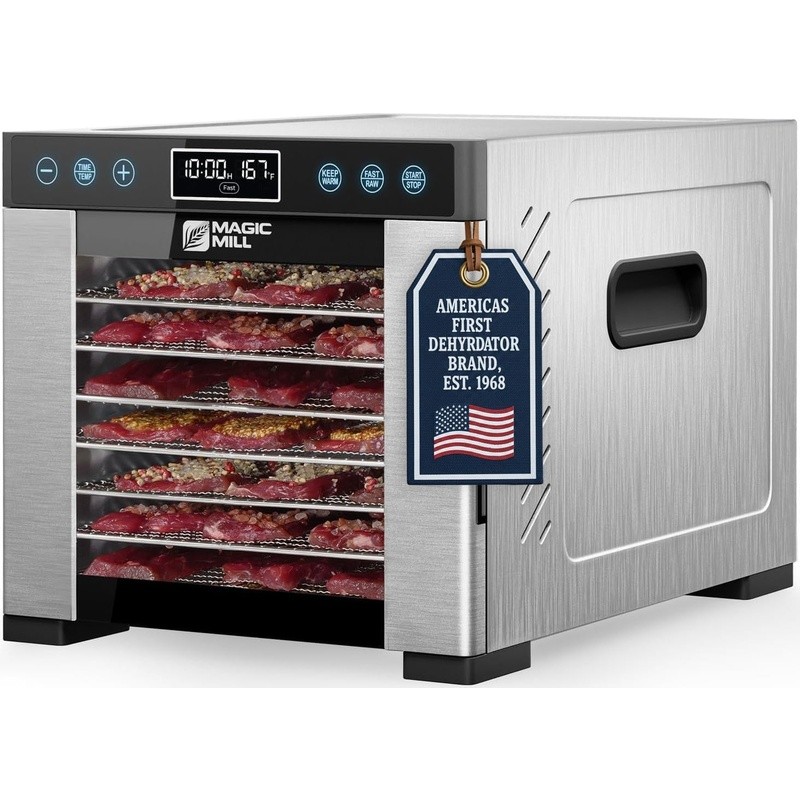 Electric Food Dehydrator W/ 10 Stainless Steel Trays Digital Timer & Thermostat$212.02New · Last checked Nov 27, 2026View on eBay
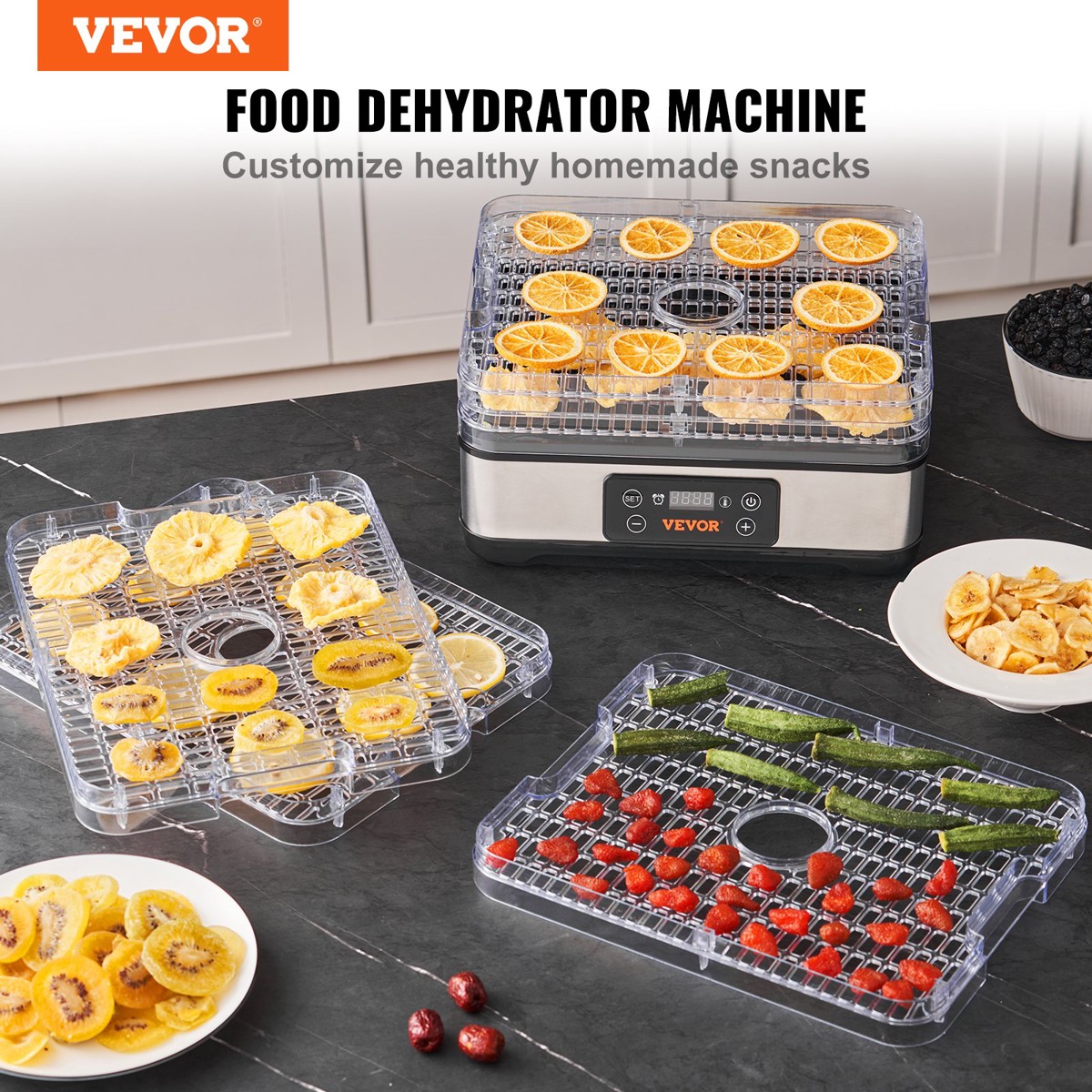 Food Dehydrator Machine, 5-Tray Fruit 300W Electric Dryer Digital Adjustable Timer & Temperature For Jerky, Herb, Meat, Beef, Dog Treats And Vegetables, ETL Listed$67.99View on Mallflare
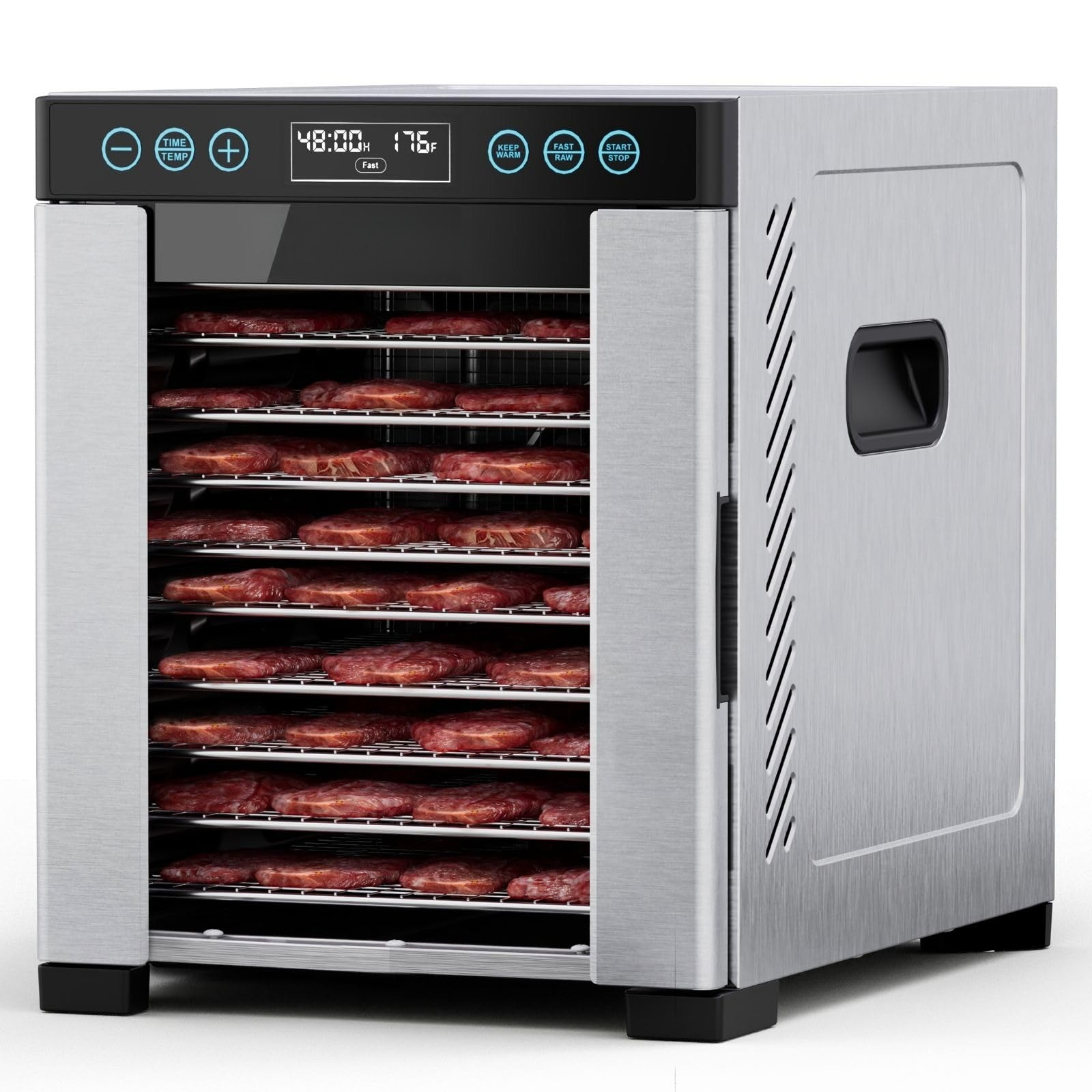 10 Tray Food Dehydrator,Digital Timer Temp Control Keep Warm ETL Approved$283.32New · Last checked Nov 27, 2026View on eBay
Highlights
- Digital control typically holds set temperature within roughly ±5°F (±3°C), while analog bi-metal dials can swing ±15-20°F, which matters for jerky safety and enzyme-sensitive raw recipes.
- Heating elements range from about 250W in compact stacked units to 600-1000W in large tray-style cabinets; higher wattage shortens recovery time when wet food is loaded.
- Rear-mounted horizontal airflow with a fan and adjustable vents dries more evenly than bottom-mounted vertical flow, which can over-dry lower trays near the element.
- Tray material and spacing define capacity and cleaning: stainless-steel or BPA-free polypropylene racks with 1-inch spacing hold more than 0.5-inch mesh trays for thick slices.
Best use cases
- Best fit for jerky and meat sticks: choose a digital model with a verified low range down to 95-105°F and a timer up to 12+ hours; skip compact 250W stacked units that cannot hold low temperatures steadily.
- Best fit for fruit leather and vegetable chips: pick a tray-style cabinet with rear horizontal airflow and at least 500W; skip bottom-flow round units if you plan full loads, as lower racks dry unevenly.
- Best fit for occasional herb drying: a compact digital stacked dehydrator with 4-6 trays is enough; skip large 10-tray cabinets unless you process garden harvests in batches.
- Wrong fit for raw-food or probiotic recipes: avoid any digital unit whose minimum setpoint is above 105°F or that lacks a documented temperature tolerance, since precise low heat is the entire requirement.
Buying tips
- Match wattage to load: under 300W suits 4-6 tray batches; 500-700W suits 6-9 trays; 800W+ is needed for 10+ trays or dense meat loads to recover temperature quickly.
- Check the temperature range and tolerance, not just the display: a digital dehydrator should state a low setpoint of 95-105°F and a hold tolerance of ±5°F for jerky and raw recipes.
- Prefer adjustable venting and rear horizontal airflow for even drying; sealed or bottom-only airflow units trap moisture and require tray rotation.
- Confirm tray count and spacing: 1-inch tray spacing fits thick slices and jerky; 0.5-inch spacing suits herbs and thin fruit but limits thick-cut capacity.
Specs
| Control Type | Digital PID/thermistor vs analog dial |
|---|---|
| Temp Range | 95-165°F typical; low end 95-105°F for jerky |
| Wattage Tier | 250-350W compact / 500-700W mid / 800W+ large |
| Airflow | Rear horizontal vs bottom vertical |
Related searches
What to check before buying
- Measure your counter depth and height clearance: tray-style cabinets can run 12-18 inches deep and 12-16 inches tall, and need open space above for the top vent.
- Verify your kitchen circuit can handle the wattage: a 1000W dehydrator draws about 8.3A at 120V, so avoid sharing a 15A circuit with other high-draw appliances.
- Confirm the plug standard for your region (NEMA 5-15 for North America, Type G/F for UK/EU) and that the unit ships with the correct voltage, not a plug adapter.
- Check whether trays, mesh sheets, and fruit-leather liners are included or sold separately, and that replacement trays are available for the model.
FAQ
Data sources: eBay / Amazon listings and product attribute feeds. Updated Nov 28, 2026.
Some links on this page are affiliate links. If you buy after clicking one, we may earn a commission at no extra cost to you. This does not change which products appear here or their order. Affiliate disclosure.