
Photos from current listings. Actual item, color, and included accessories may vary.
Electric Food Dehydrator Buying Guide
Electric food dehydrators use a fan and heating element to dry food at controlled low temperatures, and the core trade-off is between cheap vertical airflow units that dry unevenly and horizontal airflow models with better tray coverage and temperature precision. The decision rule: choose a horizontal-flow unit with adjustable thermostat down to 95°F and at least 5 trays for serious batch drying; skip fixed-temperature round stackers unless you only dry herbs or jerky occasionally.
Median $140.01 · New listings
Key takeaways
- Airflow architecture is the primary performance divider: horizontal rear-fan units dry all trays evenly without rotation, while vertical-flow stackers require tray swapping every few hours.
- Thermostat range determines food safety and quality: models adjustable from 95°F to 165°F cover herbs, yogurt, jerky, and vegetables; fixed 135°F units cannot safely make jerky or preserve enzymes.
- Tray count and spacing define batch capacity: 5-6 trays at 1-1.5 inch spacing handle family batches; expandable units accept add-on trays up to 12 for garden harvests.
At a glance
- Category
- Food Dehydrators
- Last updated
- Nov 28, 2026
Current offers
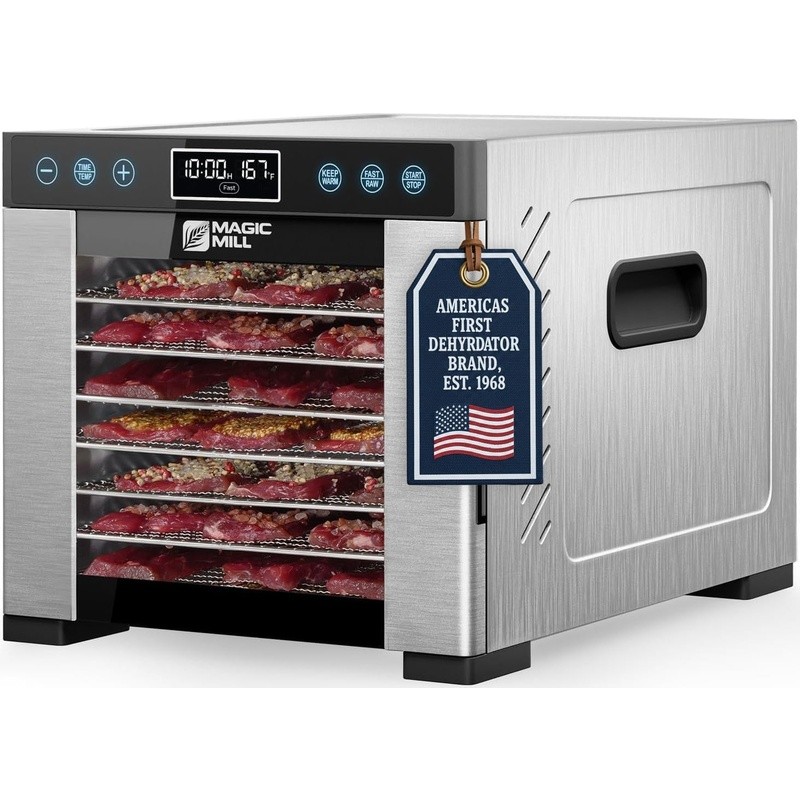 Electric Food Dehydrator W/ 10 Stainless Steel Trays Digital Timer & Thermostat$212.02New · Last checked Nov 27, 2026View on eBay
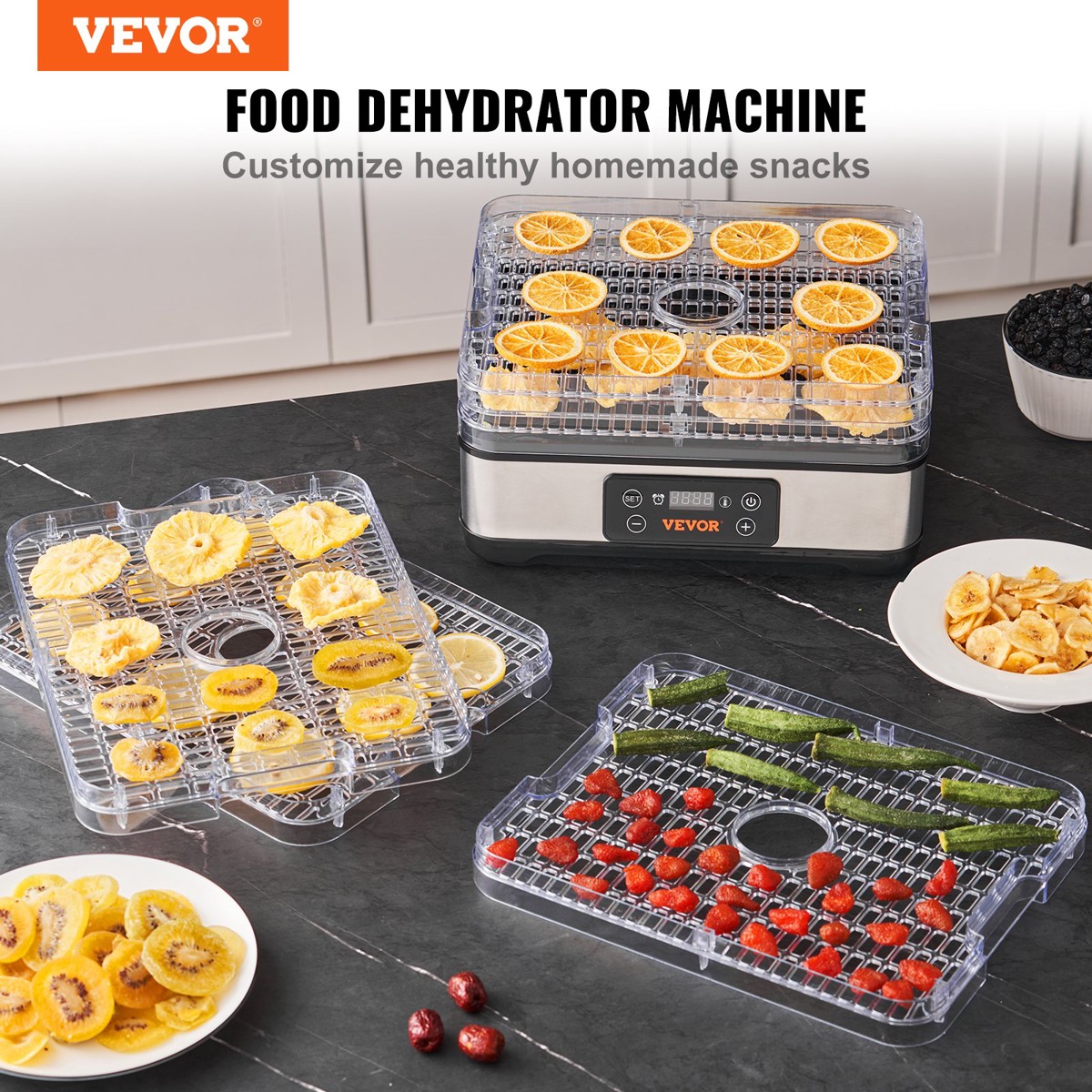 Food Dehydrator Machine, 5-Tray Fruit 300W Electric Dryer Digital Adjustable Timer & Temperature For Jerky, Herb, Meat, Beef, Dog Treats And Vegetables, ETL Listed$67.99View on Mallflare
Highlights
- Airflow architecture is the primary performance divider: horizontal rear-fan units dry all trays evenly without rotation, while vertical-flow stackers require tray swapping every few hours.
- Thermostat range determines food safety and quality: models adjustable from 95°F to 165°F cover herbs, yogurt, jerky, and vegetables; fixed 135°F units cannot safely make jerky or preserve enzymes.
- Tray count and spacing define batch capacity: 5-6 trays at 1-1.5 inch spacing handle family batches; expandable units accept add-on trays up to 12 for garden harvests.
- Construction grade separates durable from disposable: stainless-steel trays and metal-lined cabinets resist warping and staining, while BPA-free plastic trays crack and absorb odors over repeated cycles.
Best use cases
- Best fit: horizontal-flow stainless-tray unit with digital thermostat for households drying 5+ lb batches of fruit leather, jerky, and garden vegetables weekly; skip if you only dry herbs twice a year.
- Best fit: compact 4-5 tray vertical unit with adjustable 95-160°F thermostat for apartment dwellers with limited counter space drying small batches; skip large 10-tray cabinets that dominate the kitchen.
- Wrong fit: fixed-temperature round stacker with no thermostat for anyone making jerky or yogurt—the 135°F fixed setting overcooks lean meat and kills yogurt cultures; choose a thermostatically controlled model instead.
- Best fit: expandable tray-system dehydrator for gardeners processing seasonal gluts; buy the base unit plus add-on trays rather than a fixed-capacity cabinet that limits future batches.
Buying tips
- Match tray area to batch size: 1 square foot of tray space dries roughly 1 lb of sliced fruit; a 5-tray unit with 1.2 sq ft per tray handles about 6 lb per load.
- Require a thermostat adjustable to 95°F for yogurt and herbs and 165°F for safe jerky; units with only Low/Medium/High presets lack the precision for food safety.
- Choose horizontal airflow with a rear-mounted fan for even drying without rotation; vertical-flow units need tray swapping every 2-3 hours and dry bottom trays slowest.
- Prioritize stainless-steel or dishwasher-safe trays and a metal interior; plastic trays warp above 150°F and absorb strong odors like onion and fish.
Specs
| Airflow | Horizontal rear-fan vs vertical stack |
|---|---|
| Temp Range | 95-165°F adjustable thermostat |
| Tray Count | 4-12 expandable trays |
| Tray Material | Stainless steel vs BPA-free plastic |
Related searches
What to check before buying
- Measure available counter depth and height: horizontal 6-tray units run 18-20 inches deep and 14-16 inches tall; confirm clearance under upper cabinets before buying.
- Verify electrical circuit capacity: most dehydrators draw 400-600W; a 15A kitchen circuit shared with other appliances can trip, so plan a dedicated outlet for simultaneous use.
- Check tray dimensions and add-on availability if you plan to expand; proprietary tray sizes from one brand rarely fit another, so commit to a tray system with future expansion trays.
- Confirm the unit includes a mesh sheet for herbs and fruit leather trays if those are primary uses; these are often sold separately and add cost.
FAQ
Data sources: eBay / Amazon listings and product attribute feeds. Updated Nov 28, 2026.
Some links on this page are affiliate links. If you buy after clicking one, we may earn a commission at no extra cost to you. This does not change which products appear here or their order. Affiliate disclosure.