
Photos from current listings. Actual item, color, and included accessories may vary.
Food Dryer Machine Buying Guide
A food dryer machine (dehydrator) removes moisture with low heat and steady airflow; the core trade-off is between cheap fixed-temperature units that scorch or under-dry and thermostatically controlled, horizontal-flow models that dry evenly. Buy a machine with adjustable temperature (95–165°F), a horizontal rear fan, and tray-count flexibility if you plan on jerky, herbs, and fruit leather; skip analog base units for anything beyond occasional herb drying.
Median $230.95 · New listings
Key takeaways
- Heating control: analog dial units cycle ±15–20°F; digital PID or thermostat models hold ±5°F, which prevents case-hardening on jerky and scorching on herbs.
- Airflow architecture: horizontal (rear-mounted fan) dries trays evenly without rotation; vertical (bottom-up) models require tray swapping every 2–3 hours.
- Tray construction: food-grade polypropylene or stainless steel; avoid BPA-laden ABS trays that warp above 150°F and off-gas.
At a glance
- Category
- Food Dehydrators
- Last updated
- Nov 28, 2026
Current offers
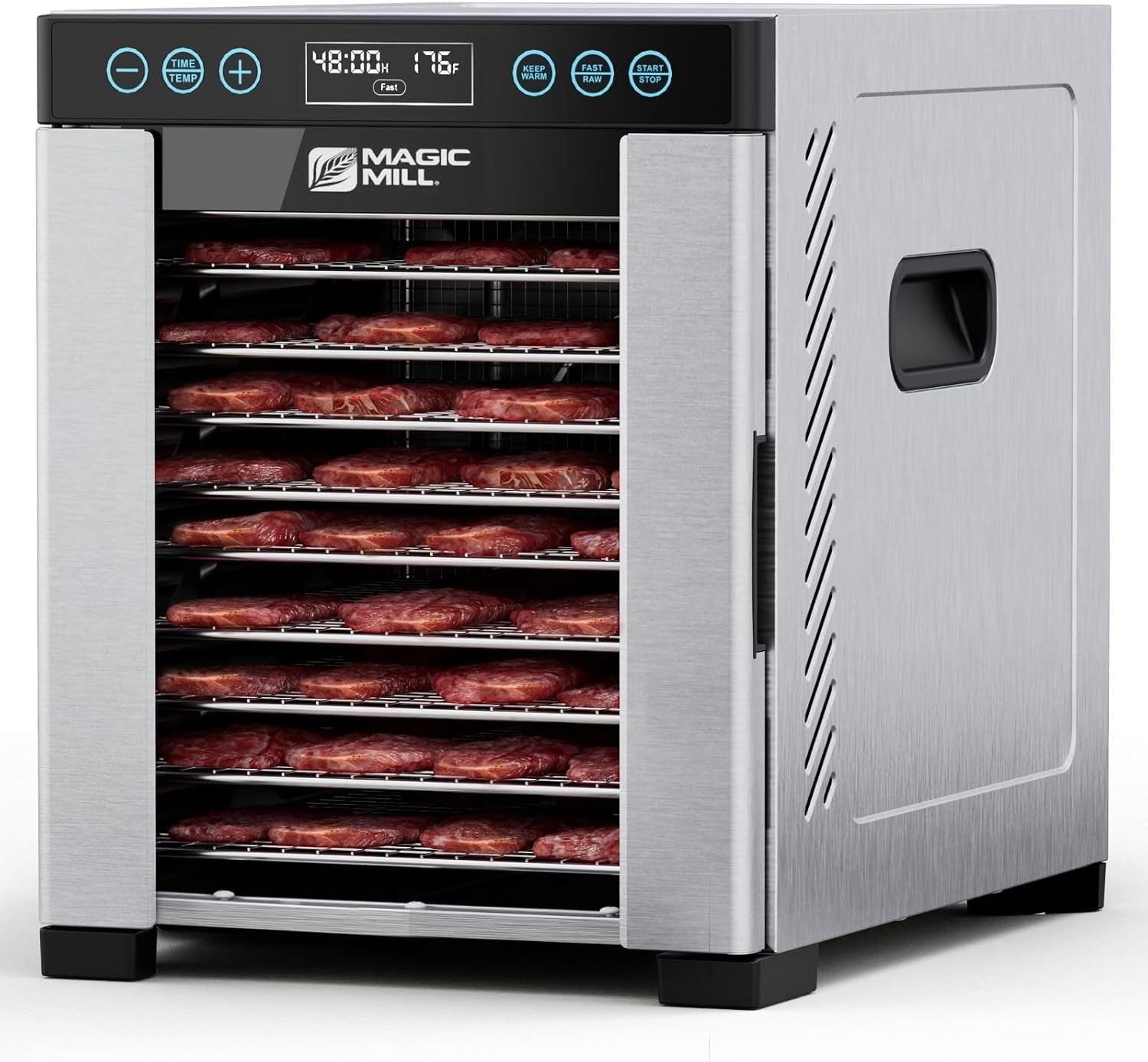 Pro Food Dehydrator Machine 10 Stainless Steel Trays Dryer Jerky Dog Treats Herb$207.99New · Last checked Nov 27, 2026View on eBay
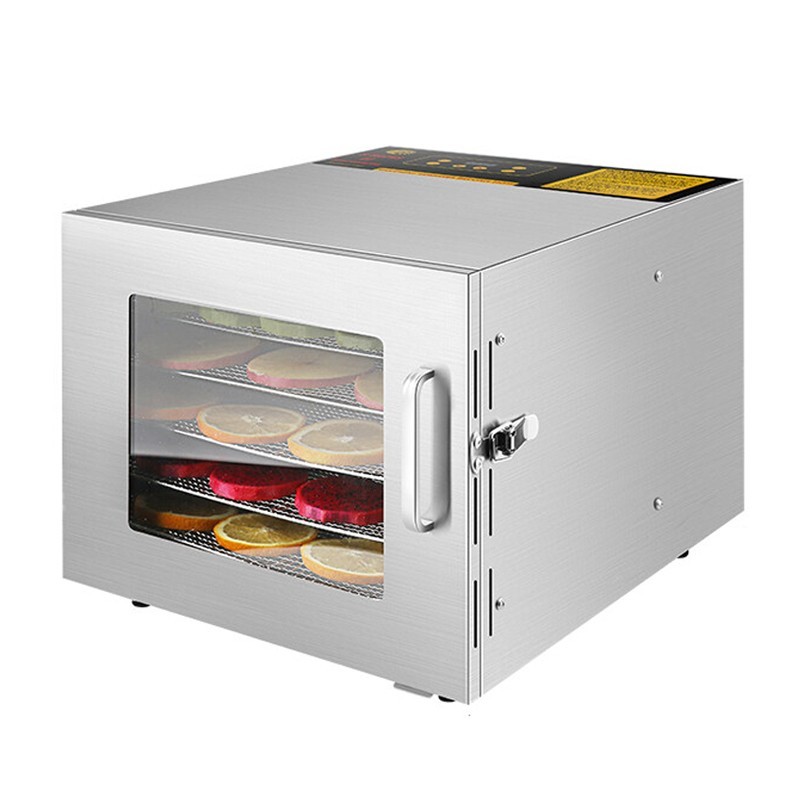 6 Trays Food Dehydrator Machine Preserver Fruits & Vegetable Dryer 600W$219.45New · Last checked Nov 27, 2026View on eBay
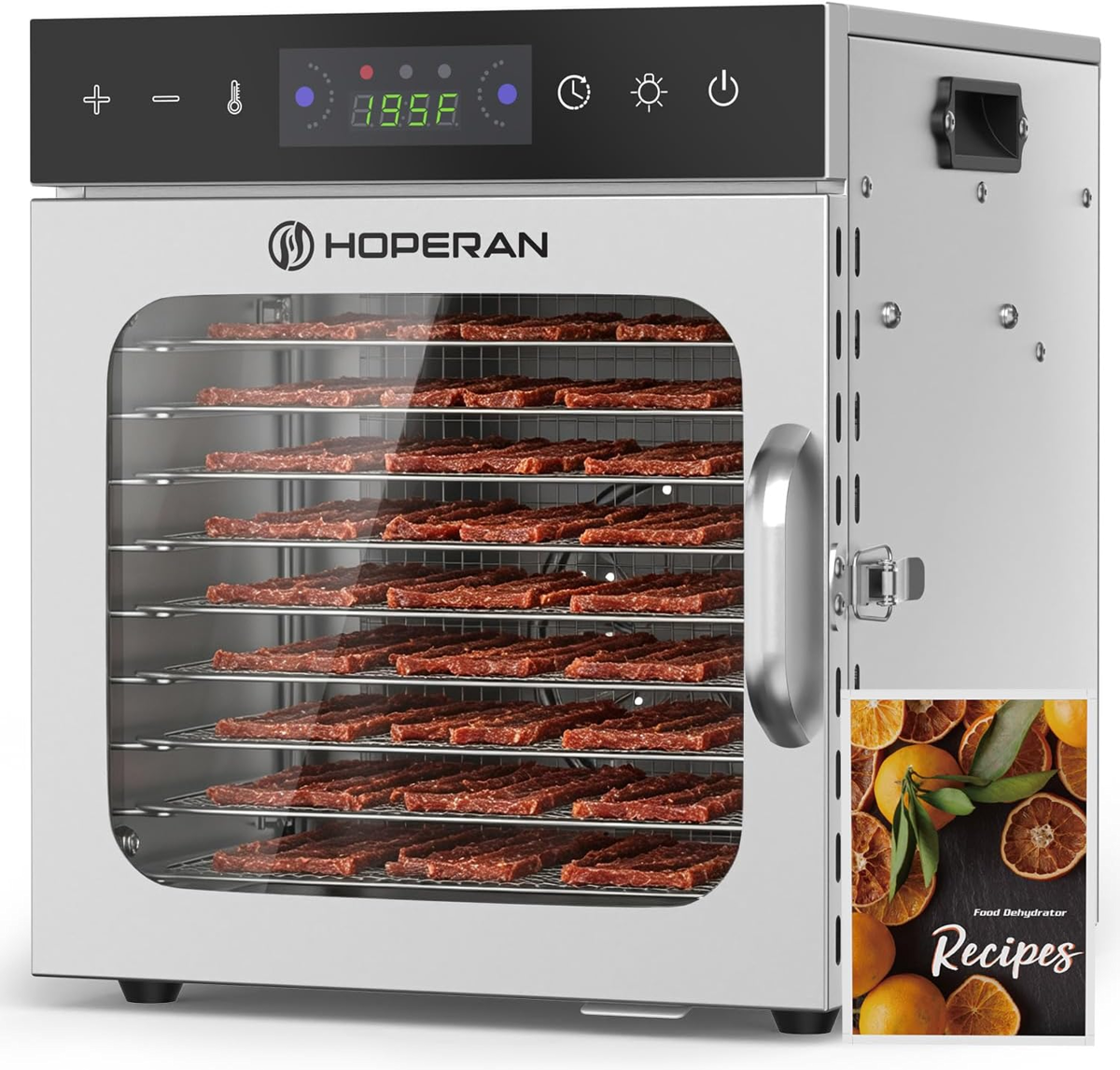 HOPERAN 10 Tray Food Dehydrator Meat Jerky Fruit Herb Dog Treat Dryer Stainless$230.95New · Last checked Nov 27, 2026View on eBay
- Pro Food Dehydrator Machine 10 Stainless Steel Trays Dryer Jerky Dog Treats Herb$239.19New · Last checked Nov 27, 2026View on eBay
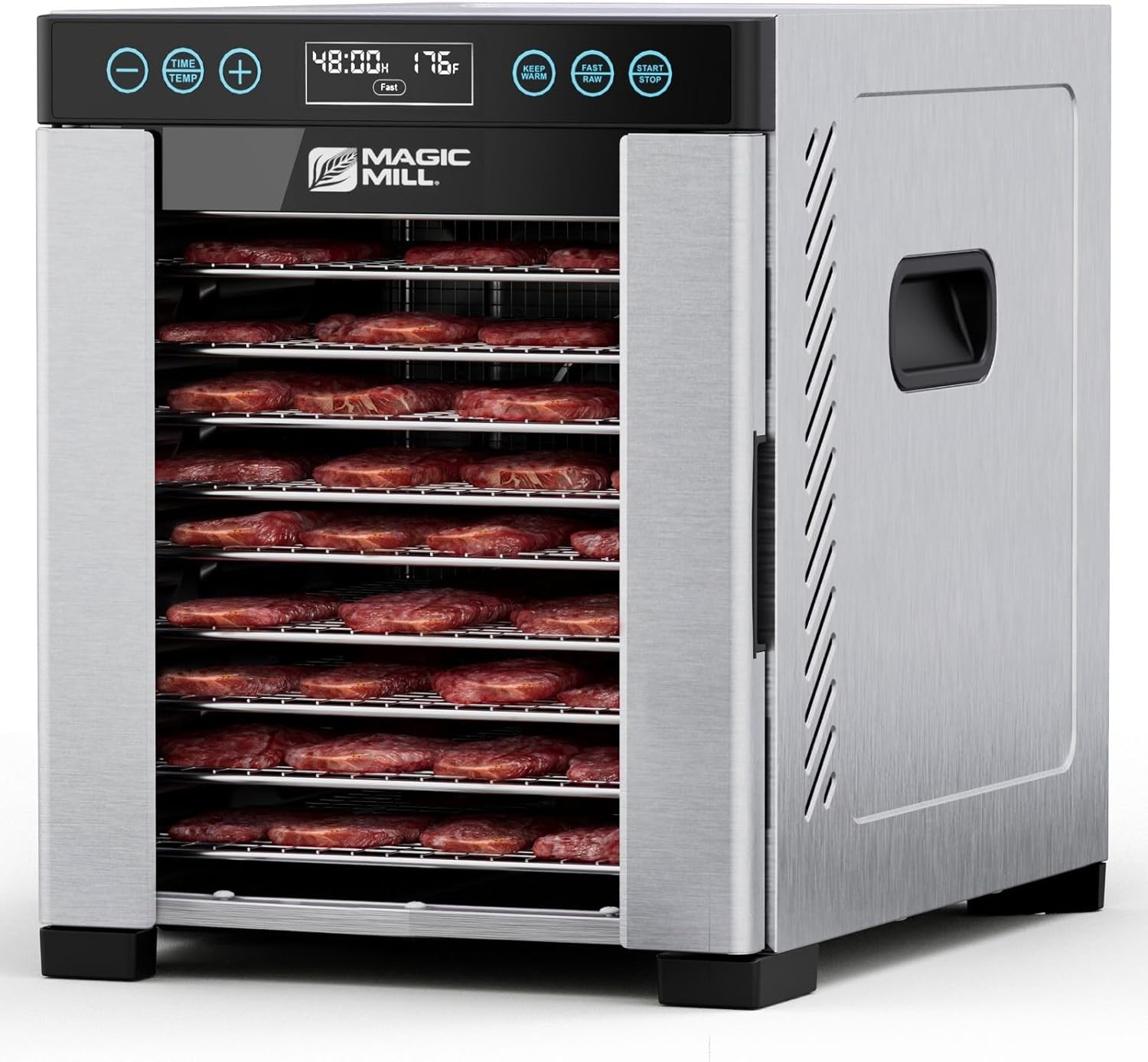 Pro Food Dehydrator Machine 10 Stainless Steel Trays Dryer Jerky Dog Treats Herb$282.70New · Last checked Nov 27, 2026View on eBay
Highlights
- Heating control: analog dial units cycle ±15–20°F; digital PID or thermostat models hold ±5°F, which prevents case-hardening on jerky and scorching on herbs.
- Airflow architecture: horizontal (rear-mounted fan) dries trays evenly without rotation; vertical (bottom-up) models require tray swapping every 2–3 hours.
- Tray construction: food-grade polypropylene or stainless steel; avoid BPA-laden ABS trays that warp above 150°F and off-gas.
- Power draw: 400–600W for 5–6 tray units, 700–1000W for 9–12 tray stainless models; a 15A household circuit handles any countertop dehydrator.
Best use cases
- Best fit: 5–6 tray digital horizontal-flow unit for weekly jerky, fruit leather, and herb drying — holds 150–160°F safely and dries evenly without rotation.
- Wrong fit: analog bottom-flow round dehydrator for raw meat jerky — temperature swings above 165°F create fat rancidity and uneven drying; reserve it for herbs and vegetable chips.
- Best fit: 9–12 tray stainless-steel expandable model for garden surplus, bulk meal prep, or pet treats — stainless trays tolerate 165°F and dishwasher cleaning.
- Wrong fit: oversized 12-tray unit for a two-person household — it draws more power, occupies counter depth beyond 18 inches, and most trays sit empty.
Buying tips
- Match tray count to batch size: 1 tray holds about 1 lb of sliced fruit or 0.75 lb of jerky strips; buy 6 trays for a 5-lb weekly batch, 9–12 for bulk harvests.
- Require an adjustable thermostat spanning at least 95–165°F: below 115°F for herbs and yogurt, 145–155°F for jerky, 135°F for fruit leather.
- Check tray spacing and total height: 1-inch tray gaps suit thin slices; 1.5–2 inches are needed for jerky strips and thick vegetable rounds.
- Choose horizontal rear-fan airflow over bottom-up vertical flow; horizontal models eliminate tray rotation and dry edges evenly across all shelves.
Specs
| Airflow | Horizontal rear-fan vs vertical bottom-up |
|---|---|
| Temp Control | Digital thermostat 95–165°F vs analog dial |
| Tray Count | 5–6 trays vs 9–12 expandable |
| Tray Material | Stainless steel vs food-grade polypropylene |
Related searches
What to check before buying
- Measure counter depth and height clearance: most 6-tray units need 18–20 inches of depth and 14–16 inches of height; 12-tray stainless models need 22+ inches depth.
- Confirm a standard 120V grounded outlet within cord reach (typically 3–4 ft); no dedicated circuit is needed for units under 1000W.
- Verify tray material and dishwasher rating: polypropylene trays are top-rack safe; stainless steel trays are fully dishwasher-safe and resist staining from acidic marinades.
- Check included accessories: fruit-leather sheets and mesh screens for herbs are often sold separately; budget for one sheet per tray if making leathers or small herbs.
FAQ
Data sources: eBay / Amazon listings and product attribute feeds. Updated Nov 28, 2026.
Some links on this page are affiliate links. If you buy after clicking one, we may earn a commission at no extra cost to you. This does not change which products appear here or their order. Affiliate disclosure.