
Photos from current listings. Actual item, color, and included accessories may vary.
Meat Food Dehydrator Buying Guide
A meat food dehydrator is a countertop appliance engineered to hold low, stable temperatures (typically 95–165°F) with steady airflow so raw meat can be safely dried into jerky or snack sticks. The core trade-off is temperature control and airflow consistency versus raw capacity: budget units overshoot or cycle wildly, while jerky-capable dehydrators hold within a few degrees and move air evenly across every tray. The decisive rule is simple—buy only a model with an adjustable thermostat that reaches at least 155–160°F and a verified heating element plus fan; fixed-temperature or tray-only 'fruit dehydrators' are compromises that cannot safely make meat jerky.
Median $166.99 · New listings
Key takeaways
- Safety floor: meat must reach 155–160°F during drying to kill pathogens, so a thermostat adjustable to at least 160°F is non-negotiable—fixed 130–140°F units are fruit/vegetable only.
- Airflow architecture separates tiers: rear-mounted fan with horizontal cross-flow (Excalibur-style) dries evenly without rotation, while bottom-up vertical-flow units need tray rotation and run hotter near the element.
- Construction grade: stainless-steel trays and a metal interior resist fat and salt corrosion from jerky; plastic trays scratch, stain, and can warp under sustained 160°F heat.
At a glance
- Category
- Food Dehydrators
- Last updated
- Nov 28, 2026
Current offers
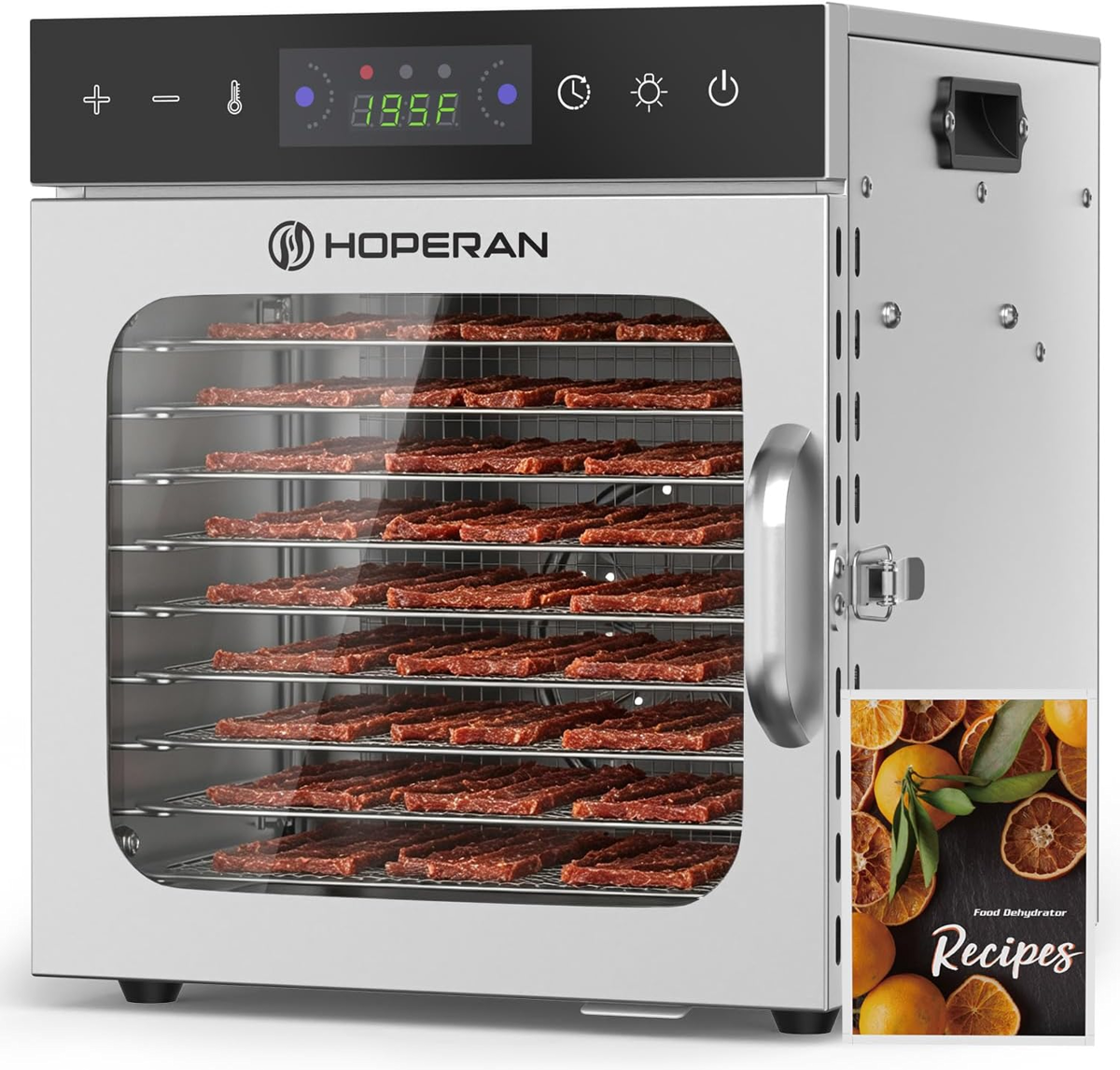 HOPERAN 10 Tray Food Dehydrator Meat Jerky Fruit Herb Dog Treat Dryer Stainless$230.95New · Last checked Nov 27, 2026View on eBay
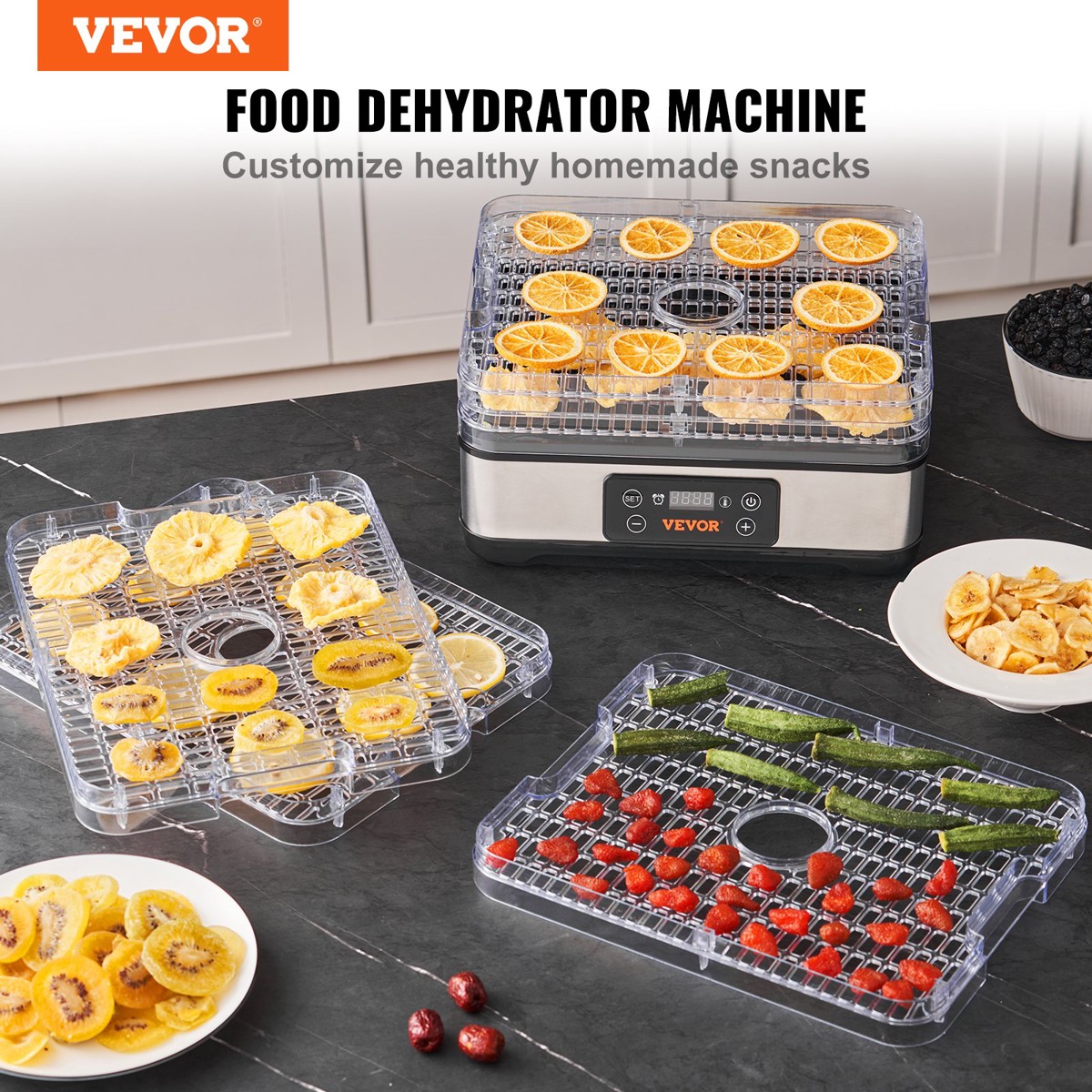 Food Dehydrator Machine, 5-Tray Fruit 300W Electric Dryer Digital Adjustable Timer & Temperature For Jerky, Herb, Meat, Beef, Dog Treats And Vegetables, ETL Listed$67.99View on Mallflare
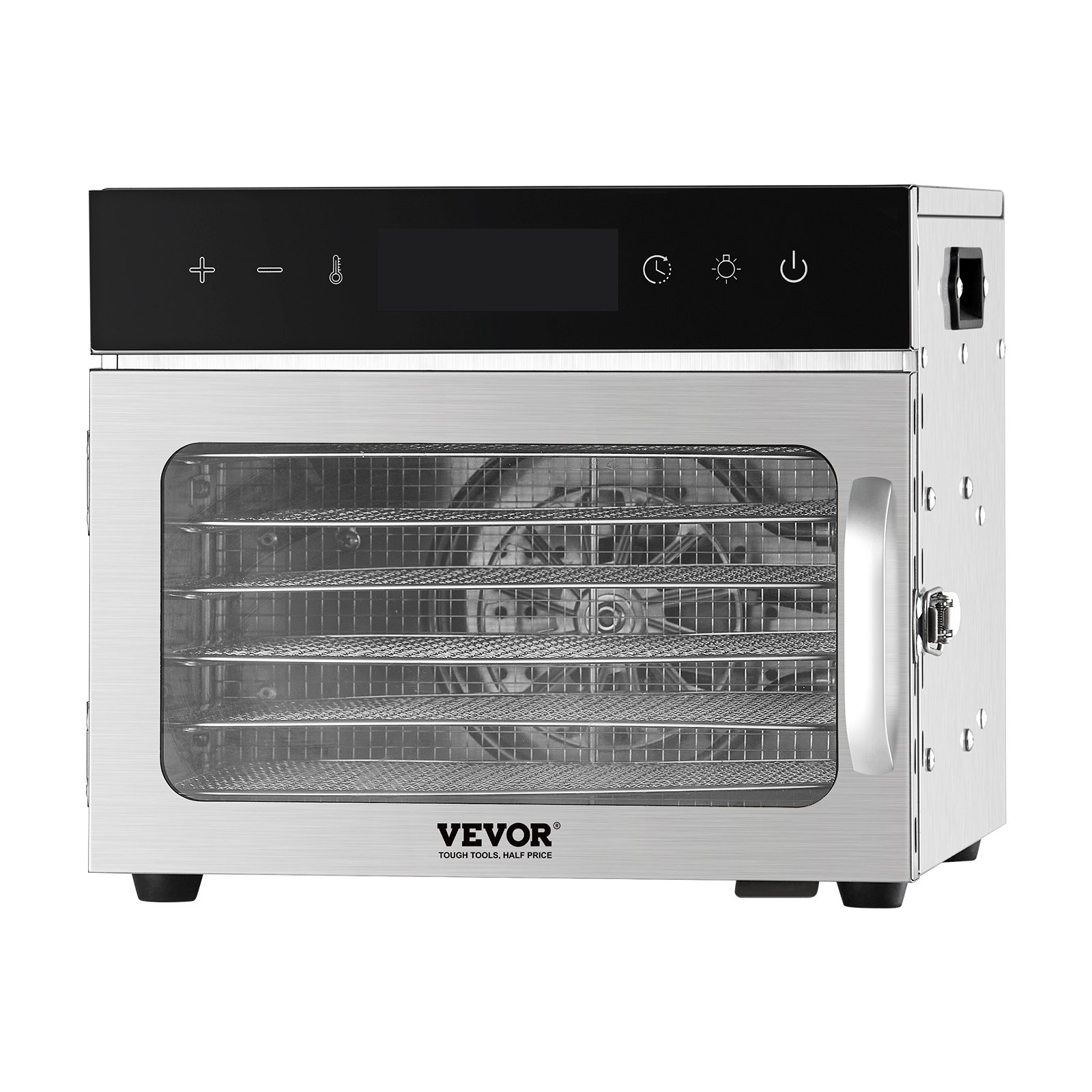 6 Trays Food Dehydrator Machine Stainless Steel 400W Jerky Meat Fruit Drying$130.99View on Mallflare
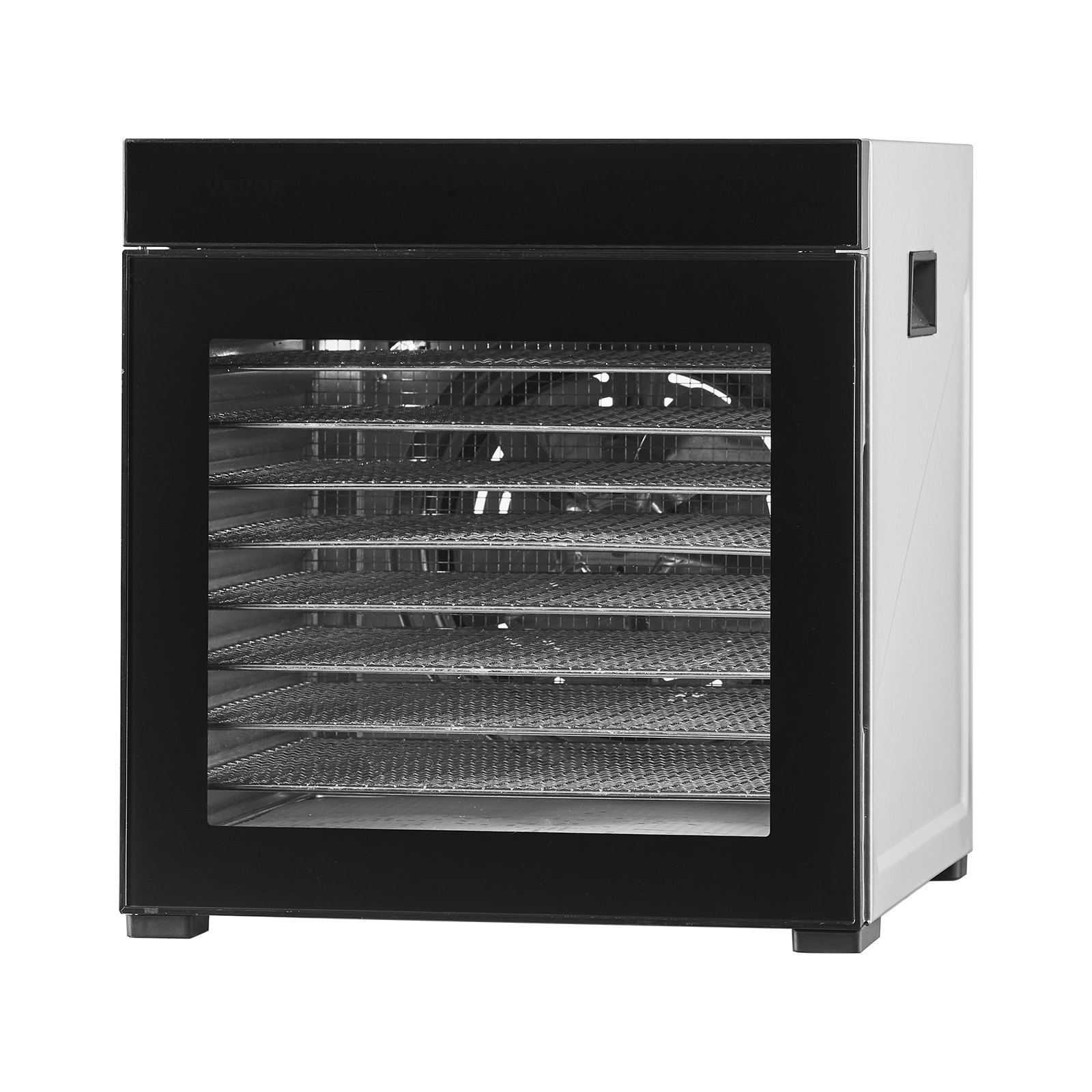 10 Trays Food Dehydrator Machine Stainless Steel 1000W Jerky Meat Fruit Drying$202.99View on Mallflare
Highlights
- Safety floor: meat must reach 155–160°F during drying to kill pathogens, so a thermostat adjustable to at least 160°F is non-negotiable—fixed 130–140°F units are fruit/vegetable only.
- Airflow architecture separates tiers: rear-mounted fan with horizontal cross-flow (Excalibur-style) dries evenly without rotation, while bottom-up vertical-flow units need tray rotation and run hotter near the element.
- Construction grade: stainless-steel trays and a metal interior resist fat and salt corrosion from jerky; plastic trays scratch, stain, and can warp under sustained 160°F heat.
- Capacity math: tray count and square inches determine batch size—6-tray square units hold roughly 5–7 lb of sliced meat per run, while 4-tray round units handle about 3–4 lb and require rotation.
Best use cases
- Best fit for regular jerky makers: a 6–9 tray square dehydrator with rear fan, adjustable 95–165°F thermostat, and stainless trays—this handles 5–7 lb batches evenly with no rotation.
- Best fit for occasional small batches: a 4–5 tray vertical-flow unit with a 160°F thermostat is adequate for 2–3 lb of jerky if you rotate trays halfway and keep cuts uniform.
- Wrong fit: fixed-temperature round dehydrators (often 130–140°F only) and 'fruit-only' models—skip these for meat; they cannot hit the safety floor and dry unevenly.
- Wrong fit for high-volume or commercial use: any sub-6-tray plastic unit—step up to a stainless cabinet style with digital PID control and a dedicated jerky mode for repeatable large runs.
Buying tips
- Match thermostat range to meat: choose a unit adjustable from at least 95°F to 165°F, with a verified 160°F+ top end; digital PID control holds ±5°F, while bimetallic dials can swing 15–20°F.
- Size by raw weight, not tray count alone: allow about 1 lb of sliced meat per square foot of tray area; a 6-tray unit with ~5 sq ft total handles 5–6 lb per batch.
- Prioritize rear-fan horizontal airflow for meat: it eliminates tray rotation and dries evenly; bottom-up vertical flow is acceptable only if you commit to rotating trays every 2–3 hours.
- Insist on stainless-steel trays or mesh screens and a metal interior: plastic trays absorb jerky fat and salt, stain permanently, and can warp at sustained 160°F.
Specs
| Thermostat Range | 95–165°F adjustable (160°F+ required) |
|---|---|
| Airflow Type | Rear-fan horizontal vs bottom-up vertical |
| Tray Material | Stainless steel vs plastic |
| Capacity | 4–9 trays; ~1 lb per sq ft |
Related searches
What to check before buying
- Measure your counter footprint and clearance: square 6–9 tray units run roughly 16–20 inches wide and need 4–6 inches of overhead clearance for the top tray and fan.
- Confirm your kitchen circuit: most dehydrators draw 400–800W; a 15A/120V standard outlet is fine, but avoid sharing a circuit with high-draw appliances during long runs.
- Check tray material and dishwasher rating: stainless trays and racks should be top-rack dishwasher safe; plastic trays usually are not and must be hand-washed.
- Verify the thermostat top end before buying: the spec sheet or control panel must show at least 160°F, and ideally 165°F, for meat safety.
FAQ
Data sources: eBay / Amazon listings and product attribute feeds. Updated Nov 28, 2026.
Some links on this page are affiliate links. If you buy after clicking one, we may earn a commission at no extra cost to you. This does not change which products appear here or their order. Affiliate disclosure.