
Photos from current listings. Actual item, color, and included accessories may vary.
Glass Door Mini Fridge Buying Guide
A glass door mini fridge is a compact beverage cooler or display refrigerator with a tempered glass front, letting you see and showcase cans, bottles, and wine. The core trade-off is compressor vs. thermoelectric cooling: compressor units cool faster, hold temperature in warm rooms, and last far longer, while thermoelectric units are quiet and cheap but struggle above 75°F ambient. Choose a compressor model with a reversible or self-closing glass door and digital thermostat for anything beyond light bedroom use.
Median $176.49 · New listings
Key takeaways
- Compressor cooling holds 34-40°F in rooms up to 90°F; thermoelectric (Peltier) units only manage 35-40°F below ambient and fail in warm spaces.
- Tempered glass doors are 3-5mm thick with a stainless or black steel frame; low-E or double-pane glass reduces condensation and UV exposure for wine.
- Can capacity math: a standard 12 oz can is ~2.6 in diameter, so 1.8 cu ft holds ~70 cans, 3.2-3.3 cu ft holds ~126-130 cans on 3-4 shelves.
At a glance
- Category
- Home Refrigerators, Freezers & Wine Coolers
- Last updated
- Nov 28, 2026
Current offers
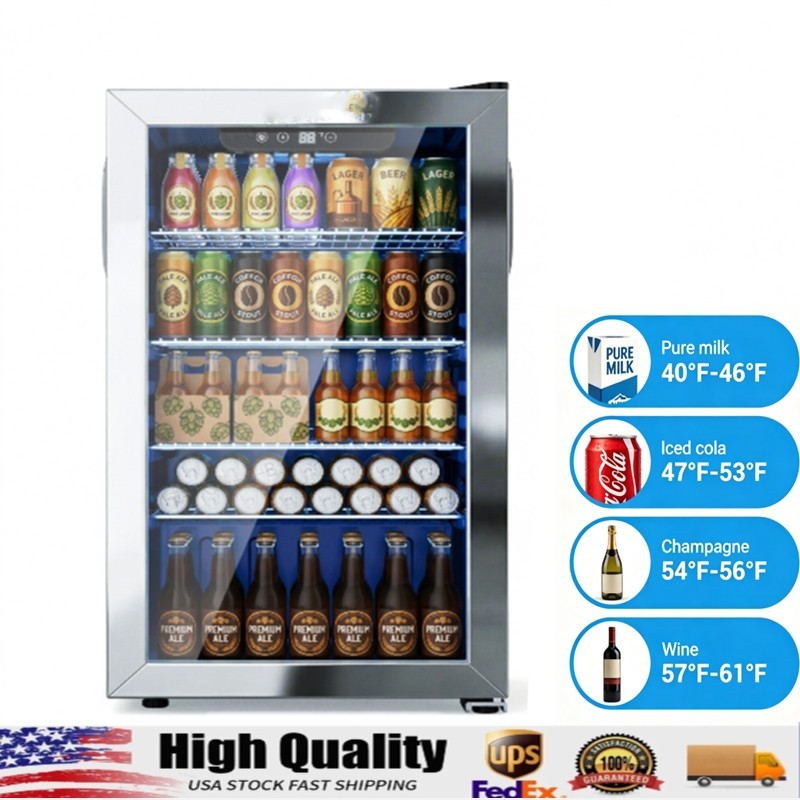 130 Can Mini Fridge Beverage Refrigerator Cooler Soda with Glass Door for Home$93.99Last checked Nov 25, 2026View on eBay
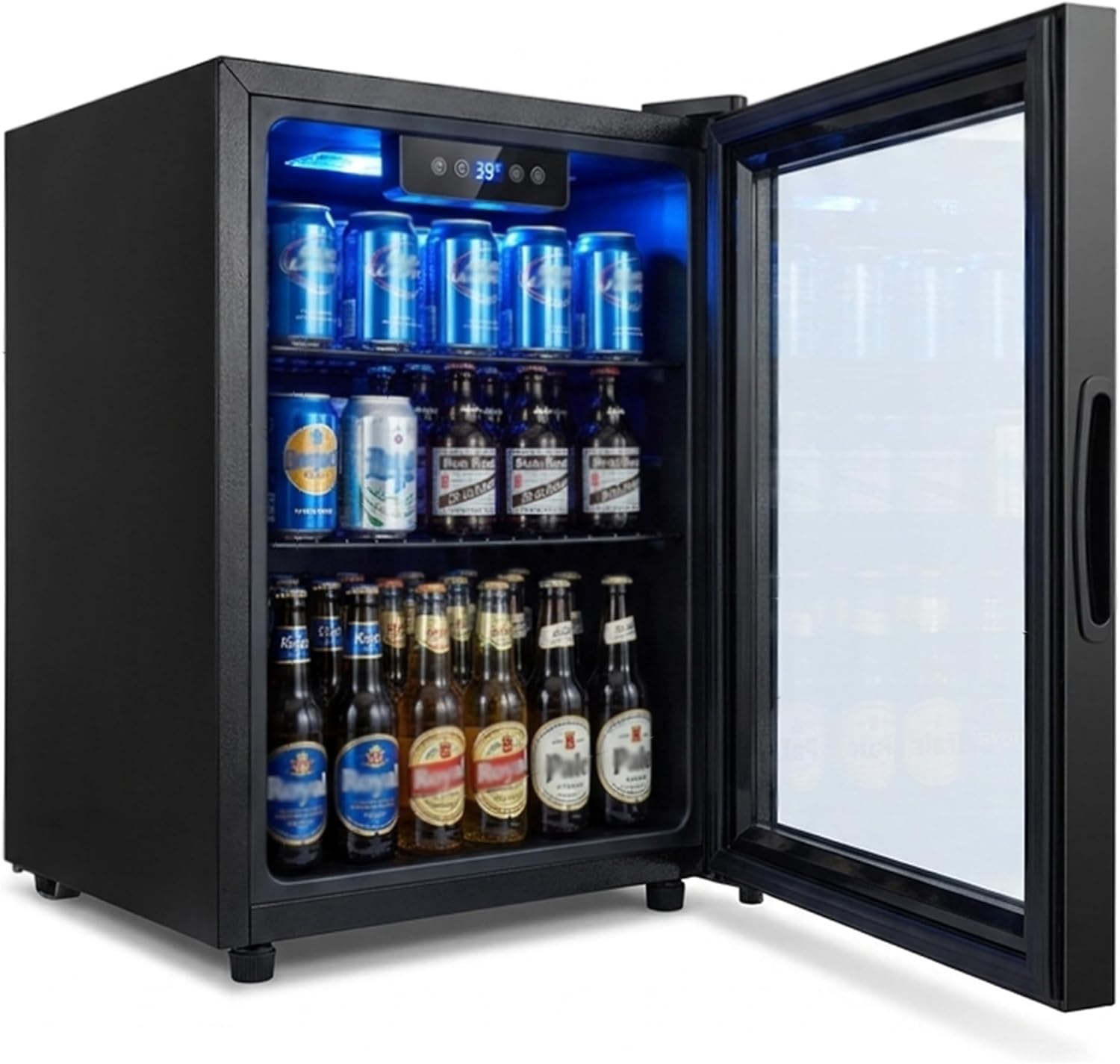 1.8 Cu Ft Beverage Refrigerator, 70 Can Mini Fridge With Glass Door, Digital Temperature Control, Adjustable Shelves, Quiet Cooler For Beer Soda Wine, Office Dorm$149.99View on Mallflare
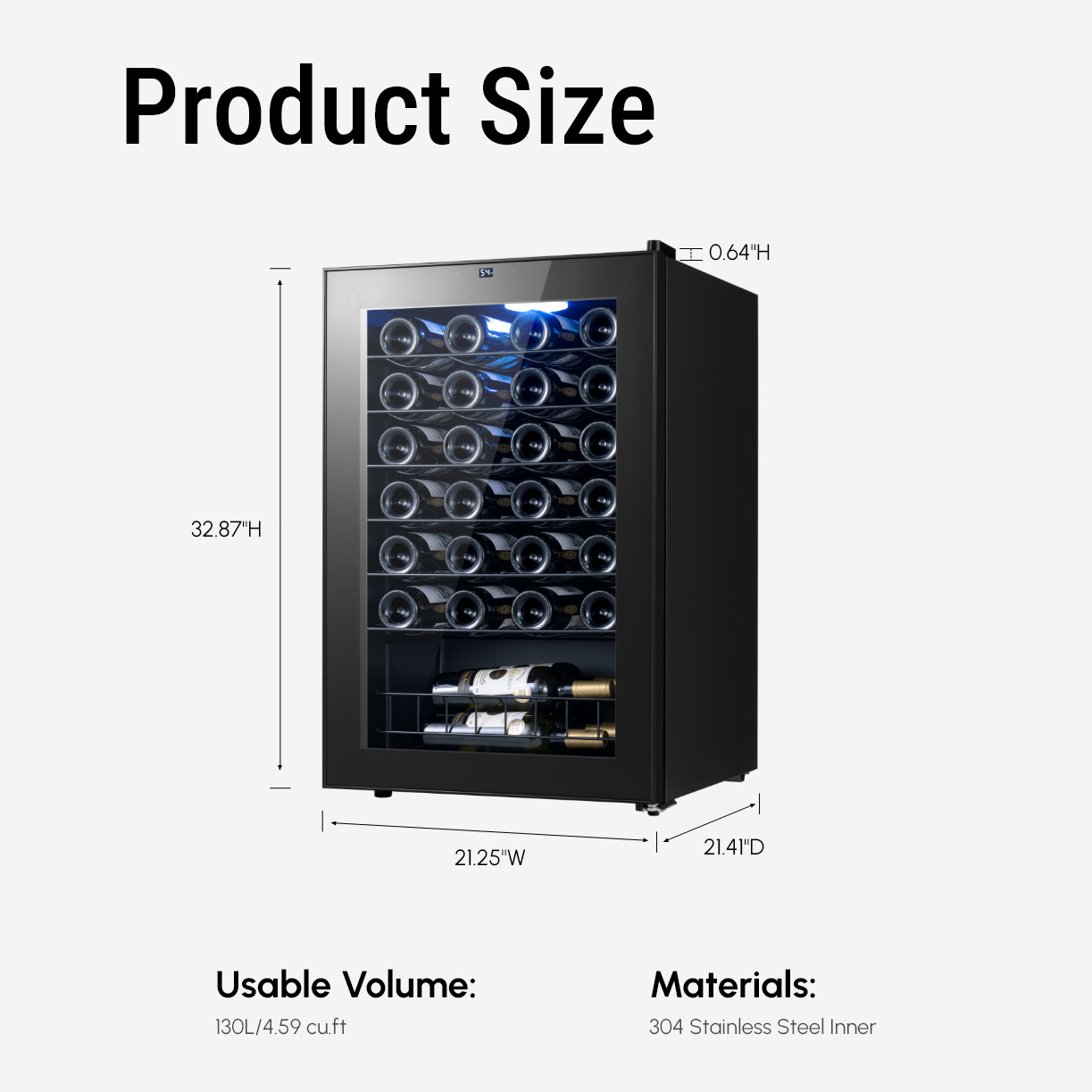 Yeego Mini Fridge Glass Door Wine Cooler 12/20/28/34/46 Bottles Home Appliance$279.99New · Last checked Nov 22, 2026View on eBay
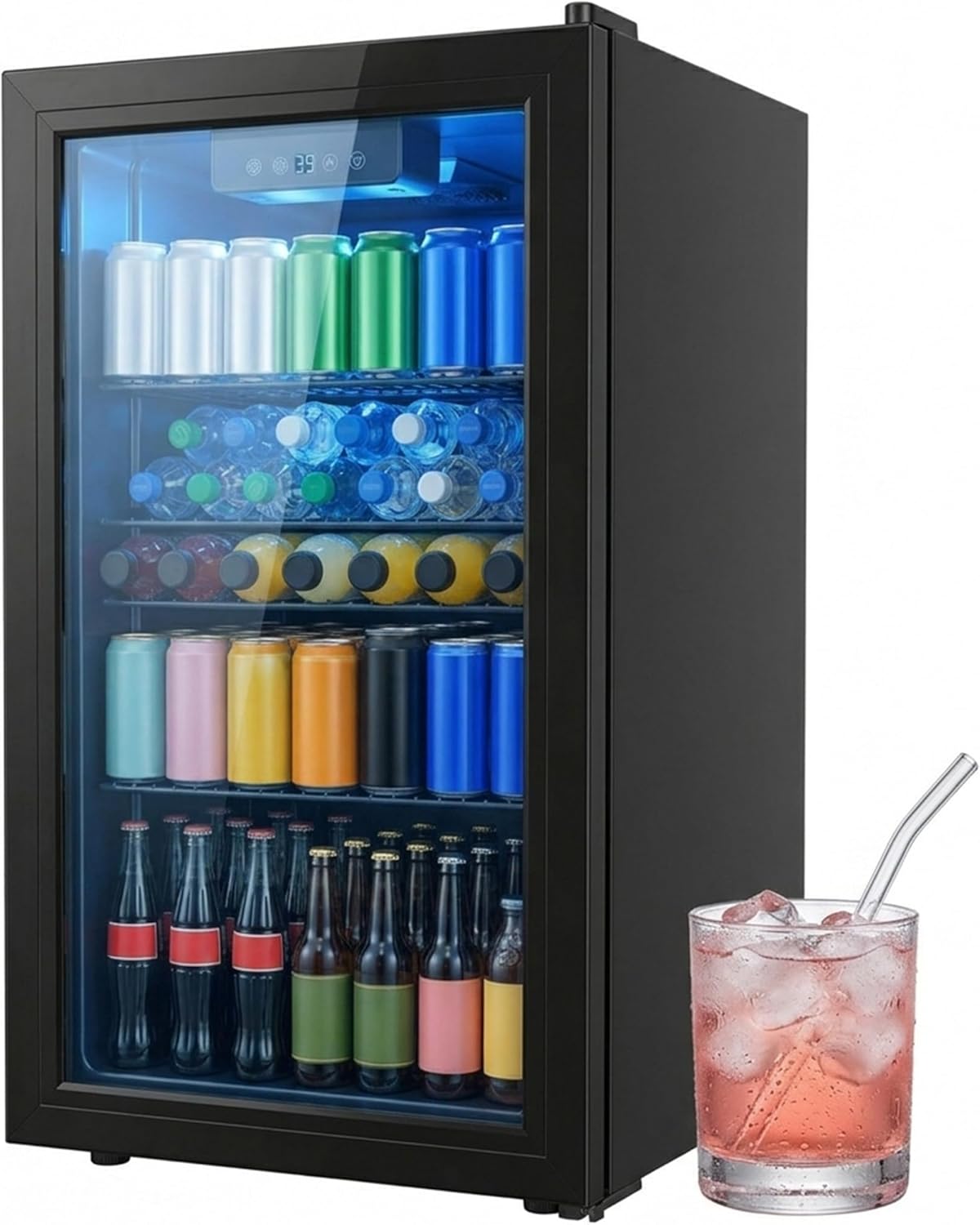 3.3 Cu Ft Beverage Refrigerator, 126 Can Mini Fridge With Glass Door, Digital Temperature Control, Quiet Cooler For Beer Soda Wine, Air Cooling For Home Office Bar$202.99View on Mallflare
Highlights
- Compressor cooling holds 34-40°F in rooms up to 90°F; thermoelectric (Peltier) units only manage 35-40°F below ambient and fail in warm spaces.
- Tempered glass doors are 3-5mm thick with a stainless or black steel frame; low-E or double-pane glass reduces condensation and UV exposure for wine.
- Can capacity math: a standard 12 oz can is ~2.6 in diameter, so 1.8 cu ft holds ~70 cans, 3.2-3.3 cu ft holds ~126-130 cans on 3-4 shelves.
- Digital thermostat with 1°F increments and auto-defrost separates mid-tier from budget analog-dial fridges that swing 5-8°F.
Best use cases
- Bedroom or dorm: pick a 1.6-1.8 cu ft thermoelectric or small compressor unit with <40 dB noise and a flush glass door; skip large 3+ cu ft compressor fridges that vibrate and cycle loudly.
- Home bar, office, or man cave: choose a 3.2-4.5 cu ft compressor beverage fridge with 120-150 can capacity, digital thermostat, and air-cooling fan for even temperature top to bottom.
- Wine or craft beer display: use a dual-zone or 40-65°F range glass door cooler with UV-tinted glass and wooden or wire shelves sized for 750ml bottles; skip can-only fridges with 2.6 in shelf gaps.
- Garage or hot climate: only a compressor unit rated for 90°F+ ambient works; thermoelectric glass door fridges will not hold safe beverage temperatures above 75°F.
Buying tips
- Size by can count: 70 cans ≈ 1.8 cu ft, 126-130 cans ≈ 3.2-3.3 cu ft; allow 10-15% headroom for bottles and taller cans.
- Insist on compressor cooling with R600a refrigerant for efficiency and 90°F ambient rating; thermoelectric is only acceptable for quiet bedroom use under 75°F.
- Check door swing and reversibility plus shelf adjustability: wire or chrome shelves spaced at 4+ in fit tall bottles; fixed 2.5 in gaps fit only standard cans.
- Look for auto-defrost and a digital thermostat with 34-40°F range for beverages, 40-65°F for wine; manual-defrost analog models ice up and swing temperature.
Specs
| Cooling Type | Compressor vs thermoelectric (Peltier) |
|---|---|
| Capacity Range | 1.6-4.5 cu ft / 60-150 cans |
| Glass Door Build | Tempered 3-5mm, low-E optional |
| Temp Range | 34-40°F beverage; 40-65°F wine |
Related searches
What to check before buying
- Measure the opening: allow 2 in rear clearance and 2-4 in side clearance for compressor ventilation; glass door depth typically adds 3-5 in to cabinet depth.
- Confirm door swing direction and clearance — a right-hinged glass door needs 20+ in of arc space; choose reversible hinges for tight corners.
- Verify electrical: standard 115V 60Hz grounded outlet on a dedicated 15A circuit; avoid GFCI-shared circuits for compressor startup surges.
- Check floor level and stability: adjustable leveling legs prevent glass door misalignment and vibration noise; avoid carpet directly under compressor vents.
FAQ
Data sources: eBay / Amazon listings and product attribute feeds. Updated Nov 28, 2026.
Some links on this page are affiliate links. If you buy after clicking one, we may earn a commission at no extra cost to you. This does not change which products appear here or their order. Affiliate disclosure.