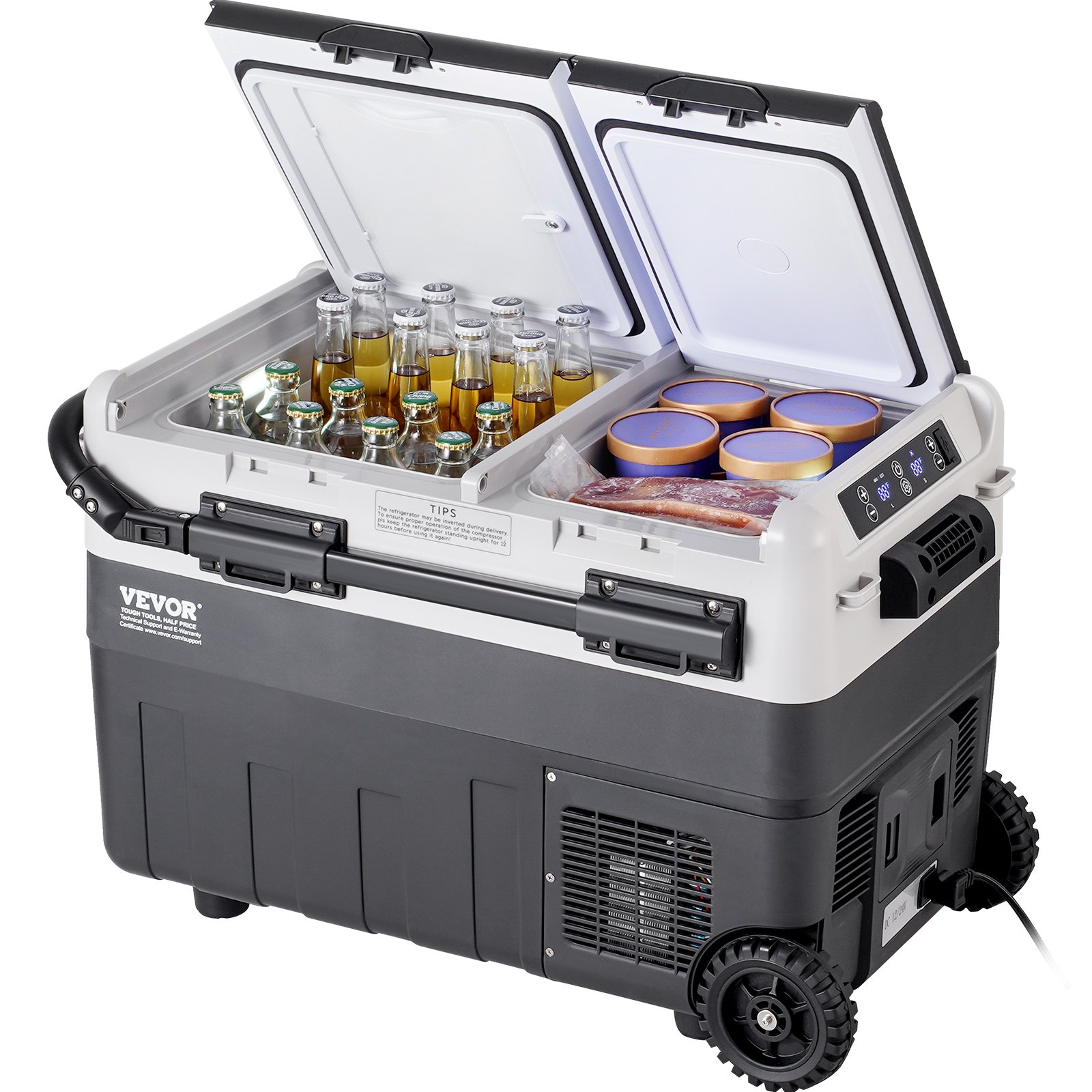

Photos from current listings. Actual item, color, and included accessories may vary.
Portable Refrigerator Freezer Buying Guide
Portable refrigerator freezers are 12/24V DC compressor-cooled units (often with 100-240V AC adapters) that hold 0°F freezer or 34-38°F fridge temps in vehicles, RVs, and off-grid cabins. The core trade-off is compressor architecture and insulation quality versus capacity: true variable-speed DC compressors (Danfoss/Secop or equivalent) with thick CFC-free foam hold temperature efficiently, while cheap thermoelectric (Peltier) boxes cannot freeze and collapse in heat. Decision rule: buy only a genuine DC compressor unit rated for your ambient, sized to your power budget and physical fitment — skip any thermoelectric or 'cooler-style' box if you need sub-zero or multi-day off-grid performance.
Median $519.49
Key takeaways
- Compressor type is decisive: variable-speed DC reciprocating compressors (Danfoss/Secop BD35F/BD50F class) cool to 0°F and draw ~0.5-1.0 Ah average; thermoelectric Peltier units only reach ~35-40°F below ambient and cannot freeze.
- Dual-zone models use either two independent compressor circuits or one compressor with electronic split-damper control; true dual-compressor units hold independent freezer/fridge setpoints, single-compressor dual-zone units share cooling capacity and recover slower after lid openings.
- Insulation quality drives duty cycle: premium units use 2.0-2.8 in (50-70 mm) CFC/HFC-free polyurethane foam with magnetic lid gaskets; thin-foam budget boxes cycle the compressor far more often and drain batteries faster at high ambient.
At a glance
- Category
- Home Refrigerators, Freezers & Wine Coolers
- Last updated
- Nov 28, 2026
Current offers
Highlights
- Compressor type is decisive: variable-speed DC reciprocating compressors (Danfoss/Secop BD35F/BD50F class) cool to 0°F and draw ~0.5-1.0 Ah average; thermoelectric Peltier units only reach ~35-40°F below ambient and cannot freeze.
- Dual-zone models use either two independent compressor circuits or one compressor with electronic split-damper control; true dual-compressor units hold independent freezer/fridge setpoints, single-compressor dual-zone units share cooling capacity and recover slower after lid openings.
- Insulation quality drives duty cycle: premium units use 2.0-2.8 in (50-70 mm) CFC/HFC-free polyurethane foam with magnetic lid gaskets; thin-foam budget boxes cycle the compressor far more often and drain batteries faster at high ambient.
- Power input matters: most DC units accept 12/24V auto-ranging and include a 100-240V AC adapter; check rated current (typically 4-7A at 12V peak, ~0.6-1.2A average) and low-voltage cutoff (10.4V/11.8V/12.6V selectable) to protect vehicle batteries.
Best use cases
- Best fit: overlanding/RV and van life with 50-75L dual-zone DC compressor units — pick independent dual-compressor if you routinely freeze and refrigerate simultaneously; single-compressor dual-zone is fine for weekend trips.
- Best fit: car/SUV day trips and grocery cold-chain with 30-45L single-zone units powered from a 12V socket or portable power station — prioritize low average draw and a usable lid opening in tight cargo areas.
- Wrong fit: home backup or garage overflow freezing — a 100-115L portable unit works only if you have a dedicated 100-240V circuit and floor space; a standard chest freezer delivers more capacity per dollar and better efficiency for stationary use.
- Skip: thermoelectric 'cooler' boxes for anything requiring freezing or >1 day off-grid — they cannot hold safe fridge temps in 90°F+ ambient and will drain a car battery quickly.
Buying tips
- Size by interior volume, not exterior: plan 1.5-2.0 cu ft (42-57L) for 2-3 people on a 3-4 day trip; 3.0-4.0 cu ft (85-115L) for families or 5+ day trips. Verify internal height clears standing bottles (typically 12-18 in).
- Confirm the compressor is a genuine variable-speed DC unit (Danfoss/Secop or documented equivalent) and that the unit is rated for 0°F (-18°C) freezer setpoint — thermoelectric and absorption units cannot meet this.
- Check dual-zone architecture: independent dual-compressor units allow true simultaneous freezer/fridge; single-compressor dual-zone units are cheaper but share capacity and have slower recovery.
- Match power: a 12V/24V auto-ranging input with a 100-240V AC adapter covers vehicle and home; ensure selectable low-voltage battery protection (three-stage 10.4/11.8/12.6V) so the unit cuts off before draining your starter battery.
Specs
| Cooling Type | DC compressor vs thermoelectric (Peltier) |
|---|---|
| Freezer Setpoint | 0°F / -18°C (compressor only) |
| Capacity Range | 30-115 L (1.0-4.0 cu ft) |
| Power Input | 12/24V DC + 100-240V AC adapter |
Related searches
What to check before buying
- Measure your cargo area, trunk, or cabinet opening (L x W x H) and compare to the unit's external dimensions including handles and lid swing clearance — 50L units typically run ~27-29 in long, 115L units ~35-38 in.
- Verify vehicle socket and wiring: 12V accessory sockets often limit to 10-15A; confirm the unit's peak current and use a dedicated fused circuit or portable power station for compressor startup surges.
- Check ambient rating: most DC compressor units are rated to 110°F (43°C); if you camp in desert heat, choose a unit with a documented high-ambient rating and condenser ventilation clearance of at least 2-4 in.
- Confirm accessories: 12/24V DC power cord, 100-240V AC adapter, and removable wire basket/divider are included; some units need a separate insulated cover for efficient summer operation.
FAQ
Data sources: eBay / Amazon listings and product attribute feeds. Updated Nov 28, 2026.
Some links on this page are affiliate links. If you buy after clicking one, we may earn a commission at no extra cost to you. This does not change which products appear here or their order. Affiliate disclosure.