
Photos from current listings. Actual item, color, and included accessories may vary.
Small Freezer Buying Guide
Small freezers are compact 1.5–5 cu ft units that preserve food when full-size appliances are impractical, available as chest, upright, or hybrid fridge-freezer combos. The core trade-off is usable capacity versus cooling architecture: manual-defrost chests hold cold air and cost less to run, while frost-free uprights and combos add convenience at higher energy use. The decision rule: choose a manual-defrost chest for long-term frozen storage and a frost-free upright or combo for frequent access and mixed fresh/frozen use.
Median $319.99
Key takeaways
- Chest freezers retain cold air when opened and typically use 10–25% less energy than uprights of equal capacity, but require manual defrost.
- Upright and combo units with frost-free (no-frost) evaporators eliminate ice buildup but add a defrost heater and fan, raising average power draw.
- R-600a (isobutane) refrigerant is standard in modern small freezers, offering lower global-warming potential and quiet, efficient compressor operation.
At a glance
- Category
- Home Refrigerators, Freezers & Wine Coolers
- Last updated
- Nov 28, 2026
Current offers
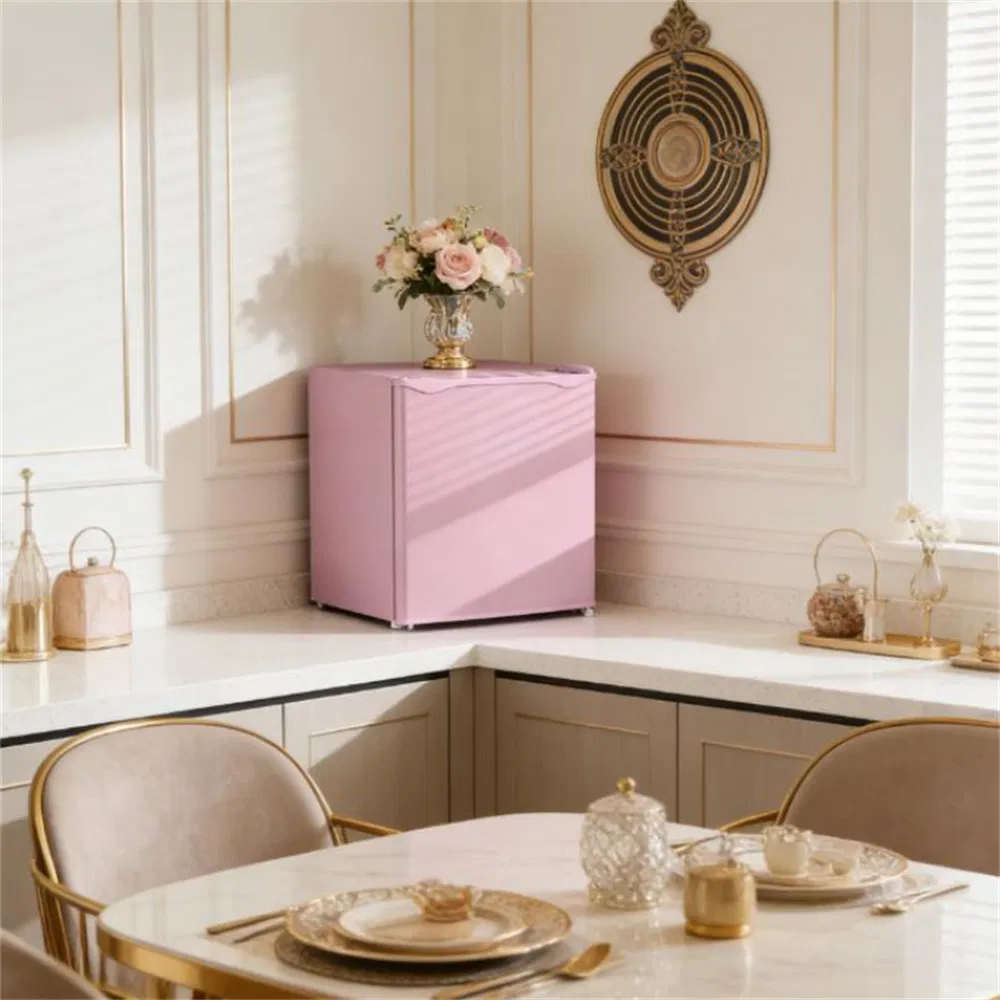 Desktop mini freezer, small fridge, pink color$252.99View on Mallflare
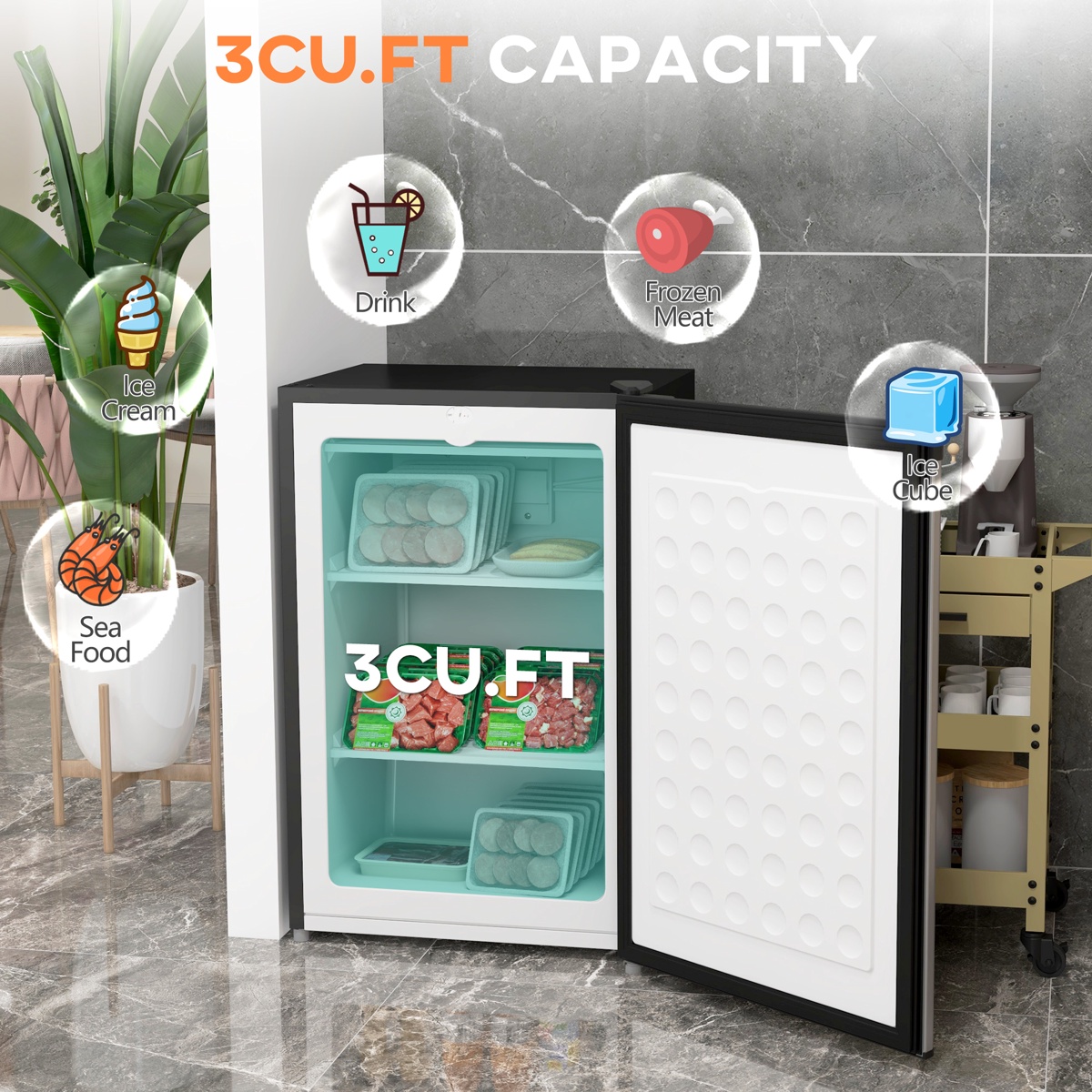 Upright Freezer, 3 Cu Ft Small With Reversible Single Door, Adjustable Thermostat For Home, Apartment, Silver$319.99View on Mallflare
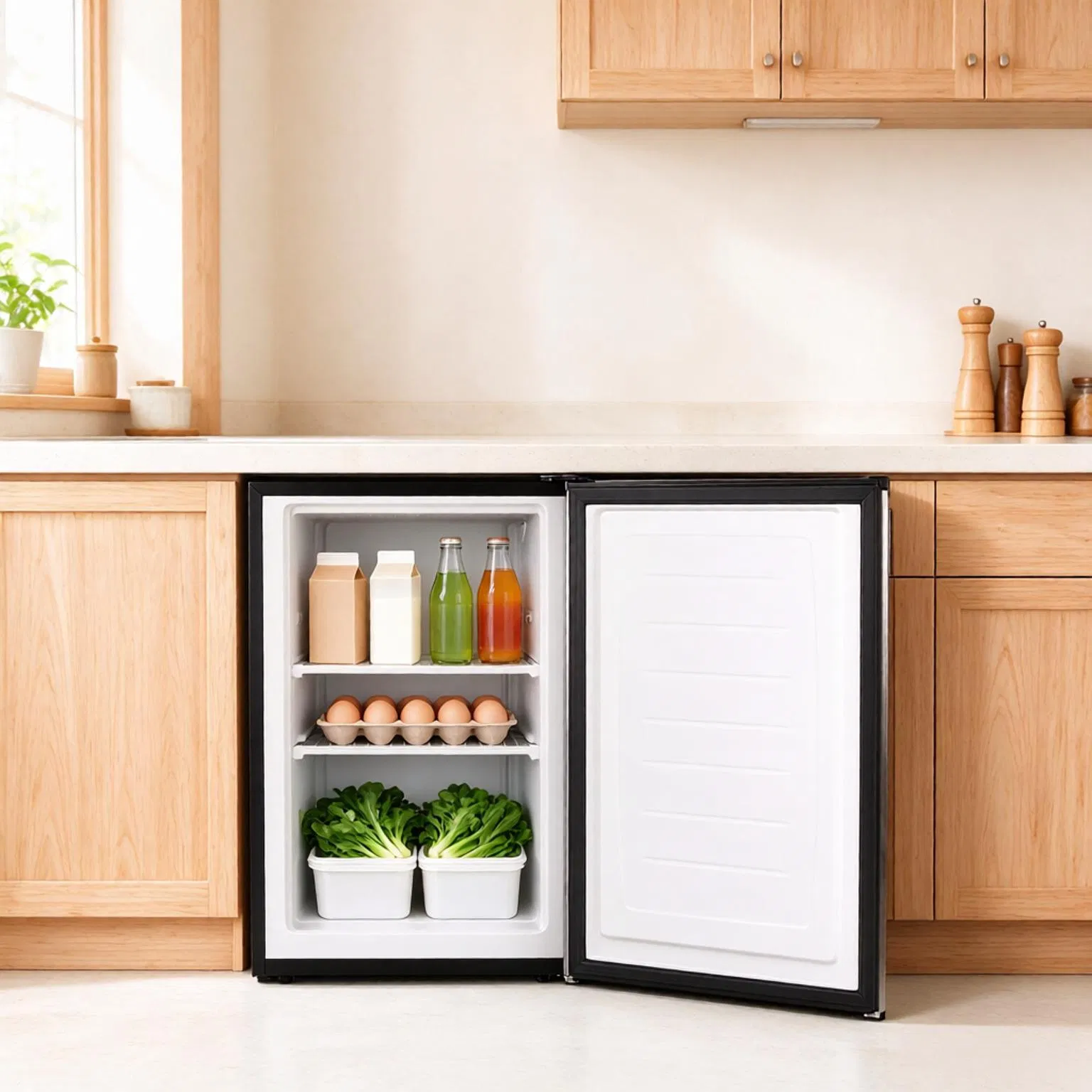 Compact Upright Freezer 3 Cubic Feet Stainless Steel Door Home Use Freezing Storage Small Appliance for Food$545.99View on Mallflare
Highlights
- Chest freezers retain cold air when opened and typically use 10–25% less energy than uprights of equal capacity, but require manual defrost.
- Upright and combo units with frost-free (no-frost) evaporators eliminate ice buildup but add a defrost heater and fan, raising average power draw.
- R-600a (isobutane) refrigerant is standard in modern small freezers, offering lower global-warming potential and quiet, efficient compressor operation.
- Reversible-door models let you match hinge side to room layout; adjustable thermostats typically span -10°F to +10°F for freeze control versus single-setting dials.
Best use cases
- Best fit: a 3–5 cu ft manual-defrost chest freezer in a garage or basement for bulk meat and batch cooking — skip frost-free uprights if the unit sits in unconditioned space.
- Best fit: a 3–4 cu ft frost-free upright in an apartment kitchen for frequent access to frozen goods — skip large chests if floor space is under 2 ft wide.
- Best fit: a 4 cu ft combo fridge-freezer with reversible doors for dorms, offices, or studio units needing both fresh and frozen storage — skip separate units when only one outlet is available.
- Wrong fit: placing any small freezer in a room that drops below 40°F unless rated for garage use — compressor lubrication and thermostat accuracy suffer in cold ambient.
Buying tips
- Size by cubic feet and interior configuration: allow 1.5–2 cu ft per person for frozen storage; a 3 cu ft chest fits roughly 100 lb of meat, while a 4 cu ft combo splits capacity between fresh and frozen zones.
- Check the door swing and hinge: reversible doors need 2–3 in of side clearance for the hinge and 4–6 in behind for airflow; measure the opening path, not just the unit footprint.
- Confirm the defrost type: manual-defrost chests need emptying and thawing once or twice a year; frost-free uprights cost more upfront and draw more power but never need manual ice removal.
- Match the electrical standard: small freezers run on 115V/60Hz in North America with a standard 5-15P plug; in 230V regions confirm the unit ships with the correct plug and compressor rating.
Specs
| Freezer Type | Chest / Upright / Combo fridge-freezer |
|---|---|
| Defrost System | Manual vs Frost-free (no-frost) |
| Capacity Range | 1.5–5 cu ft small format |
| Refrigerant | R-600a isobutane standard |
What to check before buying
- Measure the alcove width, height, and depth plus door-swing clearance — add 2 in per side and 2 in behind for ventilation before choosing a 3 vs 4 cu ft model.
- Check ambient temperature rating: standard freezers need 40–110°F; for garages or sheds choose a garage-ready model rated to 0–110°F.
- Verify outlet and circuit: a dedicated 15A grounded circuit is ideal; avoid daisy-chaining with high-draw appliances on the same circuit.
- Confirm level floor and drainage path: chest freezers must sit level for lid seal, and manual-defrost models need a nearby drain or towel access for thawing.
FAQ
Data sources: eBay / Amazon listings and product attribute feeds. Updated Nov 28, 2026.
Some links on this page are affiliate links. If you buy after clicking one, we may earn a commission at no extra cost to you. This does not change which products appear here or their order. Affiliate disclosure.