
Photos from current listings. Actual item, color, and included accessories may vary.
Dish Rack With Tray Buying Guide
A dish rack with tray is a countertop or over-sink drying system that combines a dish-holding frame with a removable drip tray or drainage channel to keep water off the counter. The core trade-off is material grade and drainage design—stainless steel with a sloped, removable tray resists rust and mold, while plastic or flat trays pool water and degrade. Buy stainless steel with a true slope-and-drain tray for daily use; skip uncoated wire or flat-bottom plastic trays unless it is a temporary or rental setup.
Median $63.75
Key takeaways
- Stainless steel grades 304 (18/8) resist pitting and rust far better than 201 or coated wire; magnets stick to 201 but not 304—use this as a quick in-store test.
- Over-sink racks use telescoping arms or roll-up mats: telescoping racks span 17–39 in and must sit on a sink rim at least 1 in wide; roll-up mats rely on a flat, level sink edge.
- Two-tier racks roughly double vertical capacity but need 18–24 in of clearance above the counter and are stable only when the lower tier is loaded with heavier items.
At a glance
- Category
- Kitchen Storage & Organization
- Last updated
- Nov 27, 2026
Current offers
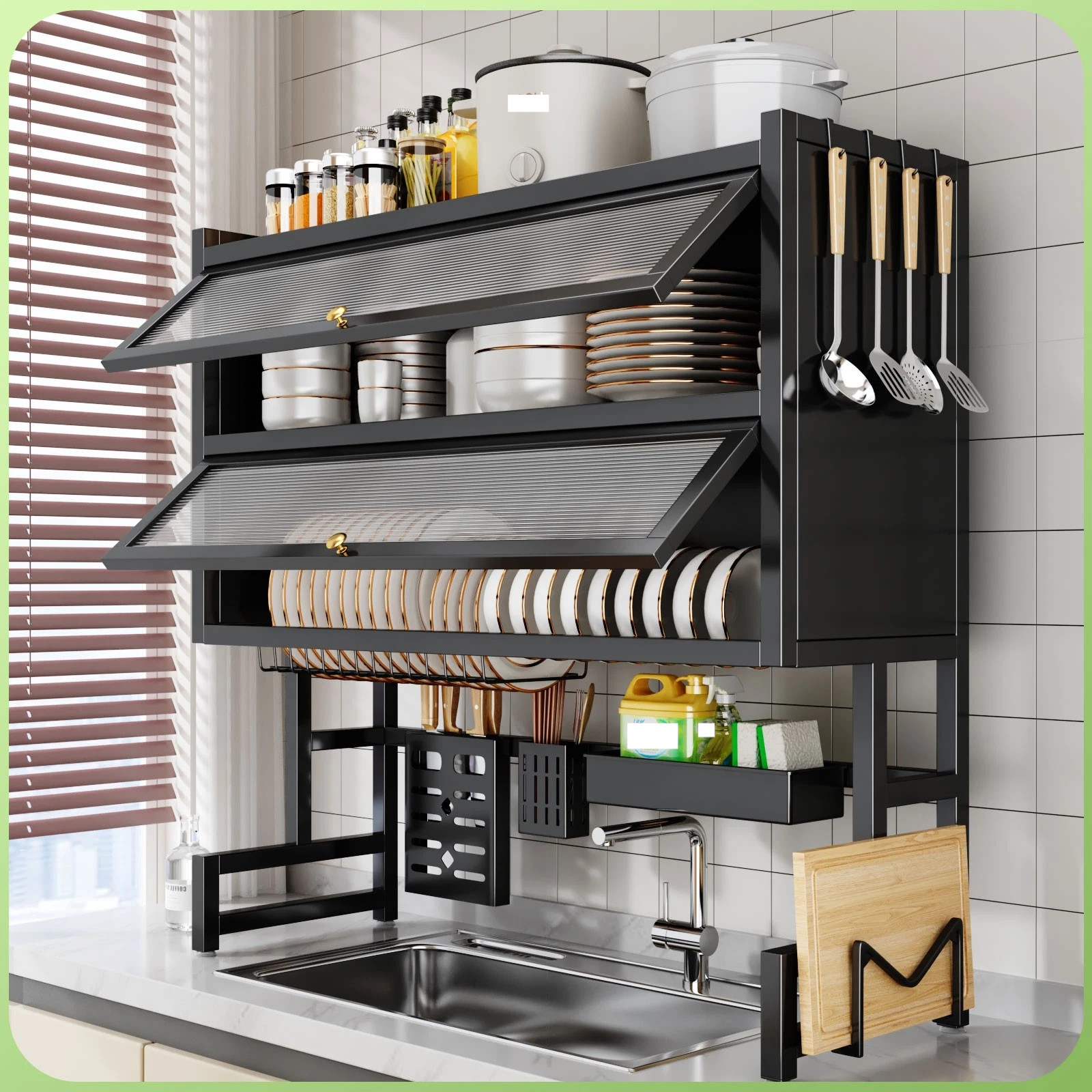 Dish Drying Rack Utensil Storage Cabinet Kitchen Over The Sink 33.46in 2 Tier$67.50View on eBay
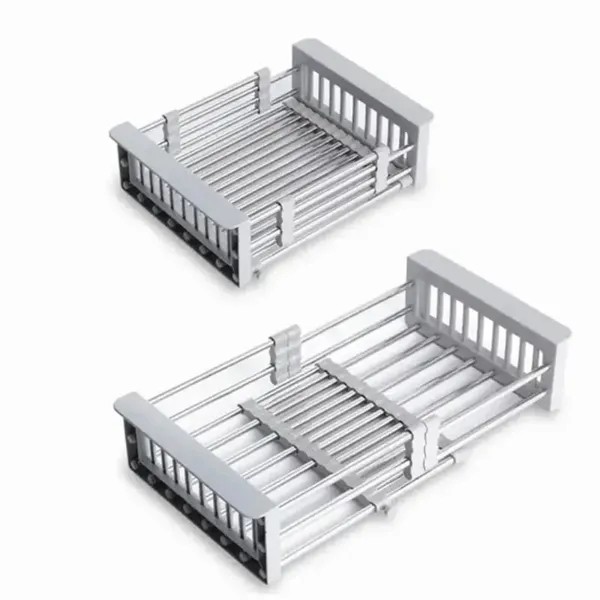 Adjustable Immersion Sink Dish Drying Rack With Stainless Steel Drain Basket - Portable And Retractable Space-Saving Fruit And Vegetable Solution$22.99View on Mallflare
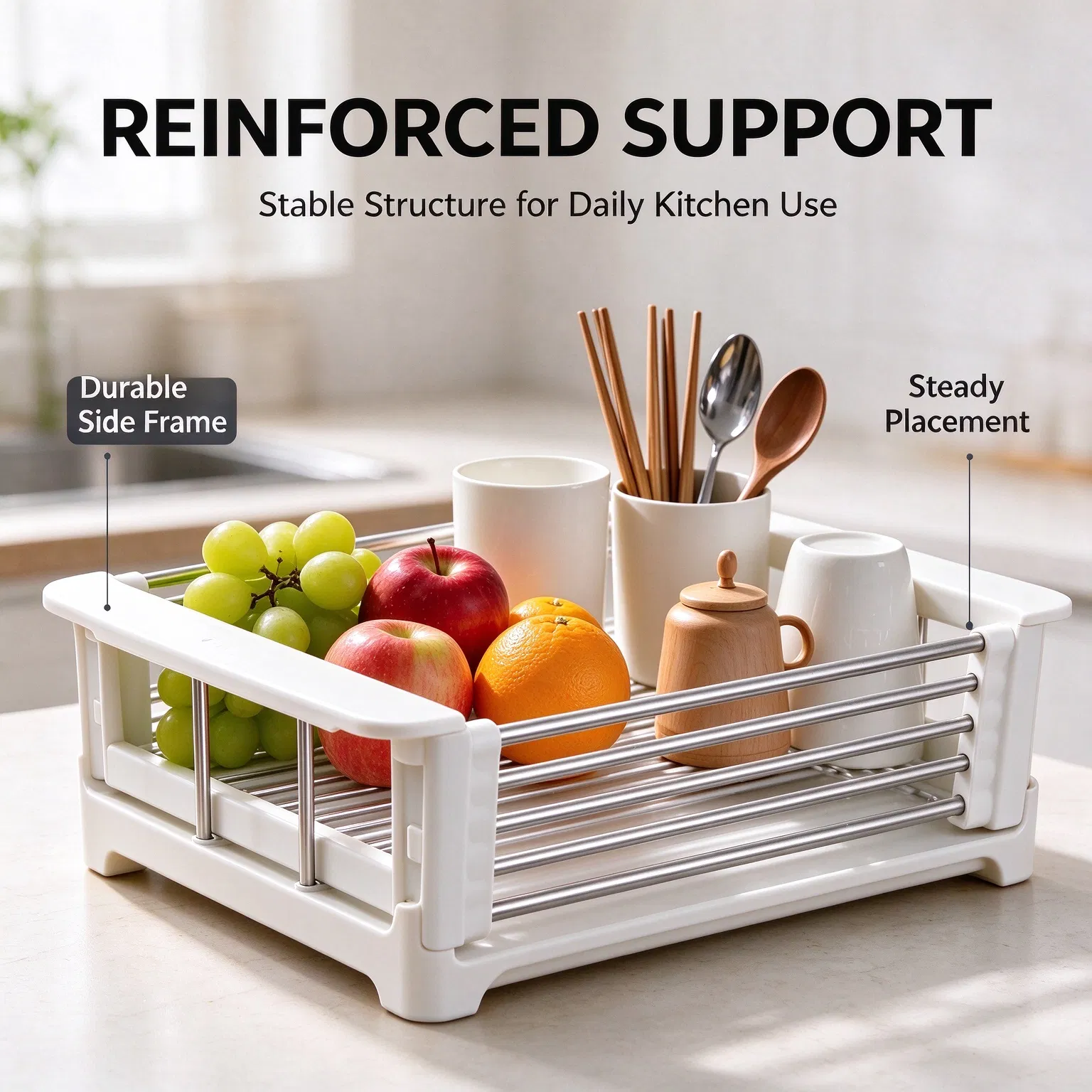 Adjustable Dish Drying Rack, Expandable Length 28cm to 47cm, Slatted Open Drain for Kitchen Sink Countertop, Sturdy Support, Ventilated Drainer for Dishes Cups Fruits Bathroom Storage$25.99View on Mallflare
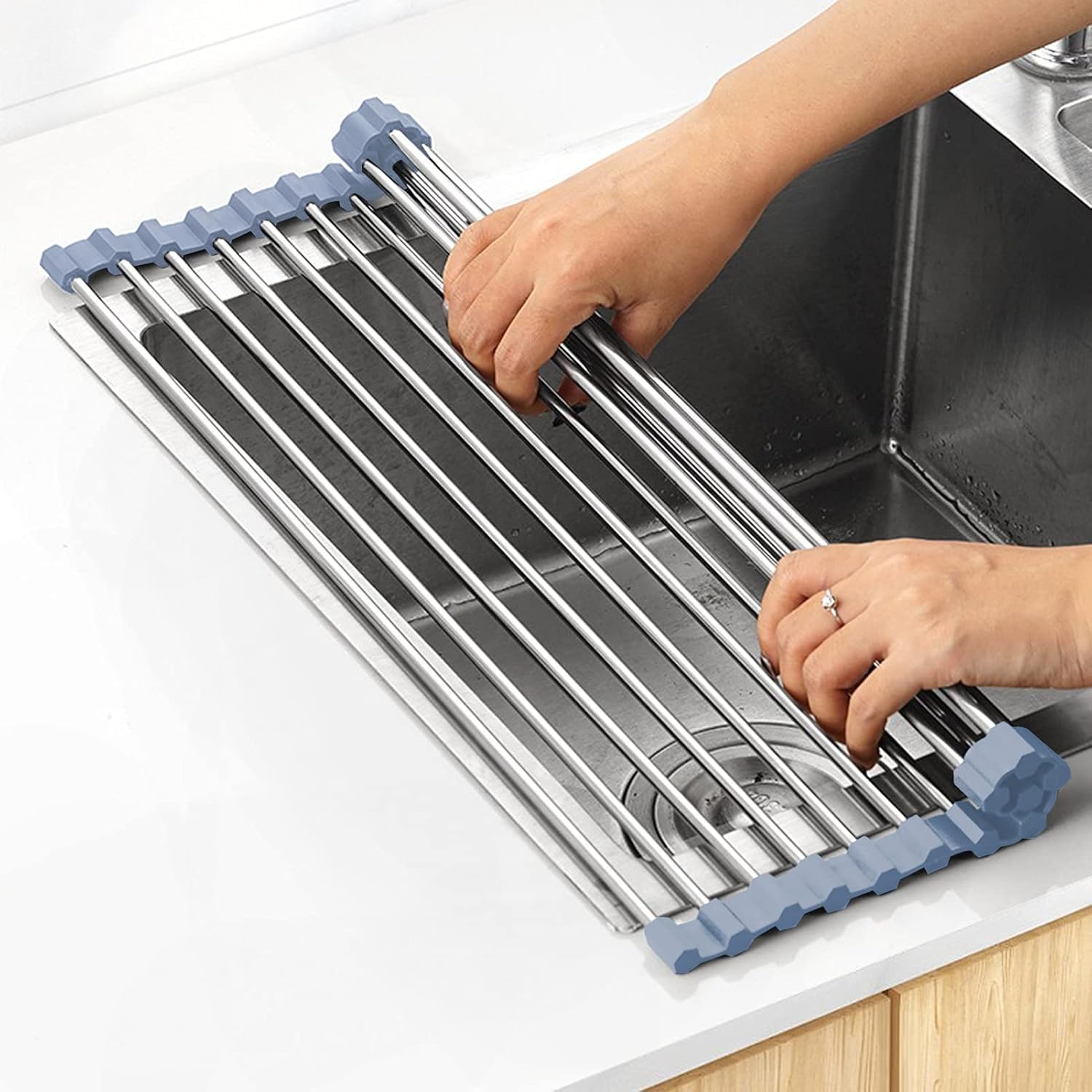 Over The Sink Dish Drying Rack, Roll Up Stainless Steel Drainer, Foldable Kitchen 17.5 X 11.8 Inch$42.99View on Mallflare
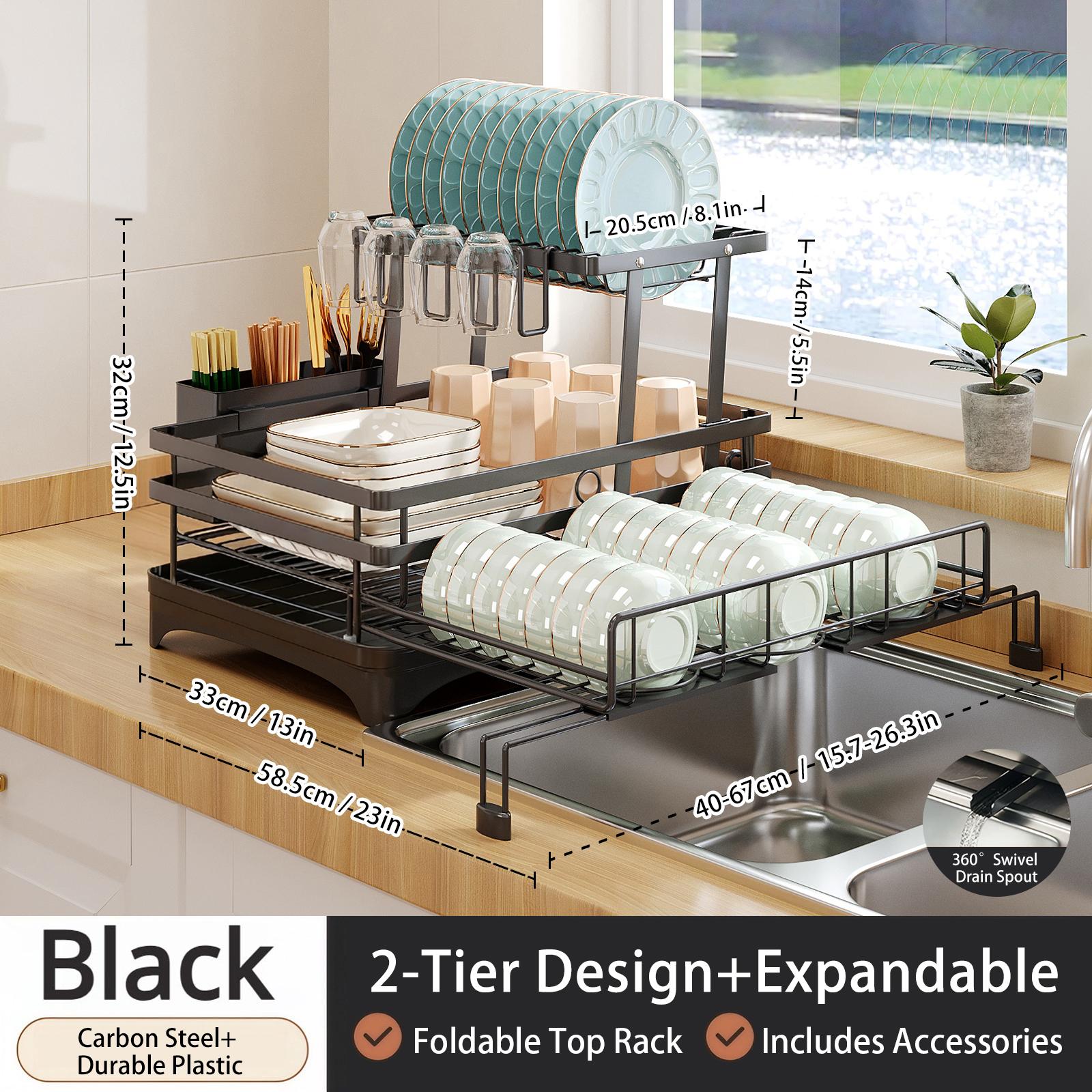 Over Sink Dish Drying Rack, 2-Tier Pull-Out Foldable DishRack with Utensil Holder, Space-Saving Kitchen Organizer,Rustproof Stainless Steel Drainer for Small KitchenCounter Cleaning Dishware$48.99View on Mallflare
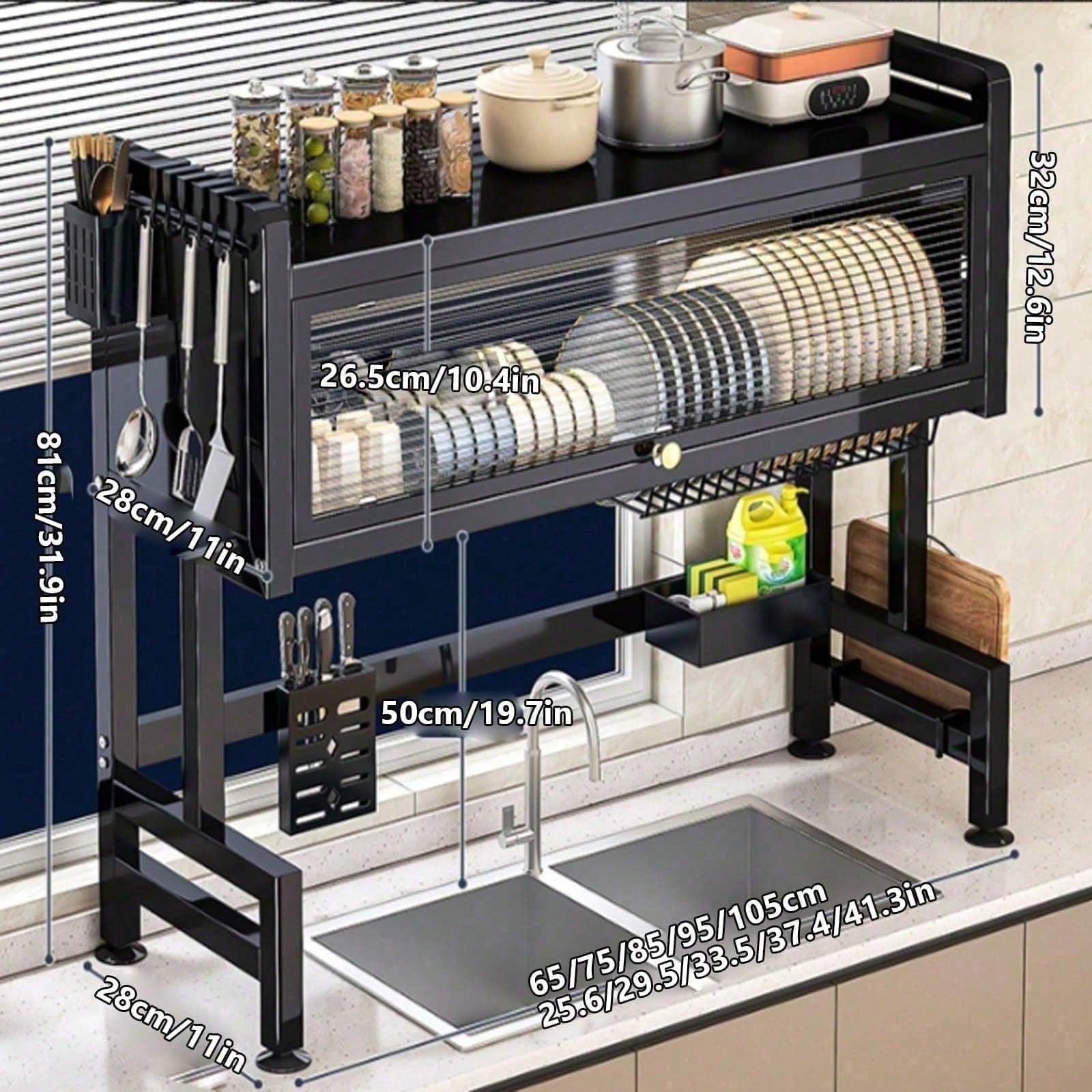 Double Tier Countertop Dish Draining Rack, Kitchen Sink Storage Shelf Organizer$53.99View on Mallflare
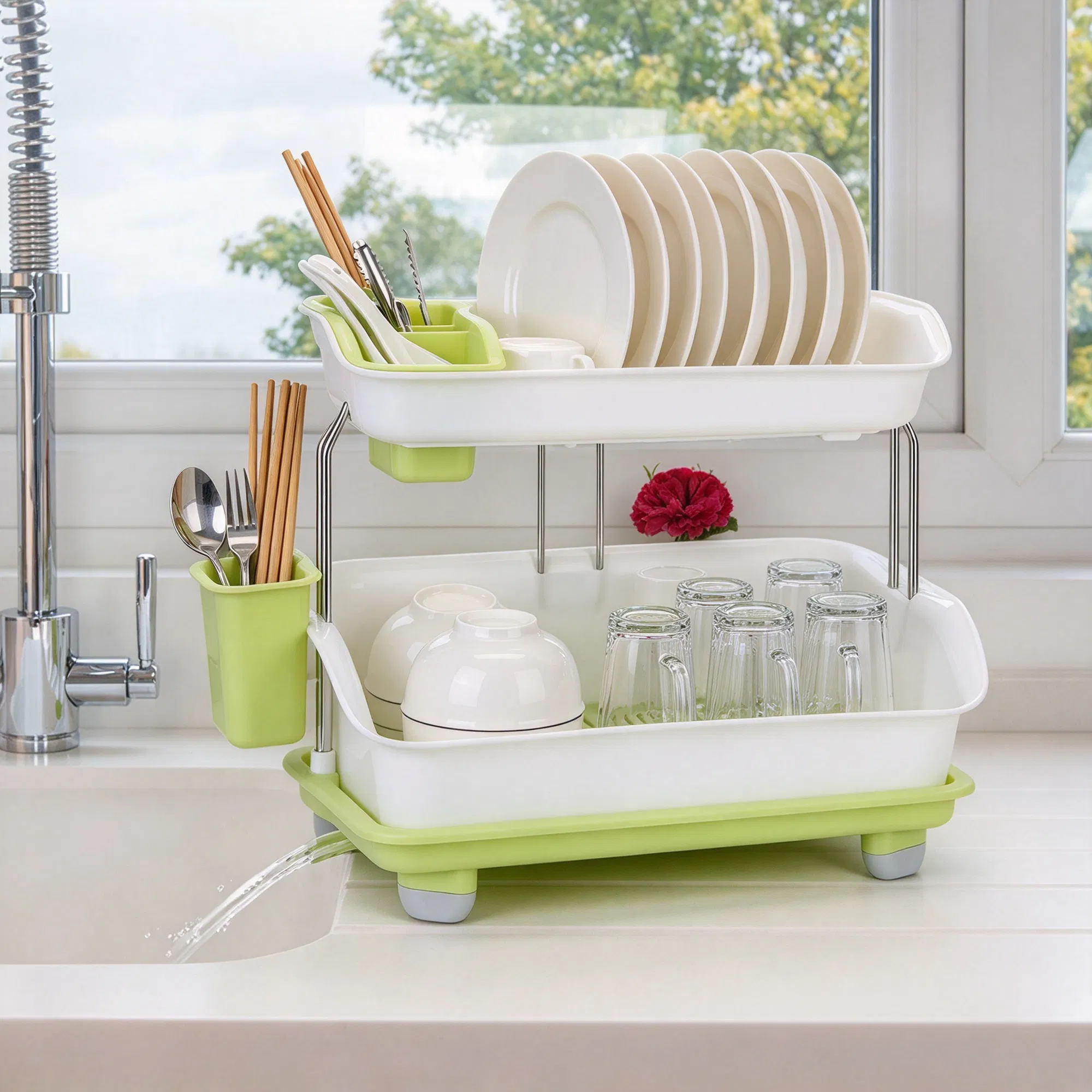 Countertop Dish Rack, 2 Tier Large Drainer with Drain Tray & Cutlery Holder, Stable Stand for Plates, Bowls and Kitchen Utensils$59.99View on Mallflare
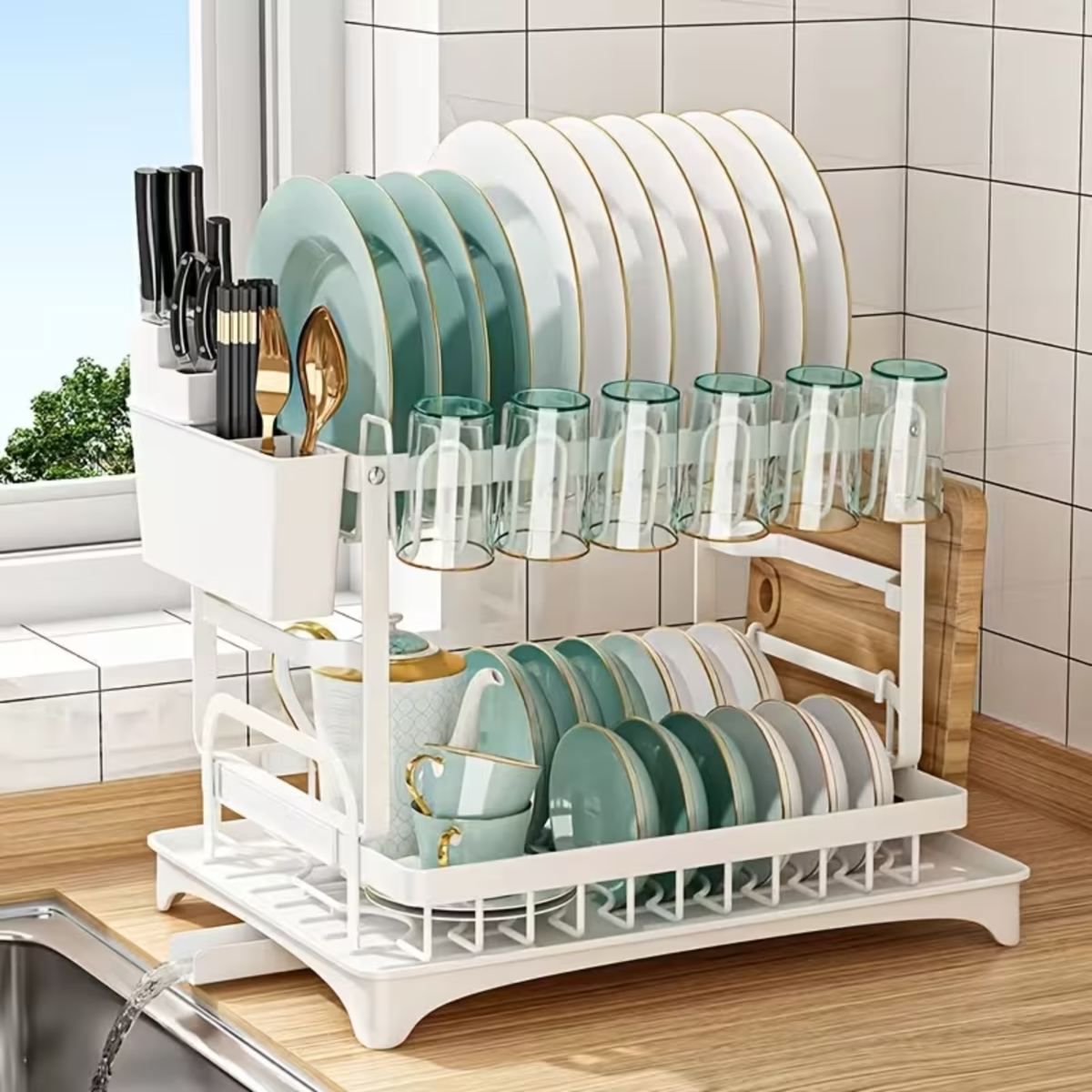 Large 2-Tier Dish Drying Rack with Drip Tray and Drainage Device, Kitchen Counter Drainer for Plates, Knives, Cups and Cutting Boards$71.99View on Mallflare
 Large 2-Tier Dish Drying Rack with Drip Tray and Drainage Device,KitchenCounter DrainerforPlates, Knives, Cups and Cutting Boards$74.99View on Mallflare
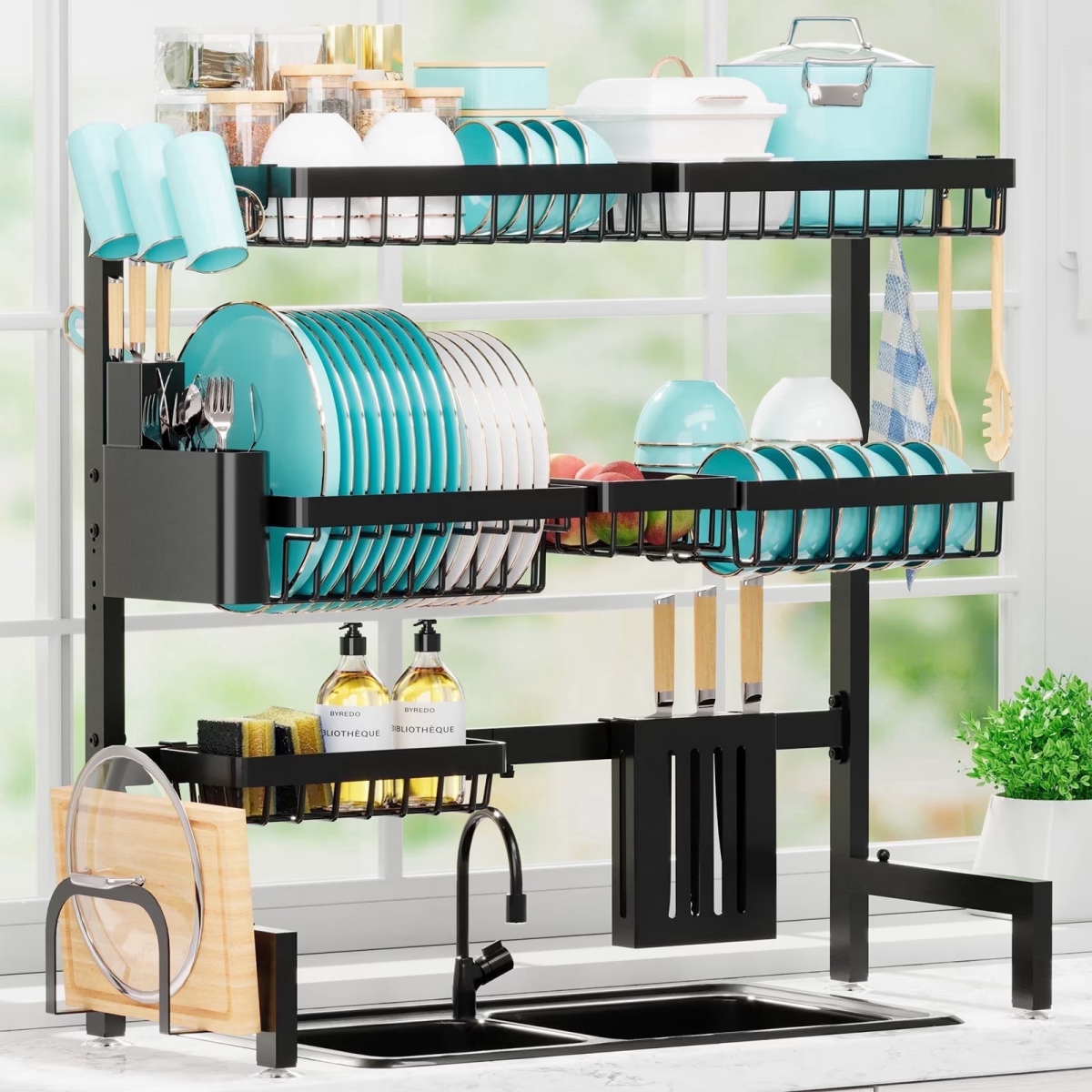 Over The Sink Dish Drying Rack,31"-39"L x 12"W x 30.5"H Expandable Drainer, Stainless Steel Rack, Black, XX-Large$100.99View on Mallflare
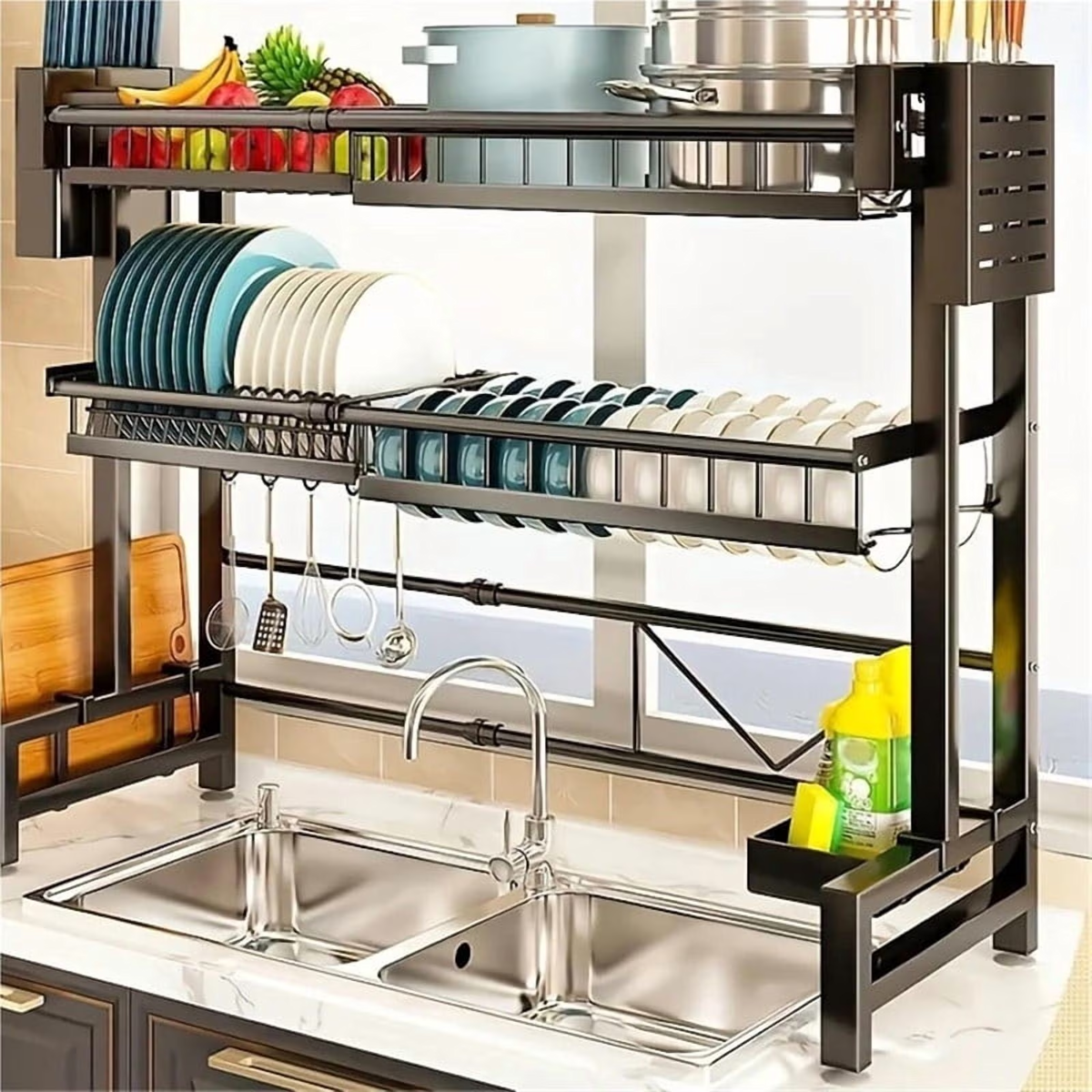 Over The Sink Dish Drying Rack, Telescopic 2 Tier Large Capacity Organize Stand, Kitchen Counter Storage Shelf Supplies for Plates Bowls Pots$101.99View on Mallflare
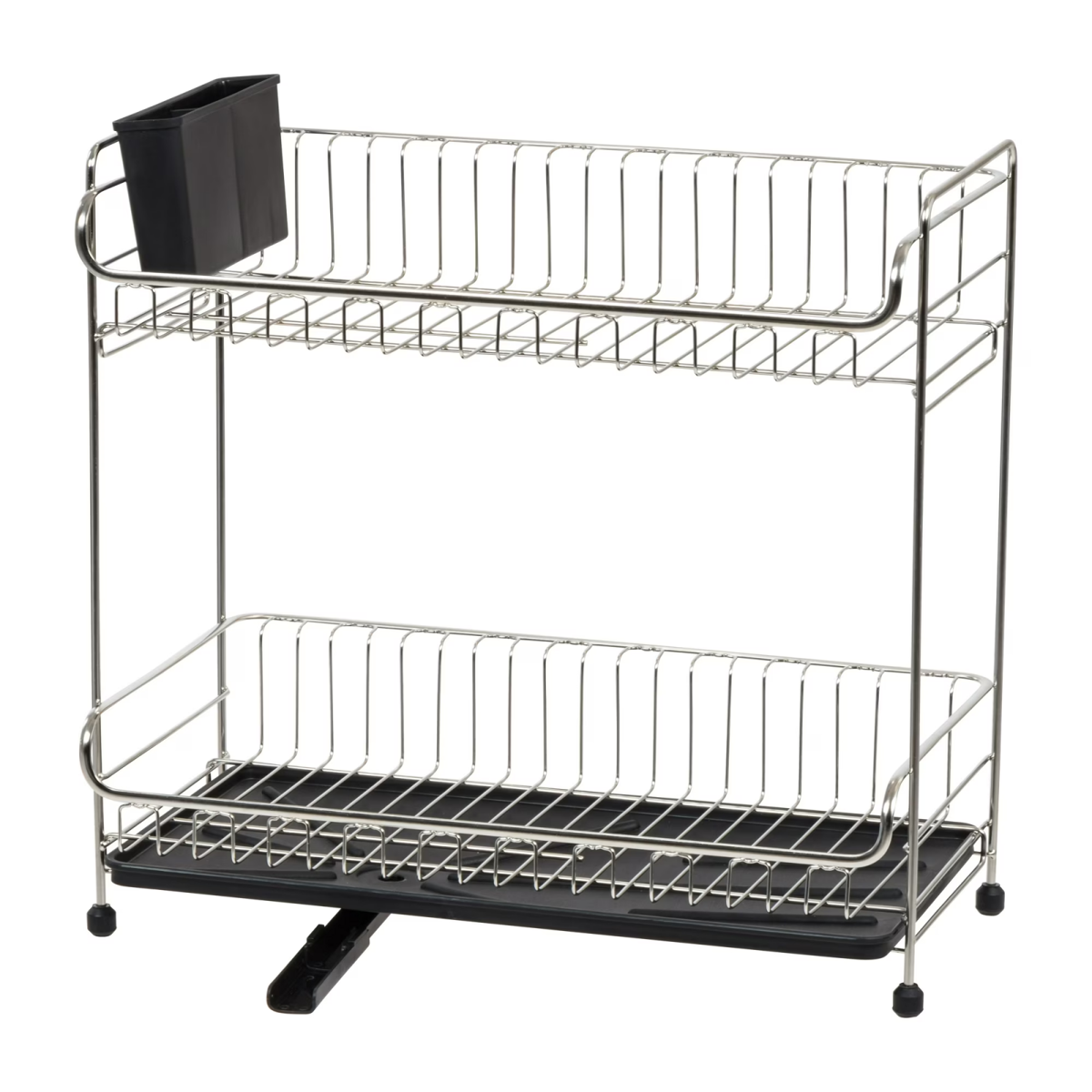 2 Tier Slim-sized Dish Rack with Drain Spout, Black$113.99View on Mallflare
Highlights
- Stainless steel grades 304 (18/8) resist pitting and rust far better than 201 or coated wire; magnets stick to 201 but not 304—use this as a quick in-store test.
- Over-sink racks use telescoping arms or roll-up mats: telescoping racks span 17–39 in and must sit on a sink rim at least 1 in wide; roll-up mats rely on a flat, level sink edge.
- Two-tier racks roughly double vertical capacity but need 18–24 in of clearance above the counter and are stable only when the lower tier is loaded with heavier items.
- Removable drip trays with a spout or slope drain fully; flat trays hold standing water and grow biofilm—prioritize a tray that tilts or pulls out completely.
Best use cases
- Small kitchens with limited counter space: pick an over-sink telescoping or roll-up rack so dishes drain directly into the basin; skip large two-tier countertop racks that consume 24 in of counter run.
- Families washing full dinner sets daily: choose a two-tier stainless countertop rack with a removable sloped tray and utensil holder; skip single-tier plastic racks that overflow and need constant emptying.
- Renters or temporary setups: a roll-up stainless mat or foldable over-sink rack stores flat and needs no mounting; skip heavy freestanding racks that require assembly and dedicated counter space.
Buying tips
- Measure your sink opening and rim: telescoping over-sink racks need a rim at least 1 in wide and a span within the rack's stated range (commonly 17–39 in); roll-up mats need a flat, unobstructed sink edge.
- Choose 304 stainless steel for the frame and wire; 201-grade and chrome-coated wire rust at weld points within months in humid kitchens. Plastic racks should be PP or ABS, not polystyrene.
- Match tray design to habit: a sloped tray with a drain spout empties without lifting, while a flat removable tray must be dumped after every load—pick the sloped version for daily use.
- For two-tier racks, confirm assembled height plus dish height clears upper cabinets: typical racks are 12–15 in tall per tier, so allow 30–36 in of vertical clearance.
Specs
| Frame Material | 304 stainless / 201 / PP plastic |
|---|---|
| Mount Type | Countertop / over-sink telescoping / roll-up |
| Tier Count | Single-tier / two-tier |
| Tray Drainage | Sloped with spout / flat removable |
Related searches
What to check before buying
- Measure sink interior width, rim width, and counter depth; over-sink racks must span the basin without resting on the faucet, and countertop racks need depth plus 2 in clearance from the wall.
- Confirm cabinet clearance above the counter—two-tier racks need roughly 30–36 in total height with dishes loaded, or the top tier becomes unusable.
- Check your dish mix: dinner plates need 10–12 in slot width, pots and cutting boards need a flat shelf, and utensil holders should have drainage holes.
- Verify the tray drains toward your sink or has a removable spout; a tray that drains away from the basin soaks the counter.
FAQ
Data sources: eBay / Amazon listings and product attribute feeds. Updated Nov 27, 2026.
Some links on this page are affiliate links. If you buy after clicking one, we may earn a commission at no extra cost to you. This does not change which products appear here or their order. Affiliate disclosure.