
Photos from current listings. Actual item, color, and included accessories may vary.
Silverware Organizer Buying Guide
A silverware organizer is a drawer insert that divides flatware and utensils into dedicated, sized compartments so handles stay aligned and blades don't collide. The primary trade-off is fixed-size versus expandable architecture: fixed trays maximize compartment count per inch but demand an exact drawer fit, while expandable trays trade some rigidity for a 2–6 inch width range. The decision rule is simple: measure your drawer's usable interior and flatware length first, then pick the configuration whose closed and extended widths straddle that measurement with at least 1/4 inch clearance.
Median $47.99
Key takeaways
- Expandable trays use sliding or accordion side modules that widen the tray by roughly 2–6 inches, letting one SKU span a broad range of drawer widths.
- Compartment count and depth govern real capacity: standard fork and spoon heads need about 1.5–2 inches of slot width, while knife slots need 2.5–3 inches to avoid blade overlap.
- Food-safe BPA-free plastic and bamboo are the durable standard materials; bamboo resists staining and odor better, plastic offers deeper molded slots and dishwasher-safe cleaning.
At a glance
- Category
- Kitchen Storage & Organization
- Last updated
- Nov 27, 2026
Current offers
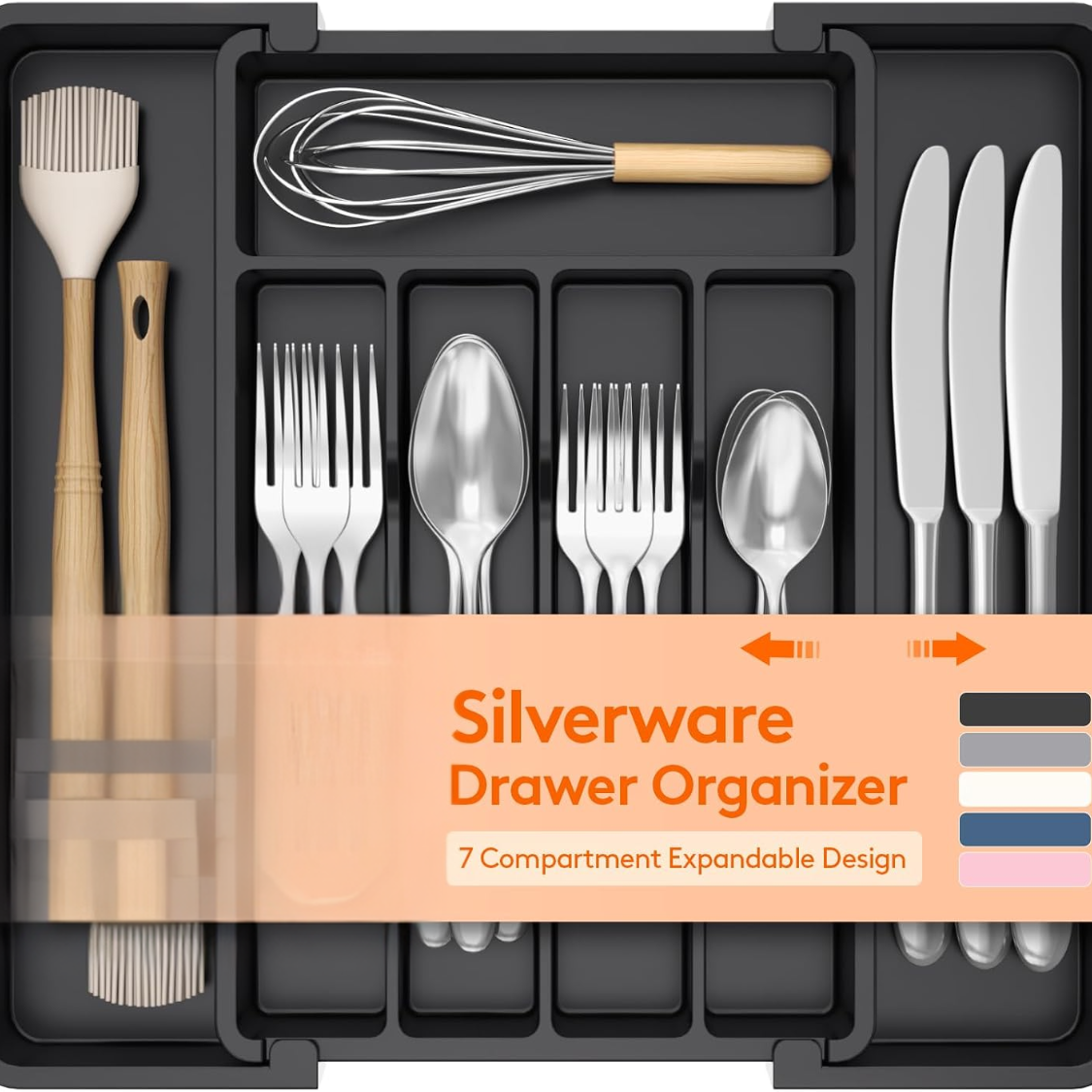 Expandable Silverware Drawer Organizer Kitchen Utensil Tray Adjustable Cutlery Storage For Forks Spoons Knives And Tools$47.99View on Mallflare
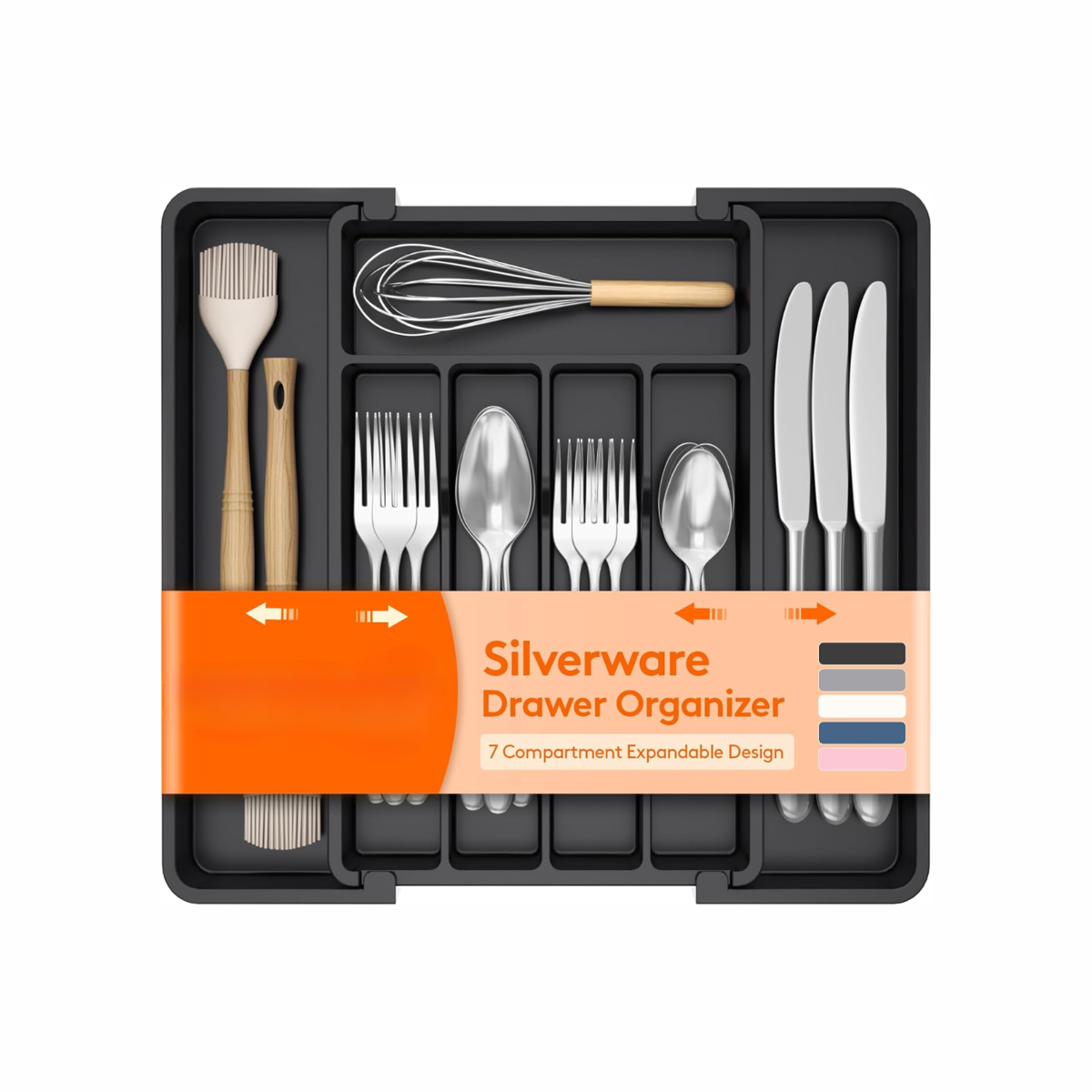 Expandable Silverware Drawer Organizer, Adjustable Kitchen Utensil Tray, Space-Saving Cutlery Storage For Forks, Spoons & Knives$47.99View on Mallflare
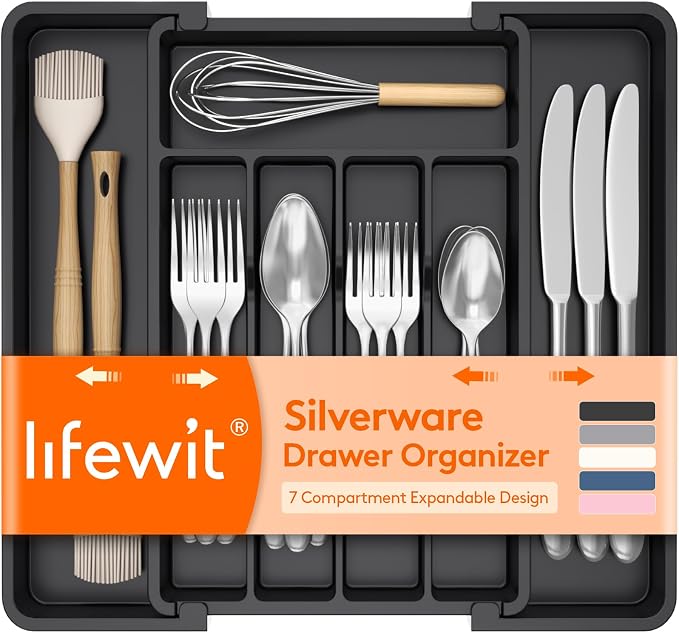 Expandable Silverware Drawer Organizer, Adjustable Kitchen Utensil Tray With Multiple Compartments For Forks, Spoons And Knives$47.99View on Mallflare
Highlights
- Expandable trays use sliding or accordion side modules that widen the tray by roughly 2–6 inches, letting one SKU span a broad range of drawer widths.
- Compartment count and depth govern real capacity: standard fork and spoon heads need about 1.5–2 inches of slot width, while knife slots need 2.5–3 inches to avoid blade overlap.
- Food-safe BPA-free plastic and bamboo are the durable standard materials; bamboo resists staining and odor better, plastic offers deeper molded slots and dishwasher-safe cleaning.
- Tier differences are mostly compartment layout and extension range rather than material grade: 5-compartment fixed trays suit narrow drawers, 7–8 compartment expandables suit standard 18–24 inch drawers.
Best use cases
- Best fit: standard 18–24 inch kitchen drawers with mixed flatware — choose an expandable 7–8 compartment tray so you can tune width and still get dedicated knife, fork, spoon, and serving slots.
- Best fit: narrow apartment or RV drawers under 14 inches — choose a fixed 5-compartment tray; expandables rarely close small enough and waste depth.
- Wrong fit: oversized 30-inch-plus drawers buying a small fixed tray — it will slide and utensils will scatter; pick a full-width fixed tray or a dual expandable spanning the drawer.
- Wrong fit: very long steak or serving utensils in a standard 12-inch-deep tray — handles will catch the drawer front; choose a tray with 13–15 inch slots or a deep drawer-specific model.
Buying tips
- Measure interior drawer width, depth, and height, then require the tray's closed and fully extended widths to bracket your measurement by 1/4 inch or more on each side.
- Match slot length to your longest utensil: standard flatware fits 12-inch slots, but steak knives and serving spoons need 13–15 inches to lie flat.
- Prefer molded dividers over thin insert fins; slots at least 1.5 inches wide keep forks and spoons from tilting and jamming the drawer.
- Choose BPA-free plastic for dishwasher-safe cleaning or bamboo for odor resistance and a warmer finish; avoid unsealed particle board that swells with moisture.
Specs
| Tray Architecture | Fixed vs expandable 2-6 in |
|---|---|
| Compartment Count | 5-8 slots typical |
| Slot Length | 12 in standard / 15 in deep |
| Primary Material | BPA-free plastic / bamboo |
Related searches
What to check before buying
- Measure usable drawer width between side rails and depth from front to back, not the cabinet opening, and subtract 1/2 inch clearance.
- Confirm drawer height clears the loaded tray: stacked flatware adds roughly 1.5–2 inches above the tray rim.
- Check the drawer front and handle clearance so the tray's extended edge does not catch when opening or closing.
- Verify your flatware style: wide-handled or chunky sets need wider slots than standard patterns and may require a deep-slot model.
FAQ
Data sources: eBay / Amazon listings and product attribute feeds. Updated Nov 27, 2026.
Some links on this page are affiliate links. If you buy after clicking one, we may earn a commission at no extra cost to you. This does not change which products appear here or their order. Affiliate disclosure.