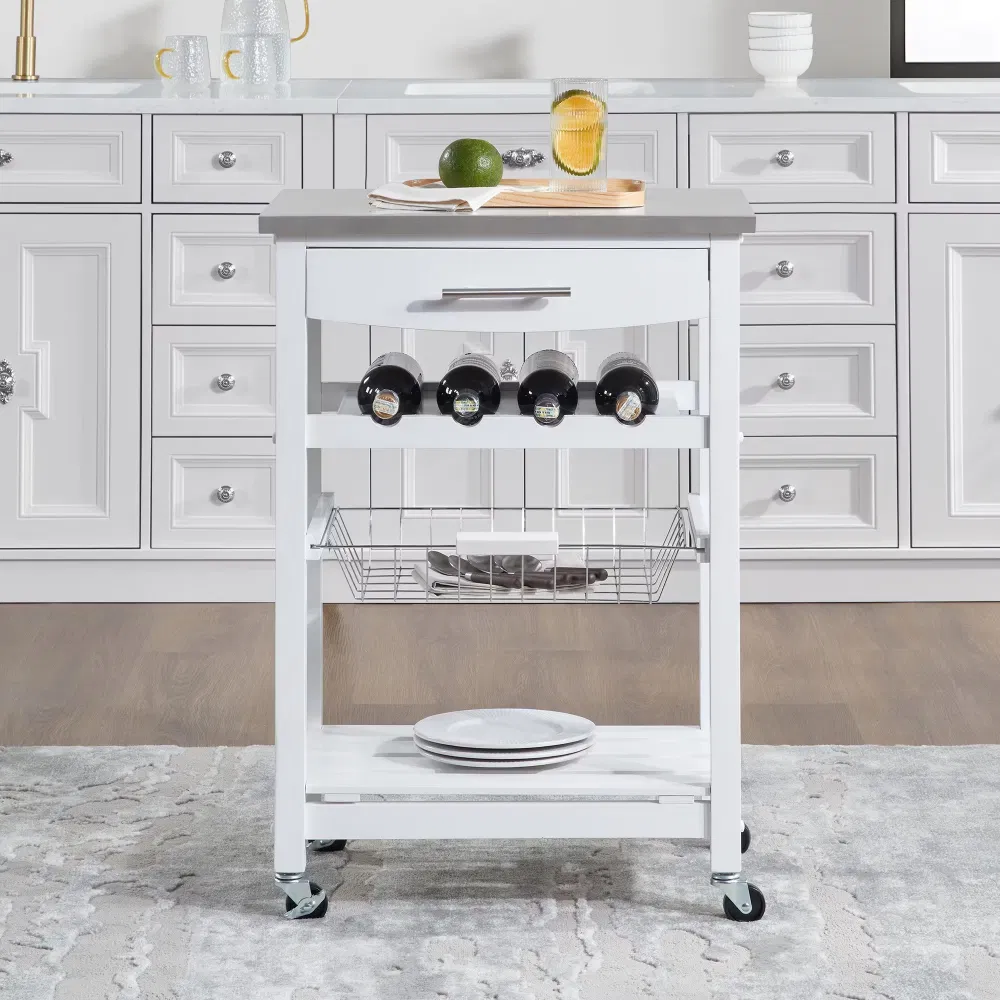

Photos from current listings. Actual item, color, and included accessories may vary.
Stainless Steel Kitchen Cart With Wheels Buying Guide
A stainless steel kitchen cart earns its keep only when the frame gauge, shelf type, and caster set match how you actually load it, not just how it photographs. Most buyer regrets trace to undersized casters, thin 201-series steel, or a cart that clears the countertop but not the doorway. This guide fixes the specification tiers so you can choose by capacity, mobility, and surface durability.
Key takeaways
- Steel grade: 304 stainless resists acids and salts from food prep; 201 and 430 are cheaper and will spot or rust in wet kitchens.
- Frame gauge and load rating: 22-gauge tubular frames with welded corner gussets hold heavy appliances; bolted 24-gauge frames flex and loosen over time.
- Caster tier: 3-inch or larger polyurethane or rubber casters roll over thresholds and protect tile; 2-inch hard plastic casters flat-spot and catch grout lines.
At a glance
- Category
- Kitchen Storage & Organization
- Last updated
- Nov 28, 2026
Current offers
Highlights
- Steel grade: 304 stainless resists acids and salts from food prep; 201 and 430 are cheaper and will spot or rust in wet kitchens.
- Frame gauge and load rating: 22-gauge tubular frames with welded corner gussets hold heavy appliances; bolted 24-gauge frames flex and loosen over time.
- Caster tier: 3-inch or larger polyurethane or rubber casters roll over thresholds and protect tile; 2-inch hard plastic casters flat-spot and catch grout lines.
- Shelf architecture: three-sided rails or lip guards keep sheet pans and bins from sliding; flat glass or wire shelves limit what you can stack safely.
Best use cases
- Pick a 3-tier 304 stainless cart with 3-inch locking casters for a compact prep station between stove and sink; skip 2-tier models if you need both a landing zone and appliance storage.
- Choose a cart with a built-in drawer and side towel bar for a rolling coffee or mixer station; skip open-frame carts if you want to hide small tools and linens.
- Avoid stainless carts in a coastal or high-humidity kitchen unless the frame is 304 with sealed welds; 201-series carts will develop rust at caster sockets and shelf edges.
- For a folding or apartment kitchen, pick a cart with a 15- to 18-inch depth so it clears a 24-inch walkway; full 24-inch-deep carts block galley aisles when parked.
Buying tips
- Check the steel grade in the listing text: 304 is the only grade worth paying for in a wet kitchen; 201 and 430 are budget compromises.
- Prioritize caster diameter over count: 3-inch or larger casters with at least two locking wheels roll and park far better than four small non-locking casters.
- Inspect shelf edges for raised rails or marine-style lips; a flat shelf without a retaining edge lets stacked items slide off during a push.
- Size the cart to your counter height minus 1 to 2 inches if you plan to slide it flush under an overhang; measure doorways and thresholds before choosing a 24-inch width.
Specs
| Steel Grade | 304 vs 201 / 430 stainless |
|---|---|
| Frame Gauge | 22-gauge welded vs 24-gauge bolted |
| Caster Size | 3-5 in locking vs 2 in fixed |
| Shelf Tiers | 2-3 tiers with retaining rails |
Related searches
What to check before buying
- Measure your narrowest doorway, threshold height, and aisle width; confirm caster diameter clears any raised sill.
- Confirm countertop overhang and toe-kick clearance so the cart parks flush without blocking cabinet doors.
- Check floor type: polyurethane or rubber casters protect tile and hardwood; hard plastic casters can scratch and flat-spot.
- Verify the cart's assembled height matches your prep comfort zone and that locking casters are on the front pair for parking stability.
FAQ
Data sources: eBay / Amazon listings and product attribute feeds. Updated Nov 28, 2026.
Some links on this page are affiliate links. If you buy after clicking one, we may earn a commission at no extra cost to you. This does not change which products appear here or their order. Affiliate disclosure.