
Photos from current listings. Actual item, color, and included accessories may vary.
Utensil Drawer Organizer Buying Guide
A utensil drawer organizer is a compartmented tray that separates flatware and cooking tools inside a kitchen drawer, and the decisive trade-off is between fixed-compartment trays that waste drawer width and expandable or modular systems that adapt to your exact drawer dimensions. The clear rule: buy an expandable or custom-divided organizer whose closed and extended widths bracket your drawer's usable interior width, and skip any tray with molded non-removable dividers or unverified plastic thickness.
Median $47.99
Key takeaways
- Expandable trays use a sliding nested-section design that extends roughly 1.5-2x their closed width, letting one tray span drawer widths from compact to wide without dead side gaps.
- Food-safe molded plastic (polypropylene or ABS) resists warping and dishwasher heat better than thin styrene or bamboo, which cracks or swells in wet drawers.
- Removable dividers create true custom compartment counts, so a tray can shift between flatware slots and wider utensil bays as your tool collection changes.
At a glance
- Category
- Kitchen Storage & Organization
- Last updated
- Nov 27, 2026
Current offers
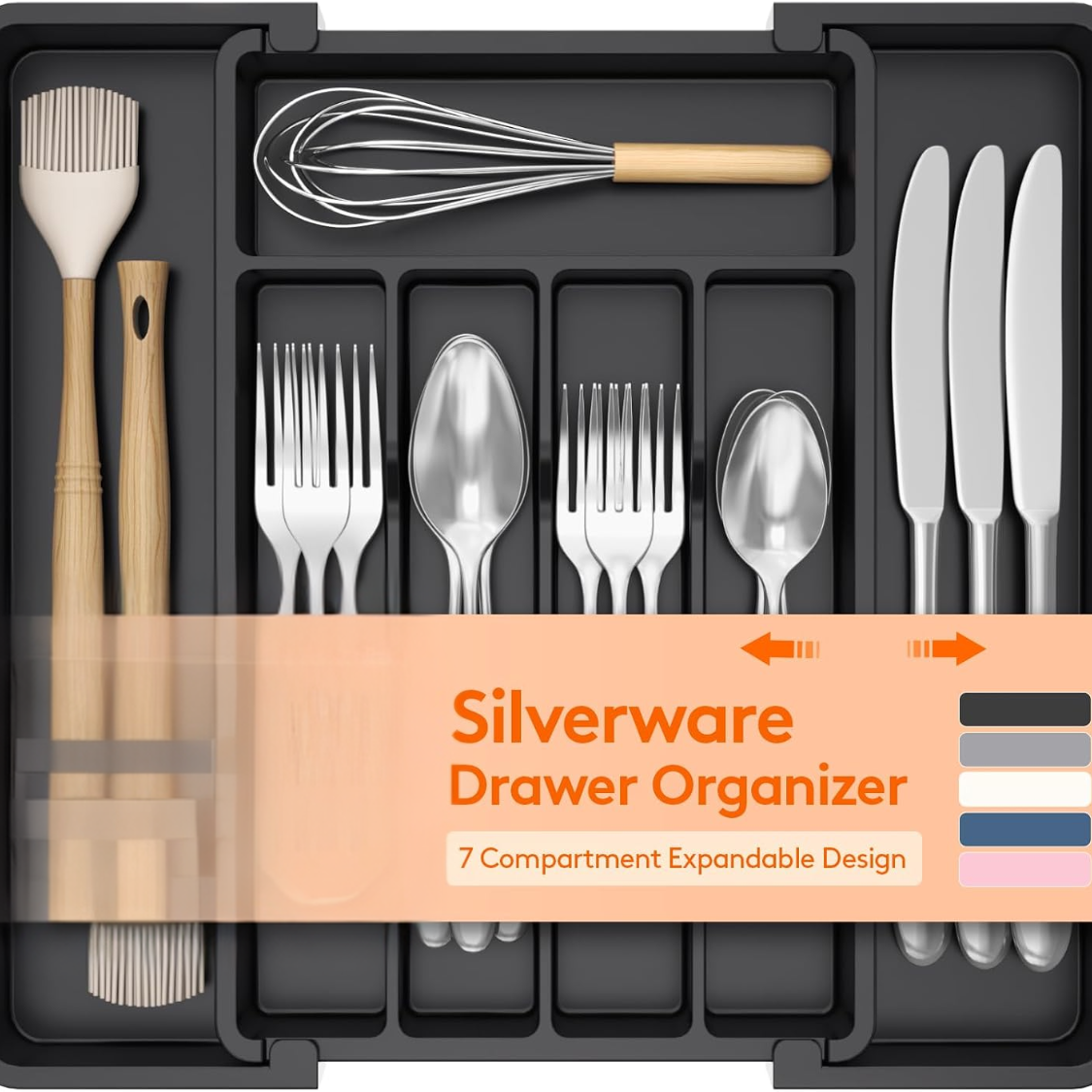 Expandable Silverware Drawer Organizer Kitchen Utensil Tray Adjustable Cutlery Storage For Forks Spoons Knives And Tools$47.99View on Mallflare
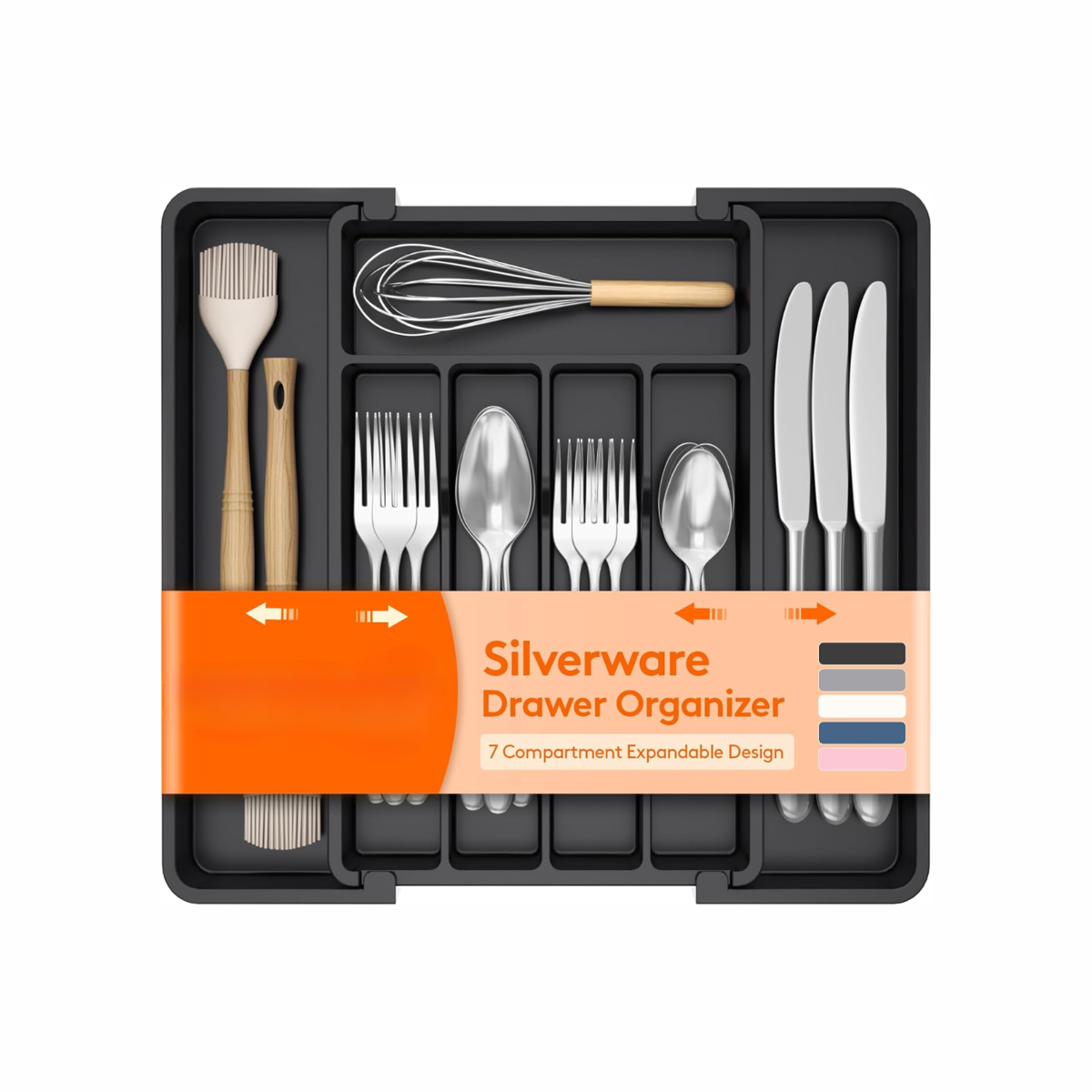 Expandable Silverware Drawer Organizer, Adjustable Kitchen Utensil Tray, Space-Saving Cutlery Storage For Forks, Spoons & Knives$47.99View on Mallflare
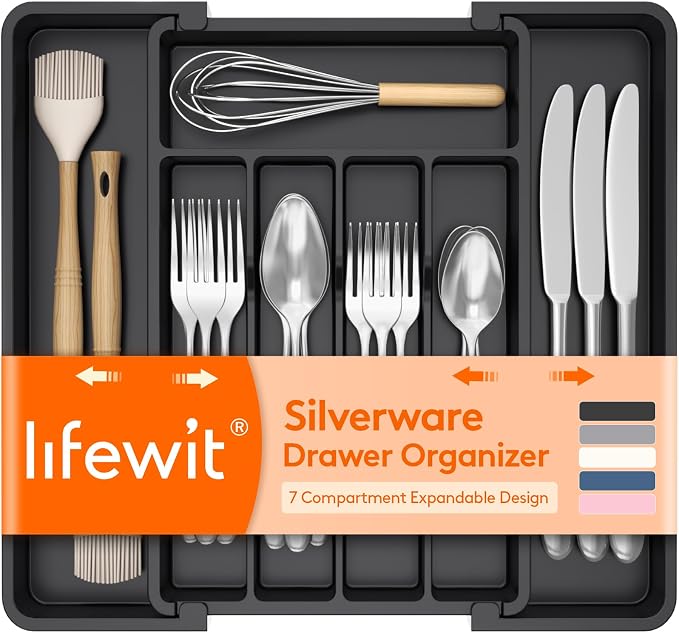 Expandable Silverware Drawer Organizer, Adjustable Kitchen Utensil Tray With Multiple Compartments For Forks, Spoons And Knives$47.99View on Mallflare
Highlights
- Expandable trays use a sliding nested-section design that extends roughly 1.5-2x their closed width, letting one tray span drawer widths from compact to wide without dead side gaps.
- Food-safe molded plastic (polypropylene or ABS) resists warping and dishwasher heat better than thin styrene or bamboo, which cracks or swells in wet drawers.
- Removable dividers create true custom compartment counts, so a tray can shift between flatware slots and wider utensil bays as your tool collection changes.
- Deep compartments and anti-slip feet or liners keep forks, spoons, and knives from sliding under the tray or jamming the drawer slide.
Best use cases
- Best fit: a standard-depth kitchen drawer holding forks, spoons, and knives — choose an expandable tray with 5-7 removable dividers so compartment width matches your flatware count and handle size.
- Best fit: a wide or oversized drawer serving as a full utensil station — pick an extra-large expandable tray and extend it near the drawer's usable width, leaving 1-2 cm clearance each side for the slide.
- Wrong fit: a shallow drawer under 5 cm interior height — skip deep expandable trays and use a low-profile fixed tray, or utensils will catch on the drawer face.
- Wrong fit: a drawer that also stores bulky tools like ladles or whisks — skip flatware-only trays with narrow fixed slots and choose a tray with at least one wide removable-divider bay.
Buying tips
- Measure the drawer's interior width at the base and subtract 2 cm; the organizer's closed width must be at or below that, and its extended width at or above it.
- Match compartment count to your flatware set: a 20-piece set needs roughly 5-7 slots, while a 40-piece service for eight needs 8+ slots or two trays.
- Choose polypropylene or ABS with walls at least 2-3 mm thick; thin walls flex under stacked cutlery and crack at the sliding joint.
- Confirm the tray depth leaves 1-2 cm above stacked utensil handles so the drawer closes without scraping, and check that feet or a liner grip the drawer base.
Specs
| Width Type | Fixed vs Expandable sliding |
|---|---|
| Material Grade | Food-safe PP / ABS, 2-3 mm walls |
| Divider Style | Fixed molded vs removable |
| Compartment Count | 5-7 flatware / 8+ large sets |
Related searches
What to check before buying
- Measure drawer interior width, depth, and height at the base — not the drawer front — since tapered drawer boxes narrow toward the bottom.
- Confirm the organizer's expanded maximum width clears the drawer's side walls and drawer slide hardware with 1-2 cm spare.
- Check drawer height: the organizer depth plus stacked utensil handles must stay below the drawer's interior height.
- Verify the tray material is food-safe and dishwasher-safe if you plan to wash it, and that it has non-slip feet or a grippy base liner.
FAQ
Data sources: eBay / Amazon listings and product attribute feeds. Updated Nov 27, 2026.
Some links on this page are affiliate links. If you buy after clicking one, we may earn a commission at no extra cost to you. This does not change which products appear here or their order. Affiliate disclosure.