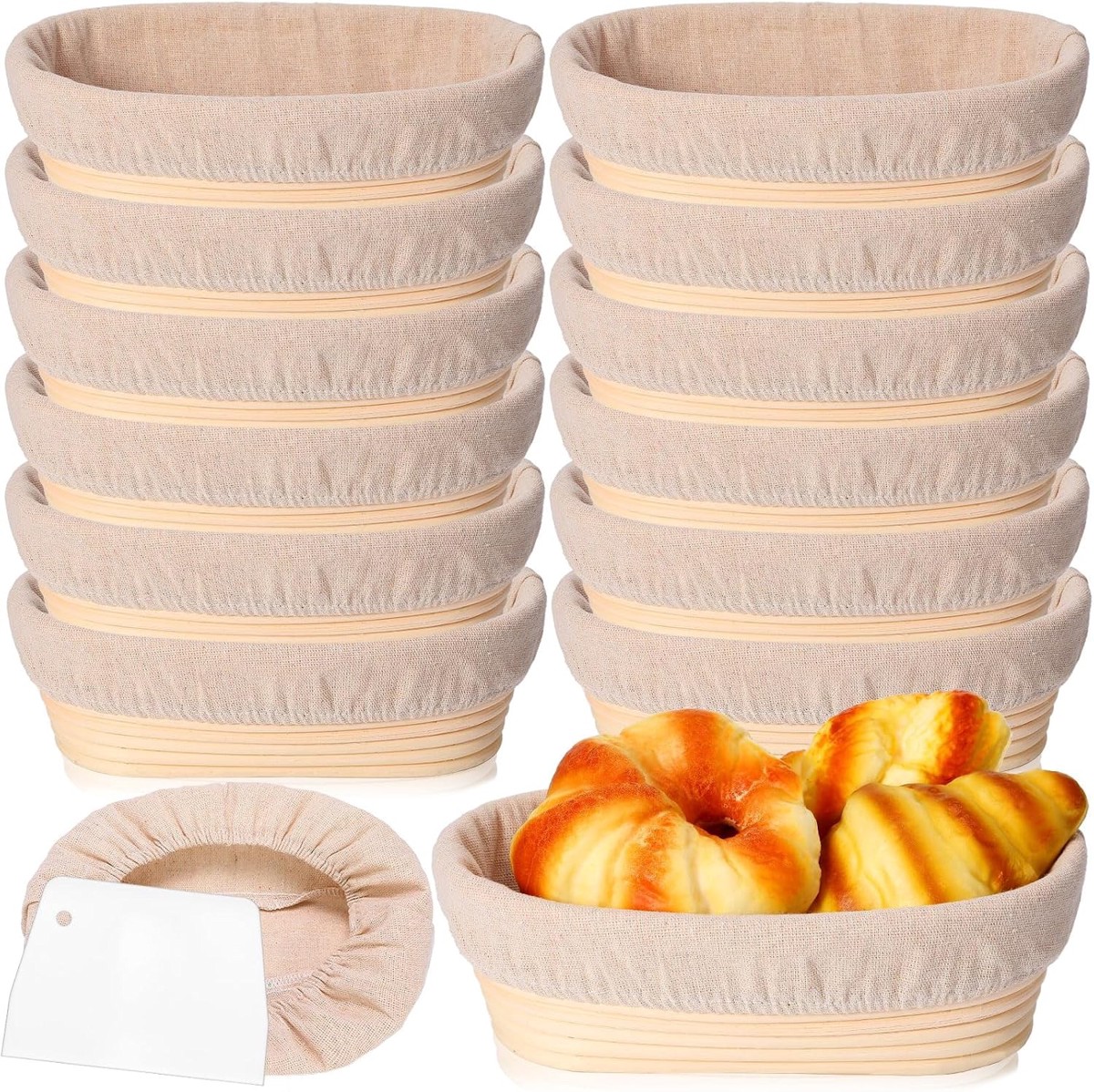

Photos from current listings. Actual item, color, and included accessories may vary.
Banneton Proofing Bowl Buying Guide
A banneton proofing bowl is a breathable, moisture-regulating vessel that holds shaped dough during its final rise, imprinting the spiral or ring pattern that defines artisan bread crust. The primary trade-off is material and construction: natural rattan/cane wicker breathes and wicks moisture for a crackly skin, while lined cotton or silicone-coated versions offer easier release but less airflow and a softer crust. The decision rule is simple: choose unlined natural cane with a linen liner for best crust development, and accept that any plastic or sealed non-breathable bowl is a storage or cold-retard shortcut, not a true proofing tool.
Median $217.17 · New listings
Key takeaways
- Natural rattan/cane wicker is the benchmark: open weave allows airflow and moisture wicking, producing the dry surface skin needed for oven spring and ear development.
- Spiral (batard) vs ring (boule) shapes dictate scoring line and loaf format: 8-9 inch round boules fit standard Dutch ovens; 10-inch oval batards suit longer hearth loaves.
- Cotton or linen liners must be unbleached, tightly woven, and removable; they catch flour for easy release and are the difference between clean spiral definition and torn crust.
At a glance
- Category
- Proofing Baskets & Bread Lames
- Last updated
- Nov 28, 2026
Current offers
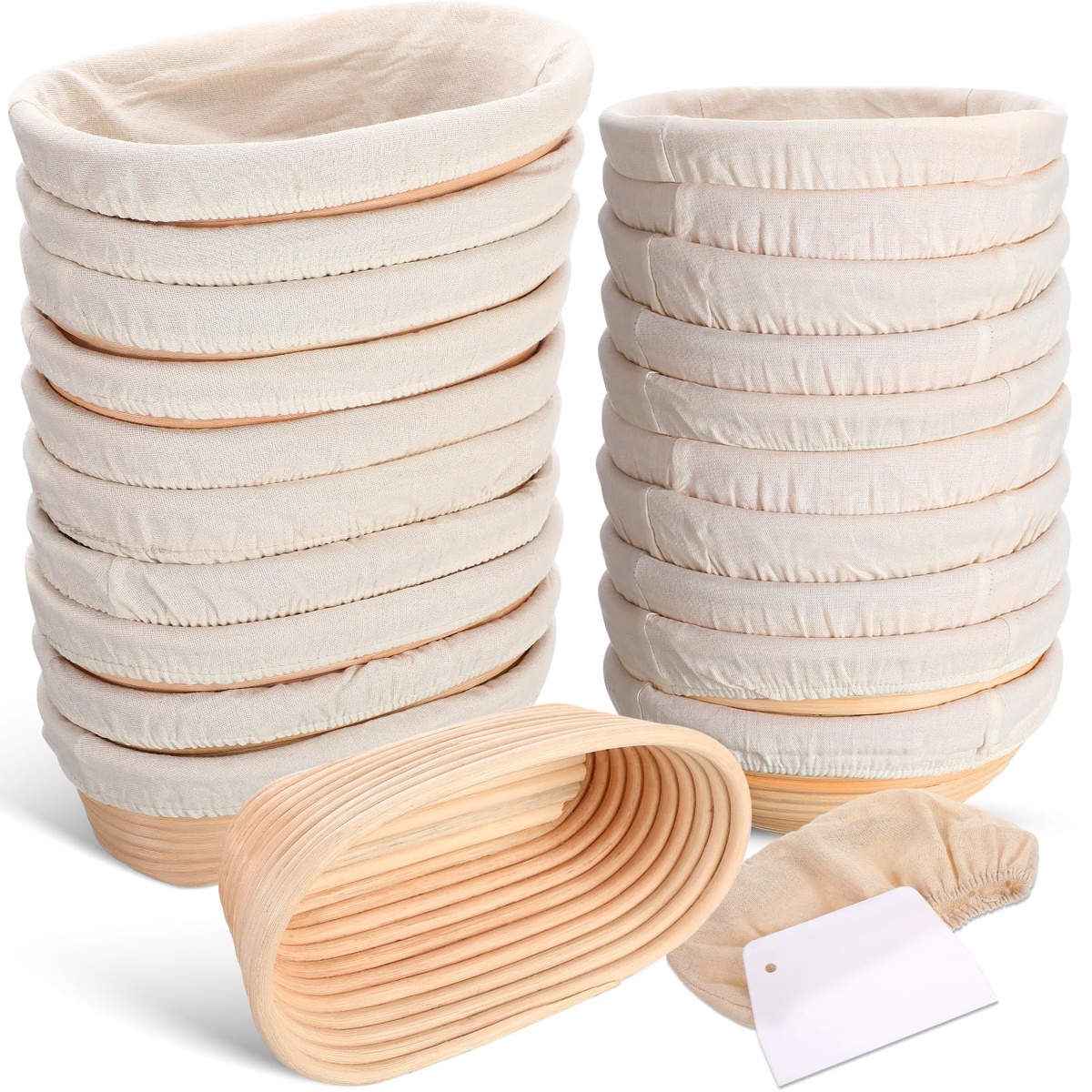
Highlights
- Natural rattan/cane wicker is the benchmark: open weave allows airflow and moisture wicking, producing the dry surface skin needed for oven spring and ear development.
- Spiral (batard) vs ring (boule) shapes dictate scoring line and loaf format: 8-9 inch round boules fit standard Dutch ovens; 10-inch oval batards suit longer hearth loaves.
- Cotton or linen liners must be unbleached, tightly woven, and removable; they catch flour for easy release and are the difference between clean spiral definition and torn crust.
- Silicone-coated or plastic bannetons release cleanly but trap moisture, yielding a softer, paler crust and are best reserved for high-hydration doughs or cold retard where sticking is the main risk.
Best use cases
- Best fit: home bakers chasing open crumb and a dark, crackly crust — pick an unlined 8-9 inch round natural cane banneton plus a linen liner and rice-flour dusting.
- Wrong fit: bakers who fear sticking and use only all-purpose flour — a silicone or heavily floured lined bowl is the safer first purchase, though crust will be softer.
- Best fit: cold-retard workflow in a small fridge — choose a smaller 7-8 inch boule or oval batard that fits shelf height and stacks without crushing the dough.
- Wrong fit: high-volume bakers who need dozens of identical bowls — flexible silicone or plastic baskets stack and clean faster, but sacrifice the breathable cane crust benefit.
Buying tips
- Match bowl diameter to loaf: 8-9 inch round for 500-800g boules; 10-inch oval for 700-1000g batards; the dough should fill about two-thirds of the bowl after shaping.
- Insist on natural rattan or cane with a tight, even weave and no chemical smell; dyed or varnished baskets can transfer odor and block moisture wicking.
- Buy a liner made of unbleached cotton or linen, not synthetic; it should be removable and sized to the bowl rim so it stays put during shaping.
- For cold retard, confirm the bowl plus dough fits your fridge shelf clearance and that the bowl is stable stacked or nested; flimsy plastic rims crack under weight.
Specs
| Material | Natural rattan/cane vs silicone vs plastic |
|---|---|
| Shape | Round boule / oval batard / ring |
| Diameter | 7-10 in (boules 8-9 in) |
| Liner Included | Unbleached linen/cotton vs none |
Related searches
What to check before buying
- Measure your Dutch oven or baking stone interior: a round banneton's dough footprint must fit with 1-2 inches clearance for oven spring.
- Check fridge shelf height and door clearance for the bowl plus a cloth cover; oval batards are the usual culprit for blocked shelves.
- Confirm your flour and hydration plan: high-hydration doughs (75%+) stick more, so budget for a linen liner and rice-flour dusting.
- Verify the bowl is untreated natural cane with no lacquer or dye; varnished baskets seal the surface and defeat the breathability that defines banneton performance.
FAQ
Data sources: eBay / Amazon listings and product attribute feeds. Updated Nov 28, 2026.
Some links on this page are affiliate links. If you buy after clicking one, we may earn a commission at no extra cost to you. This does not change which products appear here or their order. Affiliate disclosure.