
Photos from current listings. Actual item, color, and included accessories may vary.
Bread Dough Proofing Basket Buying Guide
A bread dough proofing basket (banneton) supports dough during its final rise, wicking surface moisture to hold a skin that scores cleanly and holds shape. The primary trade-off is material and weave: natural rattan or cane delivers breathability and a textured crust, while pulp or plastic liners offer easier release at the cost of moisture control. Choose a natural fiber basket with a fitted linen liner for artisan loaves; skip unlined pulp or non-breathable plastic if you want a crackling, well-scored crust.
Median $234.45 · New listings
Key takeaways
- Natural rattan/cane baskets wick moisture through the weave; pulp and plastic trap it, softening the crust and reducing oven spring.
- Coiled cane with a sewn linen liner releases high-hydration dough cleanly; unlined baskets need a heavy flour dusting.
- Basket diameter must exceed the dough ball by 20–30% after shaping; an 8-inch basket suits 500–800g of dough.
At a glance
- Category
- Proofing Baskets & Bread Lames
- Last updated
- Nov 28, 2026
Current offers
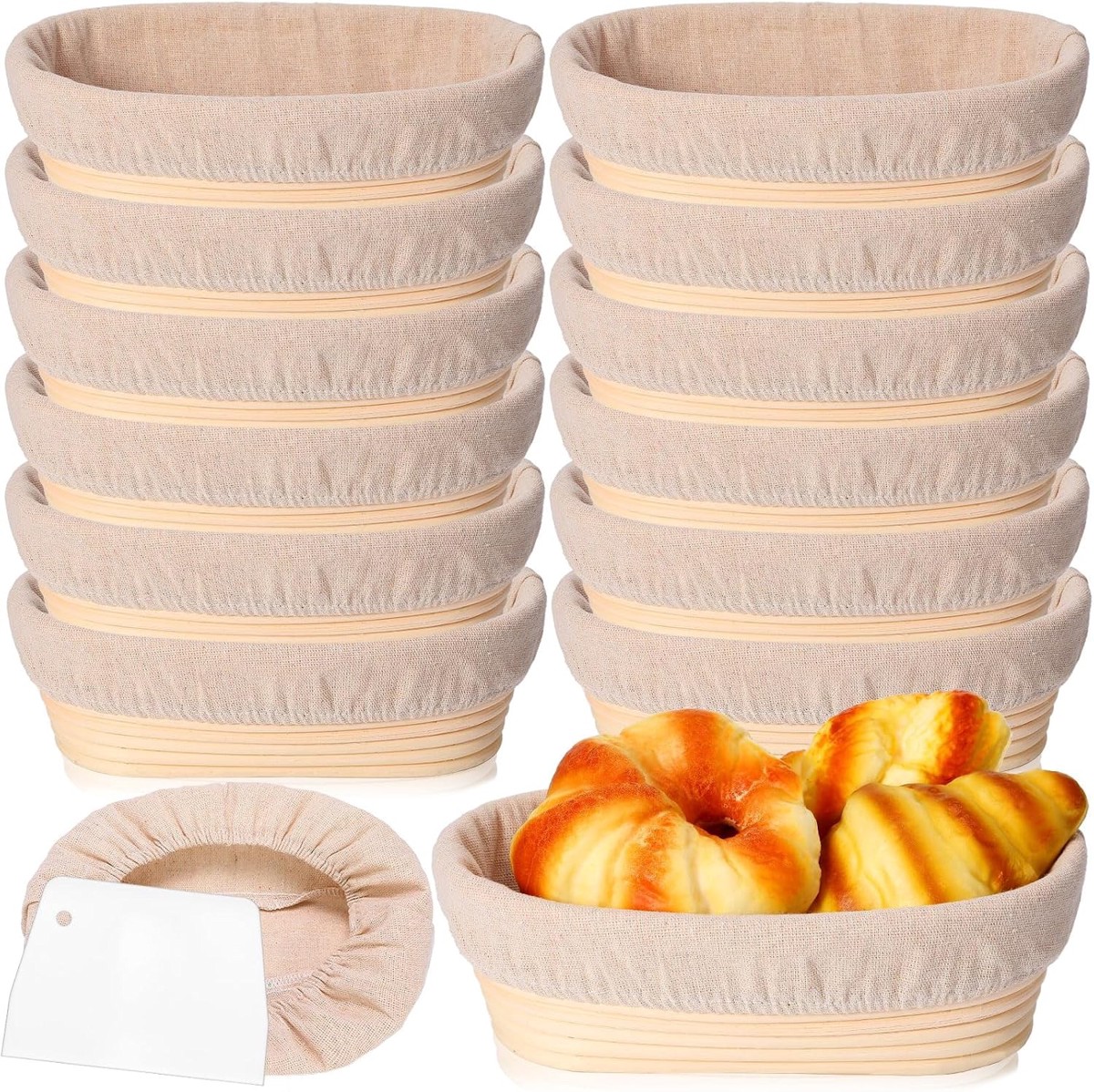 30 Set Bread Proofing Baskets 10 Inch Oval Shaped Banneton Dough Proofing Bowls$212.41New · Last checked Nov 27, 2026View on eBay
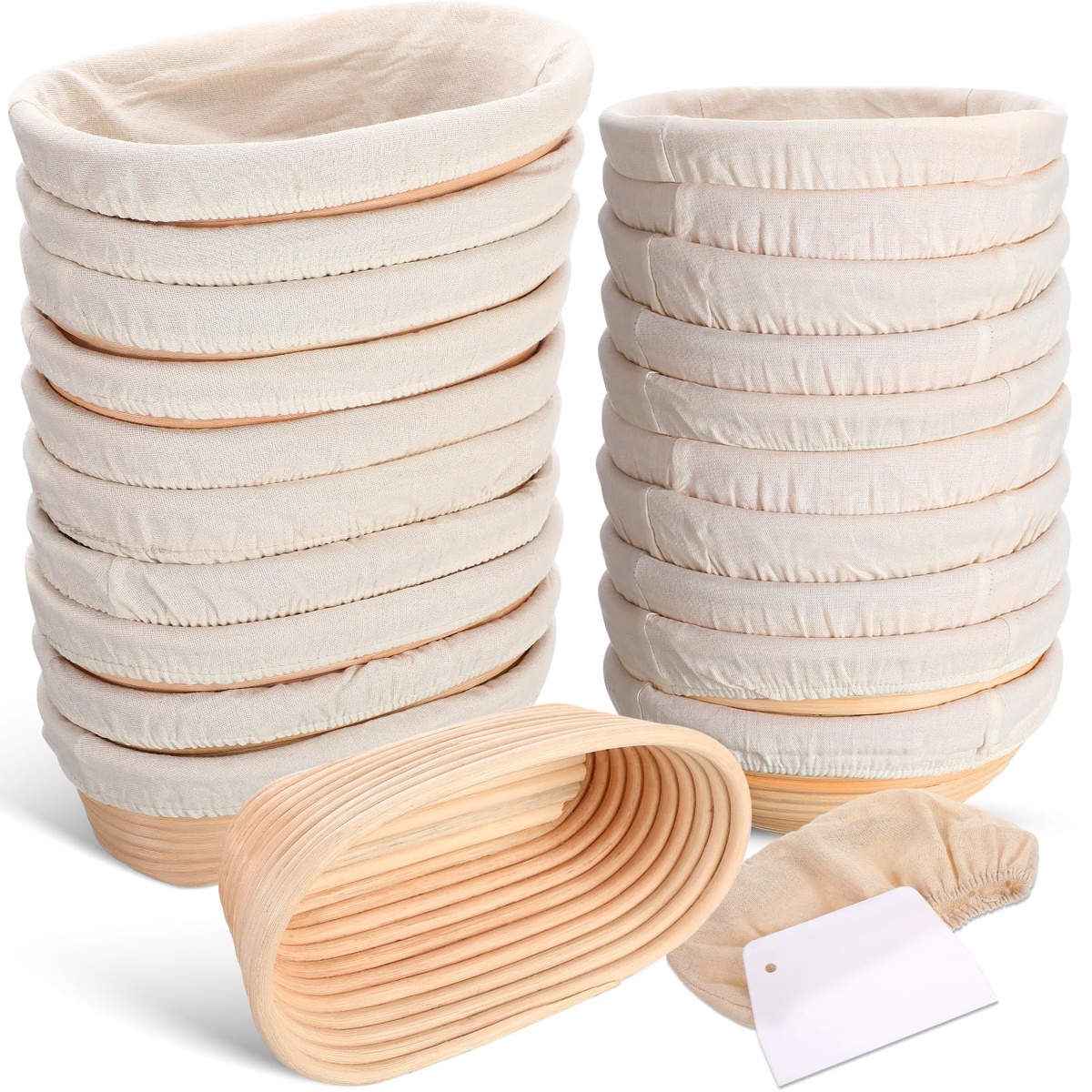 Gejoy 20 Sets Bread Proofing Baskets Banneton Dough Bowls 9'' 10'' Round Oval$221.92New · Last checked Nov 27, 2026View on eBay
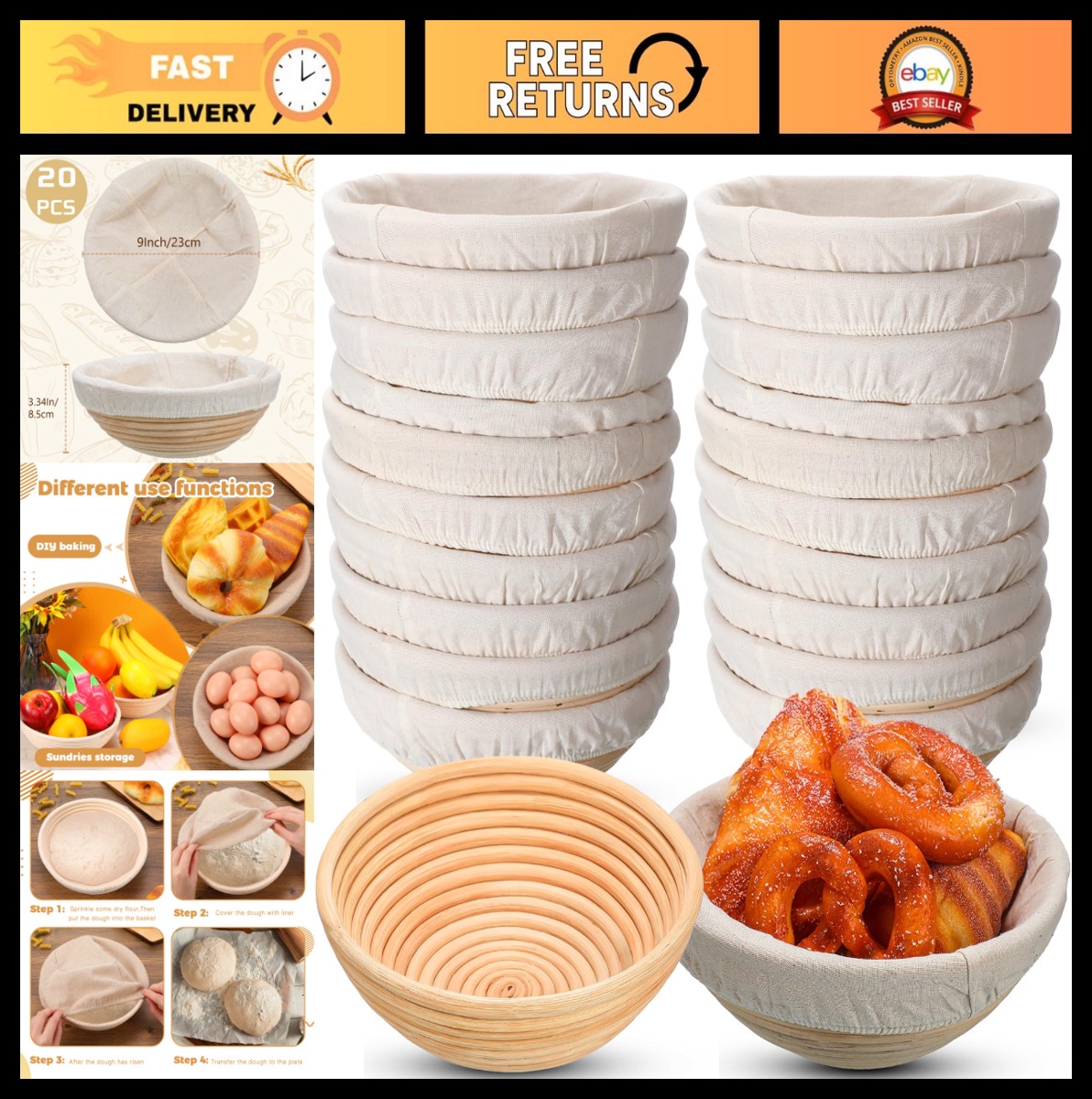 20 Sets Bread Proofing Baskets Kit - 9" Round Banneton Dough Bowls with Cloth Li$246.99New · Last checked Nov 27, 2026View on eBay
- 20 Sets Bread Proofing Baskets Kit - 9" Round Banneton Dough Bowls with Cloth Li$259.99New · Last checked Nov 27, 2026View on eBay
Highlights
- Natural rattan/cane baskets wick moisture through the weave; pulp and plastic trap it, softening the crust and reducing oven spring.
- Coiled cane with a sewn linen liner releases high-hydration dough cleanly; unlined baskets need a heavy flour dusting.
- Basket diameter must exceed the dough ball by 20–30% after shaping; an 8-inch basket suits 500–800g of dough.
- A curved lame with a replaceable razor blade cuts a clean ear; straight-handled knives tear high-hydration dough.
Best use cases
- Best fit: round boules and batards up to 1kg — pick an 8–9 inch round rattan basket with linen liner; skip tiny 6-inch baskets for standard 700g dough.
- Best fit: sourdough at 75–85% hydration — use a floured linen liner in a coiled cane basket; skip unlined plastic, which causes sticking.
- Best fit: decorative scoring — pair a curved lame with a lined banneton; skip a straight paring knife, which drags and deflates the loaf.
- Wrong fit: same-day yeasted sandwich loaves — a loaf pan gives better sandwich crumb; a banneton is for free-form artisan shapes.
Buying tips
- Match basket diameter to dough weight: 6-inch for 400–500g, 8-inch for 500–800g, 9–10-inch for 800g–1.2kg.
- Choose tightly coiled natural cane or rattan over pulp; pulp baskets are molded, less breathable, and prone to cracking.
- Buy a basket that includes a sewn linen liner; loose-weave cloth snags dough and leaves fabric fibers in the crust.
- Pick a lame with a covered or retractable blade and standard razor blades; thin 0.009–0.012 inch blades slice cleanly without tearing.
Specs
| Basket Material | Natural rattan/cane vs molded pulp |
|---|---|
| Basket Shape | Round boule vs oval batard |
| Liner Included | Linen liner vs unlined |
| Lame Blade Type | Curved replaceable razor vs straight |
Related searches
What to check before buying
- Measure your Dutch oven or baking stone: basket diameter should be at least 1 inch smaller than the pot so the dough fits after transfer.
- Confirm your proofing space stays 65–75°F; cold kitchens need longer proofing and a basket that fits your refrigerator shelf.
- Check that the basket nests or stacks with your bowls; round baskets waste shelf height in small refrigerators.
- Verify the lame includes replacement blades and a blade guard; bare razors rust and pose a cut risk.
FAQ
Data sources: eBay / Amazon listings and product attribute feeds. Updated Nov 28, 2026.
Some links on this page are affiliate links. If you buy after clicking one, we may earn a commission at no extra cost to you. This does not change which products appear here or their order. Affiliate disclosure.