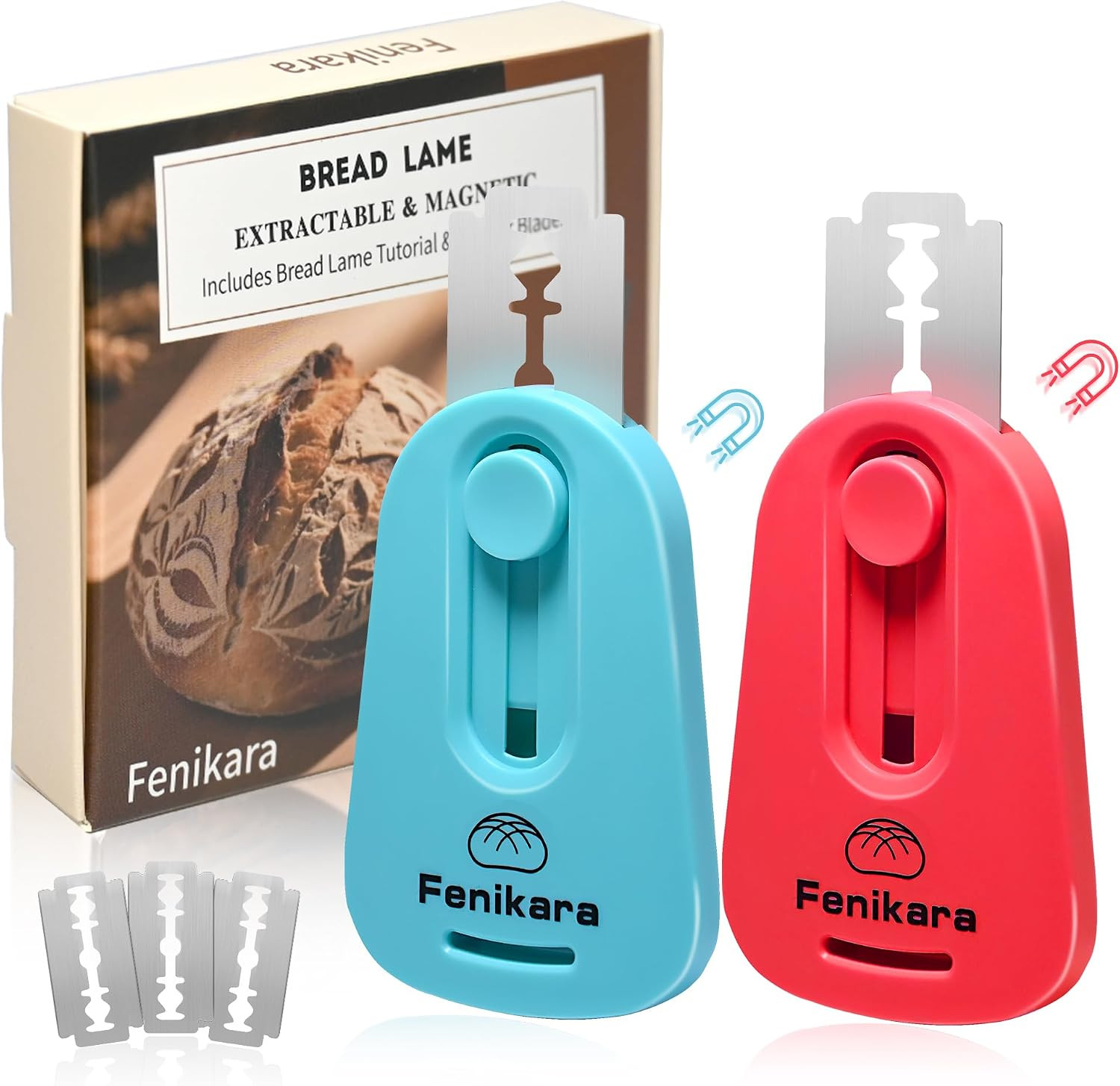

Photos from current listings. Actual item, color, and included accessories may vary.
Bread Scoring Tool Buying Guide
A bread scoring tool (lame) is a handle-and-blade system that slashes dough to control oven spring and crust direction. The key trade-off is between a fixed, thin razor for clean decorative cuts and an adjustable, thicker blade for deep structural scores. Choose a replaceable-blade lame with a firm grip for consistent results; skip novelty fixed-blade or flimsy plastic handles that tear gluten.
Median $31.81
Key takeaways
- Blade thickness: 0.2–0.3 mm straight razor for clean, low-drag cuts; thicker 0.5 mm+ blades tear delicate high-hydration dough.
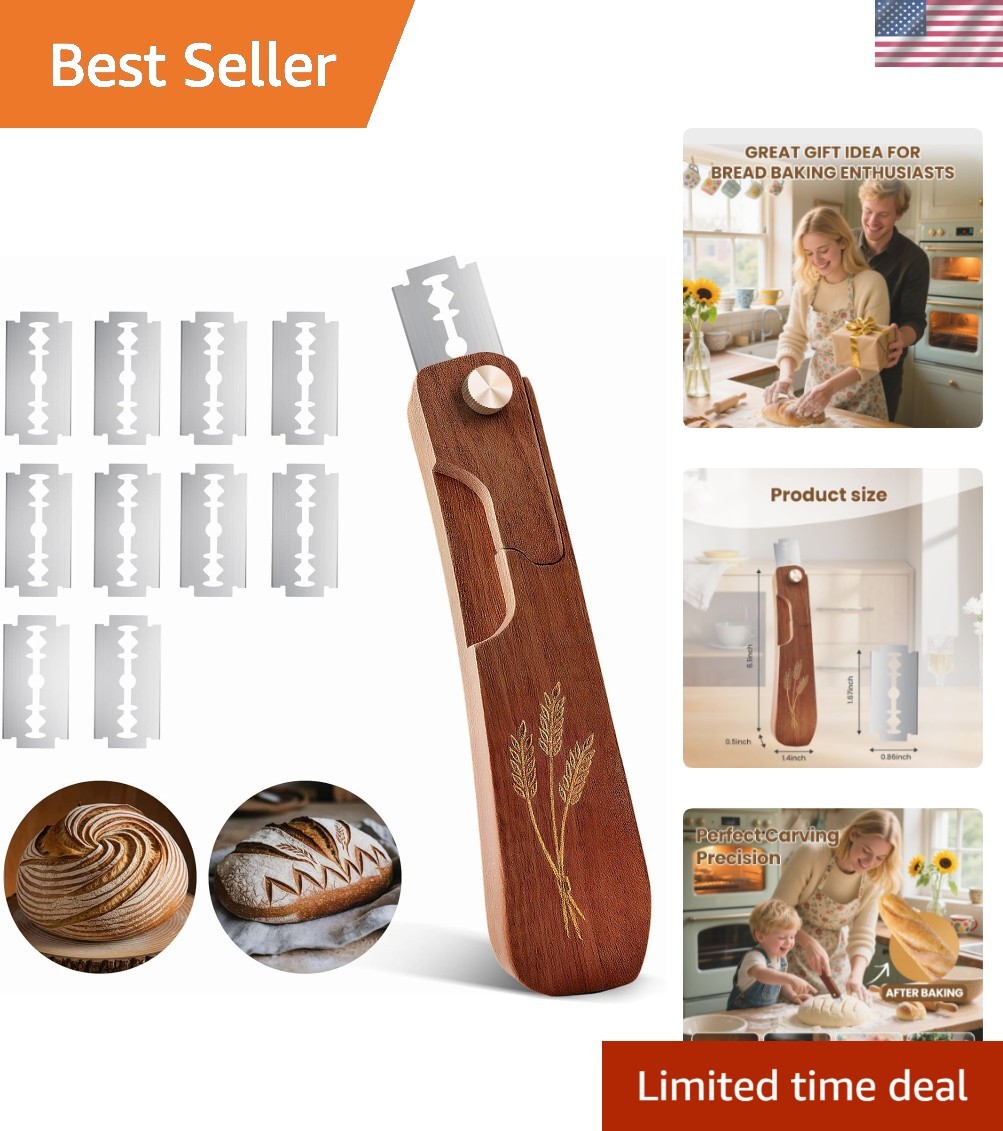
- Handle material: turned hardwood or magnetic bamboo gives grip and safe blade storage; injection-molded plastic flexes and dulls edges.
- Adjustable vs fixed: adjustable lames expose 2–10 mm of blade for ear depth control; fixed lames limit you to one scoring angle.
At a glance
- Category
- Proofing Baskets & Bread Lames
- Last updated
- Nov 28, 2026
Current offers
Highlights
- Blade thickness: 0.2–0.3 mm straight razor for clean, low-drag cuts; thicker 0.5 mm+ blades tear delicate high-hydration dough.
- Handle material: turned hardwood or magnetic bamboo gives grip and safe blade storage; injection-molded plastic flexes and dulls edges.
- Adjustable vs fixed: adjustable lames expose 2–10 mm of blade for ear depth control; fixed lames limit you to one scoring angle.
- Blade replacement standard: double-edge razor blades (e.g., 0.009 in thick) are universal; proprietary blades are hard to source.
Best use cases
- Best for artisan sourdough boules and batards: pick a curved-blade lame with a wooden handle to cut 1/2-inch-deep ears at a 30–45° angle.
- Best for high-volume bakers: choose a magnetic lame with 5–10 replacement blades and a storage case; skip single fixed-blade tools that dull after 20 loaves.
- Wrong fit for soft enriched doughs (brioche, challah): a thin razor slices cleanly, but a serrated knife or scissors prevents deflation—do not use a lame here.
- Skip expensive multi-blade kits if you only bake weekly: a single adjustable lame with a pack of razor blades covers all scoring patterns.
Buying tips
- Check blade exposure: a 2–4 mm exposure suits decorative scoring; 6–10 mm exposure is needed for deep 1-inch ears on 70%+ hydration dough.
- Choose a handle at least 4.5 inches long and 0.75 inch thick for a secure grip—shorter handles force wrist strain during precise cuts.
- Magnetic lames simplify blade changes without tools: confirm the magnet secures a standard double-edge razor blade, not proprietary inserts.
- For left-handed bakers, pick a symmetric handle or a curved blade that works in both directions; angled handles favor right-hand cuts only.
Specs
| Blade Type | Double-edge razor / curved / straight |
|---|---|
| Blade Thickness | 0.2–0.3 mm thin; 0.5 mm+ thick tears |
| Handle Material | Hardwood / bamboo vs plastic |
| Blade Adjustment | Fixed vs adjustable exposure (2–10 mm) |
Related searches
What to check before buying
- Measure your banneton diameter: a 8–9 inch round banneton needs a blade at least 4 inches long to score across the full dome in one cut.
- Check your dough hydration: above 75% hydration, use a 0.2 mm blade and a light touch; below 65%, a thicker 0.3 mm blade resists tearing.
- Confirm blade supply locally: standard double-edge razor blades (e.g., 100-pack) fit most lames; avoid tools requiring specialty blades.
- Plan storage: a lame with a magnetic cover or wooden sheath protects the blade and your fingers between bakes.
FAQ
Data sources: eBay / Amazon listings and product attribute feeds. Updated Nov 28, 2026.
Some links on this page are affiliate links. If you buy after clicking one, we may earn a commission at no extra cost to you. This does not change which products appear here or their order. Affiliate disclosure.