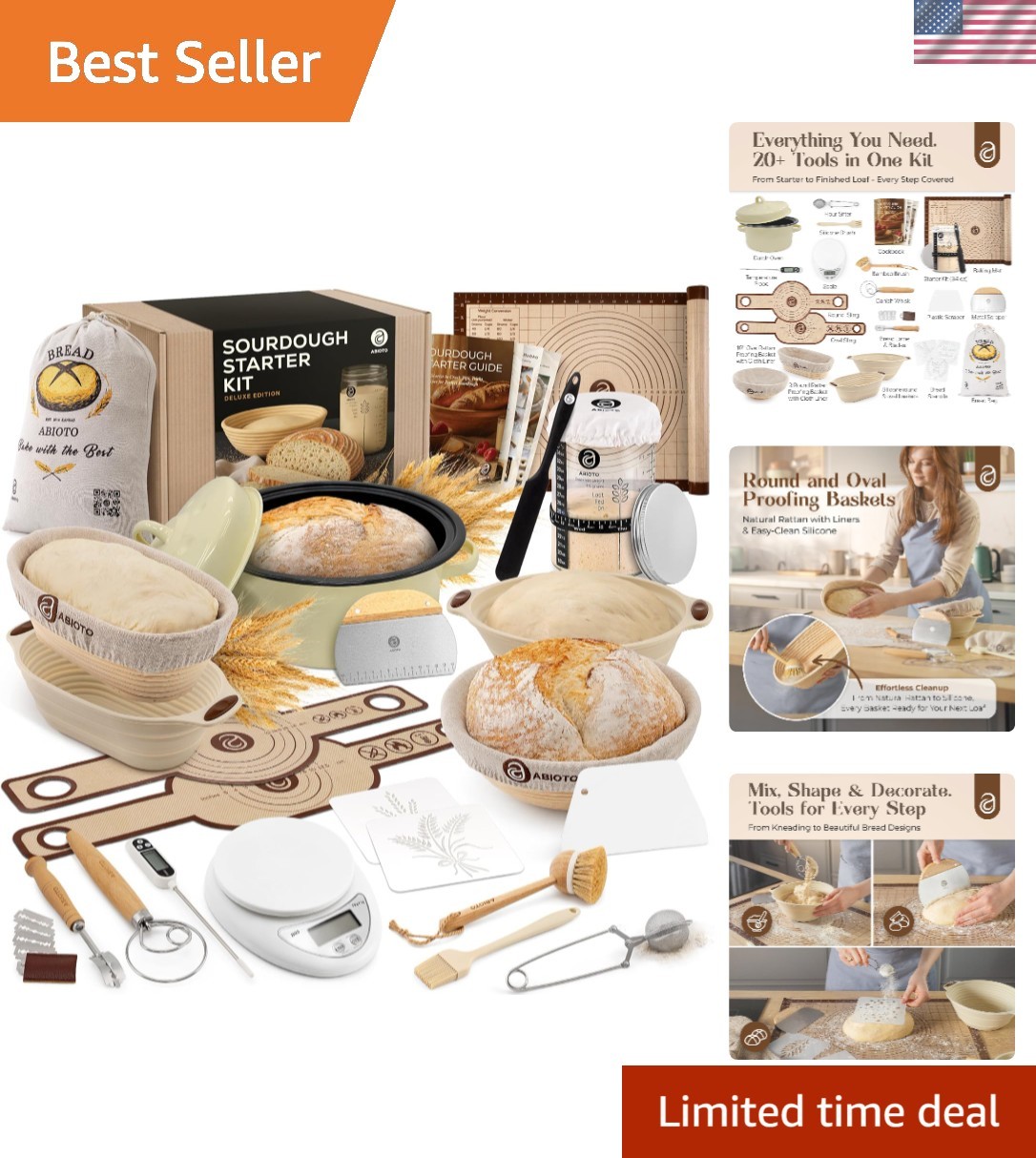

Photos from current listings. Actual item, color, and included accessories may vary.
Bread Proofing Basket Buying Guide
A bread proofing basket (banneton) is a shaped vessel—usually rattan, cane, or wood pulp—that supports dough during its final rise and imprints a spiral or ring pattern before baking. The core trade-off is between natural rattan (breathable, moisture-wicking, develops a non-stick patina) and wood-pulp or lined baskets (easier release, less maintenance, shorter lifespan). Choose natural rattan if you bake weekly and want a durable, pattern-imparting basket; choose wood pulp or lined versions only for occasional baking or very high-hydration doughs where release is critical.
Key takeaways
- Natural rattan bannetons wick moisture through coils and build a flour patina that prevents sticking; wood-pulp baskets need a cloth liner because they trap moisture and can crack with repeated wet-dough contact.
- Standard round banneton diameters: 8 in (fits 500–700 g dough), 9 in (700–1000 g), 10 in (1000–1500 g); oval bannetons typically 9×5 in or 10×6 in for batards.
- Spiral (coiled) rattan baskets impart a concentric ring pattern; ridged or lined baskets leave a smooth surface—pattern is purely cosmetic but coil gaps must be tight to avoid dough tearing.
At a glance
- Category
- Sourdough Starters & Fermentation
- Last updated
- Nov 28, 2026
Current offers
Highlights
- Natural rattan bannetons wick moisture through coils and build a flour patina that prevents sticking; wood-pulp baskets need a cloth liner because they trap moisture and can crack with repeated wet-dough contact.
- Standard round banneton diameters: 8 in (fits 500–700 g dough), 9 in (700–1000 g), 10 in (1000–1500 g); oval bannetons typically 9×5 in or 10×6 in for batards.
- Spiral (coiled) rattan baskets impart a concentric ring pattern; ridged or lined baskets leave a smooth surface—pattern is purely cosmetic but coil gaps must be tight to avoid dough tearing.
- Food-safe rattan is untreated and free of mold inhibitors; avoid baskets with strong varnish smell or visible synthetic lacquer, which can transfer odor and inhibit crust development.
Best use cases
- Best fit: weekly sourdough baker making 700–1000 g boules → choose a 9-inch natural rattan round banneton with tight coils and no liner; skip wood-pulp or lined baskets that mask the crust pattern.
- Best fit: batch baker producing two or more loaves per session → buy two identical 8- or 9-inch rattan baskets so dough shapes and proofing times stay consistent; skip single oversized 10-inch baskets that force awkward dough division.
- Best fit: high-hydration (75%+) dough or occasional baker → a wood-pulp basket with a cotton liner releases wet dough cleanly and costs less; skip natural rattan if you bake less than monthly, since unused rattan can dry-crack.
- Wrong fit: baking sandwich loaves or rye in pans → proofing baskets are for free-form hearth loaves; skip bannetons entirely and use a loaf pan for pan breads.
Buying tips
- Match basket diameter to dough weight: 8 in for 500–700 g, 9 in for 700–1000 g, 10 in for 1000–1500 g; an undersized basket forces dough up the sides and collapses the crumb.
- Choose coiled rattan with gaps under 2 mm and a smooth, splinter-free rim; loose coils snag dough and leave deep ridges that tear during scoring.
- Oval bannetons suit batards and baguette-adjacent shapes; round bannetons suit boules—buy the shape that matches your final loaf, not the basket that looks decorative.
- Skip baskets sold with a strong lacquer or paint finish; bare, untreated rattan or food-grade wood pulp is the durable, odor-neutral choice for repeated use.
Specs
| Material | Natural rattan vs wood pulp |
|---|---|
| Shape | Round boule / Oval batard |
| Diameter | 8 / 9 / 10 in (round) |
| Liner | Bare rattan / Cloth-lined pulp |
Related searches
What to check before buying
- Measure your proofing space: a 9-inch round basket needs at least 10 inches of clearance in a proofing box or refrigerator shelf; oval baskets need length clearance equal to their long axis plus 2 inches.
- Confirm your dough weight per loaf before choosing diameter—weigh your typical flour plus water plus starter to pick 8-, 9-, or 10-inch rather than guessing.
- Check that the basket ships with or without a liner: natural rattan needs no liner but benefits from a dusting of rice flour; wood-pulp baskets require a cloth liner for clean release.
- Verify the basket is untreated and food-safe—no varnish, paint, or synthetic coating—since these can transfer odor and impair crust browning.
FAQ
Data sources: eBay / Amazon listings and product attribute feeds. Updated Nov 28, 2026.
Some links on this page are affiliate links. If you buy after clicking one, we may earn a commission at no extra cost to you. This does not change which products appear here or their order. Affiliate disclosure.