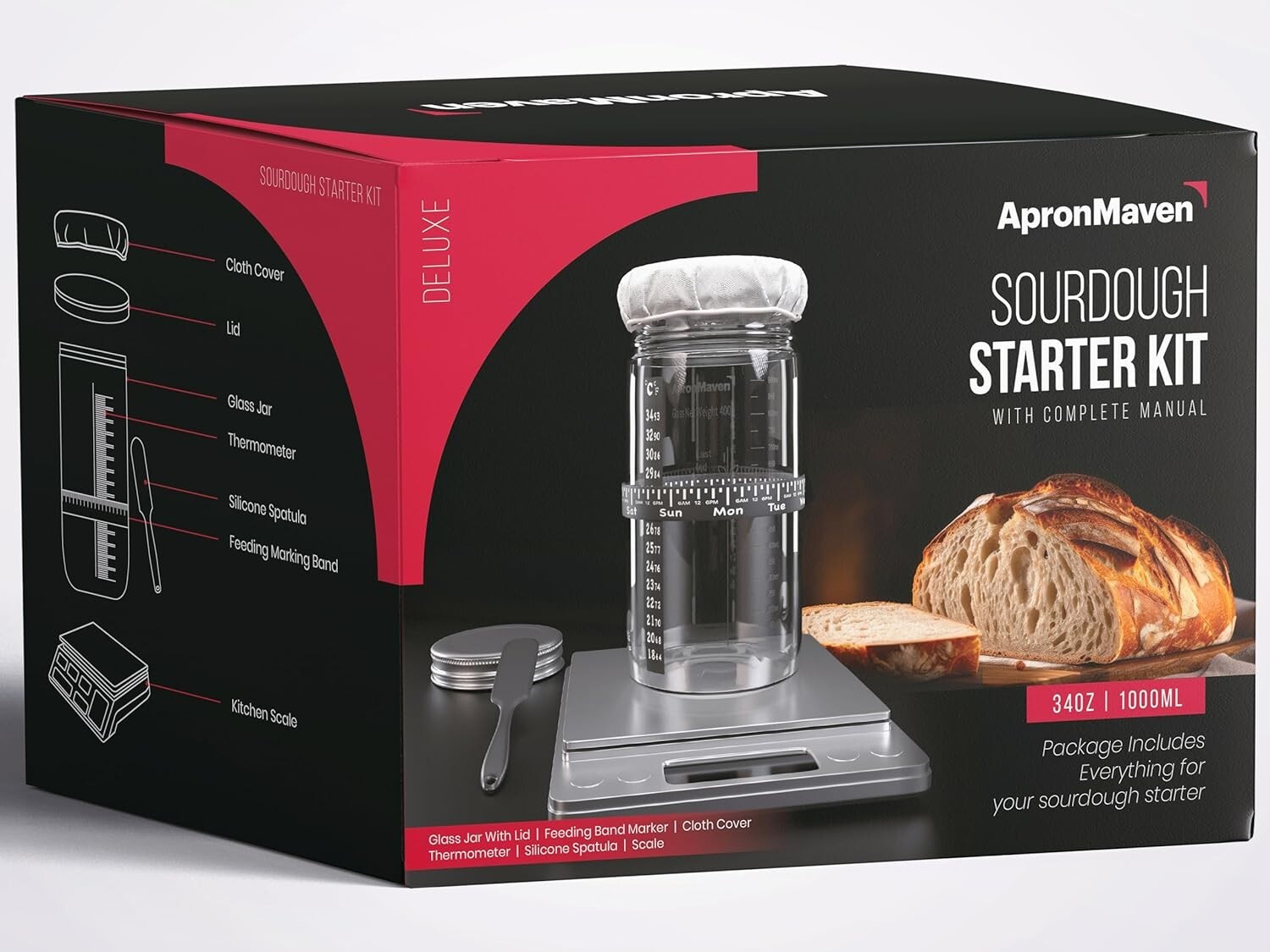

Photos from current listings. Actual item, color, and included accessories may vary.
Easy Sourdough Starter Buying Guide
An easy sourdough starter is a dehydrated or live culture paired with a feeding routine designed to minimize discard and maintenance. The core trade-off is between a shelf-stable dried culture with a fixed strain profile and a fresh live starter that arrives active but requires immediate feeding. Choose a dried starter with clear strain and feeding instructions if you want low maintenance; choose a live starter only if you will bake within days of arrival.
Key takeaways
- Dried starters are freeze-dried Lactobacillus and wild yeast blends that revive in 3-5 days with flour and water; live starters arrive active but decline within 7-10 days without feeding.
- Starter hydration determines texture: 100% hydration (equal flour and water by weight) is pourable and easy to mix; 50-60% stiff starters resist hooch but need kneading into dough.
- Whole-grain rye or wheat flour accelerates fermentation because of higher enzyme and nutrient content; all-purpose white flour produces a milder flavor and slower rise.
At a glance
- Category
- Sourdough Starters & Fermentation
- Last updated
- Nov 28, 2026
Current offers
Highlights
- Dried starters are freeze-dried Lactobacillus and wild yeast blends that revive in 3-5 days with flour and water; live starters arrive active but decline within 7-10 days without feeding.
- Starter hydration determines texture: 100% hydration (equal flour and water by weight) is pourable and easy to mix; 50-60% stiff starters resist hooch but need kneading into dough.
- Whole-grain rye or wheat flour accelerates fermentation because of higher enzyme and nutrient content; all-purpose white flour produces a milder flavor and slower rise.
- A digital scale with 1 g resolution is mandatory for consistent feeding ratios; volume scooping drifts by 20-30% and causes unstable rise times.
Best use cases
- Best fit: buy a dried starter kit with scale and jar if you bake 1-2 loaves per week and want a set-and-forget culture that stores in the pantry for months.
- Best fit: choose a live fresh starter shipped with a cold pack if you plan to bake within 5 days and want to skip the 3-5 day revival phase.
- Wrong fit: skip any starter kit that omits a gram-resolution scale; volume feeding is the leading cause of stalled or inconsistent starters.
- Wrong fit: avoid stiff 50% hydration starters if you only bake sandwich loaves in a stand mixer; high-hydration 100% starters incorporate faster and more evenly.
Buying tips
- Feeding ratio rule: use 1 part starter to 5 parts flour and 5 parts water by weight for maintenance; a 1:1:1 ratio ferments too fast at room temperature above 75°F.
- Flour choice: feed with unbleached all-purpose or bread flour for stability; reserve whole-grain rye or wheat for reviving a sluggish starter or building flavor.
- Water quality: use filtered water at 75-80°F; chlorinated tap water inhibits yeast activity, and water above 110°F kills the culture.
- Storage tier: keep a backup of any starter by spreading a thin layer on parchment, drying at room temperature, and freezing; a dried backup survives 6-12 months.
Specs
| Culture Form | Dried vs live fresh |
|---|---|
| Hydration Level | 100% vs 50-60% stiff |
| Feed Ratio | 1:5:5 by weight |
| Revival Time | 3-5 days at 75-80°F |
Related searches
What to check before buying
- Measure your jar: a 1-quart wide-mouth glass jar fits 100-200 g of starter with headroom for doubling; narrow jars overflow during peak fermentation.
- Confirm your scale reads to 1 g and has a tare function; 5 g resolution is too coarse for 1:5:5 feeding ratios.
- Check your room temperature: starters ferment fastest at 75-80°F; below 65°F revival can take 7-10 days instead of 3-5.
- Verify flour freshness: flour older than 6 months or stored above 80°F has reduced enzyme activity and will slow starter revival.
FAQ
Data sources: eBay / Amazon listings and product attribute feeds. Updated Nov 28, 2026.
Some links on this page are affiliate links. If you buy after clicking one, we may earn a commission at no extra cost to you. This does not change which products appear here or their order. Affiliate disclosure.