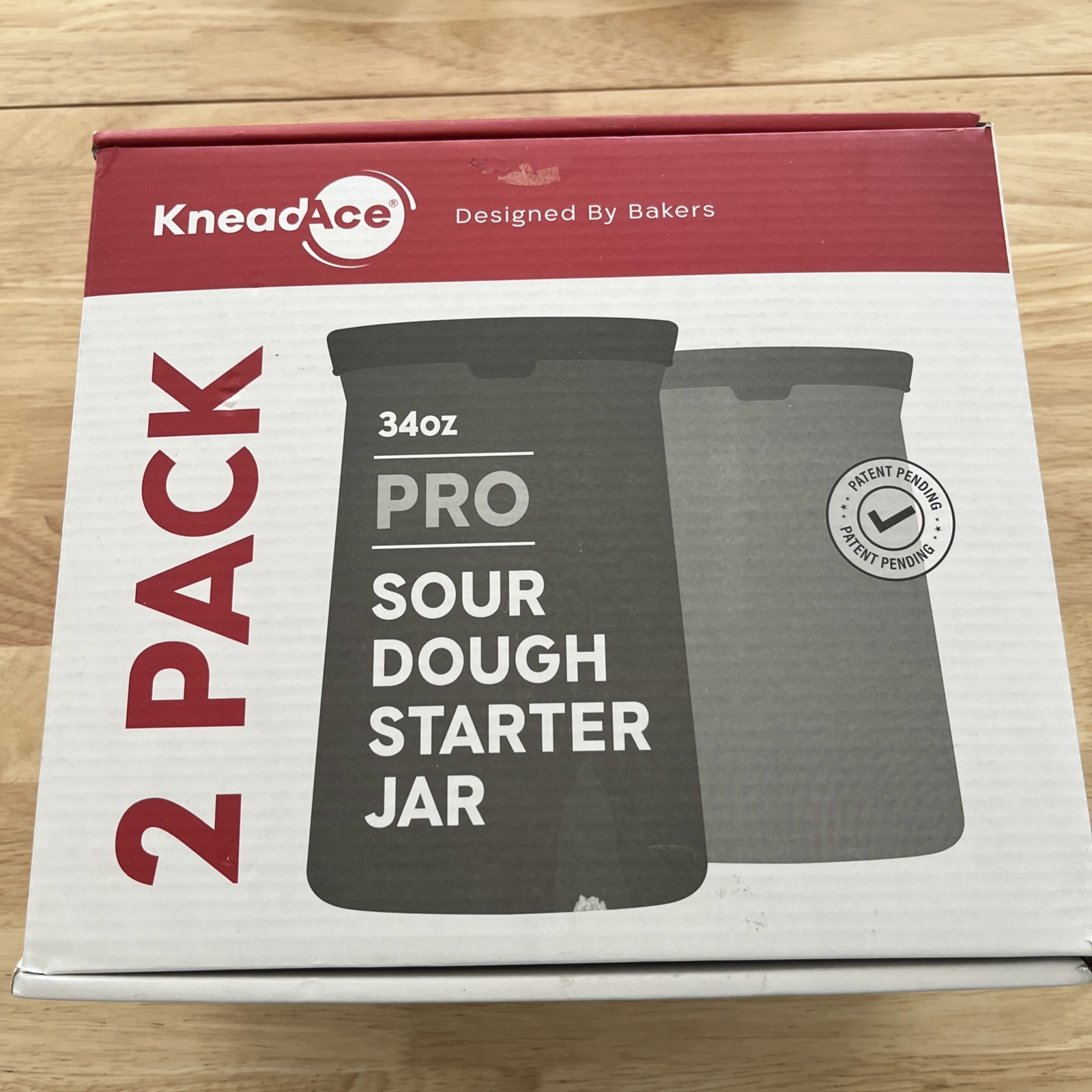

Photos from current listings. Actual item, color, and included accessories may vary.
Glass Jar Sourdough Starter Buying Guide
A glass jar sourdough starter is a clear fermentation vessel sized and shaped to culture wild yeast and bacteria, where the key trade-off is between wide-mouth accessibility and airtight sealing versus thin soda-lime glass that risks thermal shock. The decisive rule: choose borosilicate or thick-walled wide-mouth glass with a breathable or vented lid and a capacity of at least 1 L for feeding headroom, and skip any decorative or narrow-neck jar not rated for repeated warm fermentation cycles.
Median $43.00
Key takeaways
- Borosilicate glass resists thermal shock up to roughly 150°C differential, while soda-lime jars can crack when warm starter meets cool water or a cold counter.
- A 1000 ml jar supports about 500–600 g of active starter with 2–3x rise headroom; smaller 500 ml jars overflow during peak fermentation.
- Wide-mouth openings of 80–100 mm allow spatula stirring, scraping, and crust-free scooping; narrow 40–60 mm necks trap dough and impede cleaning.
At a glance
- Category
- Sourdough Starters & Fermentation
- Last updated
- Nov 28, 2026
Current offers
Highlights
- Borosilicate glass resists thermal shock up to roughly 150°C differential, while soda-lime jars can crack when warm starter meets cool water or a cold counter.
- A 1000 ml jar supports about 500–600 g of active starter with 2–3x rise headroom; smaller 500 ml jars overflow during peak fermentation.
- Wide-mouth openings of 80–100 mm allow spatula stirring, scraping, and crust-free scooping; narrow 40–60 mm necks trap dough and impede cleaning.
- Lid architecture matters: a loose glass lid or breathable cloth cover lets CO2 escape, while a clamped gasket lid is for storage only and can pressurize during active fermentation.
Best use cases
- Daily baker maintaining one starter: pick a single 1 L wide-mouth borosilicate jar with a vented or loose lid; skip 2-packs unless you actually run parallel starters.
- Beginner doing small 50 g flour feeds: a 500–750 ml jar with measurement marks is sufficient; skip oversized 2 L jars that dilute temperature stability and waste fridge space.
- Fridge storage between bakes: use a gasketed clamp lid for a tight seal to prevent drying; skip breathable cloth covers that let the surface oxidize and form a dark crust.
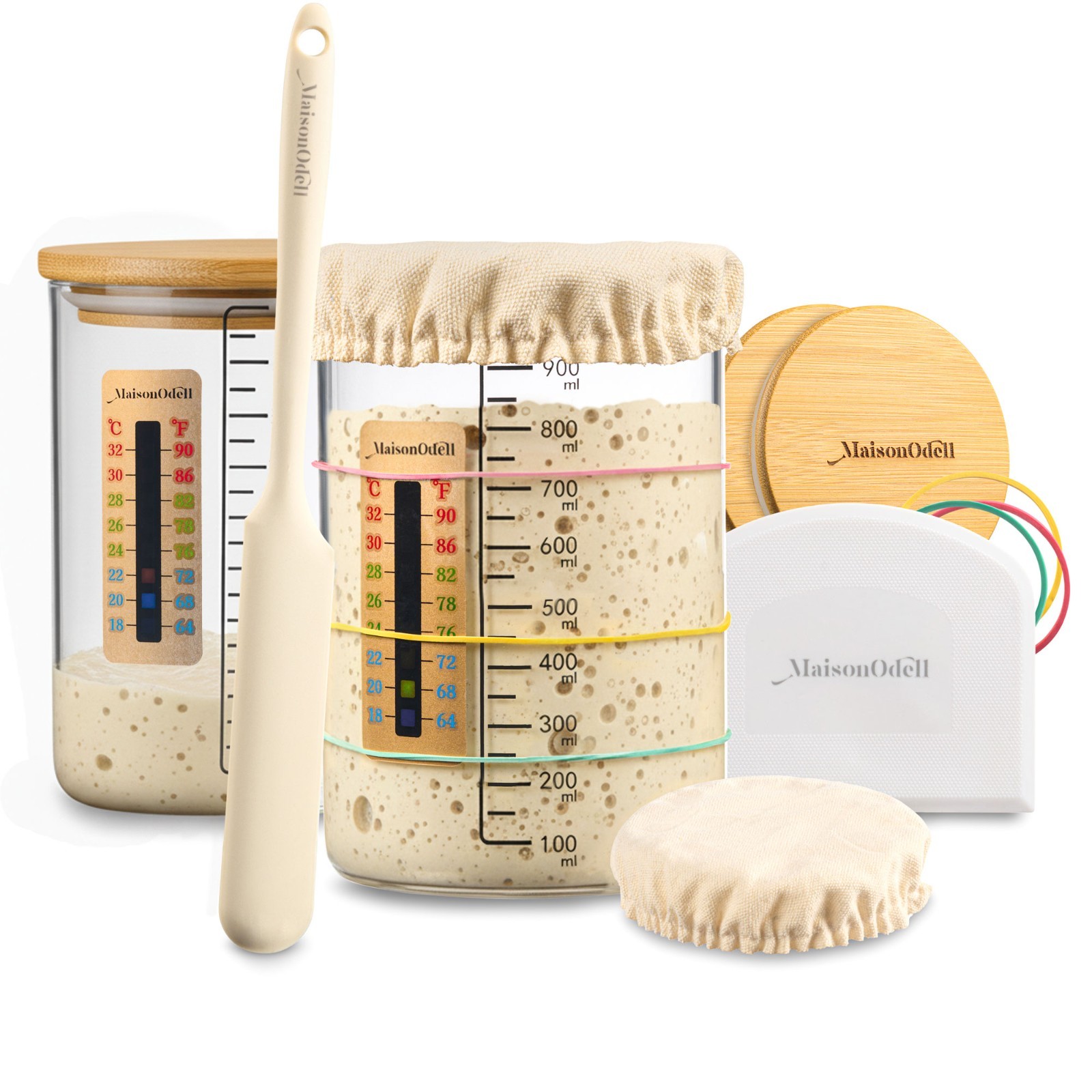
- Gift or starter-sharing kit: choose a 2 x 1000 ml set with lids and cloth covers so one jar ferments while the other is gifted; skip single decorative jars without spare lids.
Buying tips
- Size formula: jar capacity should be at least 3x your typical flour weight plus water, so a 100 g flour / 100 g water feed needs 600 ml minimum; 1 L is the safe standard.
- Demand borosilicate or thick tempered glass; thin soda-lime jars under 2 mm wall thickness crack under thermal shock from warm water or dishwasher cycles.
- Check the mouth diameter: 80 mm or wider accepts a spatula and allows thorough scraping; narrow-neck mason styles are harder to clean and dry.
- Prefer jars with embossed or printed volume graduations at 250/500/750/1000 ml so you can track rise ratio without a separate measuring cup.
Specs
| Glass Type | Borosilicate vs soda-lime / tempered |
|---|---|
| Capacity | 500 ml / 1000 ml / 2000 ml |
| Mouth Diameter | 80-100 mm wide-mouth vs narrow |
| Lid Style | Loose glass / cloth / gasketed clamp |
Related searches
What to check before buying
- Measure your fridge shelf clearance and cabinet height: a 1 L wide-mouth jar with lid typically stands 15–18 cm tall, and clamp lids add 2–3 cm.
- Confirm your feed volume math: total starter mass after feeding must not exceed one-third of jar capacity to leave rise headroom.
- Verify lid compatibility with your workflow: breathable cloth or loose glass for active fermentation, gasketed clamp lid only for cold storage.
- Check dishwasher and thermal limits: borosilicate is dishwasher-safe, but never move a jar directly from a hot wash to a cold counter or freezer.
FAQ
Data sources: eBay / Amazon listings and product attribute feeds. Updated Nov 28, 2026.
Some links on this page are affiliate links. If you buy after clicking one, we may earn a commission at no extra cost to you. This does not change which products appear here or their order. Affiliate disclosure.