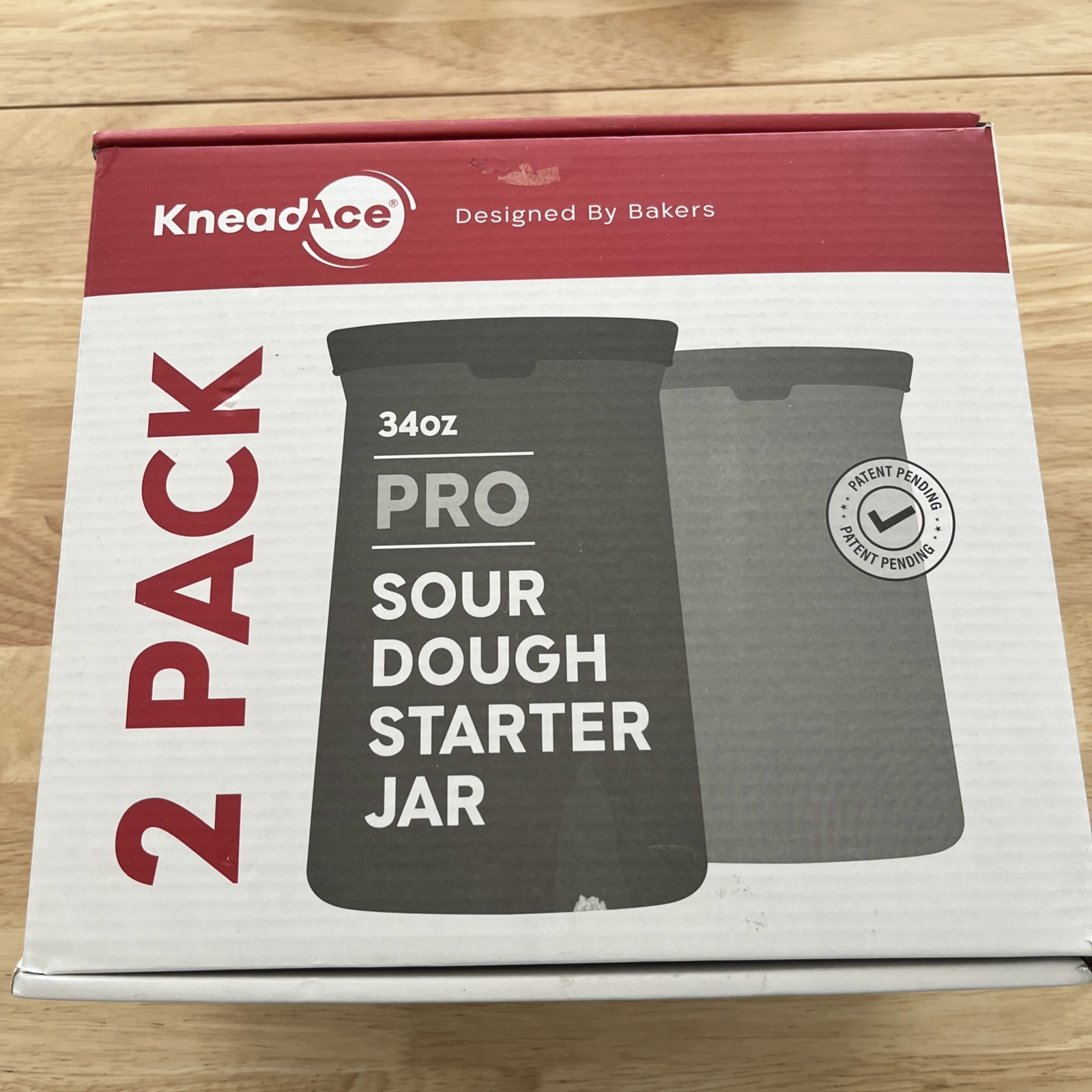

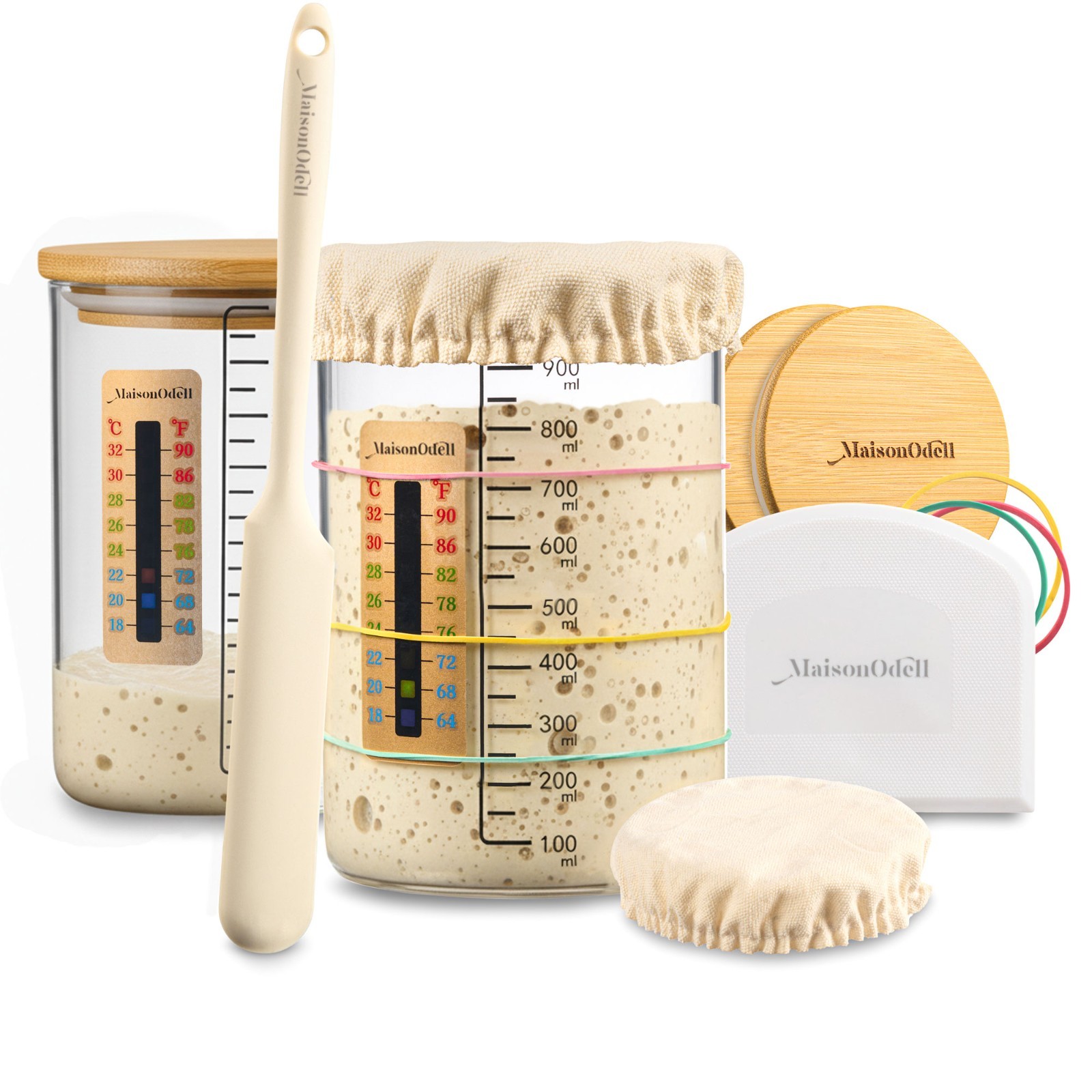
Photos from current listings. Actual item, color, and included accessories may vary.
Glass Sourdough Starter Jar Buying Guide
A glass sourdough starter jar is a clear fermentation vessel that lets you visually track rise, bubble activity, and hooch development without opening the lid. The primary trade-off is between thin soda-lime glass with wide-mouth lids that seal poorly and borosilicate or thick-walled jars with gasket-sealed, date-marked lids that hold humidity and resist thermal shock. Choose borosilicate or thick soda-lime glass with a silicone-gasket lid and volume graduations; skip thin decorative glass with metal screw lids that rust and fail to seal.
Median $43.00
Key takeaways
- Borosilicate glass resists thermal shock up to ~150°C and handles hot water rinses; thin soda-lime glass can crack above 60-70°C.
- Silicone-gasket lids create an airtight seal for consistent hydration; un-gasketed metal screw lids leak CO2 and rust at the threads.
- 1000 ml (34 oz) capacity supports 500-700 g starter with 2-3x rise headroom; smaller 500 ml jars overflow during peak fermentation.
At a glance
- Category
- Sourdough Starters & Fermentation
- Last updated
- Nov 28, 2026
Current offers
Highlights
- Borosilicate glass resists thermal shock up to ~150°C and handles hot water rinses; thin soda-lime glass can crack above 60-70°C.
- Silicone-gasket lids create an airtight seal for consistent hydration; un-gasketed metal screw lids leak CO2 and rust at the threads.
- 1000 ml (34 oz) capacity supports 500-700 g starter with 2-3x rise headroom; smaller 500 ml jars overflow during peak fermentation.
- Wide-mouth 3.5-4 inch openings allow spatula stirring and one-piece lid removal; narrow-neck jars trap dough and complicate cleaning.
Best use cases
- Best fit: daily home bakers maintaining 100-300 g starter should pick a 1000 ml borosilicate jar with gasket lid and gram/ounce markings for reliable feeding ratios.
- Best fit: bakers running multiple starters or high-hydration (100%+) recipes should buy a 2-pack of 1000 ml jars to separate wheat and rye cultures without cross-contamination.
- Wrong fit: anyone fermenting more than 700 g of starter per jar needs a 1.5-2 L vessel; a 1000 ml jar will overflow and make a mess on the counter.
- Skip: decorative clamp-lid jars with rubber gaskets not rated for food fermentation—they trap pressure and lack volume markings for tracking rise.
Buying tips
- Match jar volume to starter mass: keep starter at 50-70% of jar capacity so a 1000 ml jar handles up to ~700 g at peak rise.
- Choose borosilicate over soda-lime glass if you rinse with hot water; borosilicate tolerates thermal shock while soda-lime can crack.
- Insist on a silicone-gasket lid or airlock-compatible lid; plain metal screw bands corrode and lose seal within weeks of acidic contact.
- Look for molded gram and ounce graduations on the side—without them you cannot reliably judge doubling time or feed at a consistent ratio.
Specs
| Glass Type | Borosilicate vs soda-lime |
|---|---|
| Capacity | 500 ml / 1000 ml / 1.5-2 L |
| Lid Seal | Silicone gasket vs metal screw |
| Mouth Width | Wide-mouth 3.5-4 in vs narrow |
Related searches
What to check before buying
- Measure your shelf or counter clearance: a 1000 ml jar stands roughly 6-7 inches tall with lid, so confirm cabinet or counter height.
- Confirm your fridge space: two 1000 ml jars side by side need about 7-8 inches of width for cold retardation storage.
- Check lid compatibility: gasket lids must fit the jar's mouth diameter (typically 3.5-4 inches); airlock lids require a drilled grommet.
- Verify glass type before hot-water cleaning—borosilicate handles boiling rinses, soda-lime needs warm water only to avoid thermal shock.
FAQ
Data sources: eBay / Amazon listings and product attribute feeds. Updated Nov 28, 2026.
Some links on this page are affiliate links. If you buy after clicking one, we may earn a commission at no extra cost to you. This does not change which products appear here or their order. Affiliate disclosure.