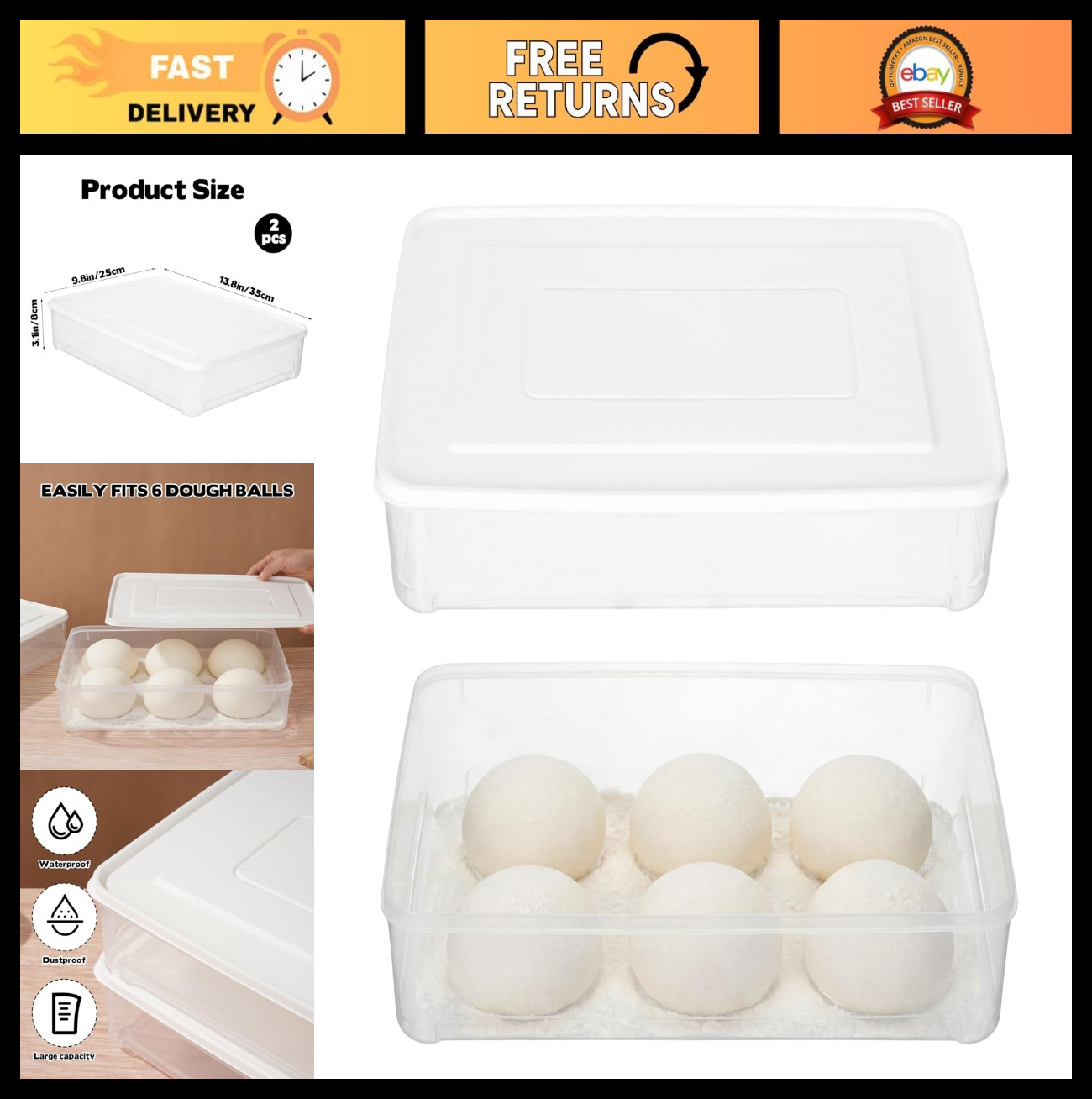

Photos from current listings. Actual item, color, and included accessories may vary.
Plastic Container Buying Guide
A plastic container for sourdough starter is a dedicated vessel that controls airflow, moisture, and light to keep wild yeast and bacteria fermenting predictably. The core trade-off is between cheap, thin PP tubs that crack or retain odors and food-grade, thick-walled PP or PC containers with airtight or vented lids. Choose a container rated food-safe with a volume at least 4x your starter's peak rise and a lid that seals but can vent; skip any unmarked or thin-walled container not designed for repeated wet-fermentation cycles.
Key takeaways
- Food-grade PP (polypropylene, recycle code 5) resists warping and is the standard for wet doughs; PC (polycarbonate) offers clarity but can craze over time.
- Wall thickness of 1.5–3 mm separates durable containers from disposable deli quarts that flex and crack at the rim after repeated washing.
- Airtight gasket lids trap CO2 for anaerobic flavor development; vented or loose-fit lids suit starter maintenance where gas release prevents blowouts.
At a glance
- Category
- Sourdough Starters & Fermentation
- Last updated
- Nov 28, 2026
Current offers
Highlights
- Food-grade PP (polypropylene, recycle code 5) resists warping and is the standard for wet doughs; PC (polycarbonate) offers clarity but can craze over time.
- Wall thickness of 1.5–3 mm separates durable containers from disposable deli quarts that flex and crack at the rim after repeated washing.
- Airtight gasket lids trap CO2 for anaerobic flavor development; vented or loose-fit lids suit starter maintenance where gas release prevents blowouts.
- Volume headroom matters: choose 1 qt (1 L) minimum for maintaining 100–200 g starter, 2–4 qt (2–4 L) for bulk builds or proofing dough.
Best use cases
- Best fit: a 1 qt (1 L) clear PP container with a screw or snap lid for maintaining a 100 g starter on a counter—easy to see rise and mark with a rubber band.
- Best fit: a 4 qt (4 L) square PP tub with a vented lid for bulk fermentation of high-hydration doughs or building starter volume for weekly baking.
- Wrong fit: thin deli quart containers or unmarked plastic—they crack, retain sour odors, and lack the headroom for a doubling starter.
- Skip: decorative glass jars with narrow mouths for large builds—wide-mouth plastic is easier to stir, scrape, and clean between feedings.
Buying tips
- Match volume to feeding routine: use a container at least 4x the starter weight in grams (e.g., 200 g starter needs 800 ml+ capacity) to avoid overflow during peak rise.
- Prioritize food-grade PP (recycle code 5) or PC with a clearly marked food-safe symbol; avoid unmarked or recycled-content plastics not rated for acidic, wet food.
- Choose a lid type by workflow: gasket-sealed for anaerobic flavor and fridge storage, vented or loose-fit for counter maintenance where daily gas release prevents lid blow-off.
- Check dimensions against your fridge shelf and proofing space; square or rectangular tubs use space more efficiently than round deli containers for bulk dough.
Specs
| Material Grade | Food-grade PP (code 5) vs PC |
|---|---|
| Lid Seal Type | Gasket airtight / Screw / Vented |
| Capacity Range | 1 qt (1 L) to 4 qt (4 L) |
| Wall Thickness | 1.5–3 mm durable vs thin deli |
Related searches
What to check before buying
- Measure your peak starter or dough volume (weight in grams ÷ ~1 g/ml) and confirm the container's stated capacity is at least 4x that number.
- Verify the container is marked food-safe (PP code 5 or PC) and rated for repeated wet, acidic contact—not just dry storage.
- Confirm lid seal type (gasket, screw, snap, vented) matches whether you need anaerobic fermentation or easy gas release.
- Check external dimensions fit your fridge shelf, counter footprint, and any proofing drawer; square tubs maximize space.
FAQ
Data sources: eBay / Amazon listings and product attribute feeds. Updated Nov 28, 2026.
Some links on this page are affiliate links. If you buy after clicking one, we may earn a commission at no extra cost to you. This does not change which products appear here or their order. Affiliate disclosure.