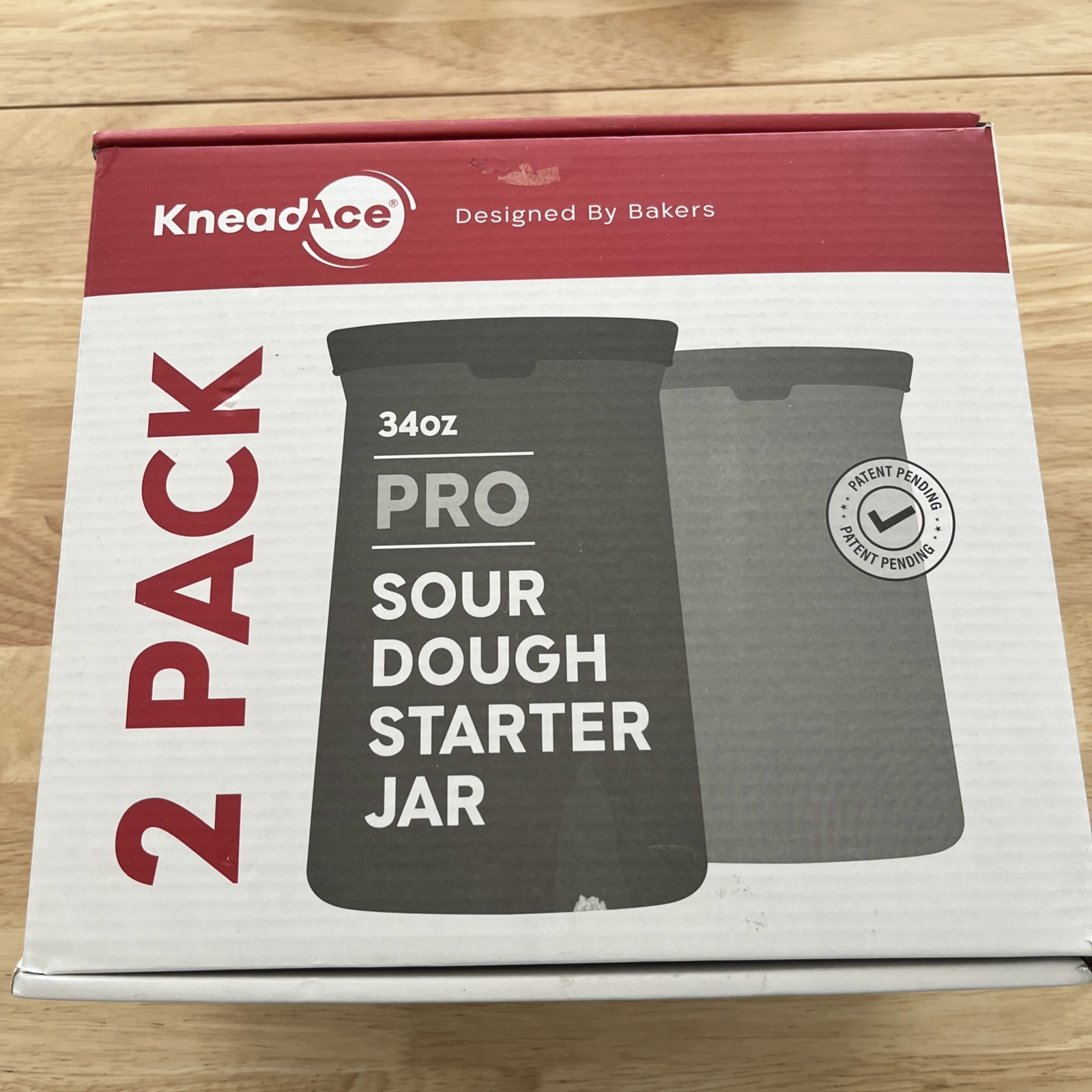

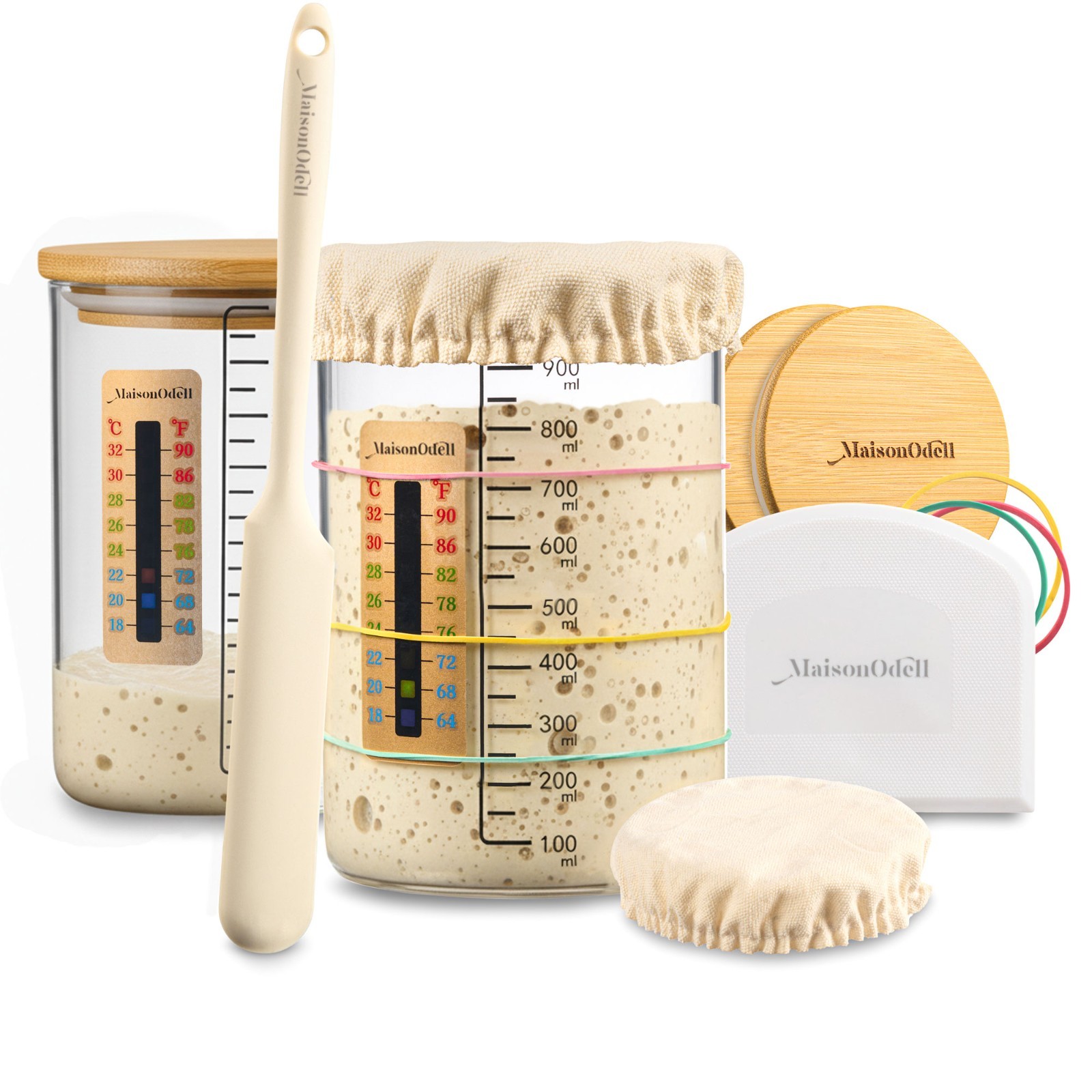
Photos from current listings. Actual item, color, and included accessories may vary.
Sourdough Glass Jar Buying Guide
A sourdough glass jar is a wide-mouth, clear glass fermentation vessel sized and shaped to let you monitor starter rise, capture wild yeast, and clean easily without flavor carryover. The primary trade-off is between thin soda-lime jars with narrow necks and thick borosilicate or tempered jars with straight walls and breathable lids. Choose a straight-sided jar of at least 1 liter with a marked fill line and a breathable or loose-fit lid; skip decorative narrow-neck jars and any jar under 500 ml for active starter maintenance.
Median $43.00
Key takeaways
- Soda-lime glass (typical mason jar) is impact-resistant but less thermal-shock tolerant than borosilicate, which handles rapid temperature changes without cracking.
- Straight-walled, wide-mouth designs (75-90 mm opening) allow full spatula access and accurate rise-level reading; narrow-neck jars trap starter and impede cleaning.
- 1-liter (1000 ml) capacity is the practical minimum for a 100 g flour starter at 1:1:1 feeding, leaving headroom for a 2-3x rise during peak fermentation.
At a glance
- Category
- Sourdough Starters & Fermentation
- Last updated
- Nov 28, 2026
Current offers
Highlights
- Soda-lime glass (typical mason jar) is impact-resistant but less thermal-shock tolerant than borosilicate, which handles rapid temperature changes without cracking.
- Straight-walled, wide-mouth designs (75-90 mm opening) allow full spatula access and accurate rise-level reading; narrow-neck jars trap starter and impede cleaning.
- 1-liter (1000 ml) capacity is the practical minimum for a 100 g flour starter at 1:1:1 feeding, leaving headroom for a 2-3x rise during peak fermentation.
- Breathable lids (cloth, paper, or one-way valve) let CO2 escape while blocking dust and insects; fully sealed lids risk pressure buildup and off-flavors.
Best use cases
- Best fit: daily starter maintainers feeding 50-100 g flour should pick a 1 L straight-sided jar with measurement marks and a cloth or loose lid for easy rise tracking.
- Best fit: refrigerator-stored starter keepers need a 500 ml-1 L jar with a tight-sealing lid to prevent drying and cross-odor absorption during cold storage.
- Wrong fit: high-volume bakers scaling to 500 g+ flour per feeding should skip 1 L jars and use 2 L+ straight-sided containers or food-grade fermentation crocks.
- Wrong fit: anyone buying a decorative narrow-neck or colored glass jar for starter will struggle to clean, stir, and monitor rise; choose clear, wide-mouth glass only.
Buying tips
- Match jar volume to feeding size: use at least 3x the volume of your fed starter (e.g., 300 ml fed starter → 1 L jar) to allow for peak rise without overflow.
- Prefer borosilicate or tempered glass for thermal-shock resistance when mixing with warm water; standard soda-lime mason jars are fine if you never exceed 50°C differentials.
- Look for embossed or printed volume markings (ml/oz) on the jar wall—this lets you track rise ratio and hydration adjustments without a separate measuring cup.
- Choose a lid system with a breathable barrier (cloth secured with a band, paper filter, or silicone one-way valve) rather than an airtight screw cap for active fermentation.
Specs
| Glass Type | Borosilicate vs Soda-lime |
|---|---|
| Capacity | 500 ml to 2 L (1 L typical) |
| Mouth Width | 75-90 mm wide-mouth |
| Lid Style | Breathable cloth/valve vs airtight |
Related searches
What to check before buying
- Measure your fridge shelf clearance and cabinet height: a 1 L straight-sided jar is typically 15-18 cm tall with lid, so confirm it fits upright where it will ferment.
- Check your starter feeding volume: if you routinely feed 100 g+ flour, confirm the jar has at least 500 ml of headroom above the fed starter line.
- Verify lid compatibility: wide-mouth mason jars accept standard 70 mm or 86 mm bands and aftermarket fermentation lids; odd-size jars may not.
- Confirm the glass is food-grade and lead-free; avoid recycled decorative glass or jars with painted exteriors that can chip into the starter.
FAQ
Data sources: eBay / Amazon listings and product attribute feeds. Updated Nov 28, 2026.
Some links on this page are affiliate links. If you buy after clicking one, we may earn a commission at no extra cost to you. This does not change which products appear here or their order. Affiliate disclosure.