
Photos from current listings. Actual item, color, and included accessories may vary.
Sourdough Jar Buying Guide
A sourdough jar is a clear, wide-mouth glass fermentation vessel (typically 500–1000 ml) used to culture, maintain, and monitor a starter. The core trade-off is between straight-sided borosilicate jars with measurement graduations for accurate rise tracking and tapered, thin soda-lime jars that make volume reads unreliable and crack under thermal shock. The decision rule: buy a straight-walled borosilicate jar with a breathable lid and etched or printed graduations; skip decorative tapered jars without volume marks.
Median $60.99 · New listings
Key takeaways
- Borosilicate glass (low thermal expansion) survives hot-water rinses and fridge-to-counter swings; soda-lime jars crack under the same thermal shock.
- Straight vertical walls with printed or etched graduations let you read rise percentage accurately; tapered shoulders distort volume readings above 500 ml.
- Wide-mouth 3.5–4 in (90–100 mm) openings allow a spatula to scrape down sides and a cloth cover to sit flush without a shoulder lip.
At a glance
- Category
- Sourdough Starters & Fermentation
- Last updated
- Nov 24, 2026
Current offers
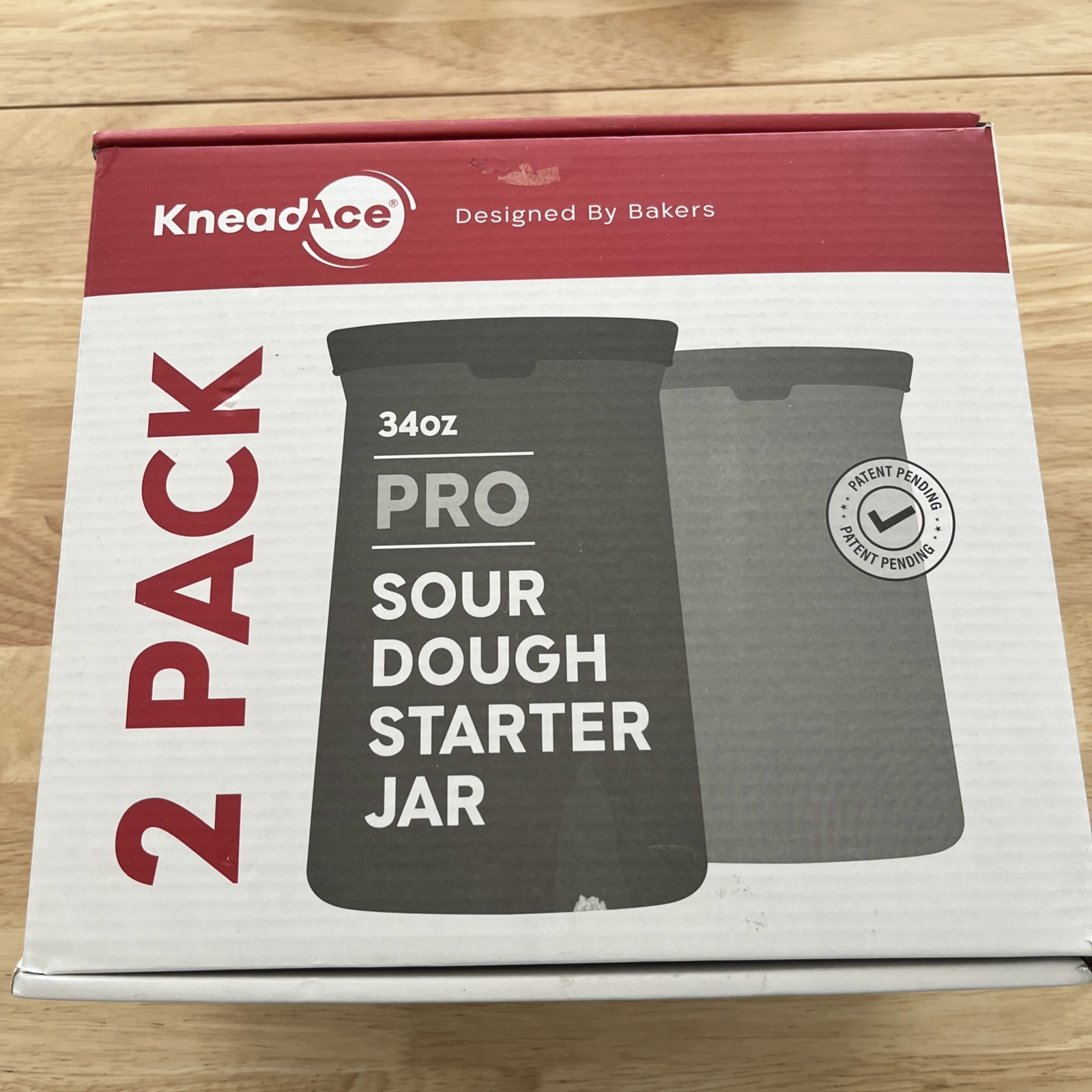 KNEADACE Pro Sourdough Starter Kit 34oz Glass Fermentation Jar 2 Pack with Lids$25.00View on eBay
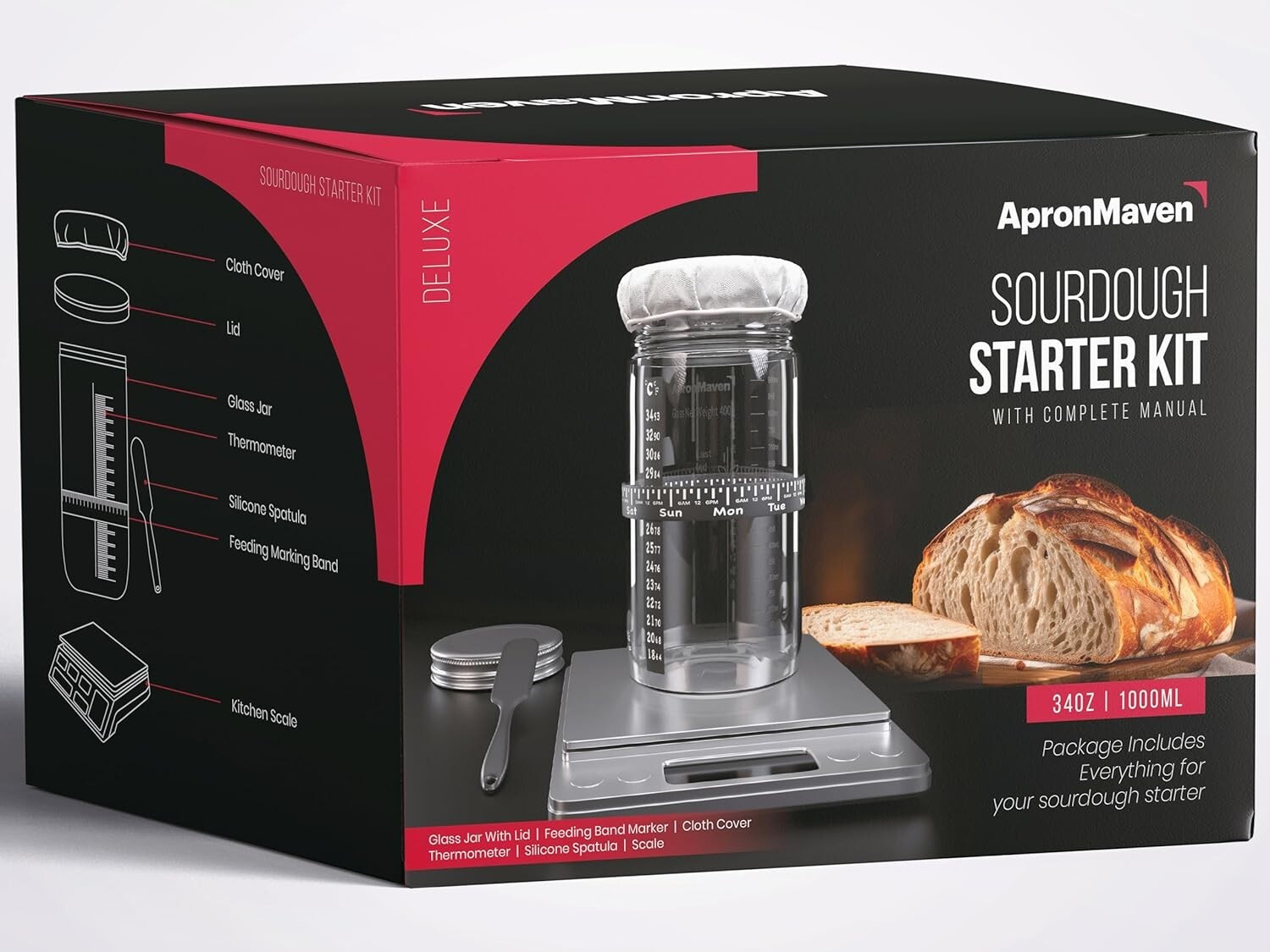 Sourdough Starter Kit Kitchen Scale jar & more For Easy Sourdough Bread Baking!$31.71View on eBay
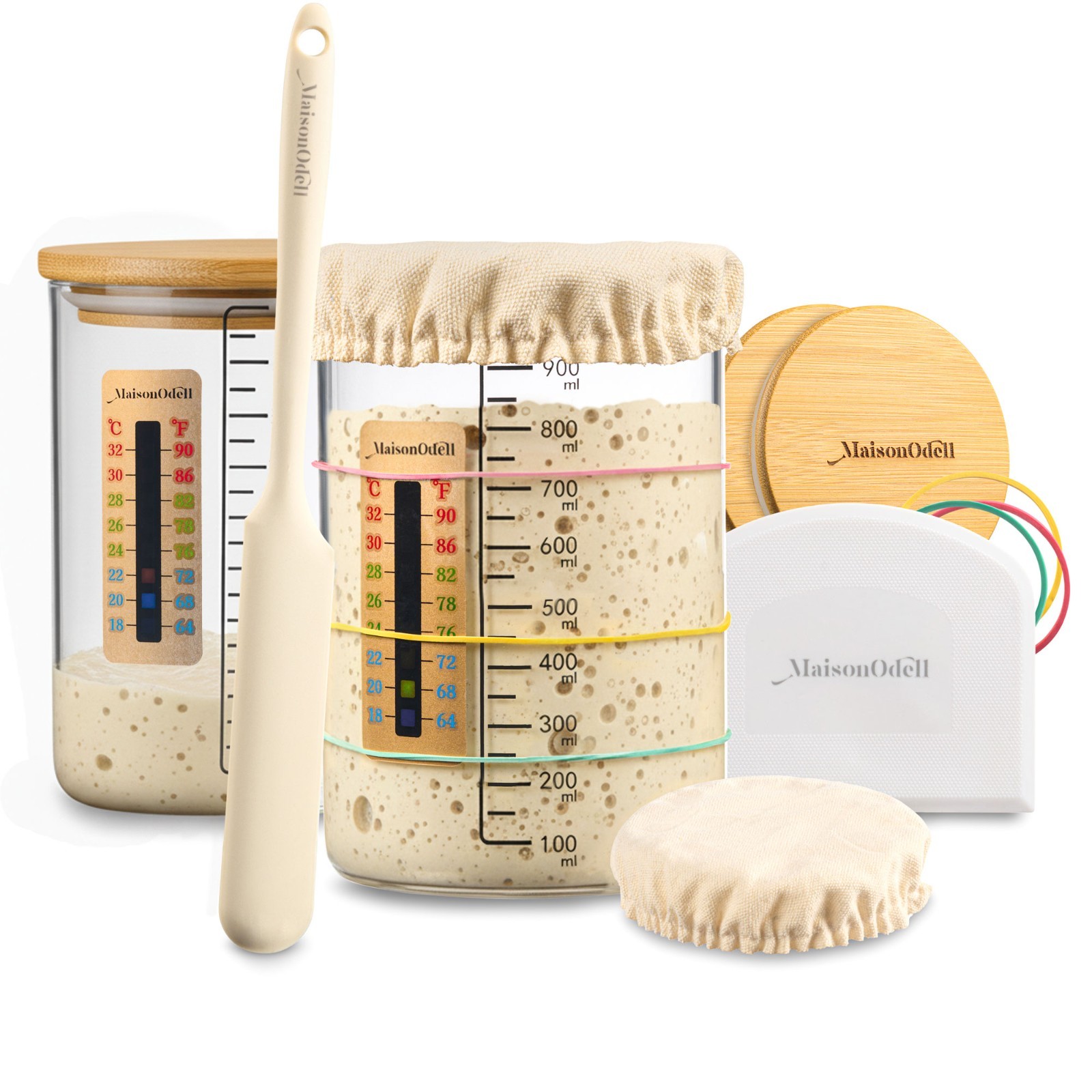 Sourdough Starter Jar Kit – 2 x 1000ml Glass Fermentation Jars | MaisonOdell$60.99View on eBay
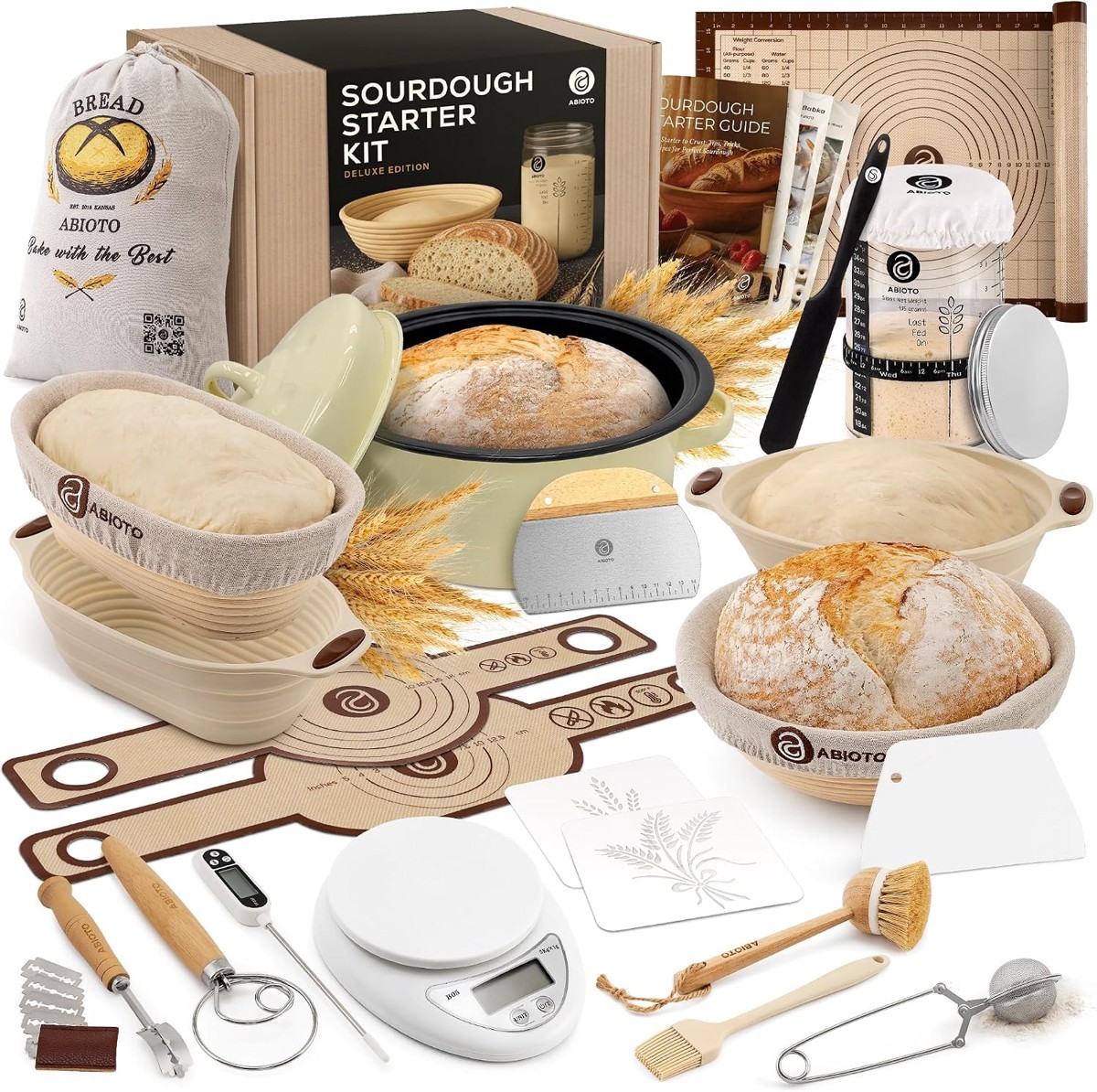 Sourdough Starter Kit w Dutch Oven Scale Proofing Baskets Jar Slings Tools$227.98New · Last checked Nov 16, 2026View on eBay
- Sourdough Starter Kit w Dutch Oven Scale Proofing Baskets Jar Slings Tools$227.98New · Last checked Nov 16, 2026View on eBay
Highlights
- Borosilicate glass (low thermal expansion) survives hot-water rinses and fridge-to-counter swings; soda-lime jars crack under the same thermal shock.
- Straight vertical walls with printed or etched graduations let you read rise percentage accurately; tapered shoulders distort volume readings above 500 ml.
- Wide-mouth 3.5–4 in (90–100 mm) openings allow a spatula to scrape down sides and a cloth cover to sit flush without a shoulder lip.
- Breathable lids (cloth band, paper filter, or loose glass) let CO2 escape while blocking fruit flies and crust; airtight clamps can stall a wet starter.
Best use cases
- Best fit: a 1000 ml straight-sided borosilicate jar with gradations and a cloth or filter lid for daily feeding and doubling tracking — pick this as your primary starter vessel.
- Best fit: a 500 ml jar for small maintenance starters kept in the fridge; a 250 ml jar is only for transporting or gifting a few tablespoons of starter.
- Wrong fit: decorative tapered crocks or swing-top clamp jars — they hide rise volume, trap pressure, and cannot be scraped clean; skip them for active culture work.
- Wrong fit: plastic containers for long-term starter storage — they scratch, harbor bacteria in micro-abrasions, and retain odors; use glass or food-grade stainless.
Buying tips
- Size rule: choose a jar at least 3x your starter's fed weight in ml — a 100 g flour + 100 g water feed (200 g total) needs a 600 ml minimum, so a 1000 ml jar leaves proper headroom for doubling.
- Material grade: specify borosilicate (often marked 'boro' or 'heat-resistant') over soda-lime; borosilicate handles 300°F+ differentials while soda-lime is rated for roughly 120°F swings.
- Lid standard: pick a jar with a breathable cover option (cloth + rubber band, paper filter, or loose-fitting glass lid); avoid airtight gasket clamps for active fermentation.
- Graduation check: choose printed or etched volume marks in 100 ml increments on a straight wall; unmarked jars force you to weigh the jar empty and track by weight instead.
Specs
| Glass Type | Borosilicate vs soda-lime |
|---|---|
| Capacity | 500 ml / 1000 ml (wide-mouth) |
| Wall Shape | Straight-sided with graduations |
| Lid Style | Breathable cloth/filter vs clamp |
Related searches
What to check before buying
- Measure your fridge shelf clearance and cabinet height: a 1000 ml jar with lid typically stands 6.5–7.5 in tall — confirm it fits upright without tilting.
- Confirm your kitchen scale reads in 1 g increments up to at least 2 kg so you can weigh jar + starter directly instead of relying on volume marks.
- Check that the jar mouth accepts your spatula and cloth cover: 90–100 mm wide-mouth is standard; narrow 70 mm necks make scraping and covering awkward.
- Verify dishwasher and thermal tolerance: borosilicate is dishwasher-safe on top rack; hand-wash soda-lime and never pour boiling water into a cold jar.
FAQ
Data sources: eBay / Amazon listings and product attribute feeds. Updated Nov 24, 2026.
Some links on this page are affiliate links. If you buy after clicking one, we may earn a commission at no extra cost to you. This does not change which products appear here or their order. Affiliate disclosure.