
Photos from current listings. Actual item, color, and included accessories may vary.
Sourdough Starter Container Buying Guide
A sourdough starter container is a wide-mouth glass jar with a breathable or vented lid that lets you observe rise, mark growth, and keep the culture clean. The core trade-off is volume versus aeration control: too small a jar overflows during peak activity, while a fully airtight lid traps gas and stalls fermentation. Choose a 1-quart (1000 ml) straight-sided glass jar with a loose or vented lid for reliable daily feeding; skip narrow-neck or plastic decorative jars that hide rise and retain odors.
Median $60.99 · New listings
Key takeaways
- Borosilicate or thick soda-lime glass resists thermal shock from warm water feeds and dishwasher cycles; thin decorative glass cracks at the shoulder.
- Straight-sided jars with printed or etched graduations let you read doubling at 100% hydration; tapered or curved jars distort volume markings.
- Vented lids or silicone gasket lids with a gas-permeable plug release CO2 while blocking dust and fruit flies; fully sealed lids build pressure and slow yeast activity.
At a glance
- Category
- Sourdough Starters & Fermentation
- Last updated
- Nov 24, 2026
Current offers
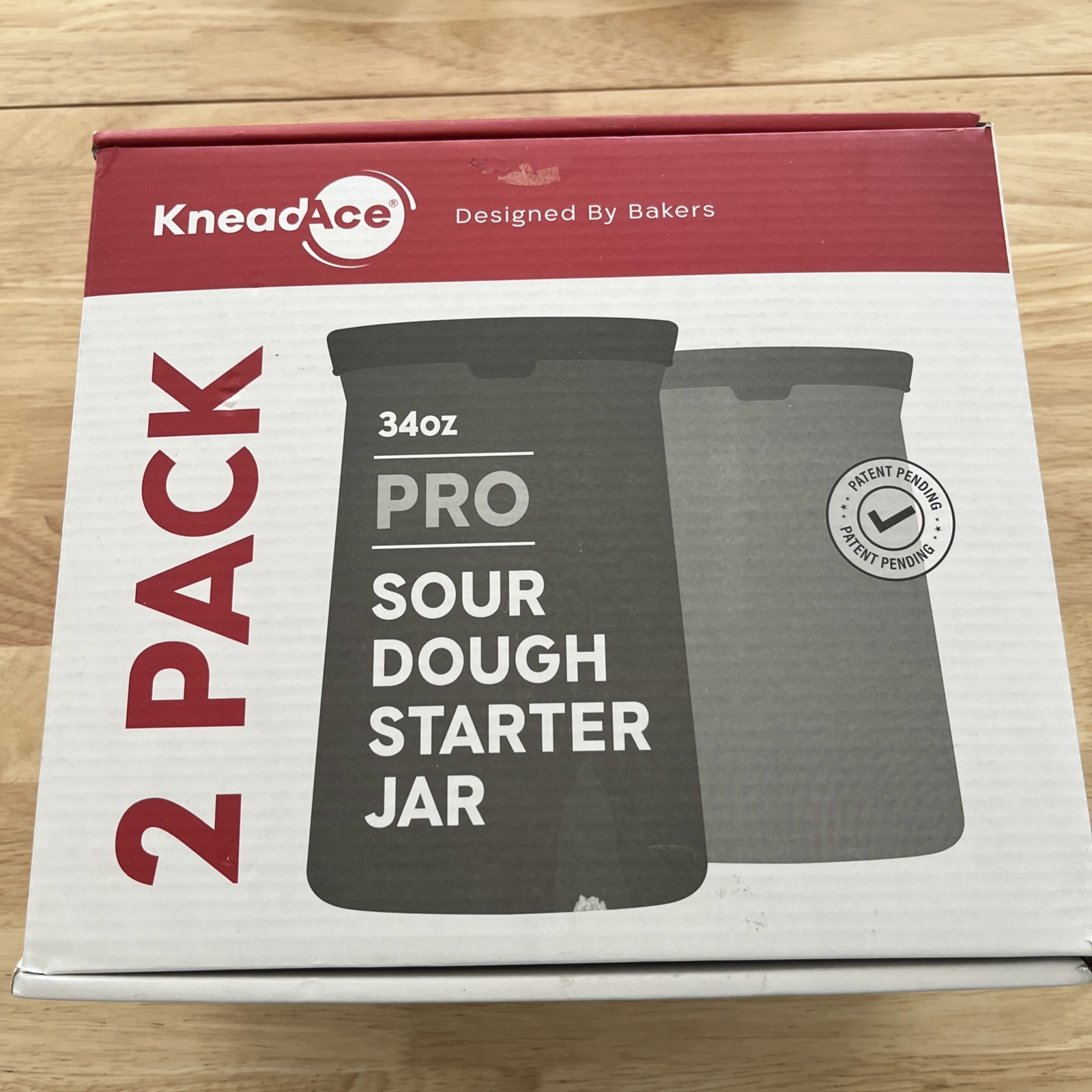 KNEADACE Pro Sourdough Starter Kit 34oz Glass Fermentation Jar 2 Pack with Lids$25.00View on eBay
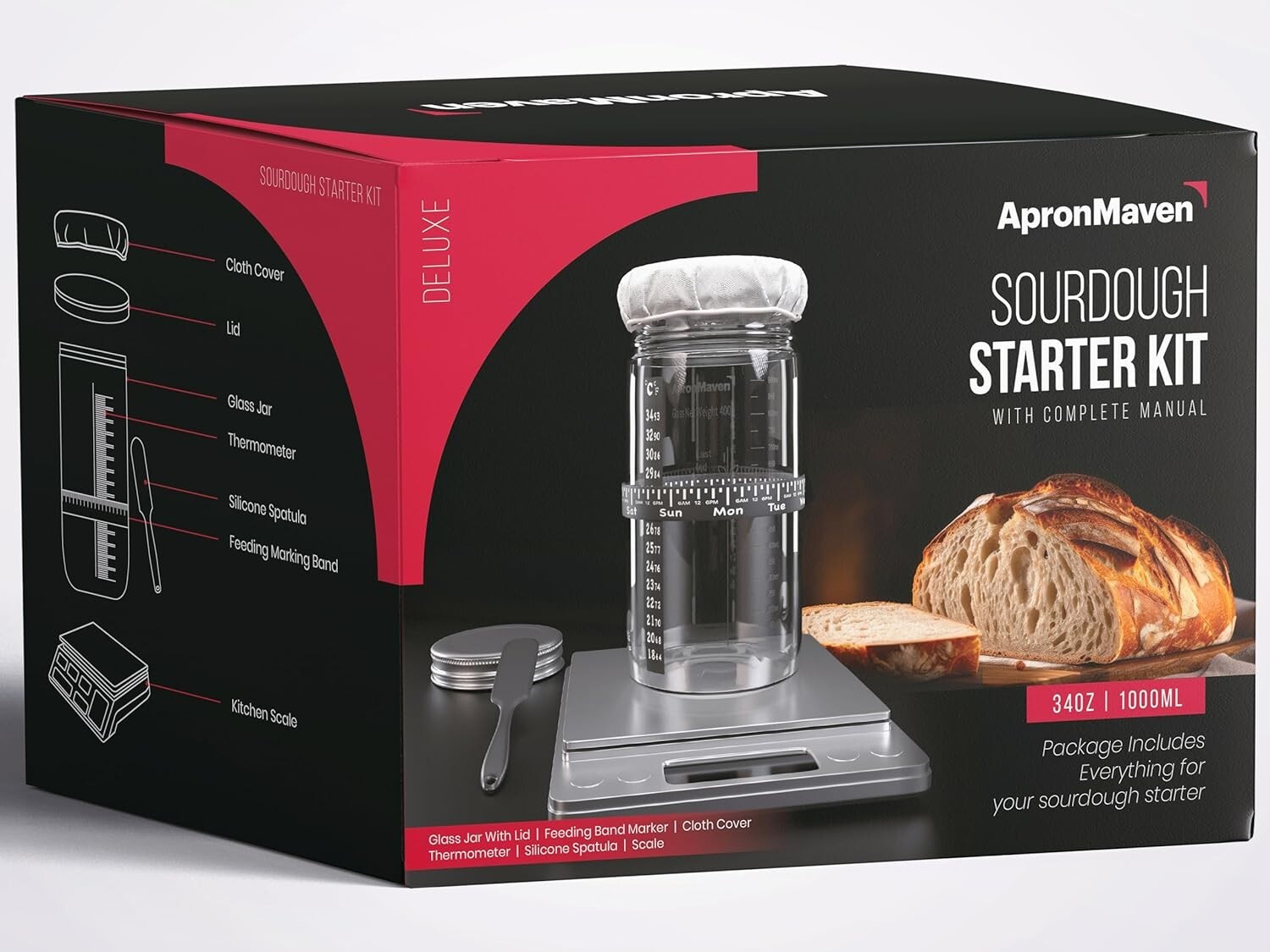 Sourdough Starter Kit Kitchen Scale jar & more For Easy Sourdough Bread Baking!$31.71View on eBay
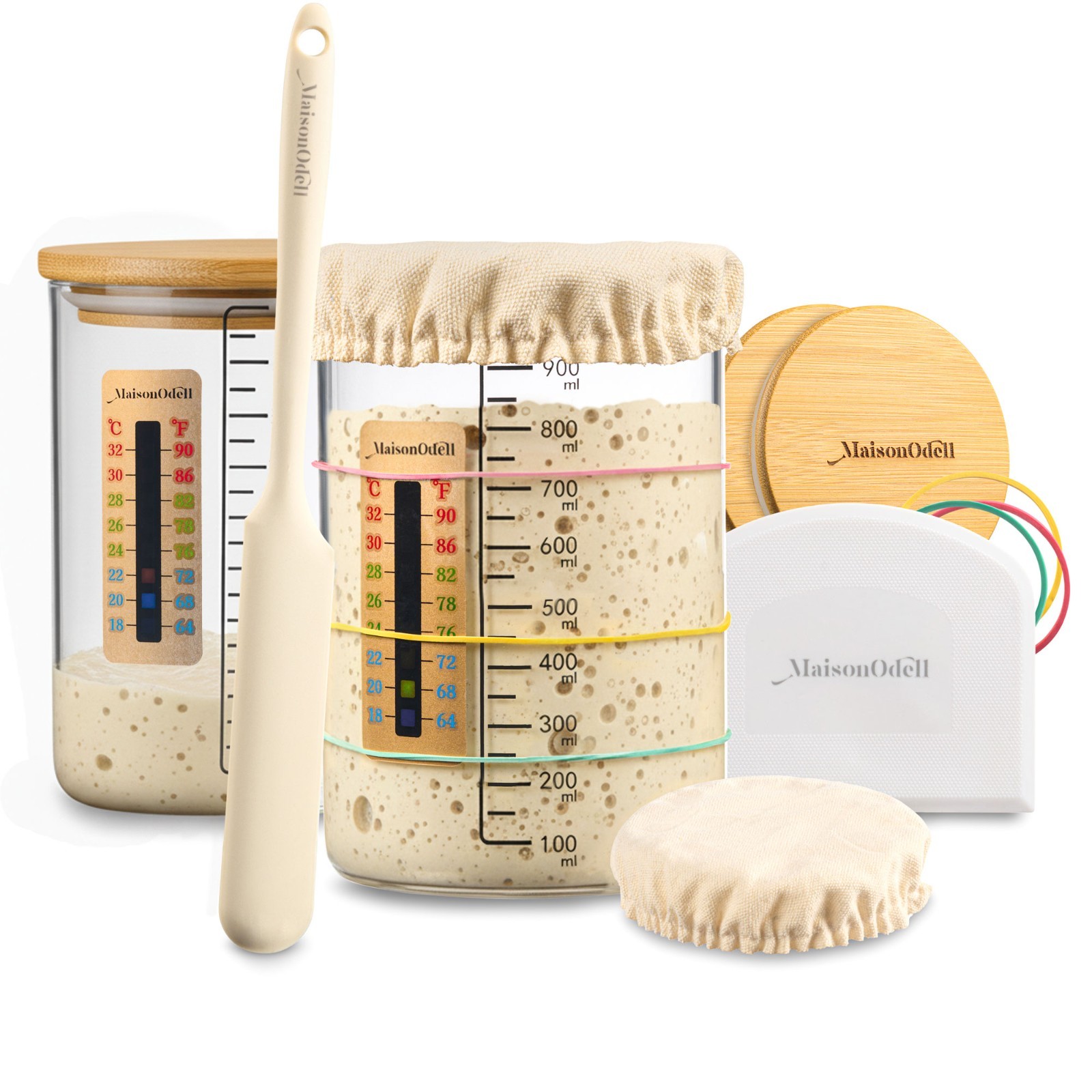 Sourdough Starter Jar Kit – 2 x 1000ml Glass Fermentation Jars | MaisonOdell$60.99View on eBay
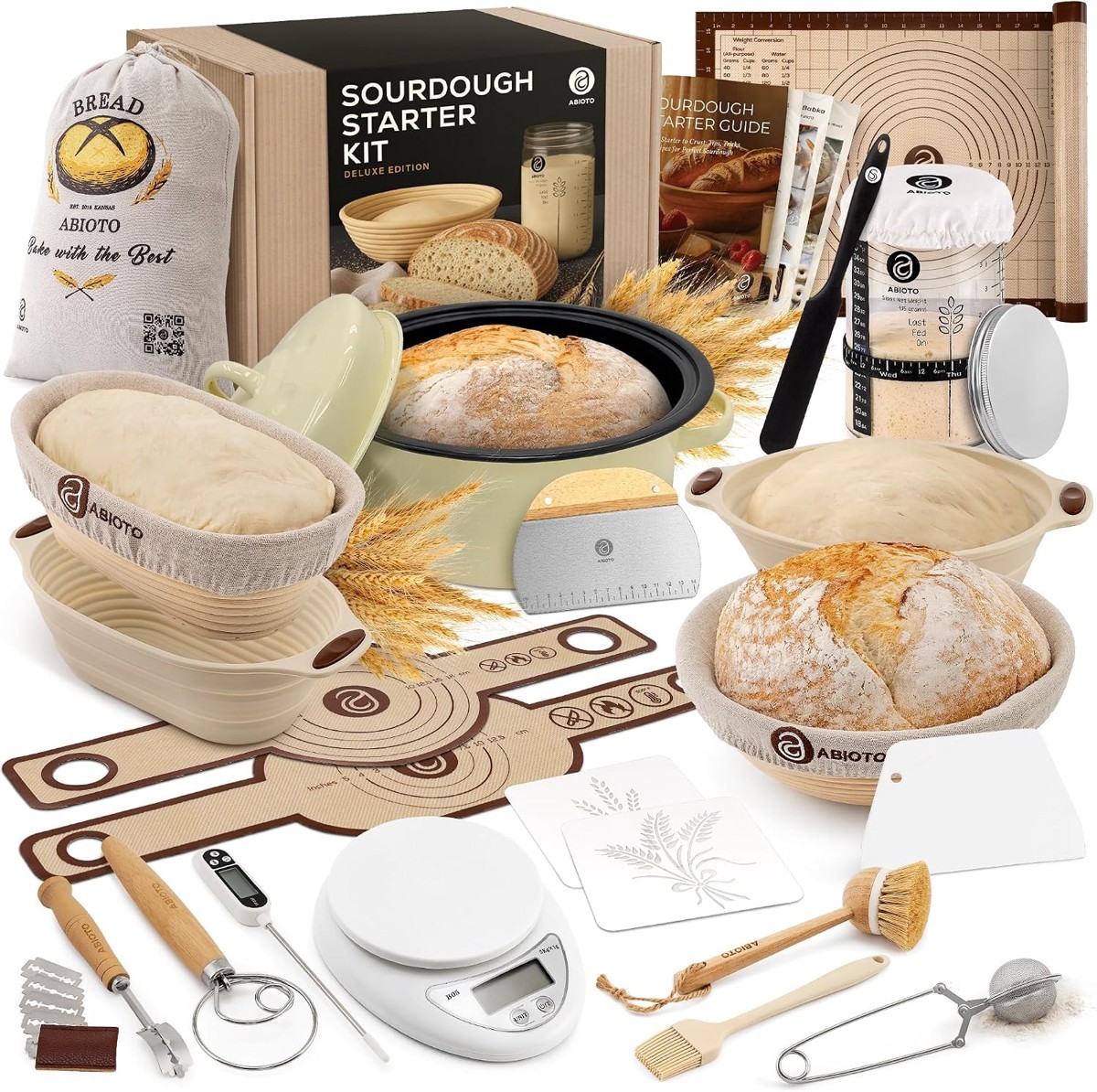 Sourdough Starter Kit w Dutch Oven Scale Proofing Baskets Jar Slings Tools$227.98New · Last checked Nov 16, 2026View on eBay
- Sourdough Starter Kit w Dutch Oven Scale Proofing Baskets Jar Slings Tools$227.98New · Last checked Nov 16, 2026View on eBay
Highlights
- Borosilicate or thick soda-lime glass resists thermal shock from warm water feeds and dishwasher cycles; thin decorative glass cracks at the shoulder.
- Straight-sided jars with printed or etched graduations let you read doubling at 100% hydration; tapered or curved jars distort volume markings.
- Vented lids or silicone gasket lids with a gas-permeable plug release CO2 while blocking dust and fruit flies; fully sealed lids build pressure and slow yeast activity.
- 1000 ml (1-quart) capacity supports 100–200 g starter with headroom for 2x rise; 500 ml jars overflow once the culture is fed at 1:1:1.
Best use cases
- Daily baker maintaining one culture: pick a single 1000 ml straight-sided glass jar with a vented silicone lid and etched measurements; skip multi-jar kits unless you run parallel starters.
- High-volume or weekly baker: choose two 1000 ml jars so one can be cleaned while the other ferments, or a 1.5–2 L jar for larger feed ratios; skip 34 oz (approx. 1000 ml) two-packs only if you never bake more than one loaf at a time.
- Gift or beginner setup: buy a kit that includes a 1000 ml jar, scale, and thermometer; skip kits bundled with bannetons or Dutch ovens if you already own bakeware, since the jar is the only fermentation-critical piece.
Buying tips
- Match jar volume to feed weight: use at least 3x the starter weight in jar volume; a 100 g starter fed 1:1:1 needs roughly 300 ml of headroom, so a 1000 ml jar is the practical minimum.
- Choose a wide-mouth opening of 3 inches or more for easy stirring, scraping, and filling; narrow-neck jars make discarding and feeding messy.
- Prefer glass over plastic: glass does not retain sour odors, resists staining from flour and hooch, and can be sanitized with boiling water.
- Look for lids that vent or sit loosely; silicone gasket lids with a small air gap or a breathable cloth cover held by a ring are the standard for active fermentation.
Specs
| Capacity | 1000 ml / 1-quart standard |
|---|---|
| Material | Glass (borosilicate or soda-lime) |
| Lid Type | Vented / loose-fit silicone or cloth |
| Shape | Straight-sided, wide-mouth |
Related searches
What to check before buying
- Measure your fridge shelf clearance: a 1000 ml jar with lid typically stands 6–7 inches tall; confirm it fits upright without tipping.
- Confirm your feed routine: if you bake daily and keep a large starter, buy two 1000 ml jars or one 1.5–2 L jar so cleaning does not interrupt fermentation.
- Check lid type against your climate: in humid kitchens use a vented silicone lid; in dry climates a loose glass lid or cloth cover prevents surface drying.
- Verify the jar is dishwasher-safe and thermal-shock rated if you clean with hot water or store starter in the fridge between feeds.
FAQ
Data sources: eBay / Amazon listings and product attribute feeds. Updated Nov 24, 2026.
Some links on this page are affiliate links. If you buy after clicking one, we may earn a commission at no extra cost to you. This does not change which products appear here or their order. Affiliate disclosure.