
Photos from current listings. Actual item, color, and included accessories may vary.
Sourdough Starter Flour Buying Guide
Sourdough starter flour is the milled grain that feeds the wild yeast and bacteria in your culture, and the core trade-off is between whole-grain nutrient density for vigorous fermentation and refined flours for predictable, mild-flavored results. The decisive rule: choose unbleached, non-bromated flour with protein in the 10–14% range and match the flour's extraction rate to your feeding schedule; bleached or self-rising flours are compromises that weaken or chemically disrupt the culture.
Median $227.99 · New listings
Key takeaways
- Whole-grain rye and whole wheat carry more wild yeast and bacteria on the bran, so they drive faster, more sour fermentations than white flour.
- Bleaching agents (chlorine dioxide, benzoyl peroxide) and bromates oxidize the flour and suppress microbial activity; unbleached, unbromated flour is required for a healthy starter.
- Protein content sets gluten strength: 10–11.5% all-purpose gives a mild, easy-to-stir starter; 12–14% bread flour builds a stronger, more elastic culture for high-rise loaves.
At a glance
- Category
- Sourdough Starters & Fermentation
- Last updated
- Nov 28, 2026
Current offers
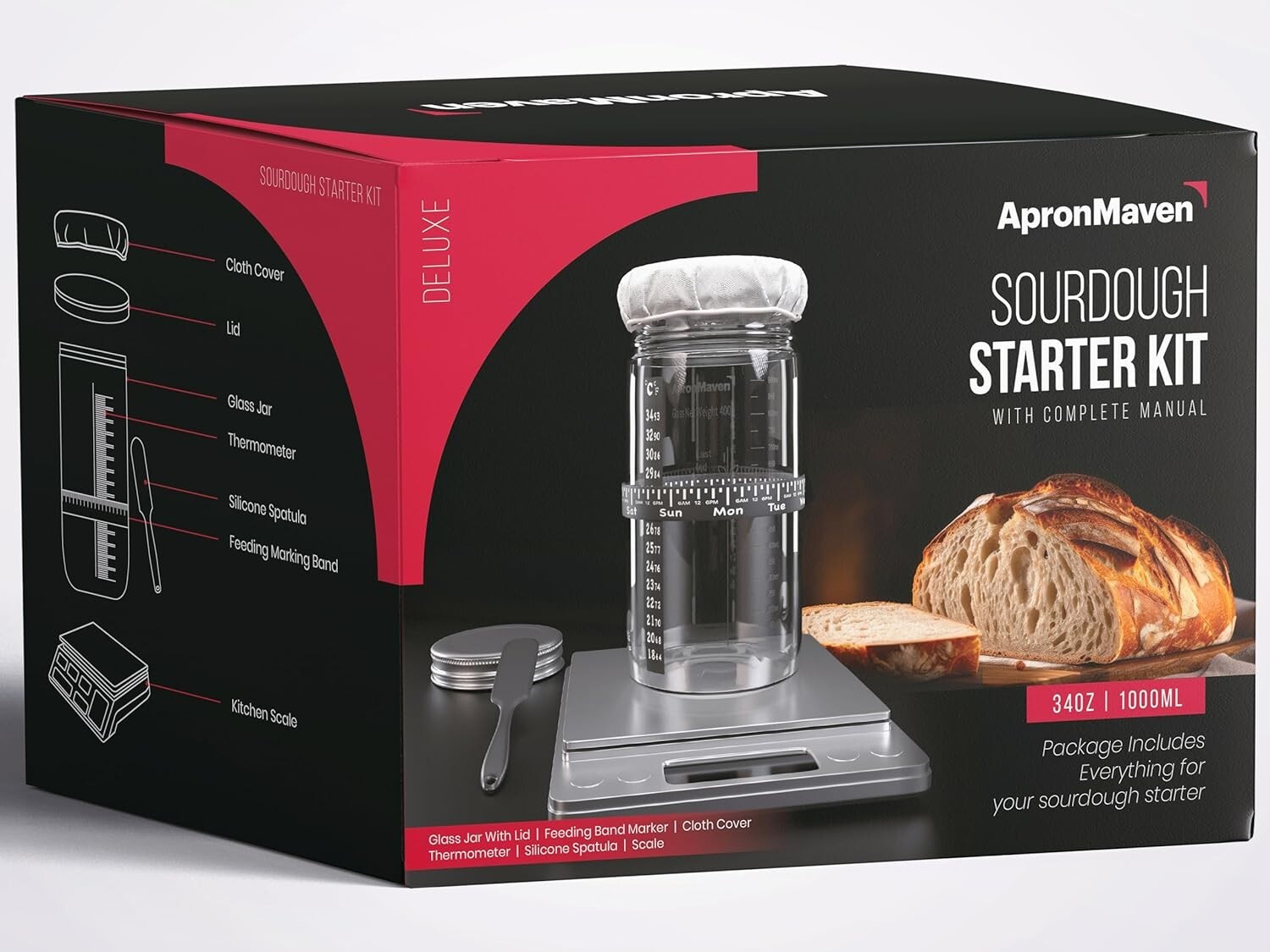 Sourdough Starter Kit Kitchen Scale jar & more For Easy Sourdough Bread Baking!$31.71View on eBay
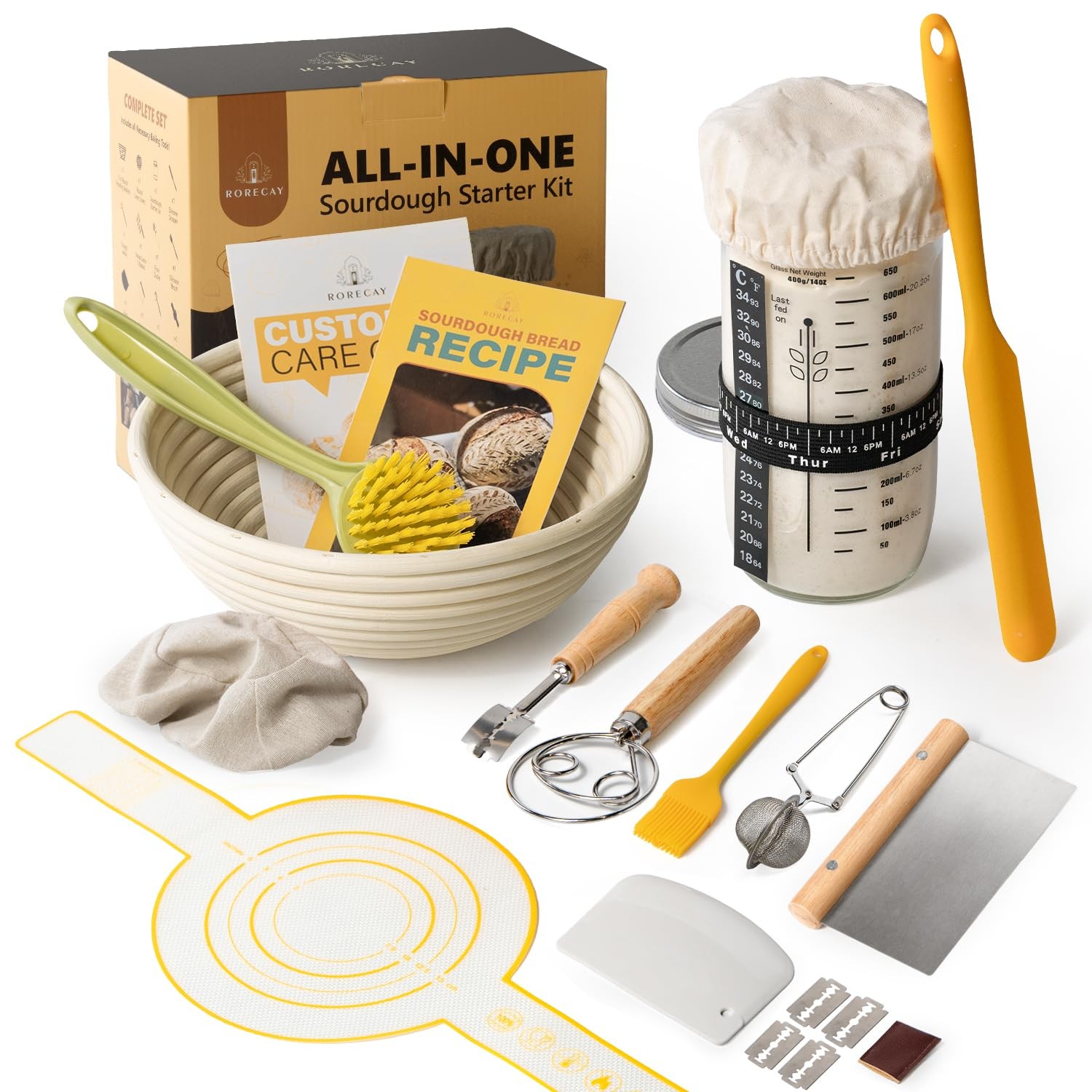 Sourdough Starter Kit with Round Banneton Bread Proofing Basket and Jar Gift Set$42.99View on eBay
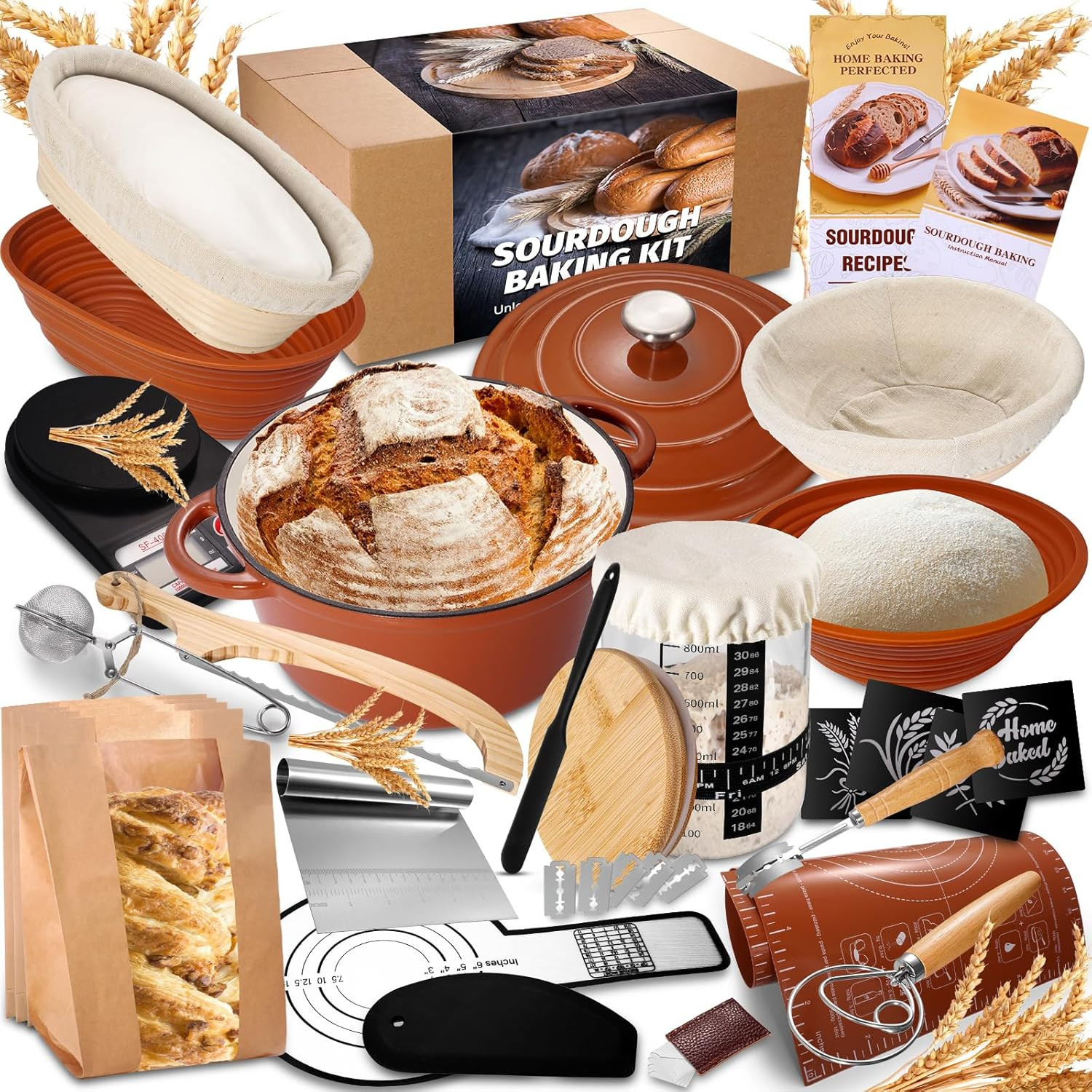 Sourdough Starter Kit with Enamel Cast Iron Pot, Complete Sourdough Bread Baking$144.27View on eBay
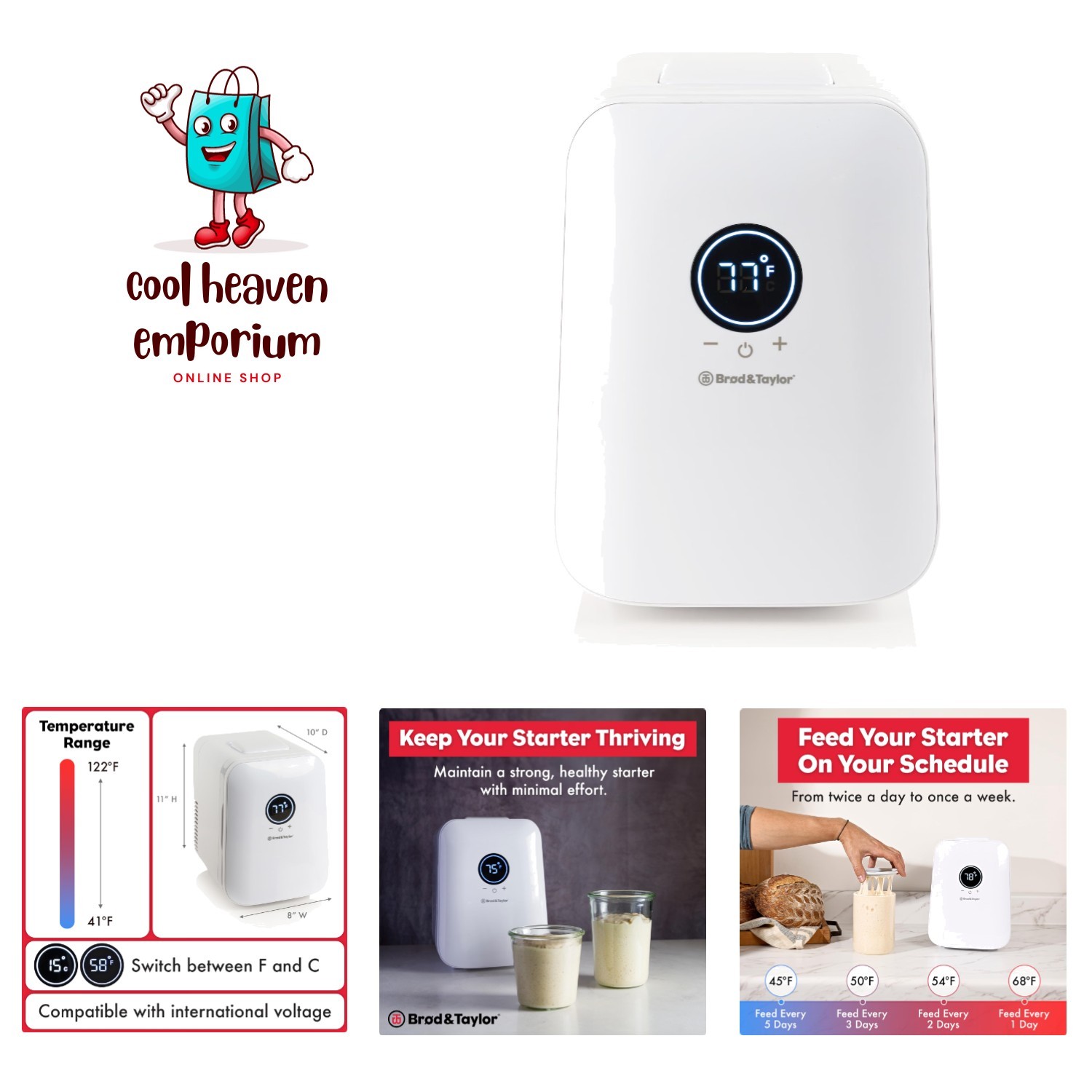 Elevate Your Bread Baking: Sourdough Home Temperature-Controlled Starter Keeper$208.99New · Last checked Nov 16, 2026View on eBay
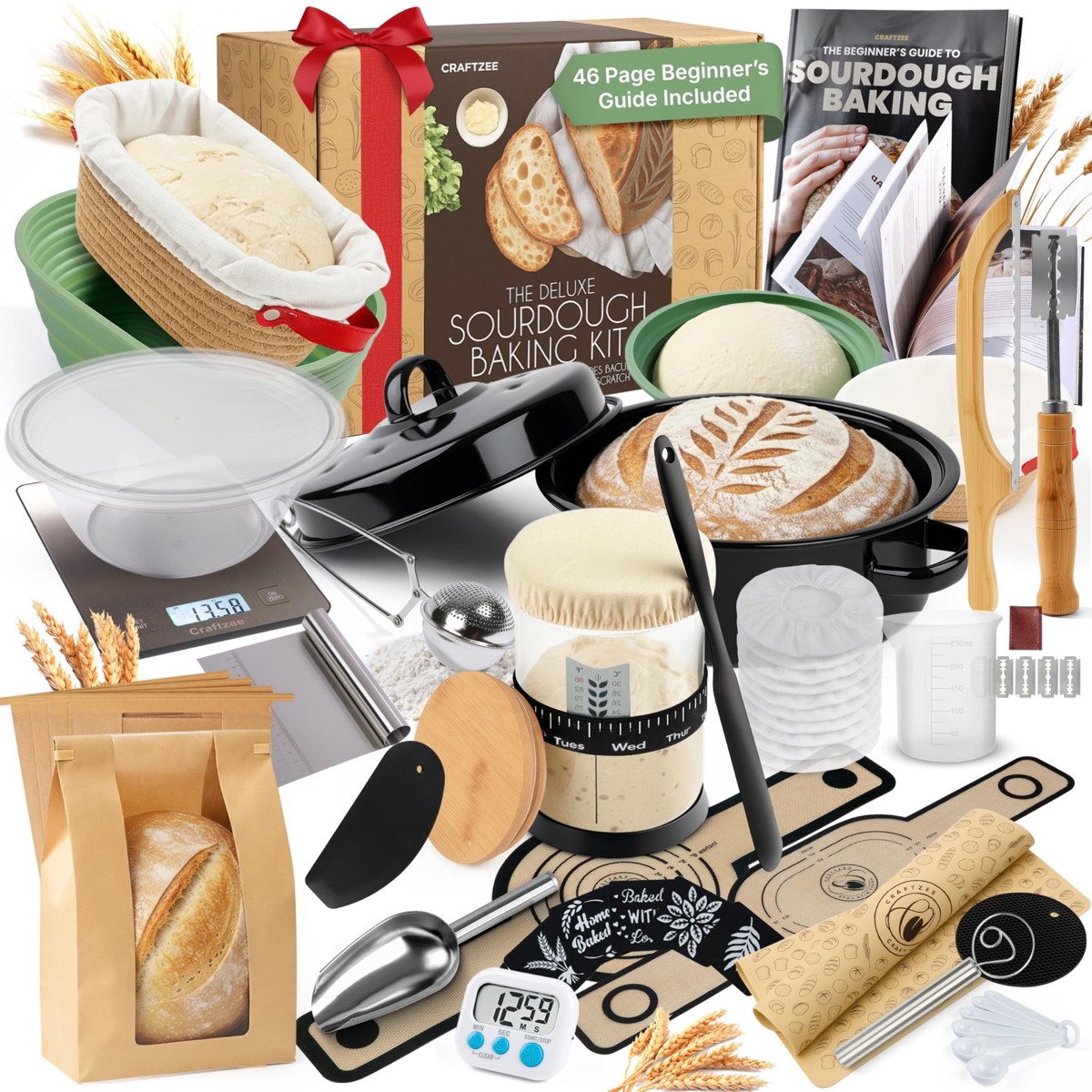 CraftZee Super All-Inclusive Premium Sourdough Starter Kit with Pot$214.29New · Last checked Nov 17, 2026View on eBay
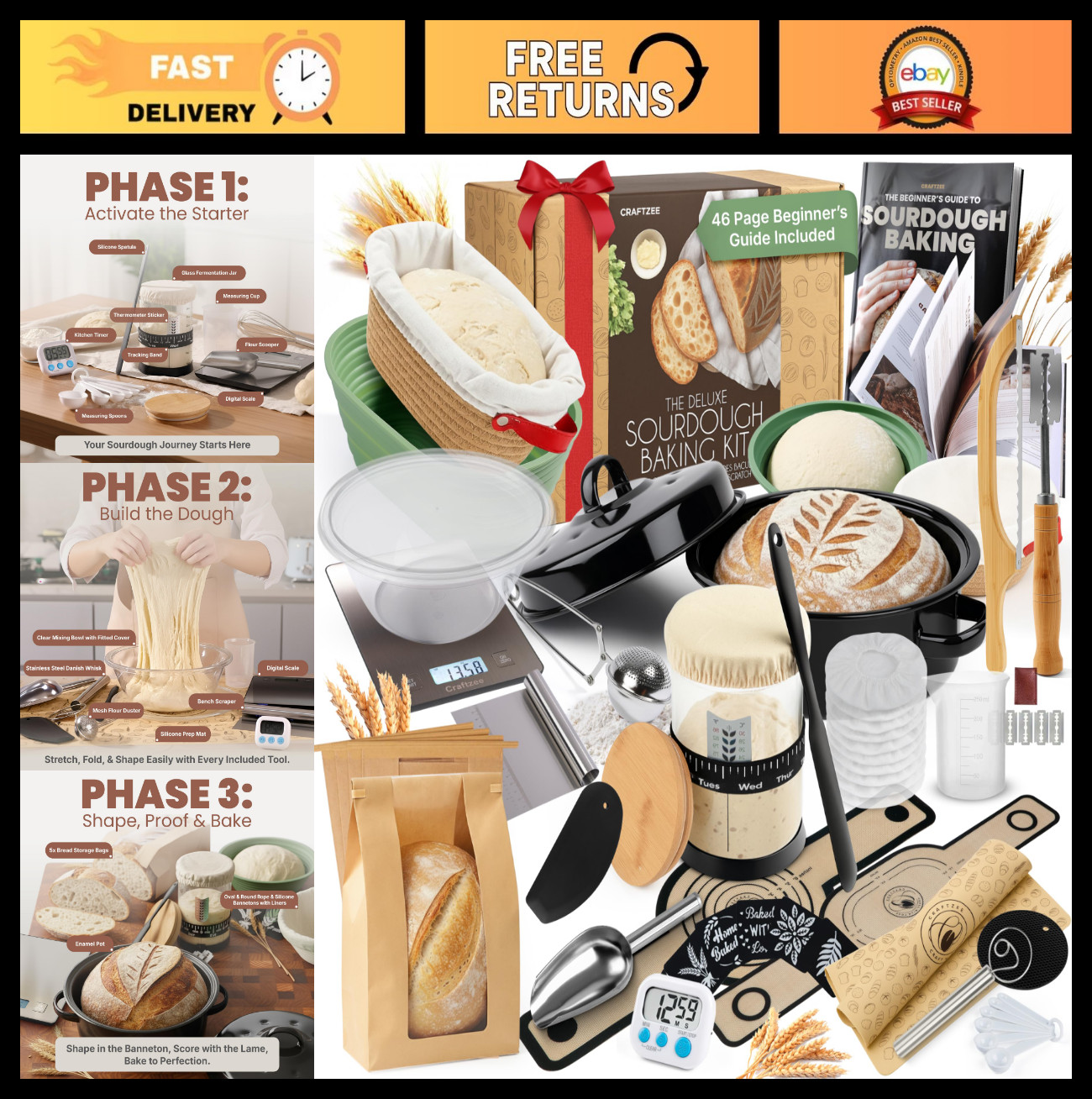 Premium Sourdough Starter Kit with Pot, Baking Supplies, Proofing Baskets & Guid$219.99New · Last checked Nov 27, 2026View on eBay
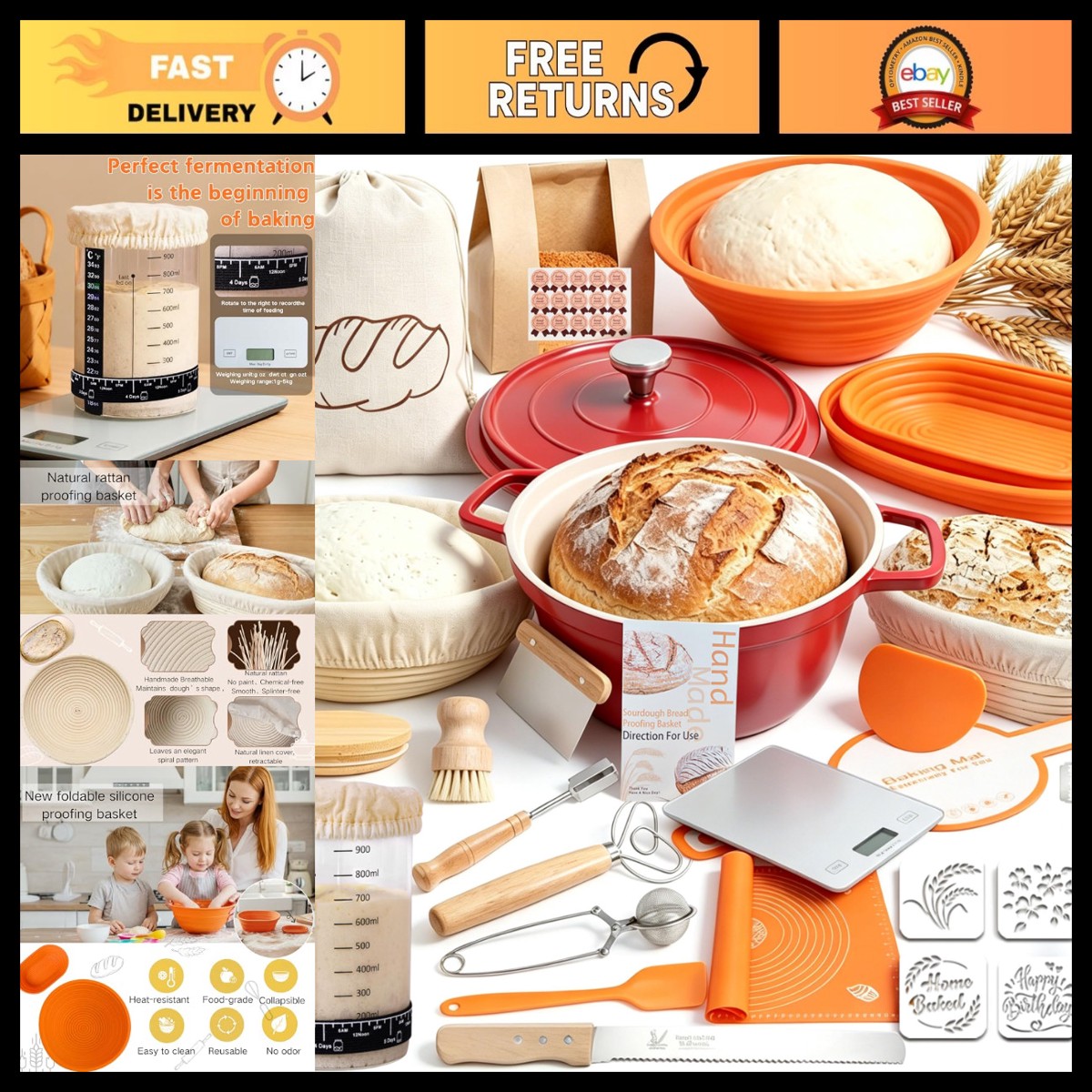 All-Inclusive Sourdough Starter Kit with Pot, 4 Proofing Baskets, Scale & Jar -$219.99New · Last checked Nov 16, 2026View on eBay
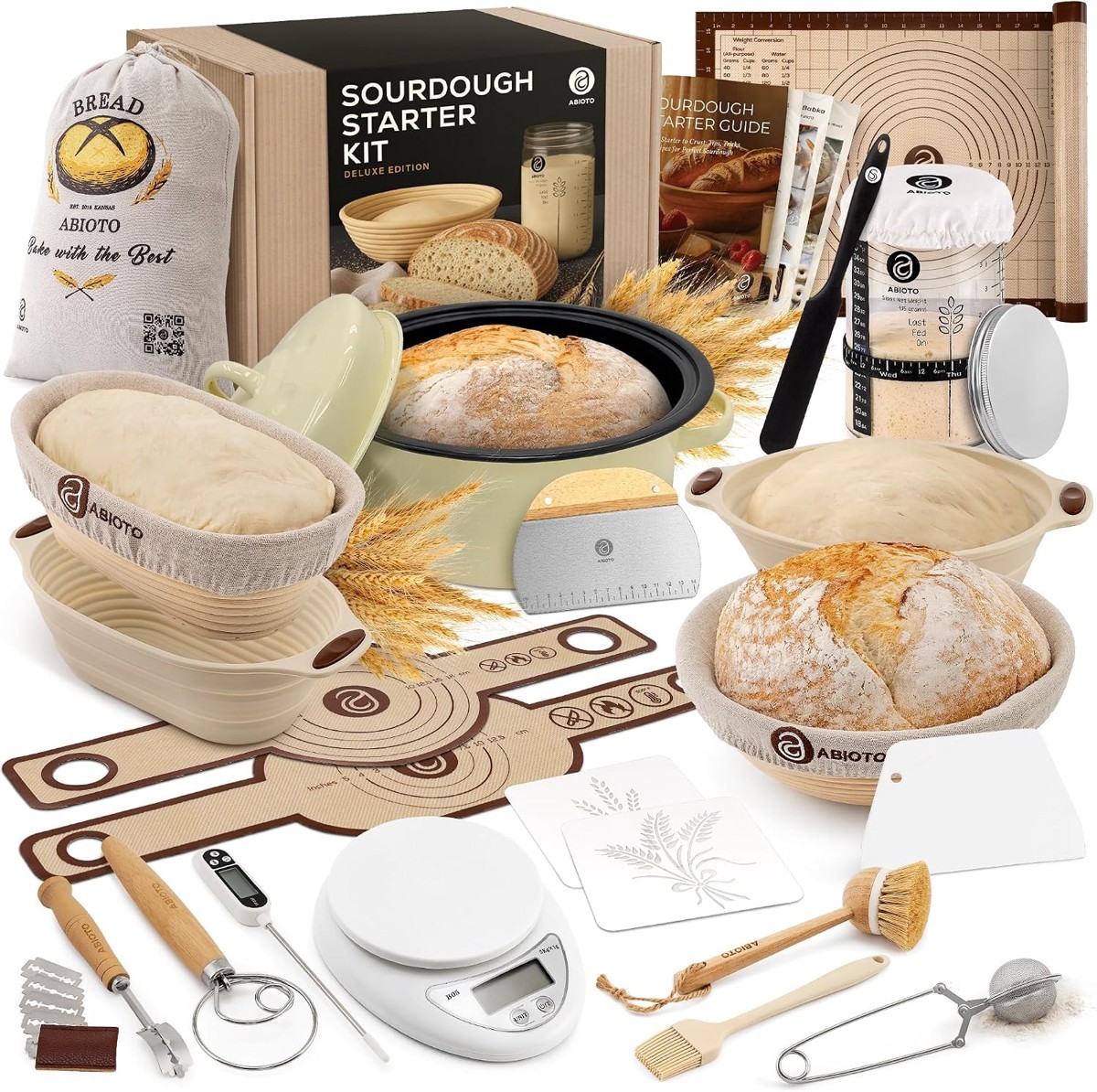 Sourdough Starter Kit w Dutch Oven Scale Proofing Baskets Jar Slings Tools$227.98New · Last checked Nov 16, 2026View on eBay
- Sourdough Starter Kit w Dutch Oven Scale Proofing Baskets Jar Slings Tools$227.98New · Last checked Nov 16, 2026View on eBay
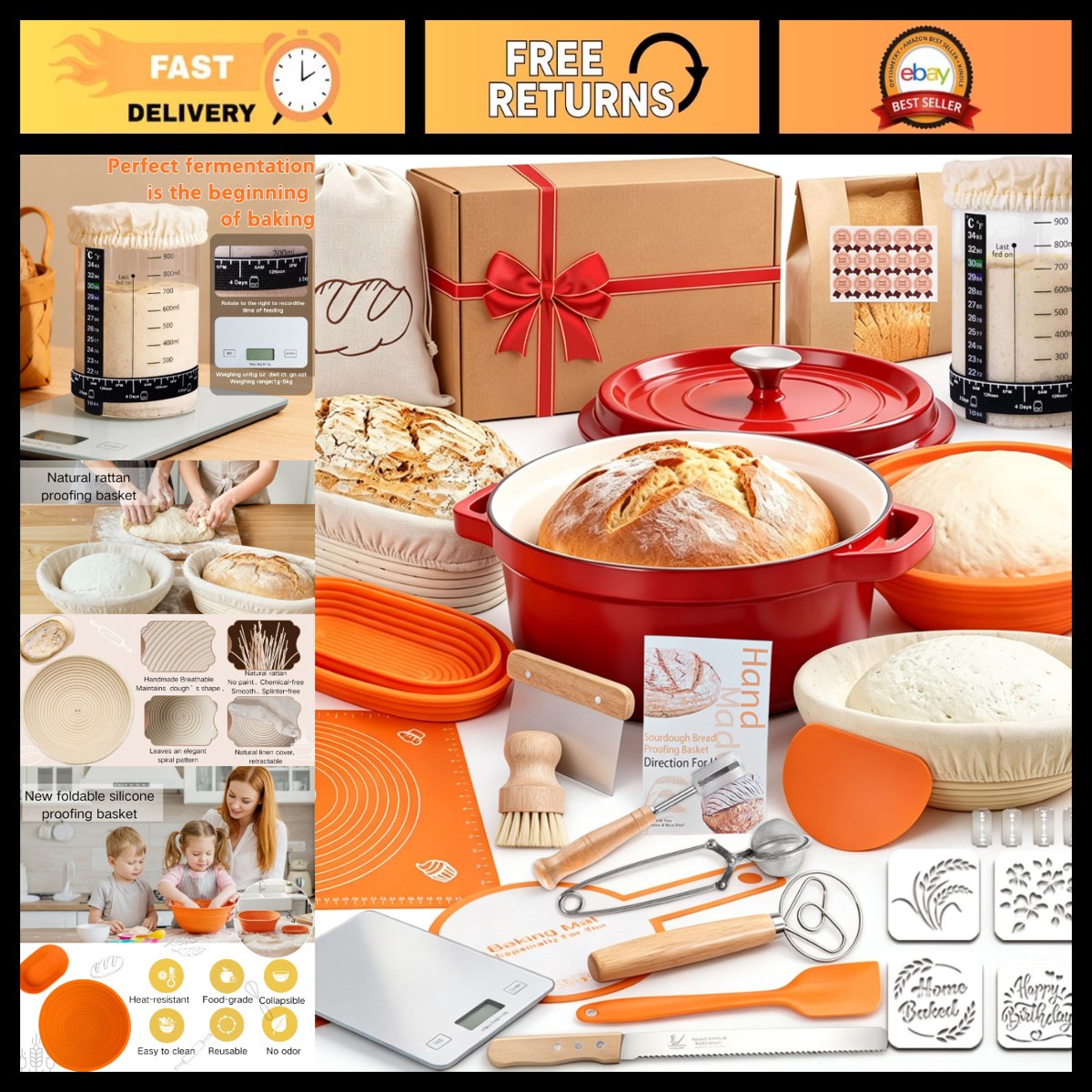 Sourdough Starter Kit with Cast Iron Dutch Oven, Scale & Proofing Baskets - Baki$227.99New · Last checked Nov 16, 2026View on eBay
- Sourdough Starter Kit with Dutch Oven, Scale & Proofing Baskets - Baking Tools f$239.99New · Last checked Nov 17, 2026View on eBay
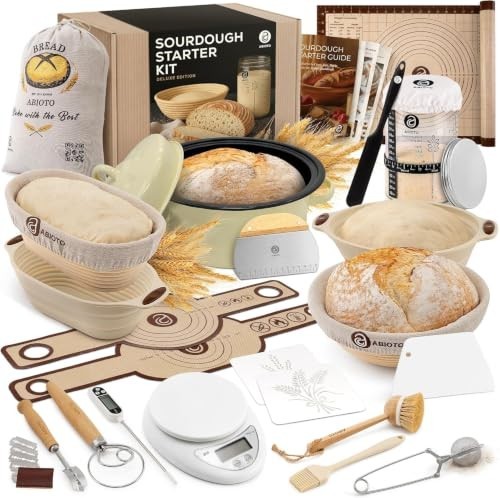 Sourdough Starter Kit w/ Dutch Oven, Scale, 34oz Jar, Baskets, Tools$240.89New · Last checked Nov 17, 2026View on eBay
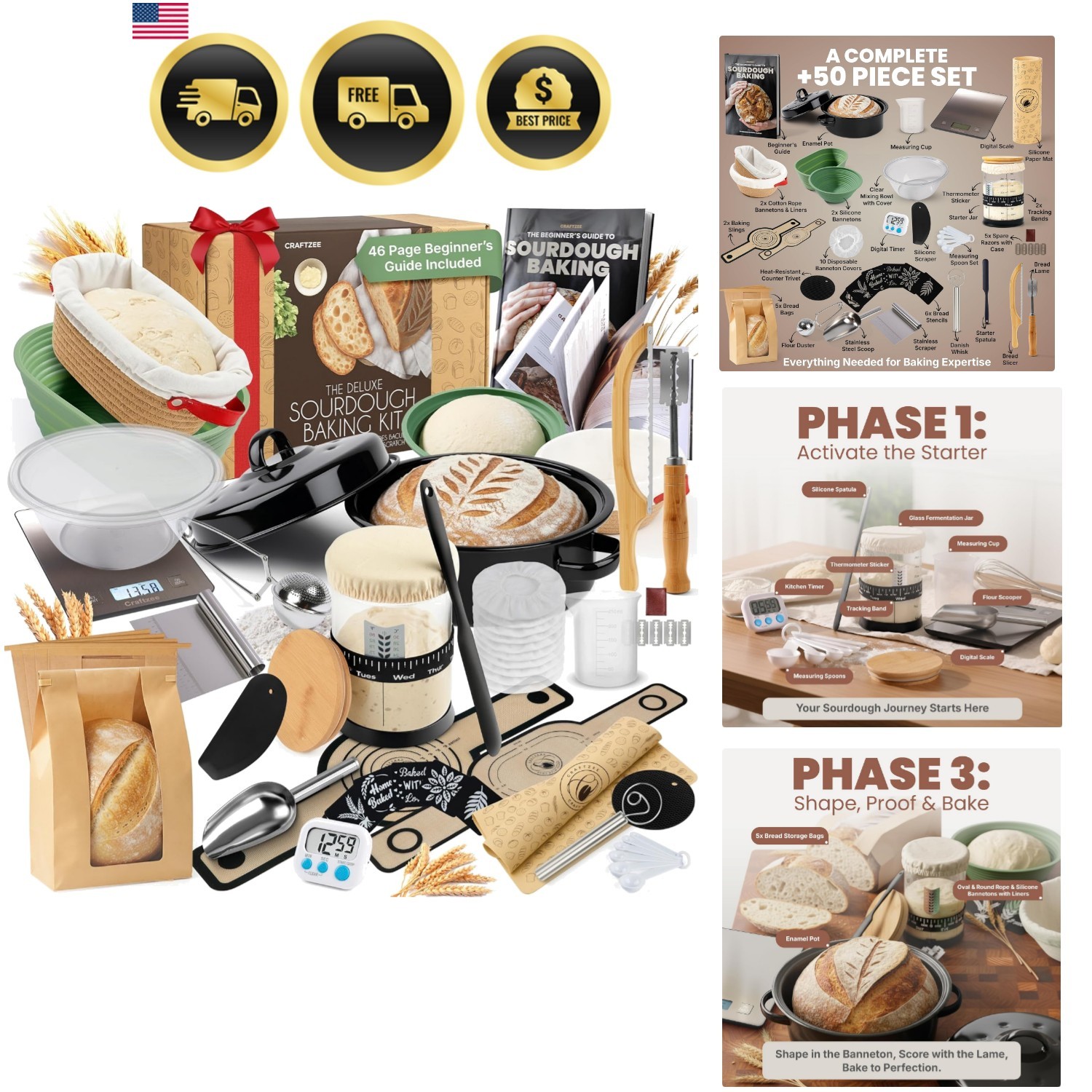 Super All-Inclusive 𝗣𝗥𝗘𝗠𝗜𝗨𝗠 Sourdough Starter Kit with Pot - Sourdough...$249.98New · Last checked Nov 16, 2026View on eBay
- Sourdough Starter Kit W/ Dutch Oven & Scale Complete Sourdough Kit W/ Proofing$251.98New · Last checked Nov 16, 2026View on eBay
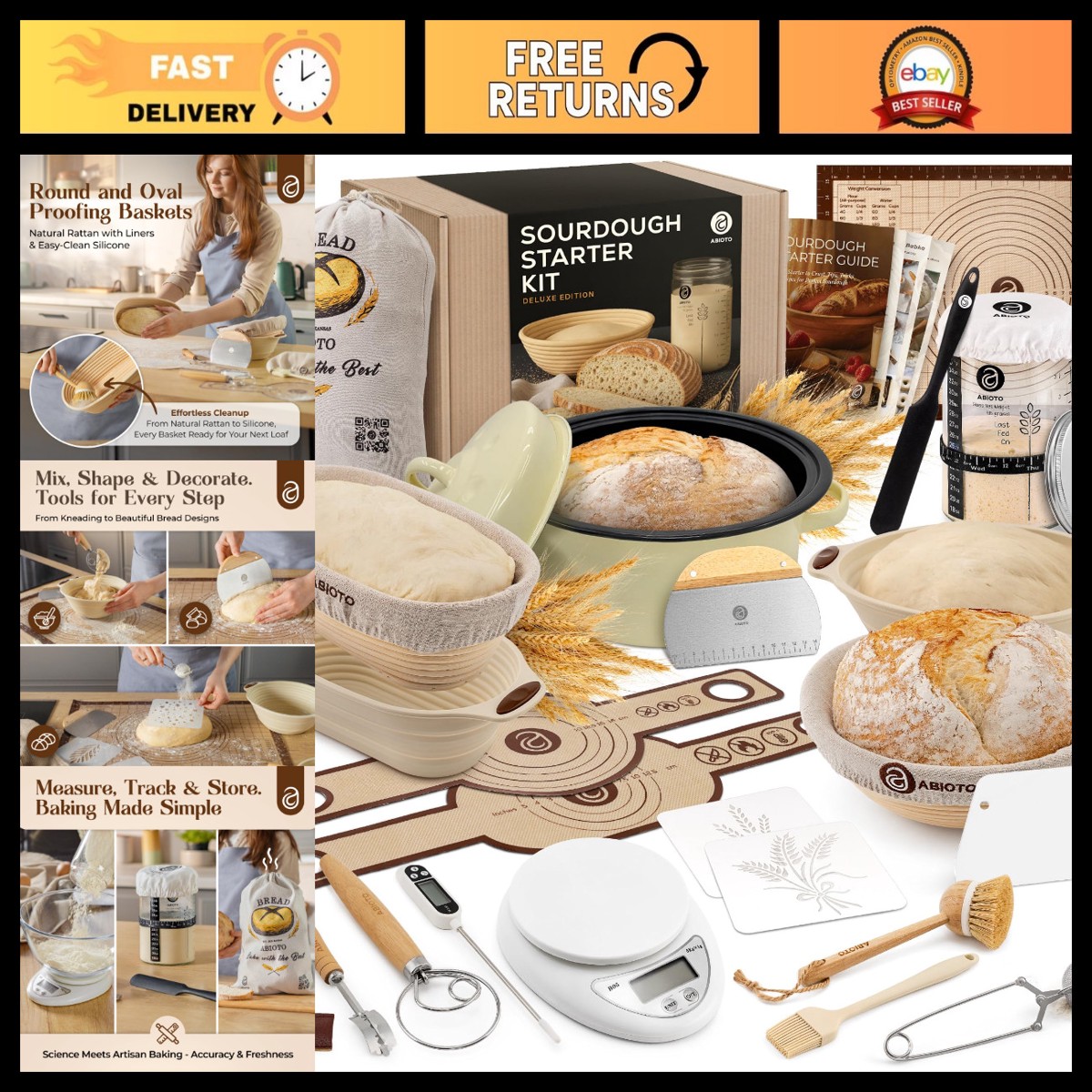 Complete Sourdough Starter Kit with Dutch Oven, Scale & Proofing Baskets - Ideal$284.99New · Last checked Nov 16, 2026View on eBay
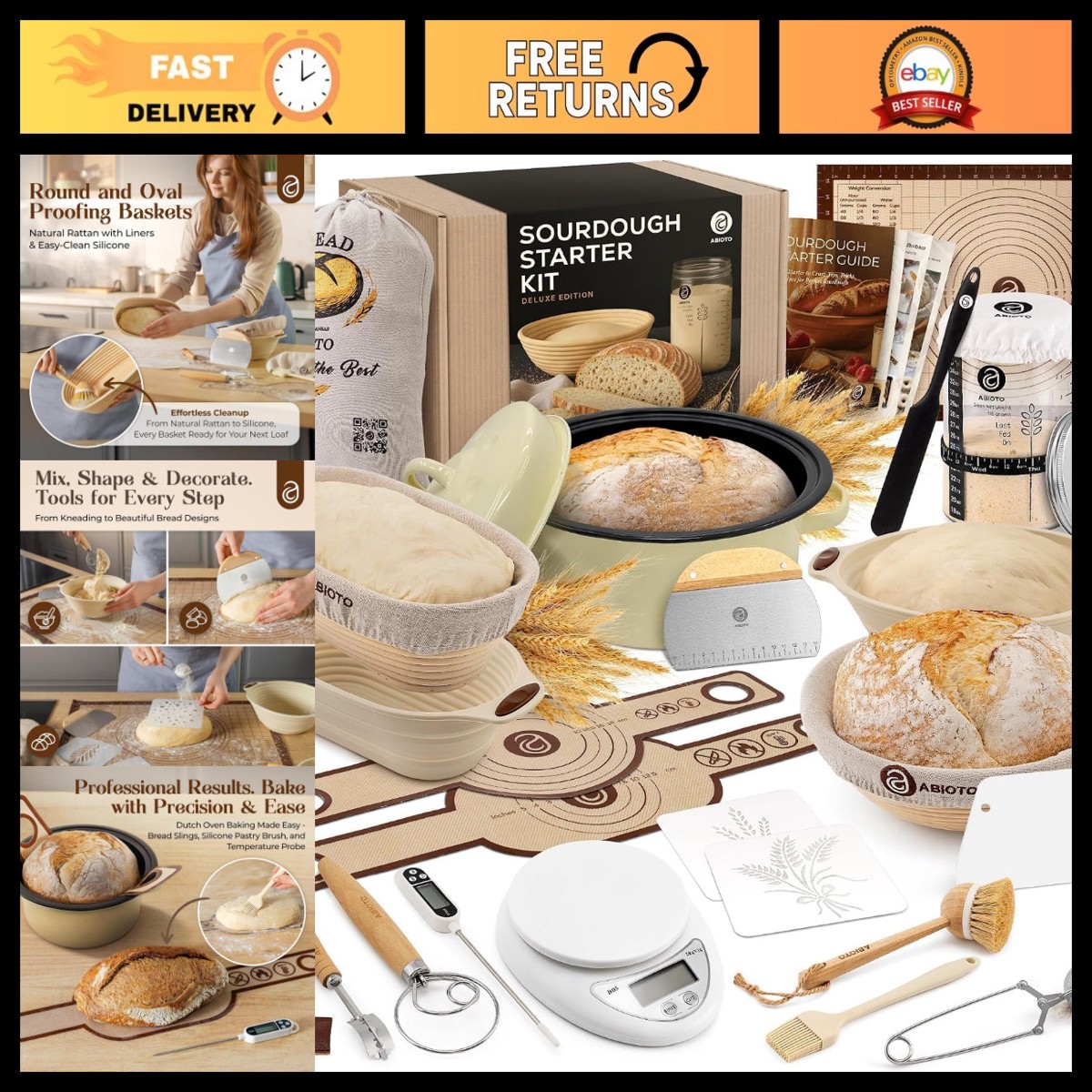 Complete Sourdough Starter Kit with Dutch Oven, Scale & Proofing Baskets - Ideal$284.99New · Last checked Nov 16, 2026View on eBay
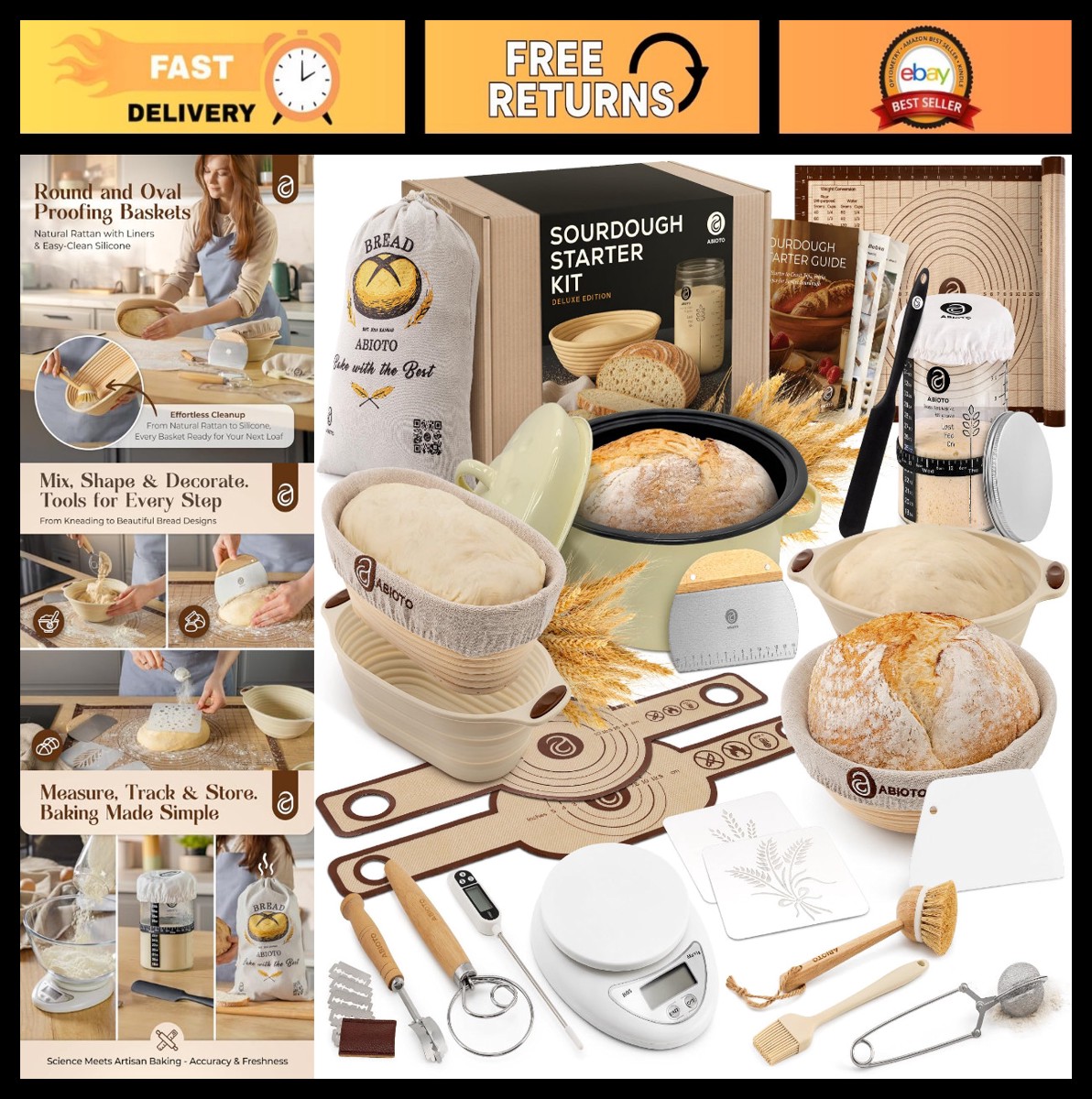 Complete Sourdough Starter Kit with Dutch Oven, Scale, Proofing Baskets & Tools$284.99New · Last checked Nov 16, 2026View on eBay
- Sourdough Starter Kit w/ Dutch Oven, Scale, 34oz Jar, Baskets, Tools$329.99New · Last checked Nov 17, 2026View on eBay
Highlights
- Whole-grain rye and whole wheat carry more wild yeast and bacteria on the bran, so they drive faster, more sour fermentations than white flour.
- Bleaching agents (chlorine dioxide, benzoyl peroxide) and bromates oxidize the flour and suppress microbial activity; unbleached, unbromated flour is required for a healthy starter.
- Protein content sets gluten strength: 10–11.5% all-purpose gives a mild, easy-to-stir starter; 12–14% bread flour builds a stronger, more elastic culture for high-rise loaves.
- Stone-ground whole grains retain the bran and germ that carry enzymes and microbes; steel-rolled or refined white flour feeds the culture but adds little inoculation.
Best use cases
- Best fit: a new starter or a sluggish culture — feed with whole-grain rye or whole wheat to jump-start microbial activity; skip refined white flour until the culture reliably doubles.
- Best fit: a mature, established starter on a daily or weekly schedule — use unbleached all-purpose or bread flour for predictable rise and a milder flavor; skip bleached or self-rising flour entirely.
- Best fit: high-hydration or long-ferment doughs — build the starter with bread flour at 12–14% protein for gluten strength; skip pastry flour or low-protein cake flour, which weakens the culture.
- Wrong fit: any starter fed with self-rising flour (contains baking powder and salt) — the salt inhibits wild yeast and the chemical leaveners mask the fermentation you are trying to build.
Buying tips
- Read the ingredient list, not the front label: the flour must list only wheat (or rye) and no bleaching agents, bromates, malted barley flour additives above 1%, or self-rising compounds.
- Match protein to purpose: 10–11.5% all-purpose for maintenance feeding; 12–14% bread flour for strength and oven spring; whole wheat or rye at any protein for inoculation and sourness.
- Buy whole-grain flour in smaller bags and store it in the freezer — the germ oils go rancid within a few months at room temperature, degrading both flavor and microbial viability.
- Avoid organic-label premiums unless the milling date is printed; freshness (within 3–6 months of milling) matters more than organic certification for starter performance.
Specs
| Flour Type | Unbleached, unbromated only |
|---|---|
| Protein Range | 10–14% (AP to bread flour) |
| Grain | Whole wheat, rye, or white |
| Additives | None (no bleach, bromate, self-rising) |
Related searches
What to check before buying
- Confirm your storage space: whole-grain and rye flours need freezer or refrigerator space to stay fresh; plan for a sealed container that fits your shelf.
- Check your feeding schedule against flour type: daily feeders can use all-purpose; weekly or refrigerated starters benefit from whole-grain feeds for longer microbial survival.
- Verify your water and climate: hard water or chlorinated tap water can inhibit the culture regardless of flour, so pair your flour choice with filtered water.
- Measure your jar and scale: a digital scale accurate to 1 g is required for consistent 1:1:1 or 1:5:5 feeding ratios; volume scooping drifts and destabilizes the culture.
FAQ
Data sources: eBay / Amazon listings and product attribute feeds. Updated Nov 28, 2026.
Some links on this page are affiliate links. If you buy after clicking one, we may earn a commission at no extra cost to you. This does not change which products appear here or their order. Affiliate disclosure.