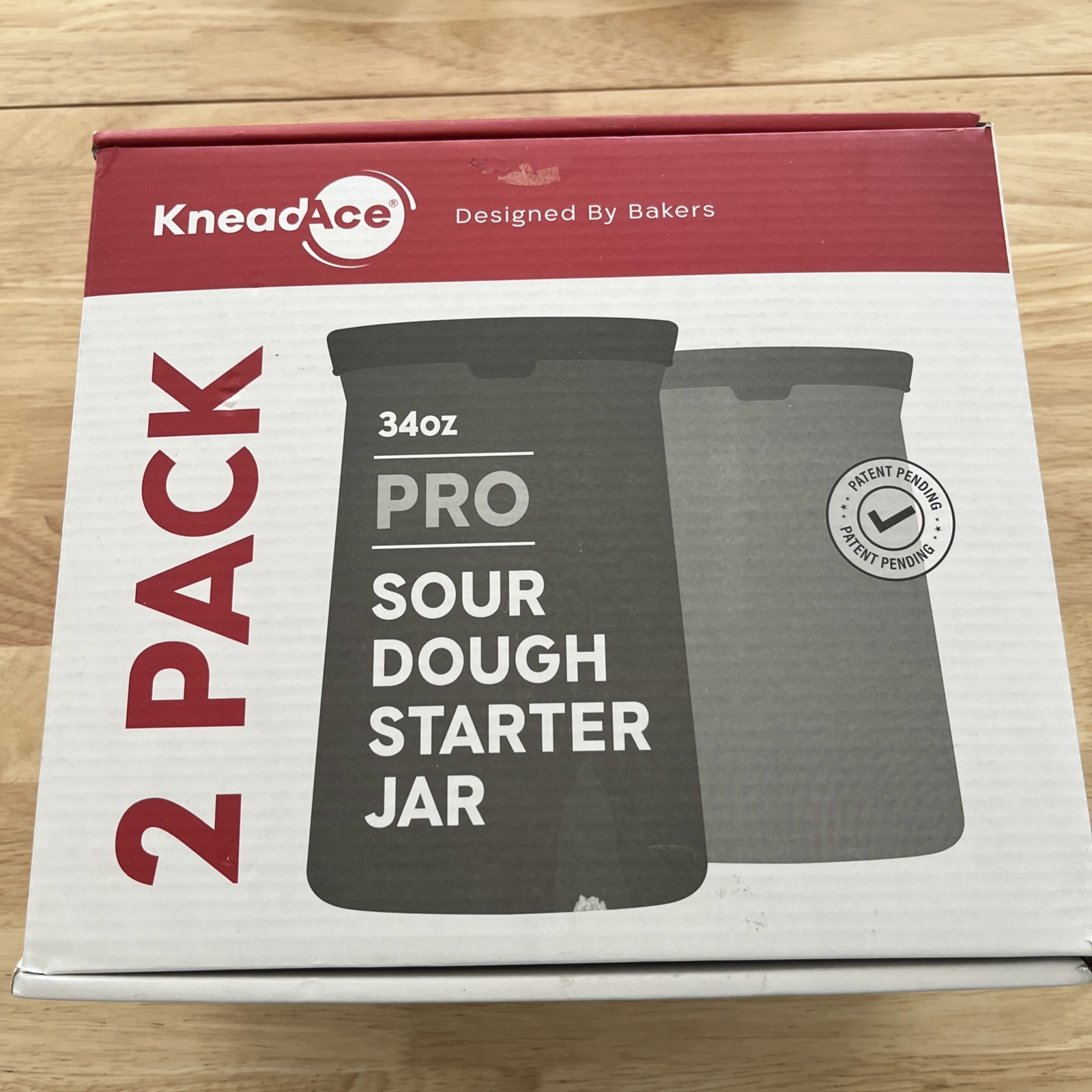

Photos from current listings. Actual item, color, and included accessories may vary.
Sourdough Starter Glass Jar Buying Guide
Sourdough starter glass jars are wide-mouth fermentation vessels that let you observe rise, capture wild yeast, and monitor a starter's activity without guessing. The decisive trade-off is between basic straight-sided glass jars with flat lids — which work but make feeding and height tracking clumsy — and purpose-built starter jars with measured volume markings, breathable or vented lids, and a scraper-friendly wide mouth. Buy the measured, wide-mouth, vented-lid tier for reliable daily feeding; skip plain Mason jars unless you already own a scale and a breathable cover.
Median $43.00
Key takeaways
- Capacity tier: 1000 ml (34 oz) is the practical minimum for a 100 g flour starter; smaller jars overflow during a 2-3x peak rise.
- Lid architecture: true starter jars use a vented or breathable lid or a loose glass lid seated on a silicone gasket — airtight clamp lids trap CO2 and stall yeast.
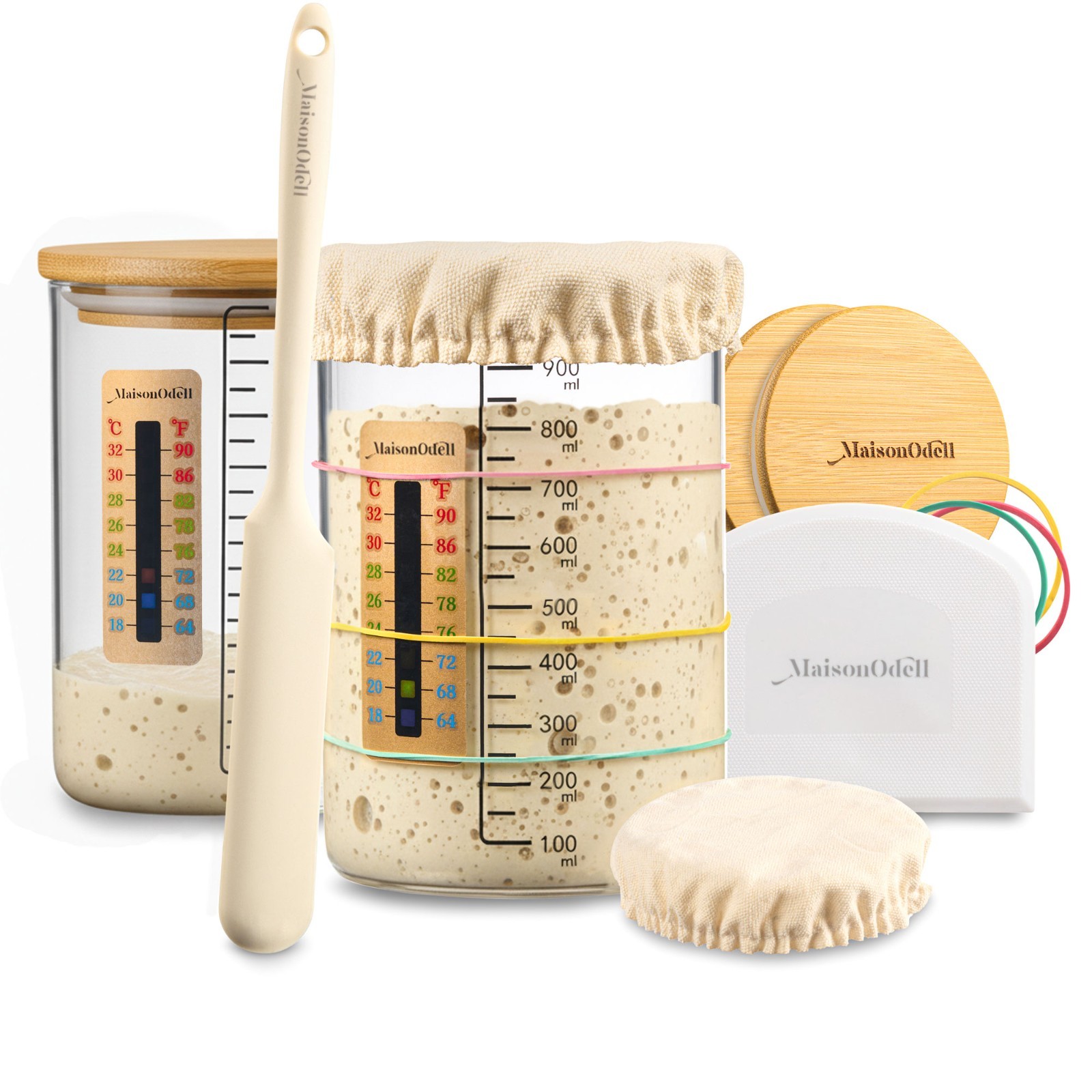
- Volume graduations molded into the glass convert starter management from scale-only guesswork to direct rise-ratio reading at a glance.
At a glance
- Category
- Sourdough Starters & Fermentation
- Last updated
- Nov 28, 2026
Current offers
Highlights
- Capacity tier: 1000 ml (34 oz) is the practical minimum for a 100 g flour starter; smaller jars overflow during a 2-3x peak rise.
- Lid architecture: true starter jars use a vented or breathable lid or a loose glass lid seated on a silicone gasket — airtight clamp lids trap CO2 and stall yeast.
- Volume graduations molded into the glass convert starter management from scale-only guesswork to direct rise-ratio reading at a glance.
- Wide-mouth openings of roughly 3.5-4 in (90-100 mm) accept a silicone spatula and allow scraping the sides down cleanly during feeding.
Best use cases
- Best fit: daily home bakers maintaining a 50-100 g flour starter should pick a 1000 ml wide-mouth jar with molded volume bands and a vented gasket lid — the rise is readable and the jar is scrapable.
- Wrong fit: anyone planning high-volume bakery batches should skip 1000 ml jars and step up to 2-3 L jars or food-grade plastic cambros, since a 1 L jar overflows at peak on large feeds.
- Best fit: fridge-retained starter keepers benefit from a 2-pack so one jar ferments while the other is cleaned — pick twin 1000 ml sets with matching lids rather than a single decorative jar.
- Wrong fit: buyers wanting an airtight decorative display jar should skip vented starter jars entirely — clamp-lid storage jars are for finished starter in the fridge, not active fermentation.
Buying tips
- Size by feed math: a 1:1:1 feed of 100 g starter plus 100 g flour and 100 g water needs 300 ml of dough; a 1000 ml jar holds the 2-3x peak with headroom, smaller jars do not.
- Check glass type: borosilicate handles thermal shock and dishwasher cycles; soda-lime glass is fine for room-temperature fermentation but cracks under sudden temperature change.
- Prioritize a vented or loose-seated lid over clamp lids — active starters produce CO2 continuously, and a fully sealed jar builds pressure and suppresses yeast activity.
- Confirm the mouth diameter accepts your tools: 90-100 mm wide mouths fit standard spatulas and scrapers, while narrow-neck jars force dough out over the rim.
Specs
| Capacity Tier | 1000 ml / 34 oz standard |
|---|---|
| Glass Type | Borosilicate vs soda-lime |
| Lid Design | Vented gasket vs airtight clamp |
| Mouth Diameter | 90-100 mm wide-mouth |
Related searches
What to check before buying
- Measure your feeding bench and fridge shelf: a 1000 ml jar stands roughly 6-7 in tall with a 3.5-4 in diameter — confirm clearance under the lid and on the shelf.
- Confirm your kitchen stays in the 70-80°F (21-27°C) fermentation range; glass is a passive vessel and cannot compensate for cold rooms.
- Check that the lid design you choose vents or seats loosely — you need CO2 escape without foil or cheesecloth workarounds.
- Verify the jar is dishwasher-safe and marked with volume graduations in ml or oz; unmarked jars force a scale-only routine.
FAQ
Data sources: eBay / Amazon listings and product attribute feeds. Updated Nov 28, 2026.
Some links on this page are affiliate links. If you buy after clicking one, we may earn a commission at no extra cost to you. This does not change which products appear here or their order. Affiliate disclosure.