
Photos from current listings. Actual item, color, and included accessories may vary.
Sourdough Starter Jar With Lid Buying Guide
A sourdough starter jar is a dedicated fermentation vessel whose lid, volume markings, and glass grade determine whether you can reliably track rise and avoid mold. The key trade-off is between a simple screw-top jar that traps gas and a breathable or vented lid that lets CO2 escape while keeping contaminants out. Choose borosilicate or thick soda-lime glass with a vented or silicone-gasketed lid for daily feeding; skip thin decorative jars with airtight seals for active starter maintenance.
Median $60.99 · New listings
Key takeaways
- Borosilicate glass (often 3.3 expansion coefficient) resists thermal shock from warm water feeds and fridge-to-counter temperature swings better than thin soda-lime jars.
- A vented or one-way lid prevents pressure buildup during peak fermentation, while a silicone gasket screw lid is best for fridge storage or transport, not active daily feeding.
- Wide-mouth 1000 ml (34 oz) jars with printed or etched 100/200/400 ml graduations let you mark the starting line and judge doubling or tripling without guesswork.
At a glance
- Category
- Sourdough Starters & Fermentation
- Last updated
- Nov 24, 2026
Current offers
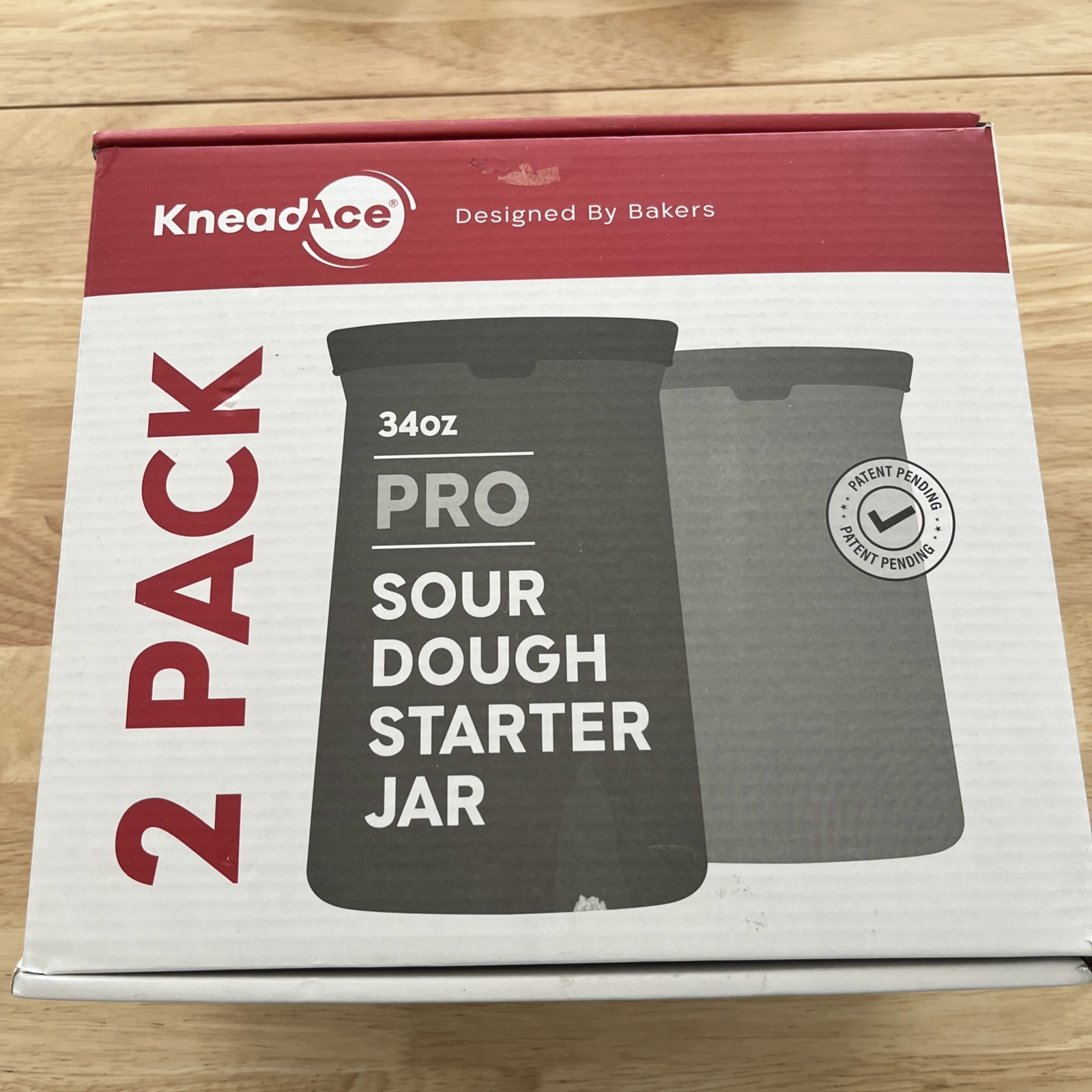 KNEADACE Pro Sourdough Starter Kit 34oz Glass Fermentation Jar 2 Pack with Lids$25.00View on eBay
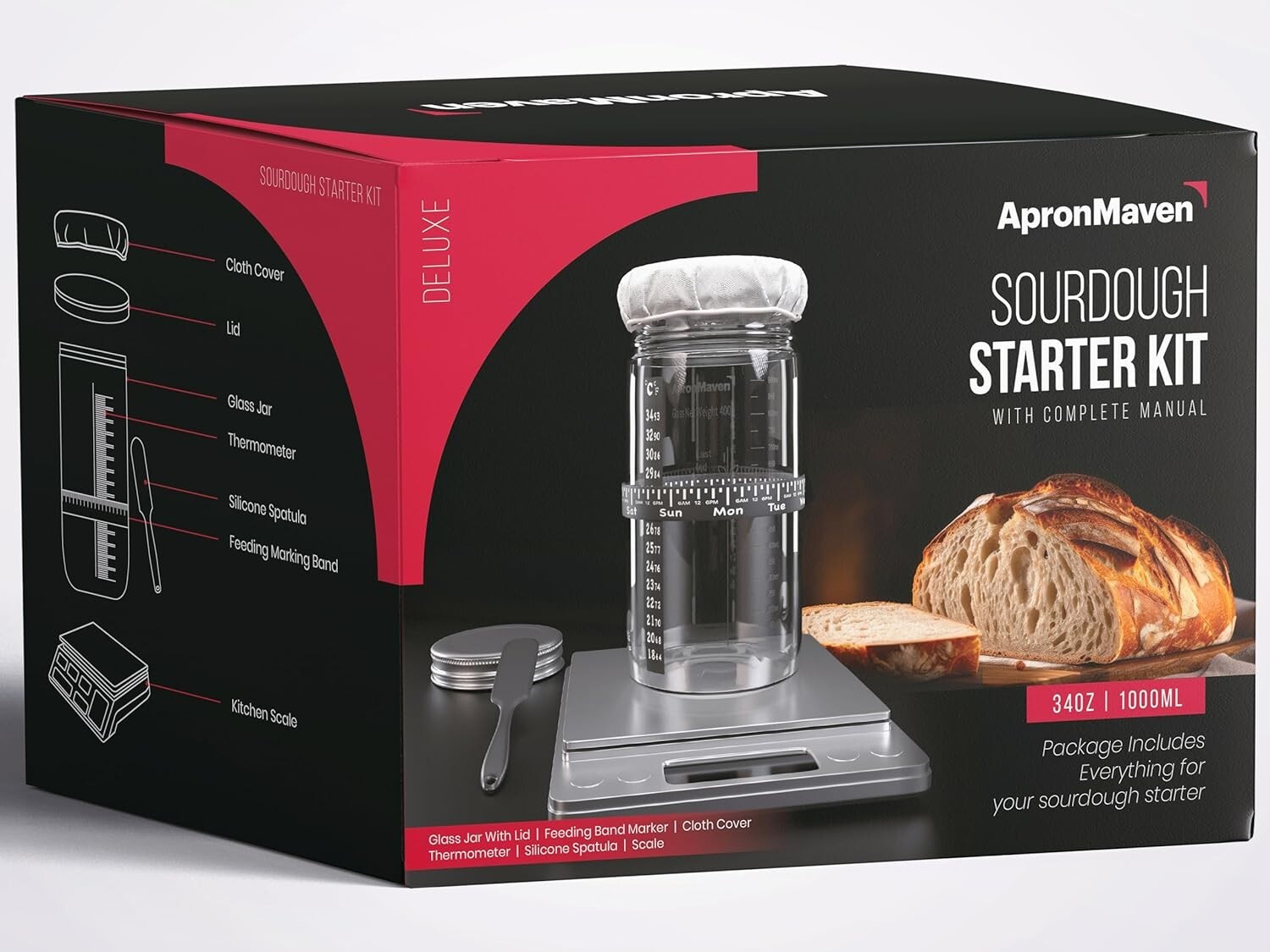 Sourdough Starter Kit Kitchen Scale jar & more For Easy Sourdough Bread Baking!$31.71View on eBay
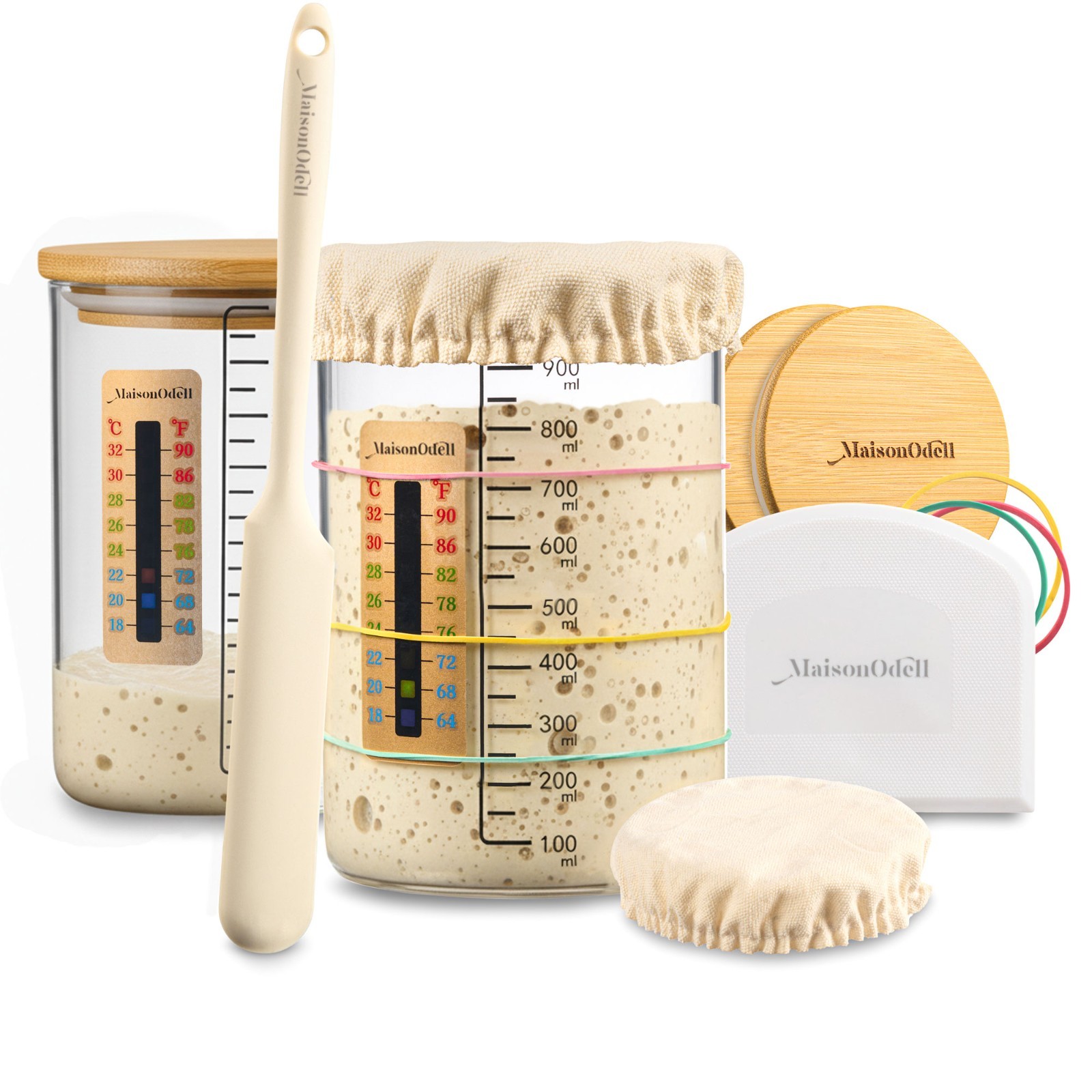 Sourdough Starter Jar Kit – 2 x 1000ml Glass Fermentation Jars | MaisonOdell$60.99View on eBay
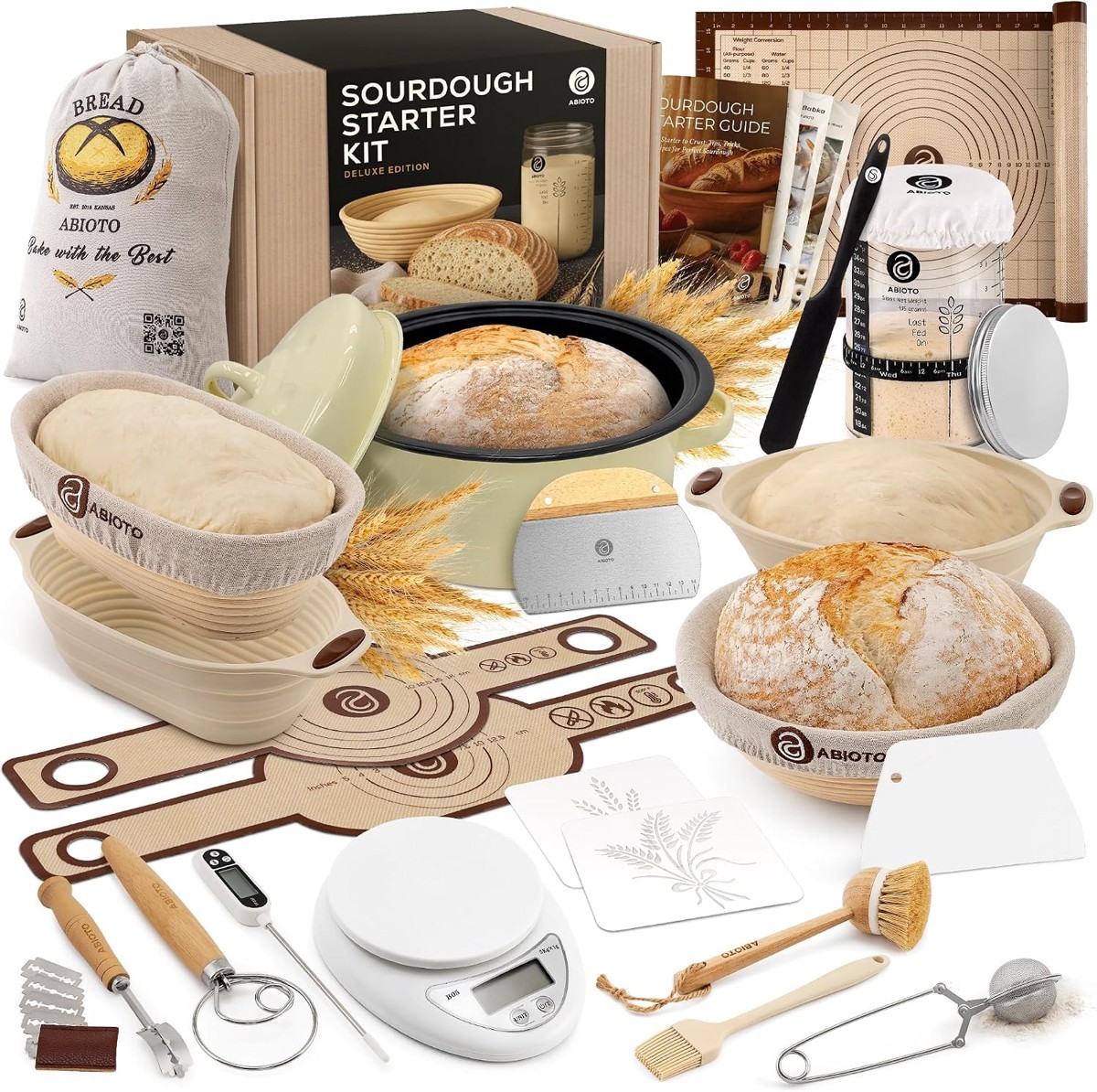 Sourdough Starter Kit w Dutch Oven Scale Proofing Baskets Jar Slings Tools$227.98New · Last checked Nov 16, 2026View on eBay
- Sourdough Starter Kit w Dutch Oven Scale Proofing Baskets Jar Slings Tools$227.98New · Last checked Nov 16, 2026View on eBay
Highlights
- Borosilicate glass (often 3.3 expansion coefficient) resists thermal shock from warm water feeds and fridge-to-counter temperature swings better than thin soda-lime jars.
- A vented or one-way lid prevents pressure buildup during peak fermentation, while a silicone gasket screw lid is best for fridge storage or transport, not active daily feeding.
- Wide-mouth 1000 ml (34 oz) jars with printed or etched 100/200/400 ml graduations let you mark the starting line and judge doubling or tripling without guesswork.
- Straight-sided cylindrical jars give more accurate rise readings than curved or square jars because volume scales linearly with height above the starter line.
Best use cases
- Best fit: a 1000 ml wide-mouth borosilicate jar with a vented silicone lid and etched ml marks for daily 1:1:1 feeding and bulk rise tracking on the counter.
- Best fit: a 500–1000 ml jar with a solid screw lid and silicone gasket for fridge retard or transporting starter without leakage; pair it with a separate vented lid for active feeds.
- Wrong fit: thin decorative 250 ml jars with airtight cork or metal clamp lids—they trap CO2, overflow, and are hard to clean, so skip them for active starter maintenance.
- Wrong fit: huge 2 L+ jars for a single small starter; the headspace makes rise hard to read and the starter dries out faster—use 2 x 1000 ml jars only if you bake multiple loaves weekly.
Buying tips
- Size the jar to your feed volume: choose 1000 ml for a 100–200 g starter so doubling or tripling stays within the jar with 30–50% headspace.
- Pick borosilicate or at least 3 mm thick soda-lime glass; thin glass under 2 mm cracks with hot water feeds and repeated thermal cycling.
- Choose a lid system that matches the task: vented silicone or one-way lid for daily feeding, solid screw lid with gasket for fridge storage.
- Confirm the jar mouth accepts a standard wide-mouth (about 86 mm) canning ring or the included lid; narrow-mouth jars are harder to fill, stir, and clean.
Specs
| Glass Type | Borosilicate vs soda-lime (3 mm+) |
|---|---|
| Capacity | 500 ml / 1000 ml / 2000 ml |
| Lid System | Vented silicone vs airtight gasket |
| Mouth Size | Wide-mouth ~86 mm vs narrow |
Related searches
What to check before buying
- Measure your counter or shelf clearance: a 1000 ml straight-sided jar is typically 15–20 cm tall, so allow 20 cm above it for rise and a vented lid.
- Check your fridge shelf height if you plan to retard starter; a 1000 ml jar with lid usually needs about 20–22 cm of vertical space.
- Confirm your tap water and feeding routine: borosilicate handles 40–45 °C warm water, but thin soda-lime jars should only see lukewarm water.
- Verify the lid fit and spare parts: a wide-mouth jar that accepts standard 86 mm canning rings gives you replacement lid options and easier cleaning.
FAQ
Data sources: eBay / Amazon listings and product attribute feeds. Updated Nov 24, 2026.
Some links on this page are affiliate links. If you buy after clicking one, we may earn a commission at no extra cost to you. This does not change which products appear here or their order. Affiliate disclosure.