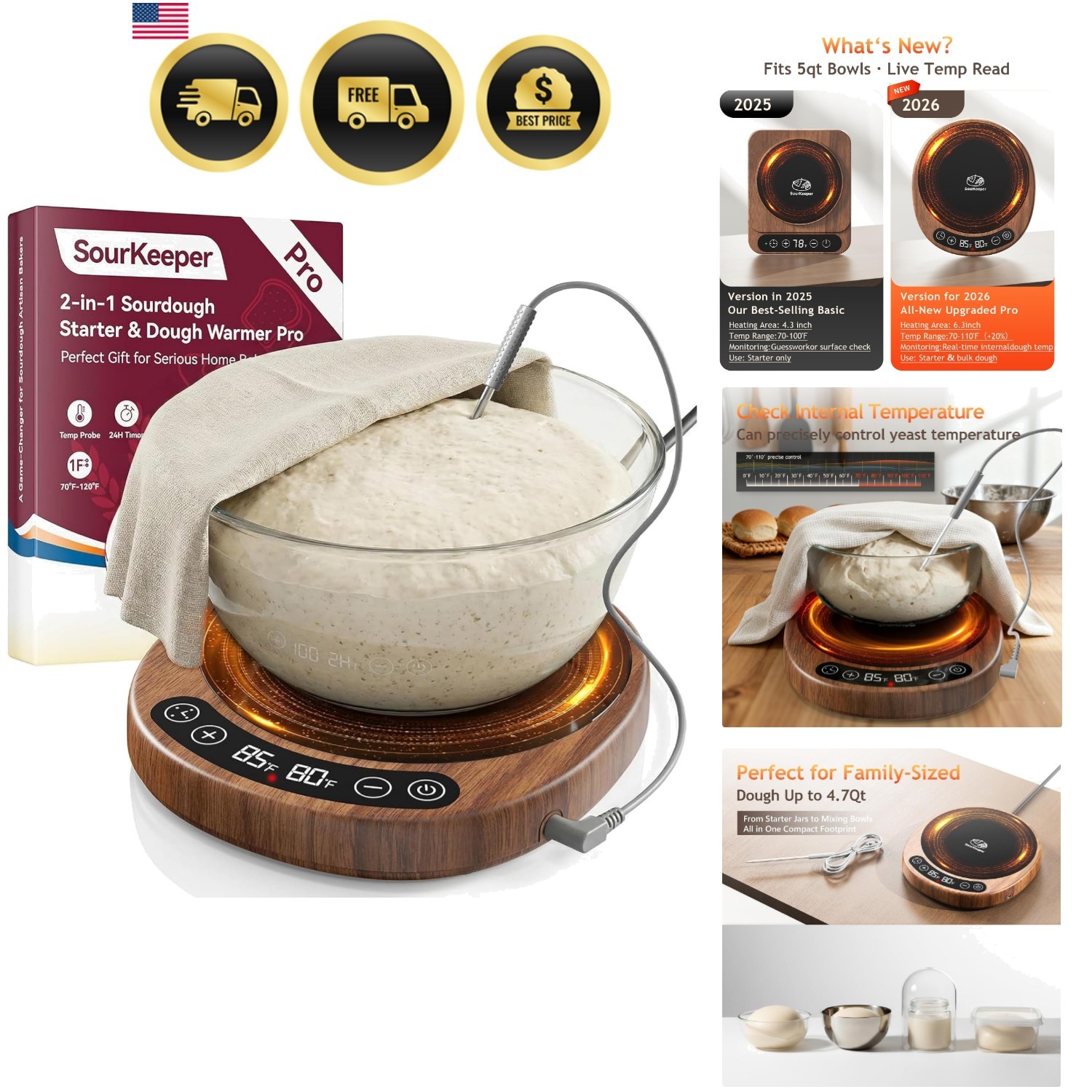

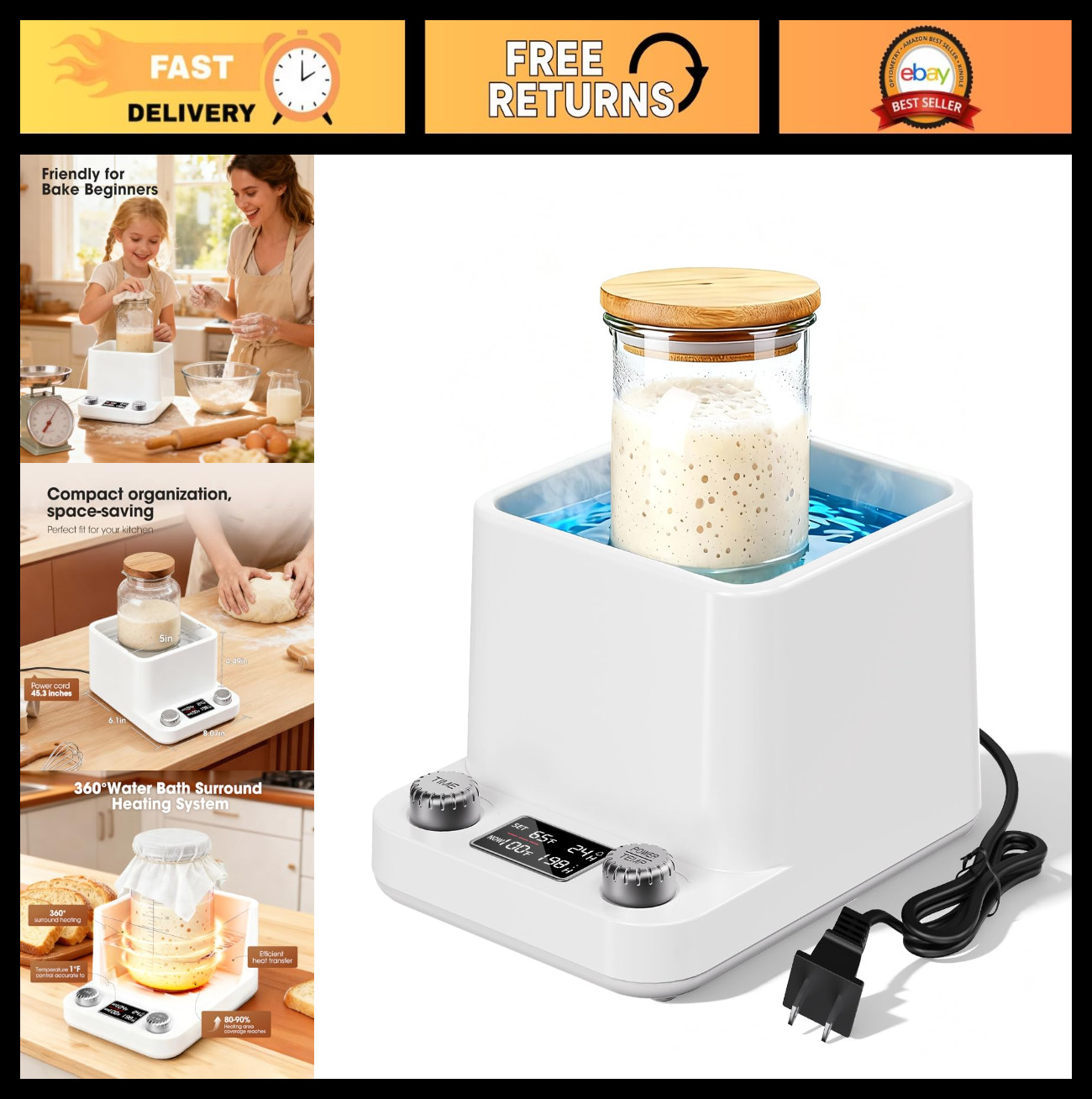
Photos from current listings. Actual item, color, and included accessories may vary.
Sourdough Starter Warmer Buying Guide
A sourdough starter warmer is a thermostatically controlled heating device that holds your starter or dough in the ideal 75–82°F fermentation band, replacing inconsistent oven-with-light hacks. The core trade-off is between fixed-wattage heat mats and probe-driven thermostats with uniform heating elements; true warmers maintain ±2°F stability across the entire vessel, while cheap mats create hot spots that kill yeast. Choose a probe-controlled, timer-equipped warmer with an exposed temperature range of at least 70–110°F if you ferment year-round in a cool kitchen; skip anything without a thermostat or with a single localized heat source.
Median $63.81
Key takeaways
- Probe-based thermostats reading in 1°F increments hold starter within ±2°F, while fixed-output mats swing 10–15°F and can overheat the base of the jar.
- 360° uniform heat comes from wrap-around or chamber-style elements; flat mats concentrate heat on one contact patch and require a trivet or towel barrier.
- Adjustable range of 70–110°F covers starter maintenance (75–80°F) and dough proofing (80–90°F); warmers capped at 90°F cannot double for yogurt or tempeh.
At a glance
- Category
- Sourdough Starters & Fermentation
- Last updated
- Nov 28, 2026
Current offers
Highlights
- Probe-based thermostats reading in 1°F increments hold starter within ±2°F, while fixed-output mats swing 10–15°F and can overheat the base of the jar.
- 360° uniform heat comes from wrap-around or chamber-style elements; flat mats concentrate heat on one contact patch and require a trivet or towel barrier.
- Adjustable range of 70–110°F covers starter maintenance (75–80°F) and dough proofing (80–90°F); warmers capped at 90°F cannot double for yogurt or tempeh.
- Built-in countdown timers prevent over-fermentation during long bulk rises; a timer is the difference between set-and-forget and manual monitoring every few hours.
Best use cases
- Pick a probe-thermostat warmer with a 70–110°F range if your kitchen drops below 68°F in winter and you feed starter daily — fixed mats will drift too cold or too hot.
- Choose a 360° chamber or wrap warmer for glass jars and crocks up to 1-gallon capacity; flat mats mated to wide bowls leave the top of the starter cold and the bottom overheated.
- Skip any warmer without an explicit thermostat or probe if you plan to proof dough — bread dough needs stable 80–85°F, and unregulated mats routinely push the exterior past 100°F.
- Choose a compact mat-style warmer only for small 1-quart jars in a already-warm room (above 70°F); it is a supplement, not a climate solution.
Buying tips
- Match warmer diameter to your vessel: a 6–8 inch mat suits 1-quart jars, while 10–12 inch chambers fit 1-gallon crocks and proofing boxes; undersized heat sources create gradients.
- Require a thermostat with at least 1°F setpoint resolution and a probe you can insert into a water-filled companion jar — this measures true internal temperature, not air.
- Confirm the warmer's cord and plug match your kitchen voltage (120V US standard); units rated only for 220–240V need a step-up transformer and are not plug-and-play.
- Prefer warmers with a removable, washable cover or wipe-clean ABS shell; flour dust and condensation are constant, and fabric-only units become microbial reservoirs.
Specs
| Control Type | Probe thermostat vs fixed-output mat |
|---|---|
| Temp Range | 70–110°F (starter & proofing) |
| Heat Pattern | 360° wrap/chamber vs flat contact |
| Timer | Countdown shutoff vs none |
Related searches
What to check before buying
- Measure your starter jar or crock diameter and height; the warmer's heated surface or chamber must fully contact or enclose the vessel without crushing the lid.
- Check your kitchen's coldest ambient temperature in winter: if it falls below 65°F, choose a warmer rated for at least 15°F above ambient to hold 78°F reliably.
- Verify the thermostat probe length reaches the center of your typical fill volume; short probes read air temperature and cause overshoot.
- Confirm you have a level, heat-safe counter spot with clearance for the cord and no direct sunlight; warmers are not rated for stovetop or outdoor use.
FAQ
Data sources: eBay / Amazon listings and product attribute feeds. Updated Nov 28, 2026.
Some links on this page are affiliate links. If you buy after clicking one, we may earn a commission at no extra cost to you. This does not change which products appear here or their order. Affiliate disclosure.