
Photos from current listings. Actual item, color, and included accessories may vary.
Type Jar Buying Guide
A sourdough starter jar is a fermentation vessel where wild yeast and bacteria culture flour and water, and the jar's material, lid design, and volume markings directly control how easily you can monitor rise, vent CO2, and avoid mold. The primary trade-off is between clear, inert glass with a breathable or vented lid for active fermentation versus sealed plastic or ceramic vessels that block airflow and hide progress. The decision rule: choose a straight-sided glass jar with graduations and a breathable or one-way vent lid for reliable starter management; skip decorative ceramic crocks or narrow-mouth jars that impede stirring and scraping.
Median $55.99 · New listings
Key takeaways
- Borosilicate glass resists thermal shock up to ~150°C and is dishwasher-safe; soda-lime glass is cheaper but cracks under sudden temperature changes and repeated hot washes.
- Wide-mouth (86-89 mm) jars allow a spatula to reach the bottom corners for complete feeding and scraping; narrow-mouth (63-70 mm) jars trap dried starter and make cleaning difficult.
- One-way silicone vent lids release CO2 while blocking oxygen and contaminants; cloth-and-rubber-band covers are breathable but allow surface drying and fruit-fly access.
At a glance
- Category
- Sourdough Starters & Fermentation
- Last updated
- Nov 24, 2026
Current offers
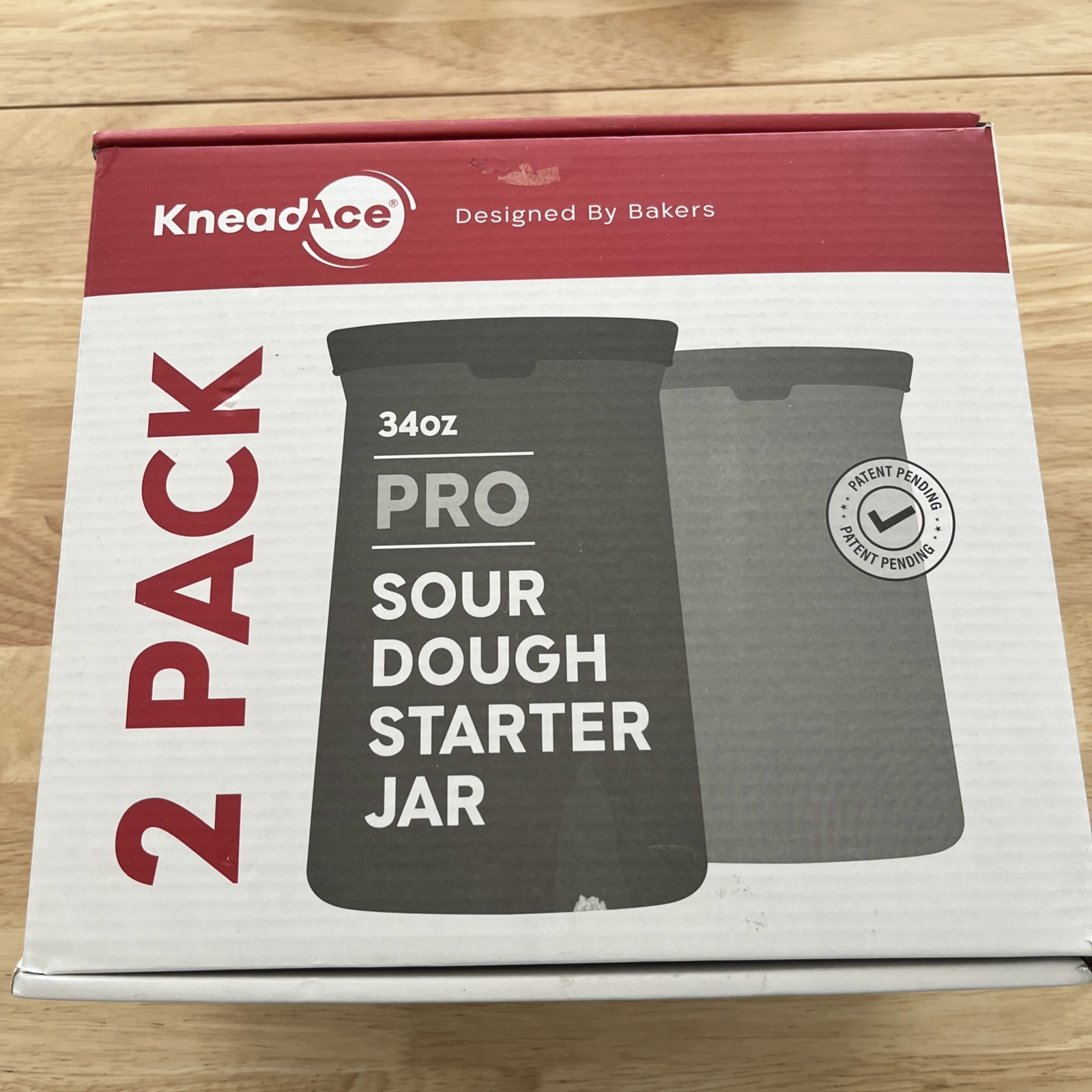 KNEADACE Pro Sourdough Starter Kit 34oz Glass Fermentation Jar 2 Pack with Lids$25.00View on eBay
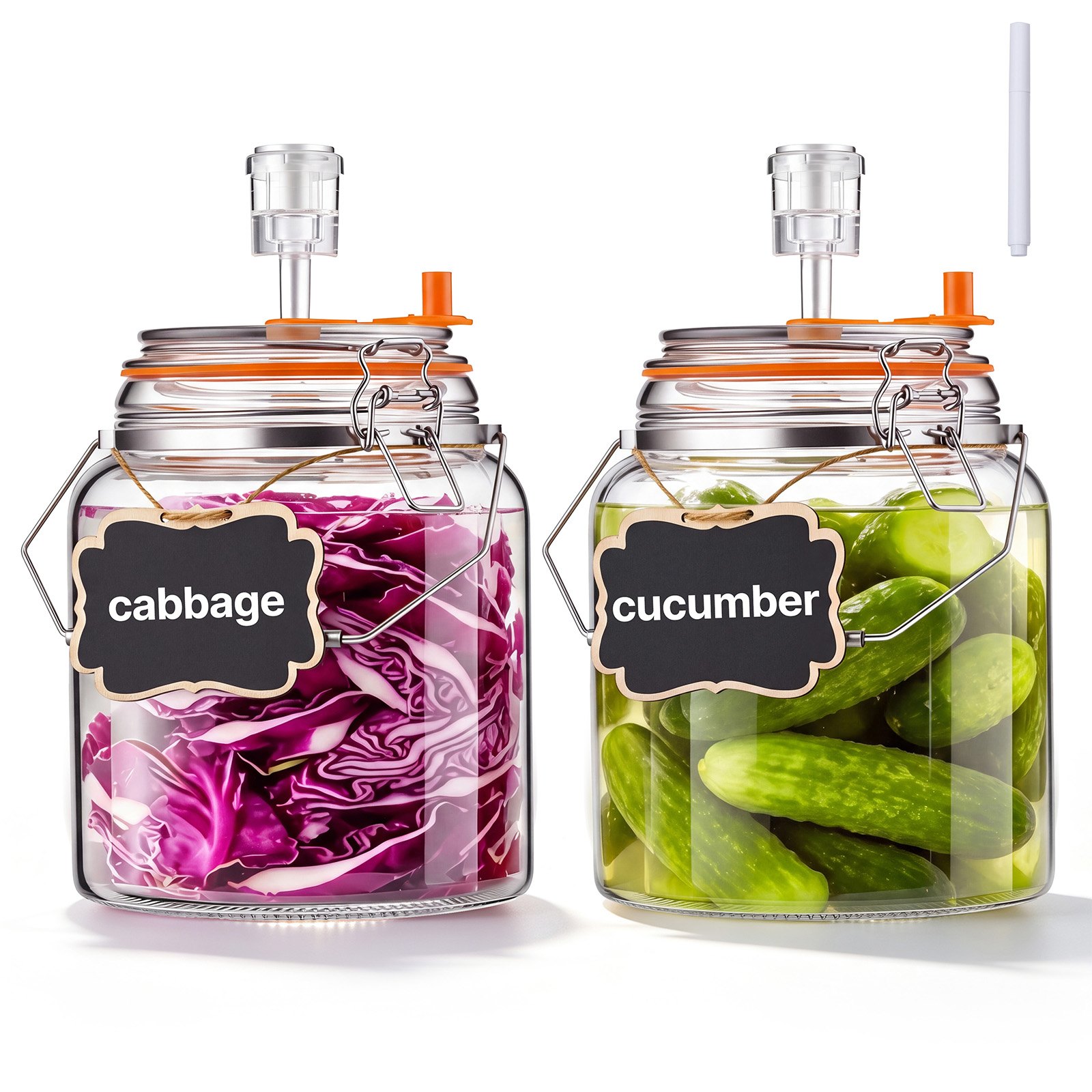 0.66 Gallon Glass Fermentation Jar, Wide Mouth Container Kit, 2-Pack, for Making Sauerkraut, Kimchi, Pickles, Vegetables, Jars for Beginners with Airlocks, Latch Lids, and Silicone Rings$35.99View on Mallflare
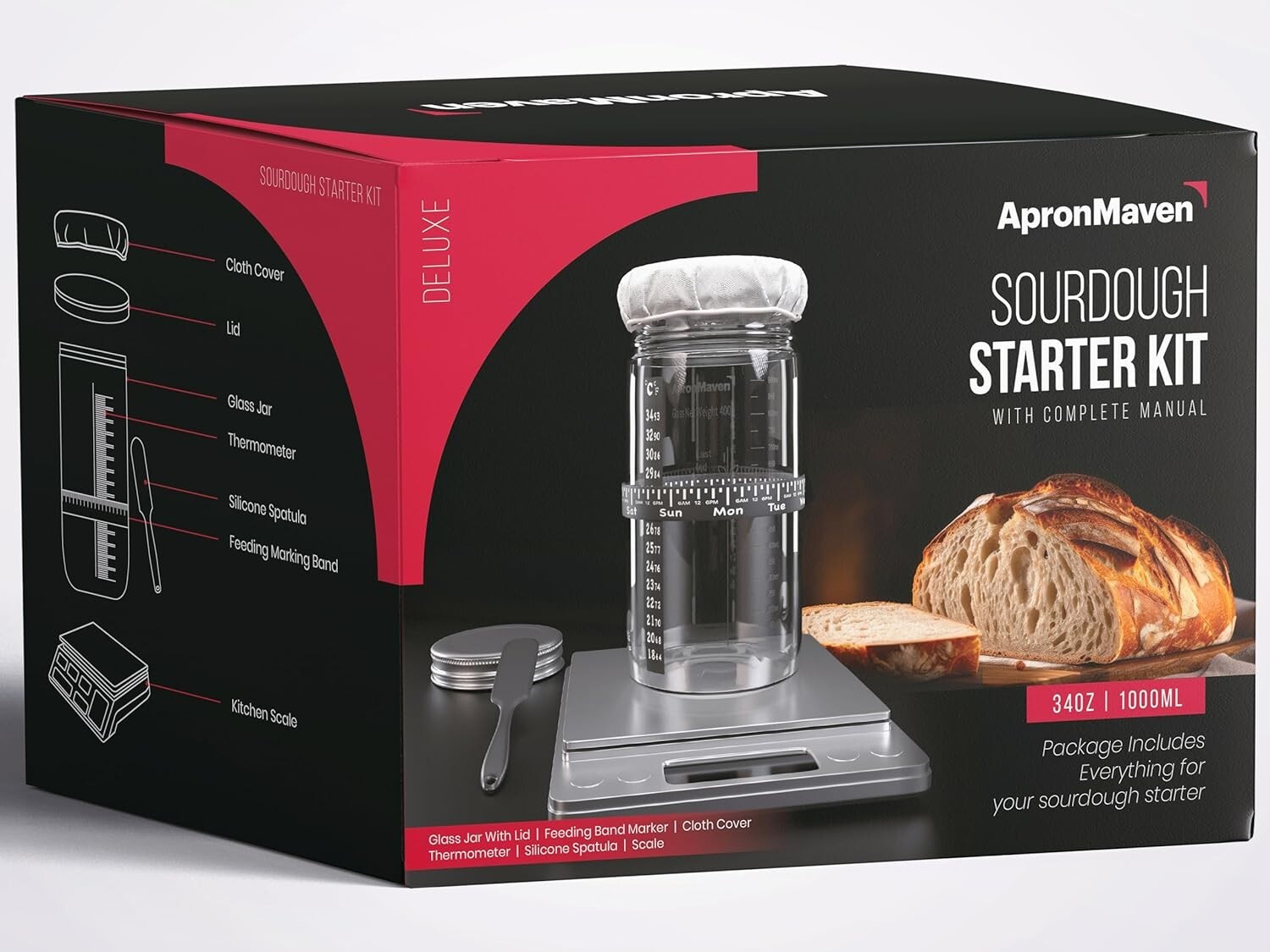 Sourdough Starter Kit Kitchen Scale jar & more For Easy Sourdough Bread Baking!$31.71View on eBay
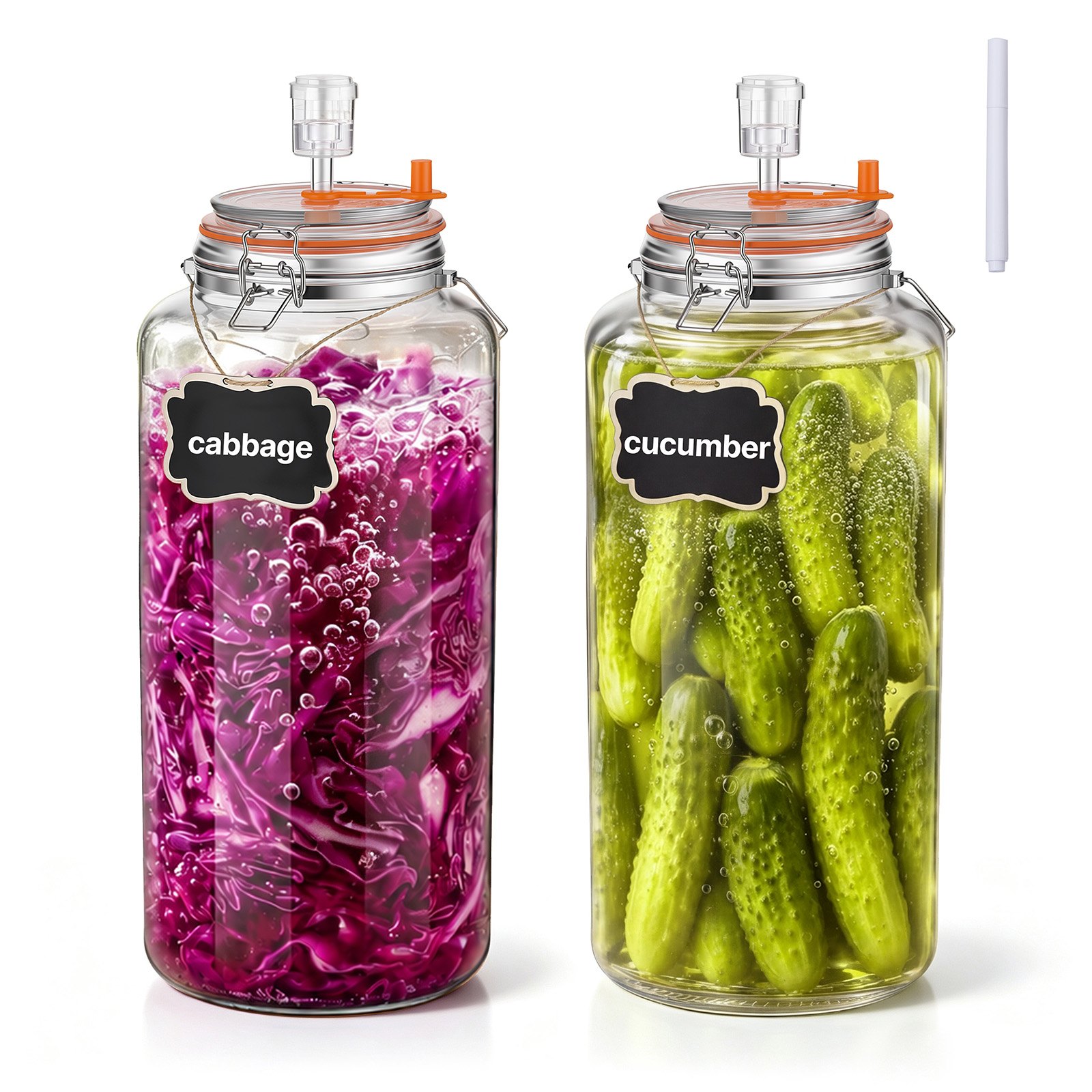 2 Gallon Glass Fermentation Jar, Wide Mouth Container Kit, 2-Pack, for Making Sauerkraut, Kimchi, Pickles and Vegetables, Jars for Beginners with Airlocks, Latch Lids, and Silicone Rings$55.99View on Mallflare
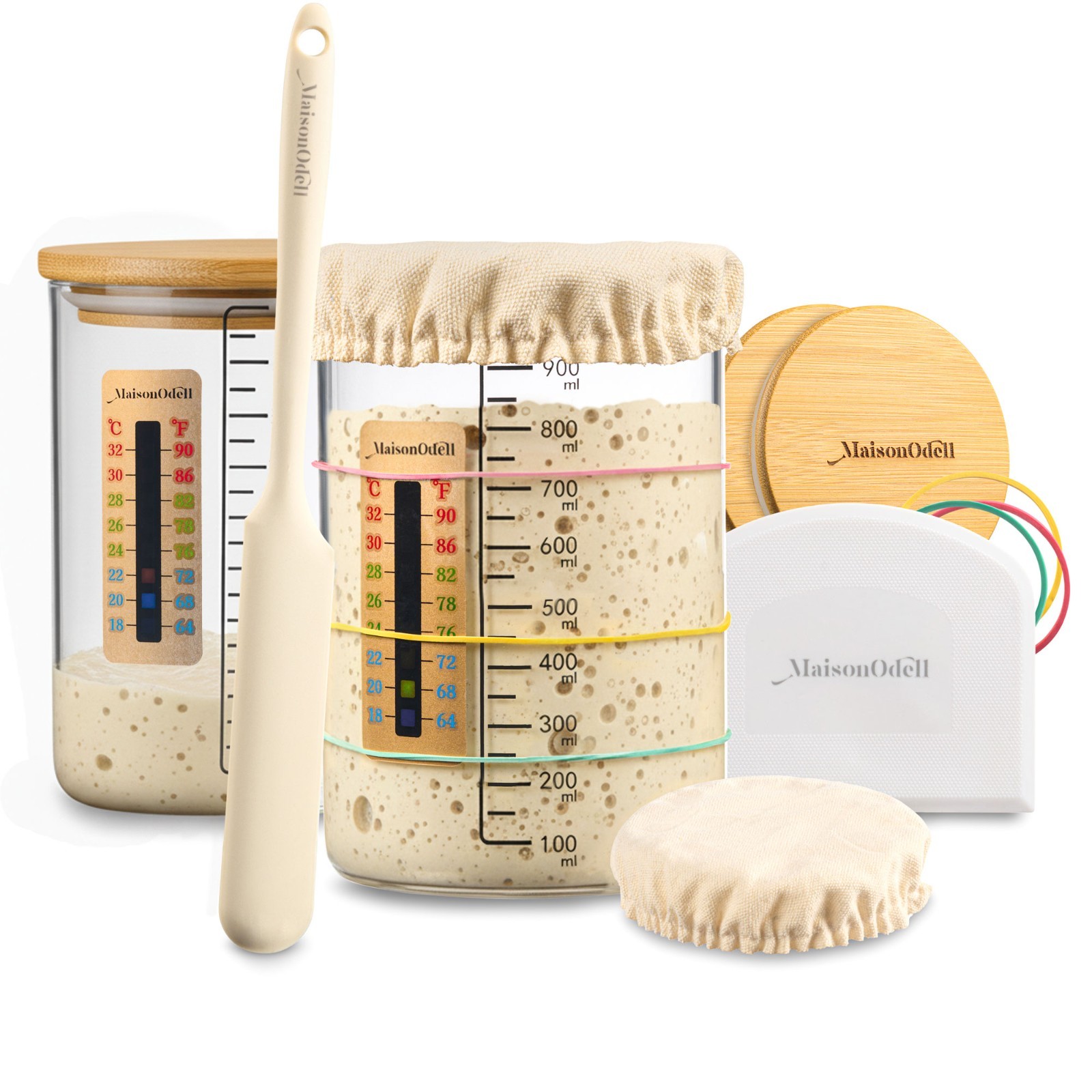 Sourdough Starter Jar Kit – 2 x 1000ml Glass Fermentation Jars | MaisonOdell$60.99View on eBay
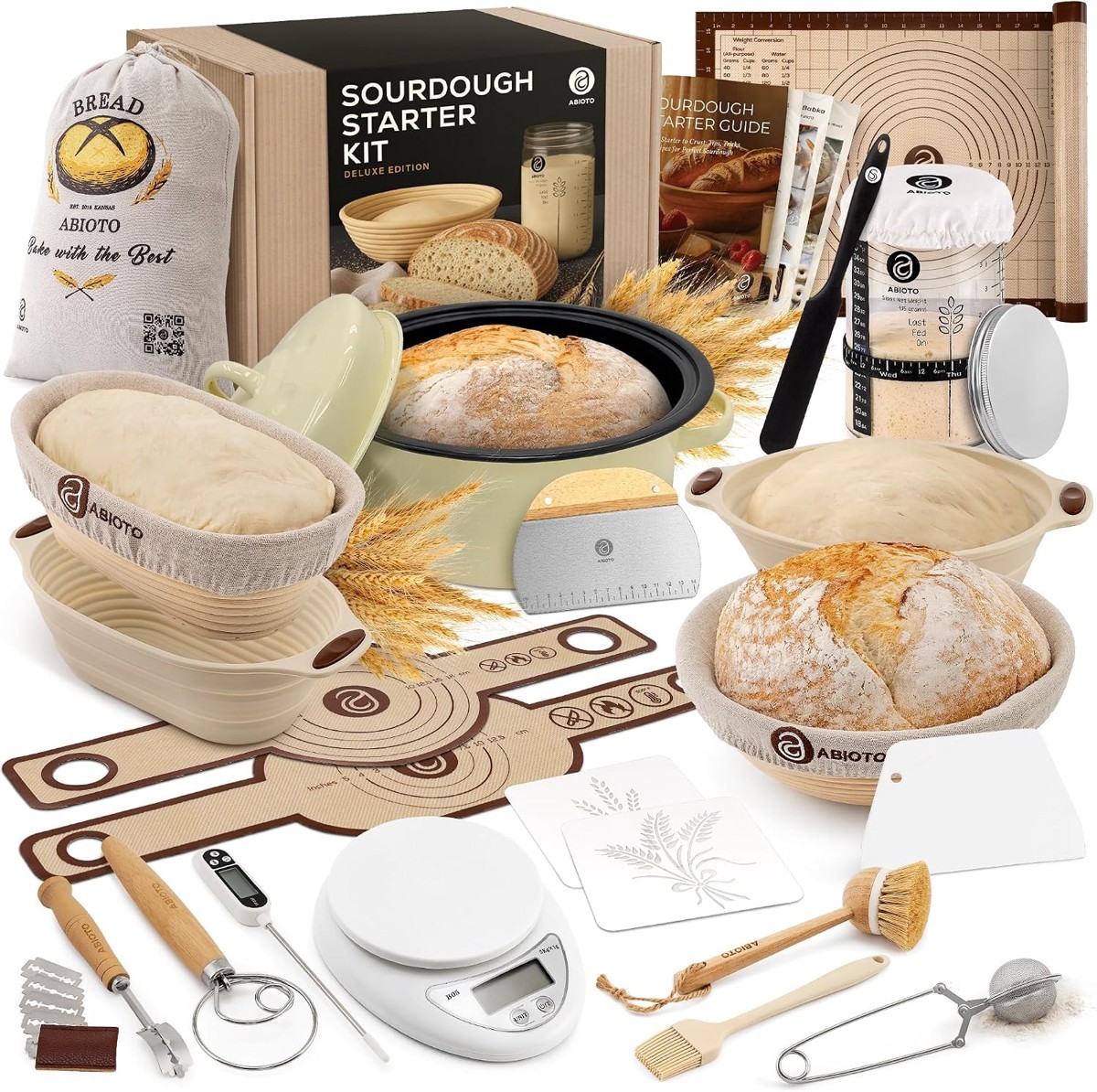 Sourdough Starter Kit w Dutch Oven Scale Proofing Baskets Jar Slings Tools$227.98New · Last checked Nov 16, 2026View on eBay
- Sourdough Starter Kit w Dutch Oven Scale Proofing Baskets Jar Slings Tools$227.98New · Last checked Nov 16, 2026View on eBay
Highlights
- Borosilicate glass resists thermal shock up to ~150°C and is dishwasher-safe; soda-lime glass is cheaper but cracks under sudden temperature changes and repeated hot washes.
- Wide-mouth (86-89 mm) jars allow a spatula to reach the bottom corners for complete feeding and scraping; narrow-mouth (63-70 mm) jars trap dried starter and make cleaning difficult.
- One-way silicone vent lids release CO2 while blocking oxygen and contaminants; cloth-and-rubber-band covers are breathable but allow surface drying and fruit-fly access.
- Straight cylindrical walls with etched or printed milliliter/gram graduations let you track rise volume precisely; tapered or decorative jars distort readings and hide the dough level.
Best use cases
- Best fit: daily-baked sourdough maintainers should pick a 500-750 ml straight-sided borosilicate jar with a silicone one-way vent lid and clear volume markings for accurate rise tracking and easy scraping.
- Best fit: refrigerator-stored starter keepers need a 250-500 ml airtight glass jar with a screw lid to minimize oxidation and dehydration during 1-4 week cold storage; skip breathable cloth covers here.
- Wrong fit: buying a 1 L+ wide ceramic crock for a small starter—the large headspace accelerates drying and makes it hard to judge doubling; choose a jar sized so starter fills 1/3 to 1/2 of the volume.
- Wrong fit: using a sealed plastic container for active countertop fermentation—CO2 buildup can pop lids or crack thin plastic; use a vented or loosely covered glass jar instead.
Buying tips
- Size the jar so your starter volume at peak rise occupies no more than 50% of total capacity; a typical 100 g flour + 100 g water feed doubles to ~400 ml, so a 500-750 ml jar suits most home bakers.
- Choose borosilicate glass over soda-lime for starters kept near warmth or washed in hot water; borosilicate handles thermal shock from ~-20°C to 150°C without cracking.
- Verify lid compatibility: wide-mouth jars accept standard 86-89 mm one-way vent lids and screw caps; narrow-mouth jars require 63-70 mm lids that are less common and harder to source.
- Prefer jars with etched (not painted) graduations—painted markings fade after repeated dishwasher cycles, while etched marks remain legible for the jar's life.
Specs
| Jar Material | Borosilicate vs soda-lime glass |
|---|---|
| Mouth Diameter | Wide 86-89 mm vs narrow 63-70 mm |
| Lid Type | One-way vent / cloth / airtight screw |
| Capacity Range | 250-750 ml (starter fills 1/3-1/2) |
Related searches
What to check before buying
- Measure your fridge shelf clearance and counter space: a 750 ml jar with vent lid stands roughly 18-20 cm tall, so confirm it fits upright without tipping.
- Check that the jar mouth diameter matches your spatula and funnel width—86 mm wide-mouth accepts most kitchen tools; 63 mm narrow-mouth may not.
- Confirm the lid style suits your fermentation stage: breathable cloth or one-way vent for active countertop rise, airtight screw lid for cold retard.
- Verify the jar is dishwasher-safe and thermal-shock rated if you plan to wash in hot water or store near a warm oven.
FAQ
Data sources: eBay / Amazon listings and product attribute feeds. Updated Nov 24, 2026.
Some links on this page are affiliate links. If you buy after clicking one, we may earn a commission at no extra cost to you. This does not change which products appear here or their order. Affiliate disclosure.