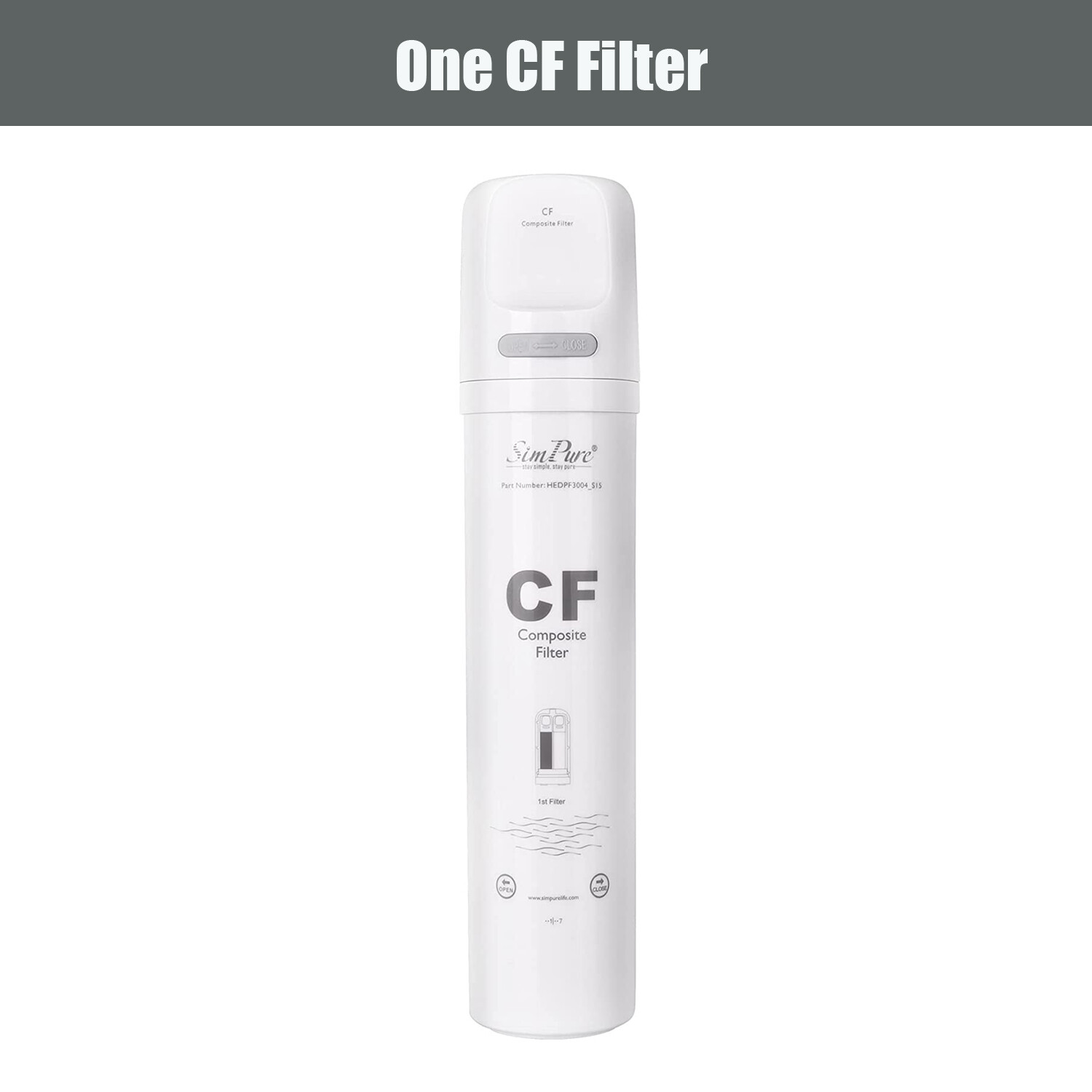

Photos from current listings. Actual item, color, and included accessories may vary.
Countertop Water Filter Buying Guide
Countertop water filters are point-of-use systems that sit on your counter and connect to a standard faucet, avoiding under-sink installation. The core trade-off is filtration technology versus maintenance and output: carbon/gravity units are simple and cheap to run but remove limited contaminants, while reverse osmosis and distillation remove nearly everything but cost more, waste water, and require filter changes. The decision rule: for municipal water with taste/chlorine issues, choose a certified carbon block or gravity system; for well water, heavy metals, or dissolved solids, step up to a multi-stage RO or distiller.
Median $111.00
Key takeaways
- Gravity-fed systems use activated carbon or carbon fiber media and need no plumbing or power; flow is slow (2-4 hours per batch) but they work during outages and remove chlorine, taste, and some VOCs.
- Reverse osmosis countertop units typically use 4-8 stages: sediment, carbon block, RO membrane (0.0001 micron), and post-carbon or remineralization; they reject 90-99% of dissolved solids but generate 1-4 gallons of wastewater per gallon produced.
- Distillers boil water at 750W-class power and condense steam, removing nearly all dissolved solids and microorganisms; they use roughly 0.5-1 kWh per gallon and require descaling every few weeks in hard-water areas.
At a glance
- Category
- Water Filtration
- Last updated
- Nov 29, 2026
Current offers
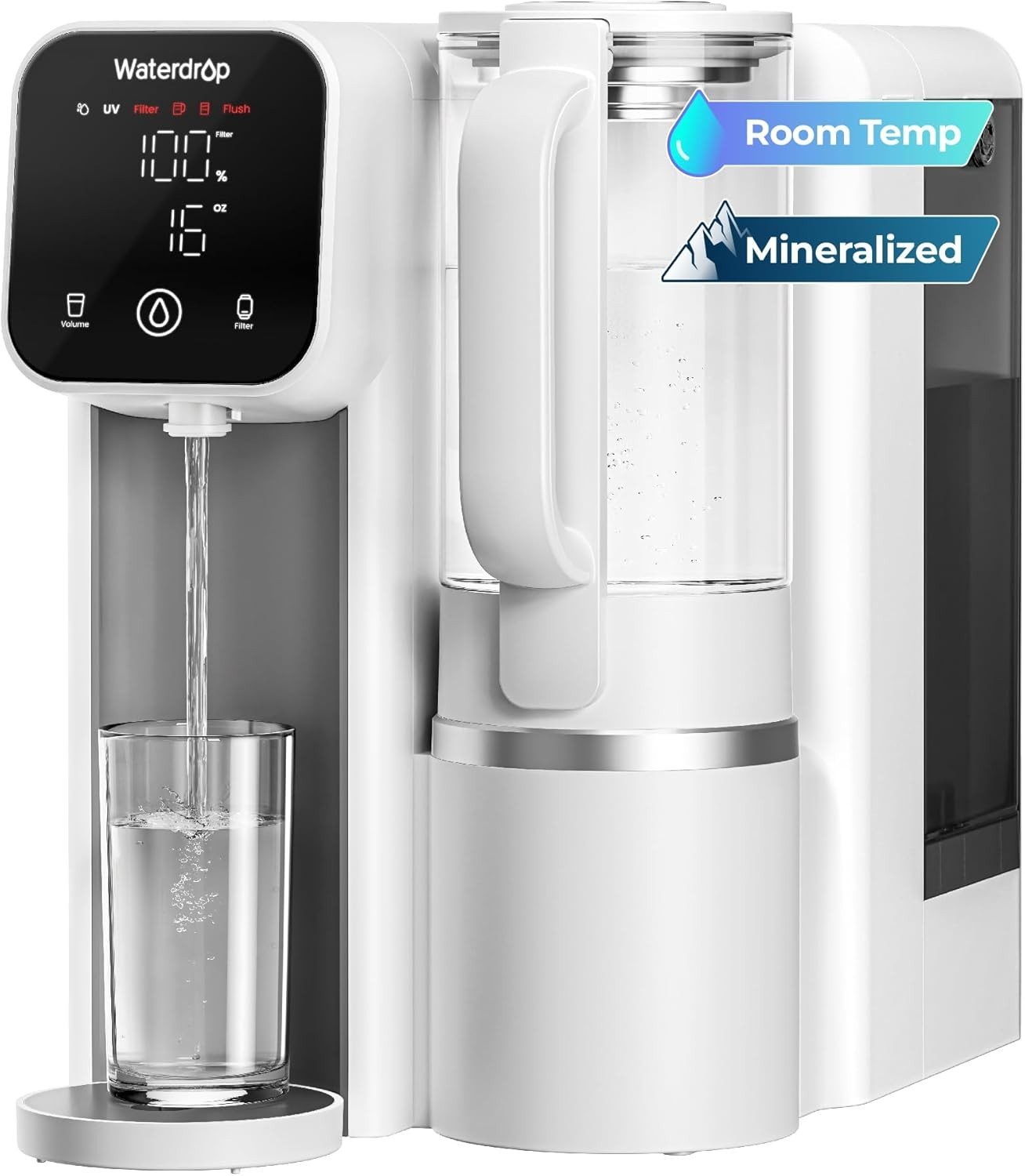
Highlights
- Gravity-fed systems use activated carbon or carbon fiber media and need no plumbing or power; flow is slow (2-4 hours per batch) but they work during outages and remove chlorine, taste, and some VOCs.
- Reverse osmosis countertop units typically use 4-8 stages: sediment, carbon block, RO membrane (0.0001 micron), and post-carbon or remineralization; they reject 90-99% of dissolved solids but generate 1-4 gallons of wastewater per gallon produced.
- Distillers boil water at 750W-class power and condense steam, removing nearly all dissolved solids and microorganisms; they use roughly 0.5-1 kWh per gallon and require descaling every few weeks in hard-water areas.
- Certification matters more than stage count: look for NSF/ANSI 42 (aesthetics), 53 (health contaminants), 58 (RO), or 401 (emerging contaminants) on the specific model, not just the brand.
Best use cases
- Choose a gravity carbon or carbon-fiber countertop filter if you rent, have standard municipal water with chlorine taste, and want zero installation and no electricity; skip it if you have well water with nitrates or high TDS.
- Choose a multi-stage countertop RO system if your water tests high in TDS, lead, or arsenic, or you want bottled-water-quality taste; pick a model with remineralization if you dislike flat-tasting RO water, and skip if you cannot accommodate wastewater discharge.
- Choose a countertop distiller if you need near-total removal of dissolved solids and microbes (e.g., questionable well or rural supply) and can tolerate slow output and periodic descaling; skip it for everyday high-volume drinking because of energy use and mineral-stripped taste.
- Skip any countertop unit if your faucet lacks a standard removable aerator or you cannot dedicate counter space; under-sink or whole-house systems fit better in those cases.
Buying tips
- Match the system to your water report: if TDS is above 300-500 ppm or lead/arsenic is present, choose RO or distillation; for TDS under 200 ppm and chlorine-only issues, a certified carbon block is sufficient.
- Check filter cost and interval before buying: carbon blocks typically last 3-6 months, RO membranes 1-2 years, and distillers need descaling every 2-4 weeks in hard water; factor replacement filters into ownership cost.
- Verify faucet compatibility: most countertop units require a standard threaded aerator (typically 15/16-inch or 13/16-inch) or include adapters; models that divert at the faucet avoid permanent plumbing.
- For RO, confirm the wastewater ratio and whether the unit needs a drain connection or collection tank; some countertop RO models store wastewater internally and must be emptied manually.
Specs
| Filtration Method | Carbon block / Gravity / RO / Distillation |
|---|---|
| Contaminant Removal | NSF 42/53/58 certified tiers |
| Installation Type | Faucet-diverter / Freestanding gravity |
| Power Requirement | None (gravity) / 750W class (distiller) |
Related searches
What to check before buying
- Measure your counter space and the unit's footprint plus clearance for the dispenser or spout; gravity units are tall and need vertical room to fill.
- Check your faucet aerator thread size and whether it is removable; confirm the unit includes or supports your thread standard.
- Test your water (TDS meter and annual water quality report) to pick carbon vs RO vs distillation; high TDS or hardness points to RO or distiller.
- Confirm electrical needs: distillers and some RO units require a nearby outlet; gravity filters need none.
FAQ
Data sources: eBay / Amazon listings and product attribute feeds. Updated Nov 29, 2026.
Some links on this page are affiliate links. If you buy after clicking one, we may earn a commission at no extra cost to you. This does not change which products appear here or their order. Affiliate disclosure.