
Photos from current listings. Actual item, color, and included accessories may vary.
Cast Iron Pan Buying Guide
A cast iron pan is a solid, heat-retaining cooking vessel made from cast iron, prized for searing, baking, and stovetop-to-oven versatility. The core trade-off is between raw, pre-seasoned iron that builds a natural nonstick patina over time and enameled cast iron that offers easier cleanup but can chip. Choose unpainted, pre-seasoned iron for high-heat searing and longevity; choose enameled iron only for acidic, low-heat dishes where you accept a more delicate surface.
Median $48.49
Key takeaways
- Raw cast iron pans are typically sand-cast and pre-seasoned with vegetable oil, creating a polymerized layer that improves with use; enameled pans have a fused glass coating that is nonreactive but can chip under thermal shock.
- Thicker walls and a heavier base (common in 10-inch and larger skillets) resist warping and hold heat for better searing; thin, lightweight pans heat faster but lose temperature when food is added.
- Pre-seasoned pans are oven-safe to high temperatures (often 500°F+), while enameled cast iron is usually limited to 450°F and should not be preheated empty on high heat.
At a glance
- Category
- Cookware & Cutlery
- Last updated
- Nov 28, 2026
Current offers
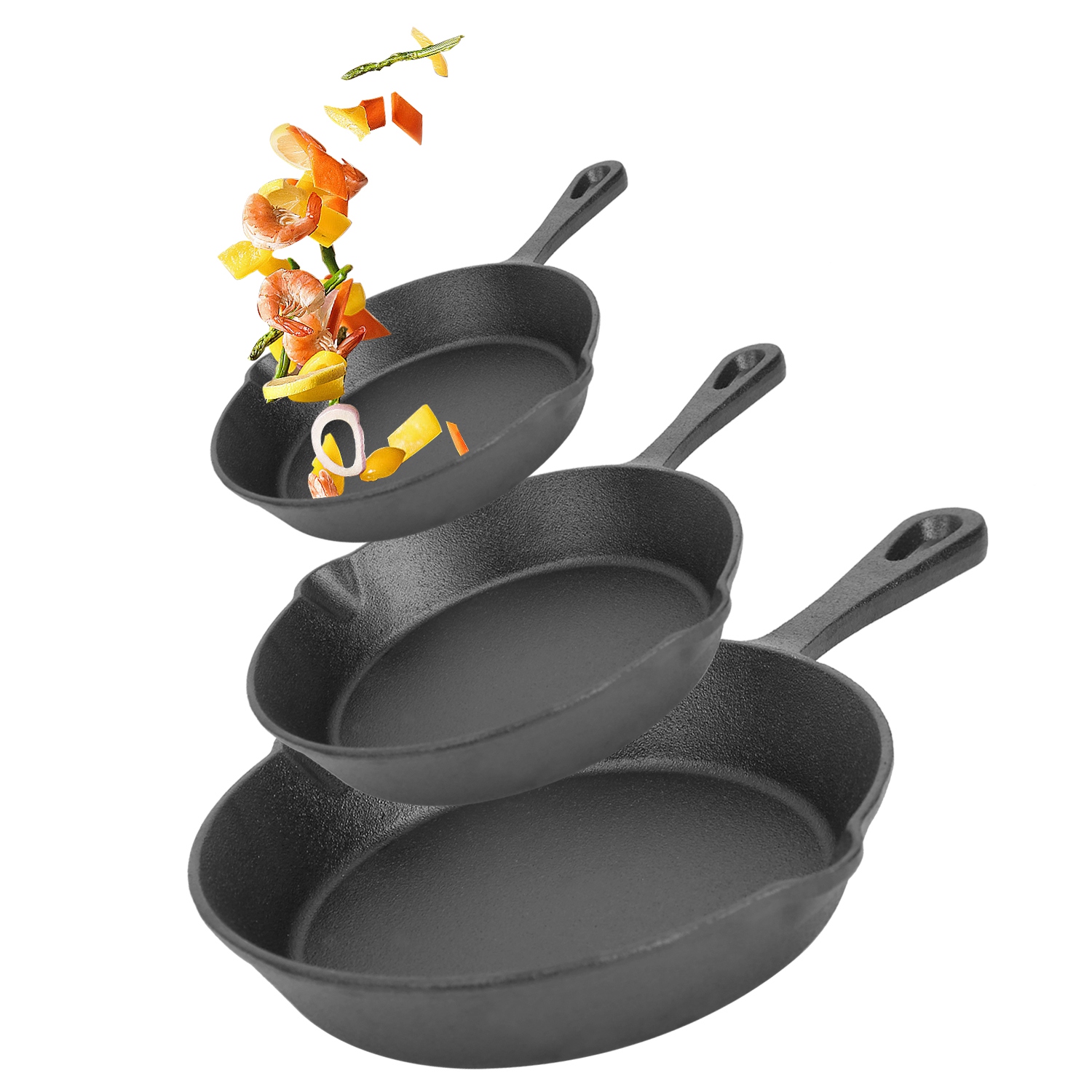 3Pcs Pre-Seasoned Cast Iron Skillet Set For Indoor Outdoor 6in 8in 10in Non-Stick Oven Safe Cookware Heat-Resistant Frying Pan For Cooking Baking$36.99View on Mallflare
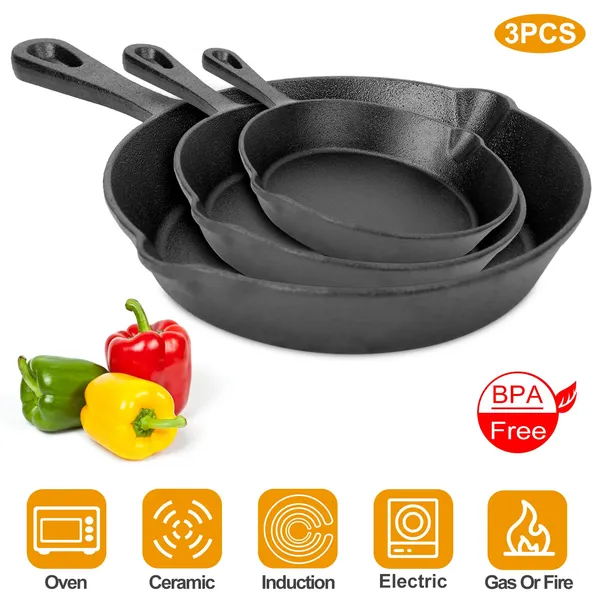 3Pcs Pre-Seasoned Cast Iron Skillet Set 6-8-10in Non-Stick Oven Safe Cookware Heat-Resistant Frying Pan$44.99View on Mallflare
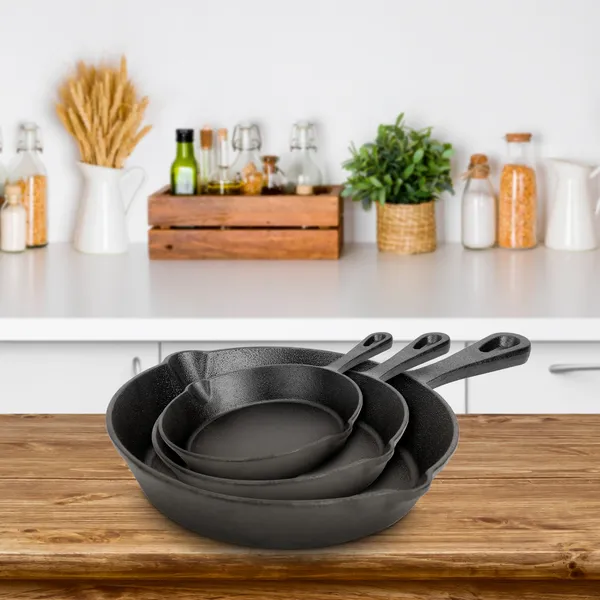 3Pcs Pre-Seasoned Cast Iron Skillet Set 6/8/10in Non-Stick Oven Safe Cookware Heat-Resistant Frying Pan$51.99View on Mallflare
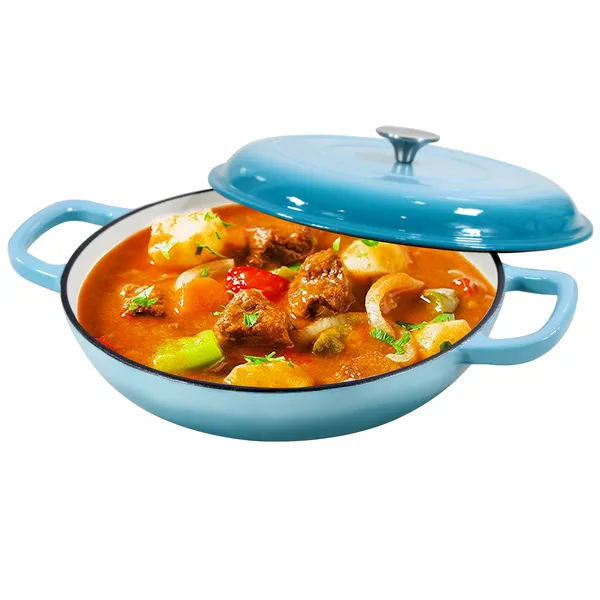 COOKWIN Cast Iron Casserole Braiser 3.8 Quart Heavy Duty Skillet With Lid And Dual Handles Porcelain Enameled Surface Cookware Pot$78.99View on Mallflare
Highlights
- Raw cast iron pans are typically sand-cast and pre-seasoned with vegetable oil, creating a polymerized layer that improves with use; enameled pans have a fused glass coating that is nonreactive but can chip under thermal shock.
- Thicker walls and a heavier base (common in 10-inch and larger skillets) resist warping and hold heat for better searing; thin, lightweight pans heat faster but lose temperature when food is added.
- Pre-seasoned pans are oven-safe to high temperatures (often 500°F+), while enameled cast iron is usually limited to 450°F and should not be preheated empty on high heat.
- Assist handles on large pans (12-inch and up) improve control when lifting a heavy, full skillet; dual-handle designs distribute weight but reduce stovetop maneuverability.
Best use cases
- Best fit: daily searing, frying, and baking in a home oven—pick a 10- or 12-inch pre-seasoned raw iron skillet with a helper handle for stability; skip enameled versions if you regularly cook at high heat.
- Best fit: acidic dishes like tomato sauces or wine reductions—choose an enameled cast iron braiser or skillet to avoid metallic taste and seasoning damage; skip raw iron for long simmers unless the pan is well-seasoned.
- Best fit: outdoor cooking over fire or grill—use a raw cast iron pan with dual assist handles for lifting; skip enameled pans because direct flame can cause thermal shock and chipping.
- Wrong fit: lightweight, quick-response cooking—cast iron heats slowly and is heavy; choose carbon steel or nonstick aluminum for toss-and-flip techniques.
Buying tips
- Match pan diameter to burner size: a 10-inch skillet suits most home burners, while a 12-inch pan needs a large burner or oven use to heat evenly; 6- and 8-inch pans are for eggs and single servings.
- Choose pre-seasoned raw iron if you want a pan that improves with use; choose enameled iron only if you prioritize easy cleanup and low-acid cooking, accepting that the coating can chip.
- For a skillet set, verify that each pan has a flat base (no wobble) and that handles are oven-safe; sets often include 6, 8, and 10-inch sizes, which cover most tasks but skip large-family searing.
- Weight matters: a 10-inch raw iron skillet typically weighs 4–6 pounds, while a 12-inch can exceed 8 pounds; if you have wrist or grip issues, look for a helper handle or a smaller pan.
Specs
| Surface Type | Raw pre-seasoned vs enameled |
|---|---|
| Oven Safety | Raw: 500°F+ / Enamel: 450°F |
| Common Sizes | 6, 8, 10, 12, 17 inch |
| Cooktop Compatibility | Gas, electric, induction, grill |
Related searches
What to check before buying
- Measure your stovetop burner and oven interior: a 12-inch pan with handle needs at least 13 inches of oven depth and a burner no smaller than the pan base for even heating.
- Check your cooktop type: induction requires a flat, magnetic base; enameled cast iron works but can scratch glass-top stoves if slid, so lift rather than slide.
- Confirm handle material and oven-safety rating: raw iron handles get hot and require mitts; some enameled pans have stainless steel handles rated to a lower temperature.
- For grill or open-fire use, ensure the pan has no enamel coating and that handles are solid cast iron or riveted steel, not plastic.
FAQ
Data sources: eBay / Amazon listings and product attribute feeds. Updated Nov 28, 2026.
Some links on this page are affiliate links. If you buy after clicking one, we may earn a commission at no extra cost to you. This does not change which products appear here or their order. Affiliate disclosure.