
Photos from current listings. Actual item, color, and included accessories may vary.
Cast Iron Skillet Buying Guide
Cast iron skillets are solid, heat-retaining pans made from a single piece of cast iron, prized for searing, baking, and lifelong durability. The primary trade-off is between raw, pre-seasoned iron (lighter, cheaper, requires maintenance) and enameled cast iron (heavier, non-reactive, no seasoning needed but can chip). Choose raw iron for high-heat searing and grill use; choose enameled for acidic sauces and low-maintenance cooking.
Median $48.49
Key takeaways
- Raw cast iron is cast in sand molds, creating a pebbled surface that seasoning fills over time; modern pre-seasoned pans use soy-based or vegetable oil baked at high heat for a ready-to-use finish.
- Enameled cast iron has a fused glass coating that is non-reactive and doesn't require seasoning, but it can chip if overheated or shocked; raw iron can be re-seasoned indefinitely.
- Skillet weight scales with diameter: a 10-inch raw skillet typically weighs 5–7 lb, while a 12-inch exceeds 8 lb; dual assist handles on 15-inch and larger pans are essential for safe lifting.
At a glance
- Category
- Cookware & Cutlery
- Last updated
- Nov 28, 2026
Current offers
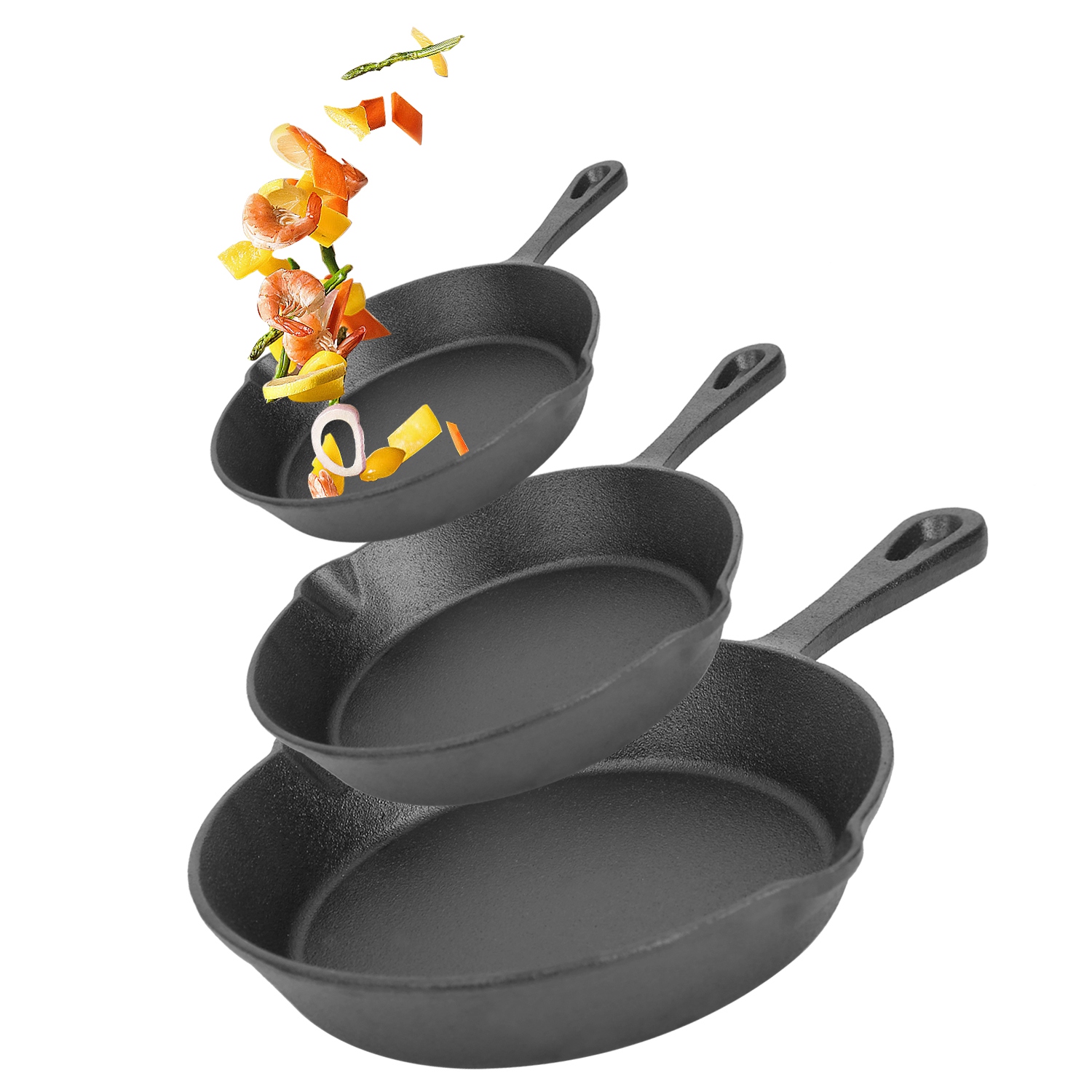 3Pcs Pre-Seasoned Cast Iron Skillet Set For Indoor Outdoor 6in 8in 10in Non-Stick Oven Safe Cookware Heat-Resistant Frying Pan For Cooking Baking$36.99View on Mallflare
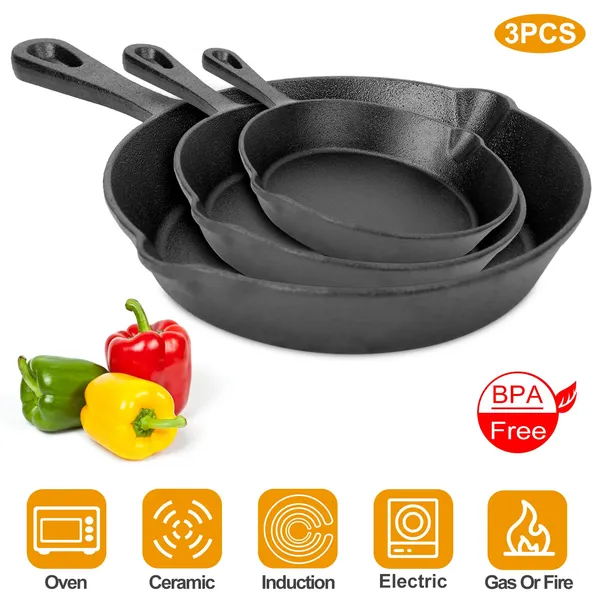 3Pcs Pre-Seasoned Cast Iron Skillet Set 6-8-10in Non-Stick Oven Safe Cookware Heat-Resistant Frying Pan$44.99View on Mallflare
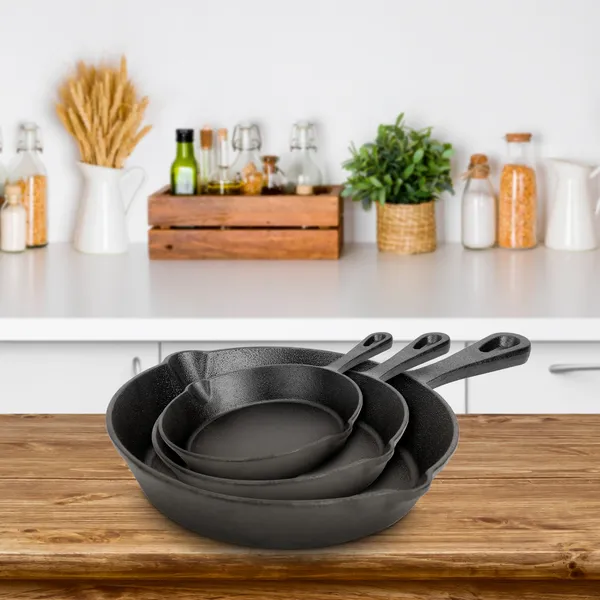 3Pcs Pre-Seasoned Cast Iron Skillet Set 6/8/10in Non-Stick Oven Safe Cookware Heat-Resistant Frying Pan$51.99View on Mallflare
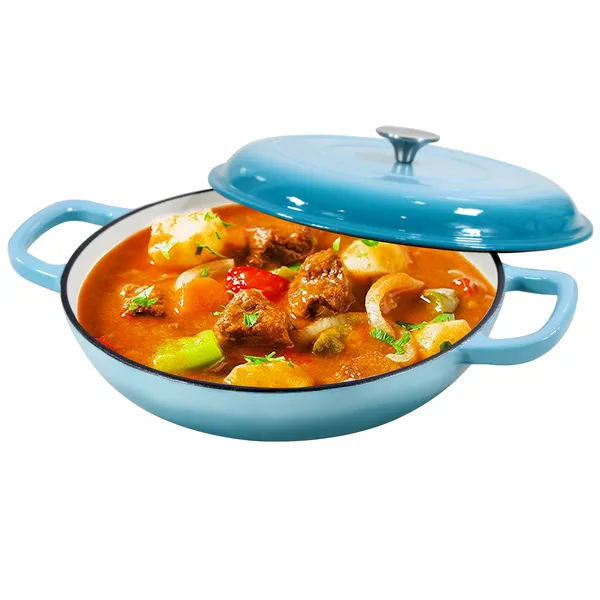 COOKWIN Cast Iron Casserole Braiser 3.8 Quart Heavy Duty Skillet With Lid And Dual Handles Porcelain Enameled Surface Cookware Pot$78.99View on Mallflare
Highlights
- Raw cast iron is cast in sand molds, creating a pebbled surface that seasoning fills over time; modern pre-seasoned pans use soy-based or vegetable oil baked at high heat for a ready-to-use finish.
- Enameled cast iron has a fused glass coating that is non-reactive and doesn't require seasoning, but it can chip if overheated or shocked; raw iron can be re-seasoned indefinitely.
- Skillet weight scales with diameter: a 10-inch raw skillet typically weighs 5–7 lb, while a 12-inch exceeds 8 lb; dual assist handles on 15-inch and larger pans are essential for safe lifting.
- Oven-safe temperature ratings differ: raw cast iron is safe to 500°F+ (and beyond, though seasoning may degrade), while most enameled pieces are rated to 450–500°F and should not be used under a broiler.
Best use cases
- Best for high-heat searing, grilling, and campfire cooking: pick a raw, pre-seasoned skillet in 10–12 inch size; skip enameled if you need direct flame or broiler use.
- Best for acidic tomato sauces, braises, and low-maintenance everyday cooking: choose an enameled cast iron braiser or skillet; skip raw iron for long simmers with acidic ingredients unless well-seasoned.
- Best for large-batch family meals or batch baking: select a 15–17 inch skillet with dual assist handles; skip 6–8 inch skillets unless cooking for one or making individual servings.
Buying tips
- Match skillet diameter to burner size: a 10-inch skillet fits most stovetop burners; 12-inch needs a large burner or induction zone; 6–8 inch is for eggs or single portions.
- For raw iron, look for a smooth-milled cooking surface if you want easier non-stick performance out of the box; standard sand-cast surfaces require more seasoning buildup.
- Enameled cast iron should have a thick, even coating with no exposed iron rims (unless rim is deliberately black); avoid enameled pans with visible chips or cracks.
- Check handle design: oversized loop handles stay cooler and are easier to grip with oven mitts; dual handles on pans over 12 inches distribute weight safely.
Specs
| Material | Raw cast iron / Enameled cast iron |
|---|---|
| Seasoning | Pre-seasoned vs bare / enameled |
| Oven Safe | Raw: 500°F+ / Enameled: 450–500°F |
| Handle Type | Single long / Dual assist handles |
Related searches
What to check before buying
- Measure your stovetop burner and oven interior: a 12-inch skillet needs at least 13 inches of oven width and a burner that accommodates the base diameter.
- Confirm your cooktop type: induction requires a magnetic base (all cast iron is induction-compatible); glass-top stoves need a flat, smooth bottom to avoid scratching.
- Check your lifting ability: a 12-inch raw skillet can weigh 8 lb or more; consider a lighter 10-inch or enameled version if you have wrist or shoulder limitations.
- For enameled cast iron, verify oven-safe temperature limit (typically 450–500°F) and avoid sudden temperature changes that can crack the enamel.
FAQ
Data sources: eBay / Amazon listings and product attribute feeds. Updated Nov 28, 2026.
Some links on this page are affiliate links. If you buy after clicking one, we may earn a commission at no extra cost to you. This does not change which products appear here or their order. Affiliate disclosure.