
Photos from current listings. Actual item, color, and included accessories may vary.
Stock Pot Buying Guide
A stock pot is a deep, straight-sided vessel built for volume cooking—stocks, boiling, brewing, and batch meals—where heat transfer, stability, and material thickness determine performance. The core trade-off is between thin-gauge economy steel that scorches and dents and heavy-gauge clad or commercial-grade construction that holds heat evenly for decades. Choose by gauge, base construction, and capacity-to-burner ratio: 0.8 mm+ fully clad or 1.0 mm+ aluminum-core bases for daily stove use; thin 0.6 mm stamped steel only for water-boiling or low-heat tasks.
Median $99.49
Key takeaways
- Base construction decides heat spread: tri-ply (steel-aluminum-steel) or disk-bottom pots eliminate hot spots on gas and induction; single-ply 0.6 mm steel warps and scorches above medium heat.
- 304 (18/8) stainless is the food-safe brewing and stock standard; 201 or 18/0 grades cost less but pit under acidic stocks and long boils.
- Commercial-grade stock pots run 1.0-1.2 mm walls with riveted handles rated for 40+ qt loads; consumer sets often use 0.6-0.8 mm walls and spot-welded handles.
At a glance
- Category
- Cookware & Cutlery
- Last updated
- Nov 28, 2026
Current offers
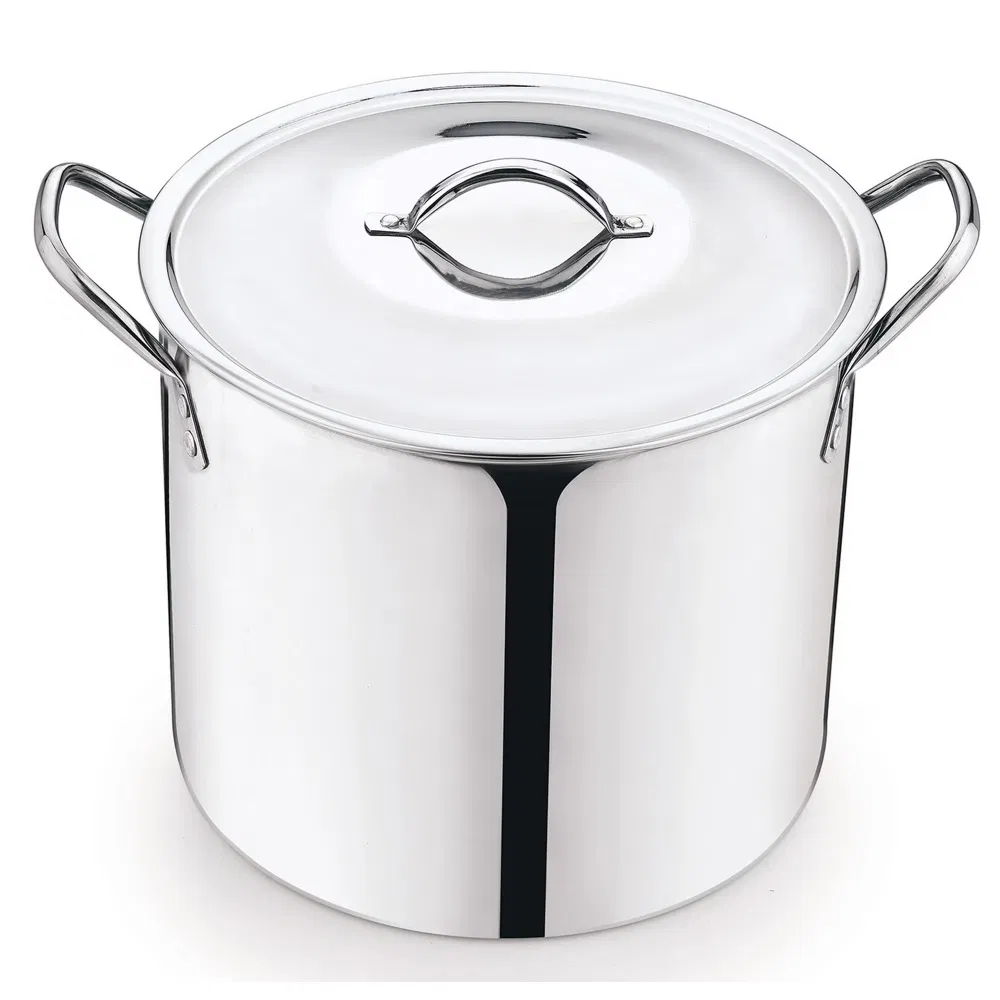 12-Qt Stainless Steel Stock Pot with Lid$60.99View on Mallflare
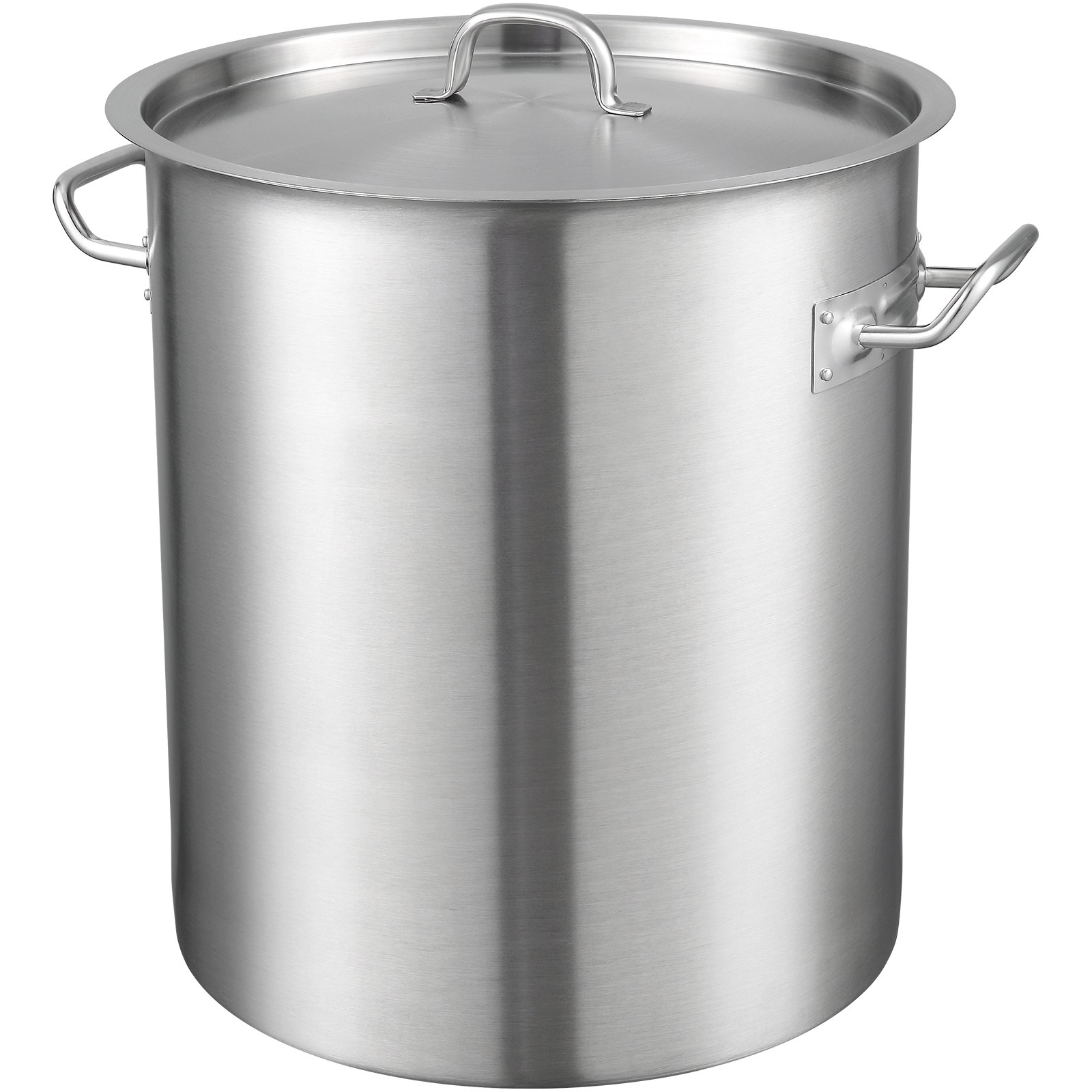 Stainless Steel Stockpot, 42 Quart Large Cooking Pots, Multipurpose Cookware Sauce Pot With Lid & Handle, Heavy Duty Commercial Grade Stock Pot, Sanding Treatment, For Groups Events Silver$95.99View on Mallflare
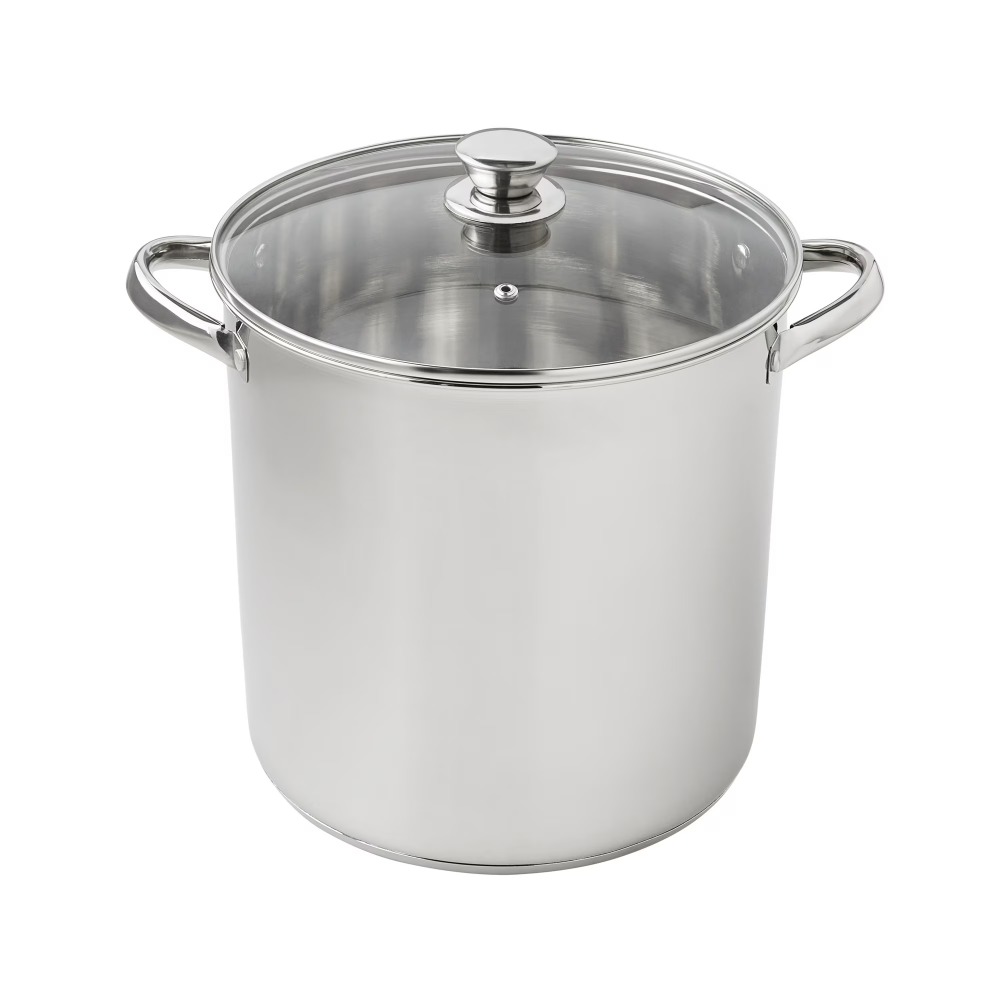 Stainless Steel 12-Quart Stock Pot with Glass Lid, Induction Compatible, Dishwasher Safe$97.99View on Mallflare
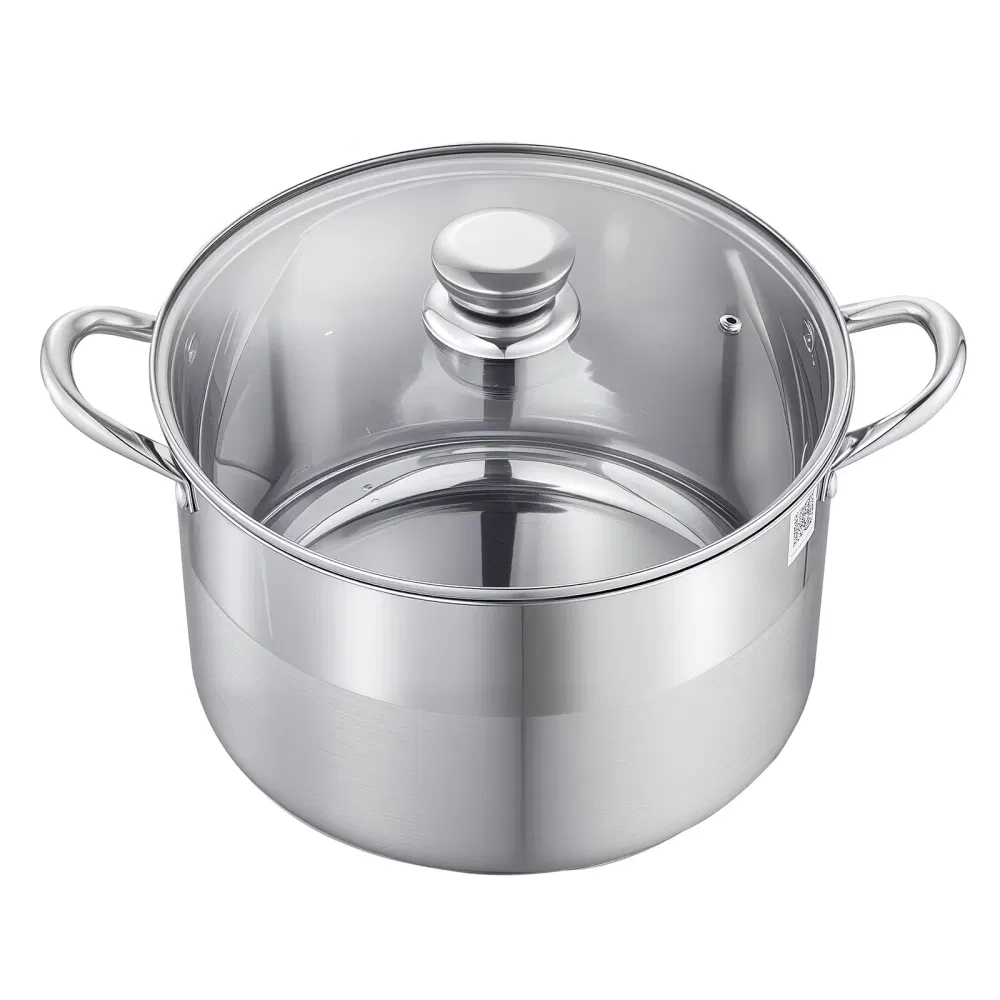 12-Quart Stainless Steel Stock Pot with Glass Lid, Compatible Gas, Induction, and Electric Stoves, Ideal for Soups, Stews, and Pasta$100.99View on Mallflare
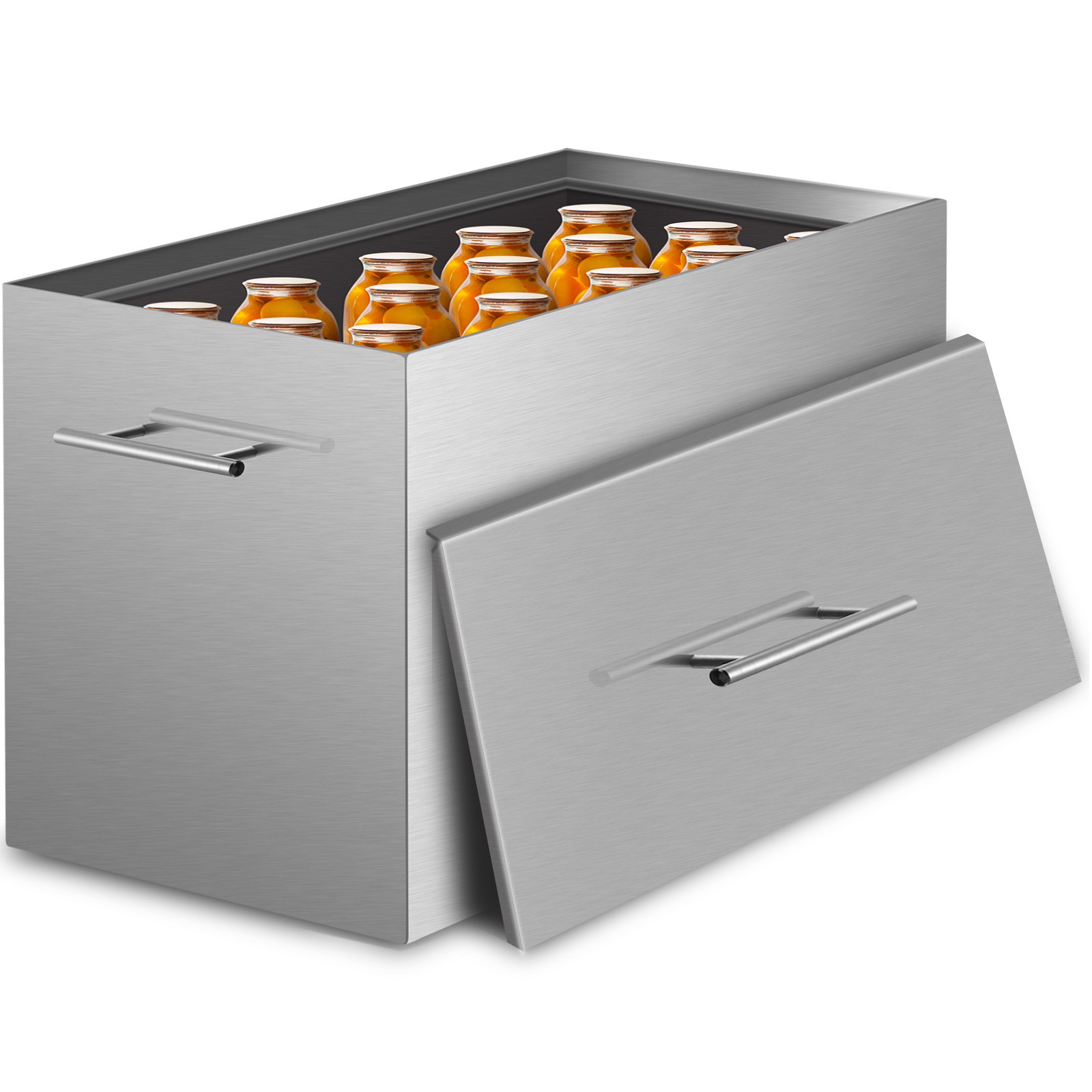 Water Bath Canner, 15 Quart Stove Top Pot, Boiling Canners With 2 Canning Racks, 304 Food Grade Stainless Steel Large Stock Pot, Flat Bottom Brushed Holds 15 Jars$117.99View on Mallflare
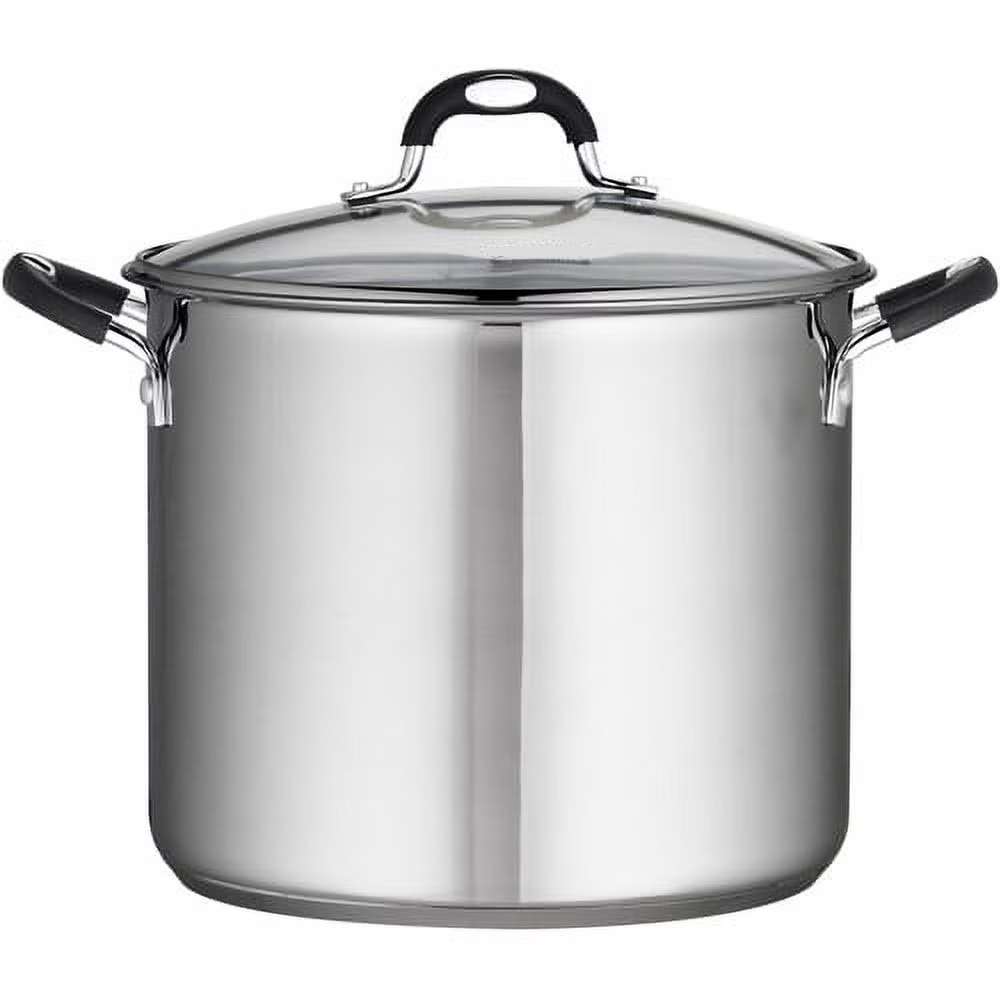 Stainless Steel 12 Quart Covered Stock Pot$148.99View on Mallflare
Highlights
- Base construction decides heat spread: tri-ply (steel-aluminum-steel) or disk-bottom pots eliminate hot spots on gas and induction; single-ply 0.6 mm steel warps and scorches above medium heat.
- 304 (18/8) stainless is the food-safe brewing and stock standard; 201 or 18/0 grades cost less but pit under acidic stocks and long boils.
- Commercial-grade stock pots run 1.0-1.2 mm walls with riveted handles rated for 40+ qt loads; consumer sets often use 0.6-0.8 mm walls and spot-welded handles.
- Induction compatibility requires a magnetic base—test with a magnet; pure aluminum and thin 304-only pots will not heat on induction cooktops.
Best use cases
- Home batch cooking (8-16 qt): pick a tri-ply or disk-bottom 304 pot with riveted side handles and a vented lid; skip 0.6 mm single-ply pots that warp on high gas.
- Large-group events or canning (24-42 qt): choose commercial-grade 1.0 mm+ walls, welded or heavy riveted handles, and a flat base sized to your burner; skip consumer sets with spot-welded handles.
- Beer brewing (10-16 gal): use a 304 pot with valve, spigot, and thermometer ports; skip 201-grade or ceramic-coated pots that chip and harbor bacteria in fermenters.
- Everyday saucepan tasks (2-4 qt): a 2.7-3.7 qt stockpot from a clad set works for pasta and soups; skip oversized 20 qt+ pots for small burners—they overhang and heat unevenly.
Buying tips
- Match pot diameter to burner: base should be within 1 inch of burner grate diameter; oversize pots on small burners scorch centers and waste gas.
- For induction, verify a magnetic base—304 alone is often non-magnetic; look for 'induction-compatible' with an encapsulated magnetic layer.
- Choose 304 (18/8) stainless for brewing and acidic stocks; 201 grades are acceptable only for water boiling and short simmers.
- Handle attachment matters: riveted handles outlast spot welds; for pots above 20 qt, require at least two side handles plus a helper handle.
Specs
| Material Grade | 304/18-8 vs 201/18-0 stainless |
|---|---|
| Base Construction | Tri-ply clad vs disk vs single-ply |
| Wall Thickness | 0.6 mm consumer / 1.0 mm+ commercial |
| Induction Ready | Magnetic base required |
Related searches
What to check before buying
- Measure your largest burner grate and oven interior—a 42 qt pot is roughly 18 in diameter and will not fit most home ovens or small burners.
- Confirm cooktop type: induction needs a magnetic base; ceramic glass needs flat, warp-resistant bottoms; gas tolerates slight concavity.
- Check lid fit and venting—tight lids with steam vents reduce boil-over; glass lids limit max oven temperature.
- For brewing setups, verify valve/spigot thread size and thermometer port diameter match your fittings before purchase.
FAQ
Data sources: eBay / Amazon listings and product attribute feeds. Updated Nov 28, 2026.
Some links on this page are affiliate links. If you buy after clicking one, we may earn a commission at no extra cost to you. This does not change which products appear here or their order. Affiliate disclosure.