
Photos from current listings. Actual item, color, and included accessories may vary.
Countertop Microwave Buying Guide
A countertop microwave is a freestanding, plug-in appliance that combines a magnetron, waveguide, and turntable in a self-contained chassis; the core trade-off is between compact size and usable cavity volume versus power, sensor accuracy, and inverter technology. Durable options use inverter power and stainless or painted-steel cavities, while compromises rely on low-wattage transformers, thin-coated interiors, and mechanical dials that drift. The decision rule: buy by cavity volume and wattage tier matched to your largest dish and daily reheat load, not by exterior footprint alone.
Median $248.99 · New listings
Key takeaways
- Inverter magnetrons deliver continuous variable power (e.g., 1,000 W output at any percentage) versus transformer units that pulse full power on/off, which prevents edge overcooking on delicate foods.
- Cavity volume tiers are standardized at roughly 0.7, 0.9, 1.1, 1.6, and 2.2 cu ft; a 1.1 cu ft unit fits a 12-inch dinner plate, while 1.6+ cu ft accommodates a 9x13-inch baking dish or a whole chicken.
- Sensor cooking uses a humidity sensor in the exhaust path to terminate cycles automatically; models without sensors rely on fixed time/weight presets that require manual adjustment.
At a glance
- Category
- Microwave Ovens
- Last updated
- Nov 27, 2026
Current offers
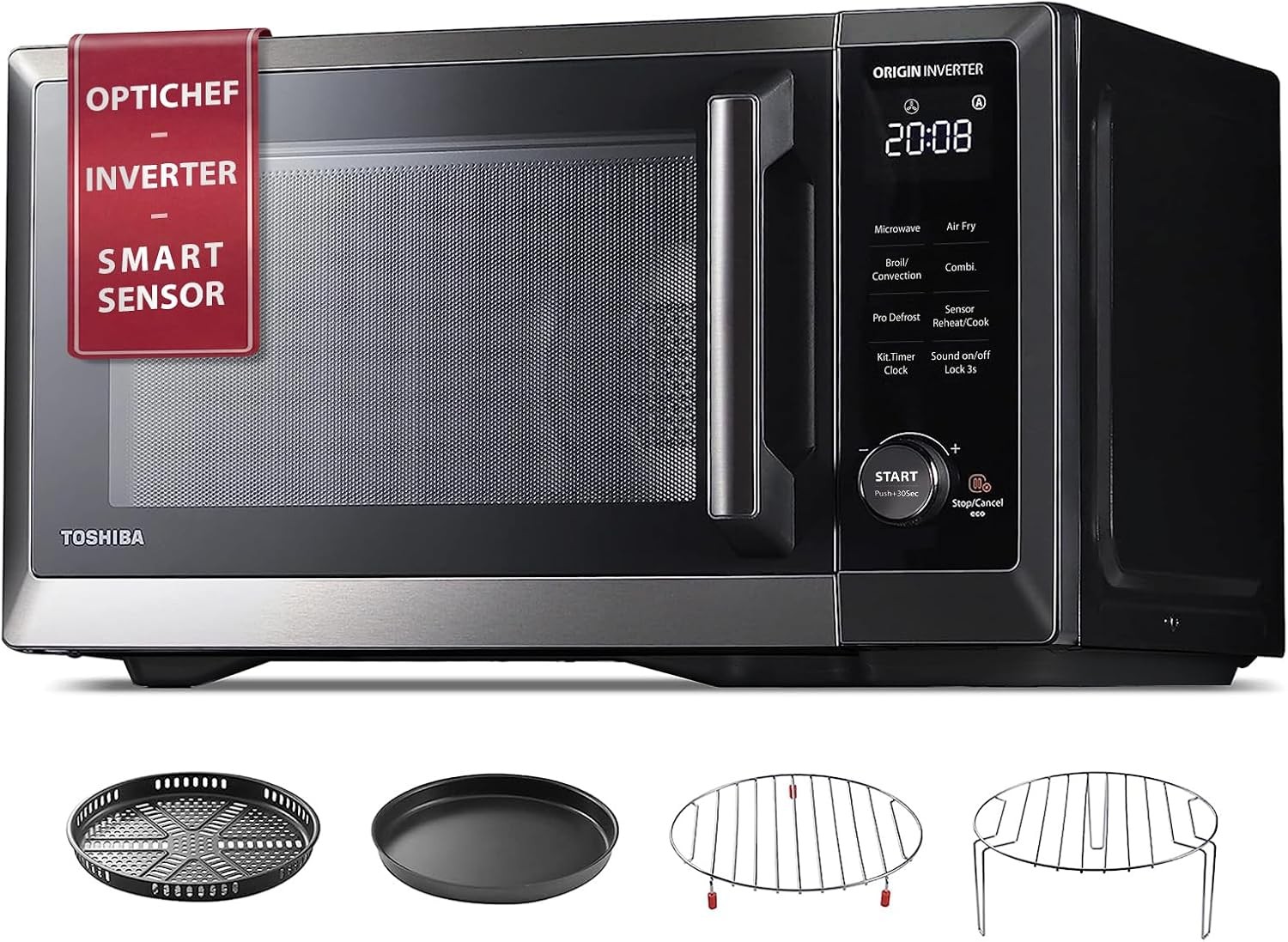 All-in-One Countertop Microwave Air Fryer Combo for Small Kitchens 1.0 Cu.Ft$284.99New · Last checked Nov 26, 2026View on eBay
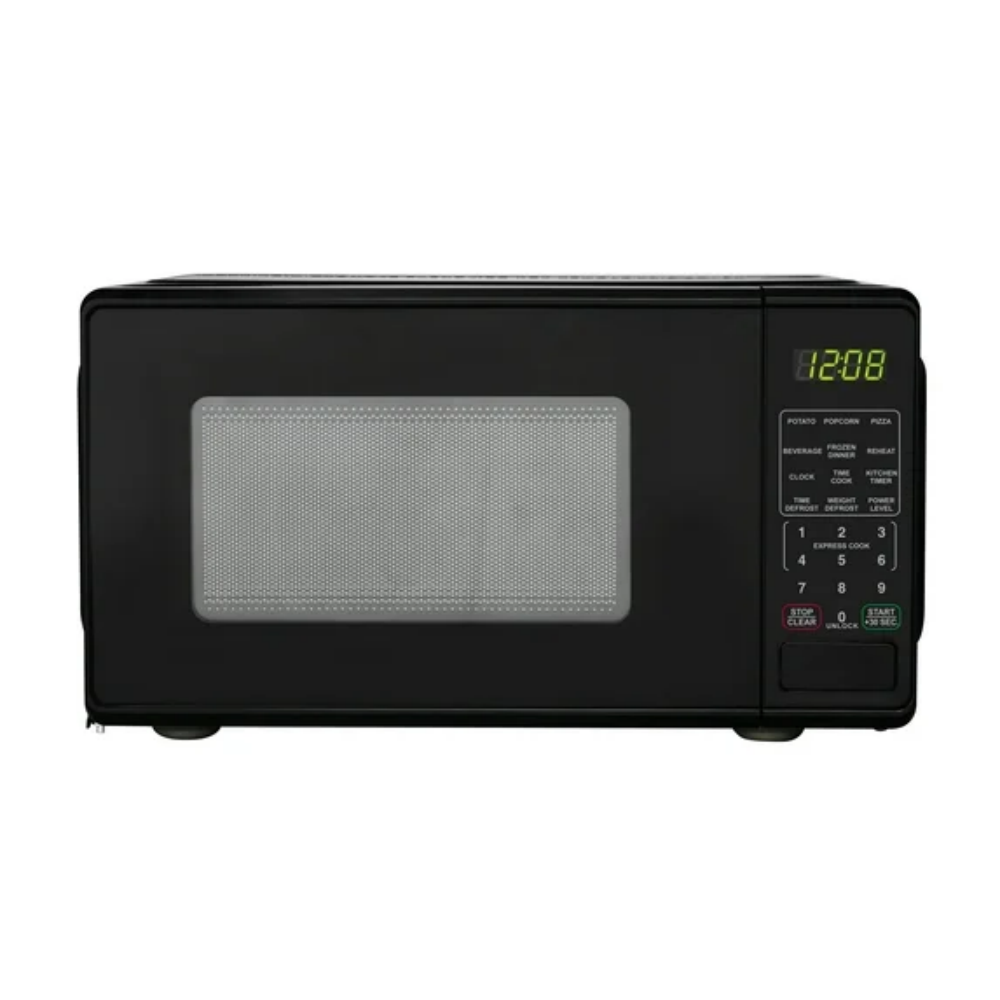 0.7 Cu ft Countertop Microwave Oven, 700 Watts, Black, New$146.99View on Mallflare
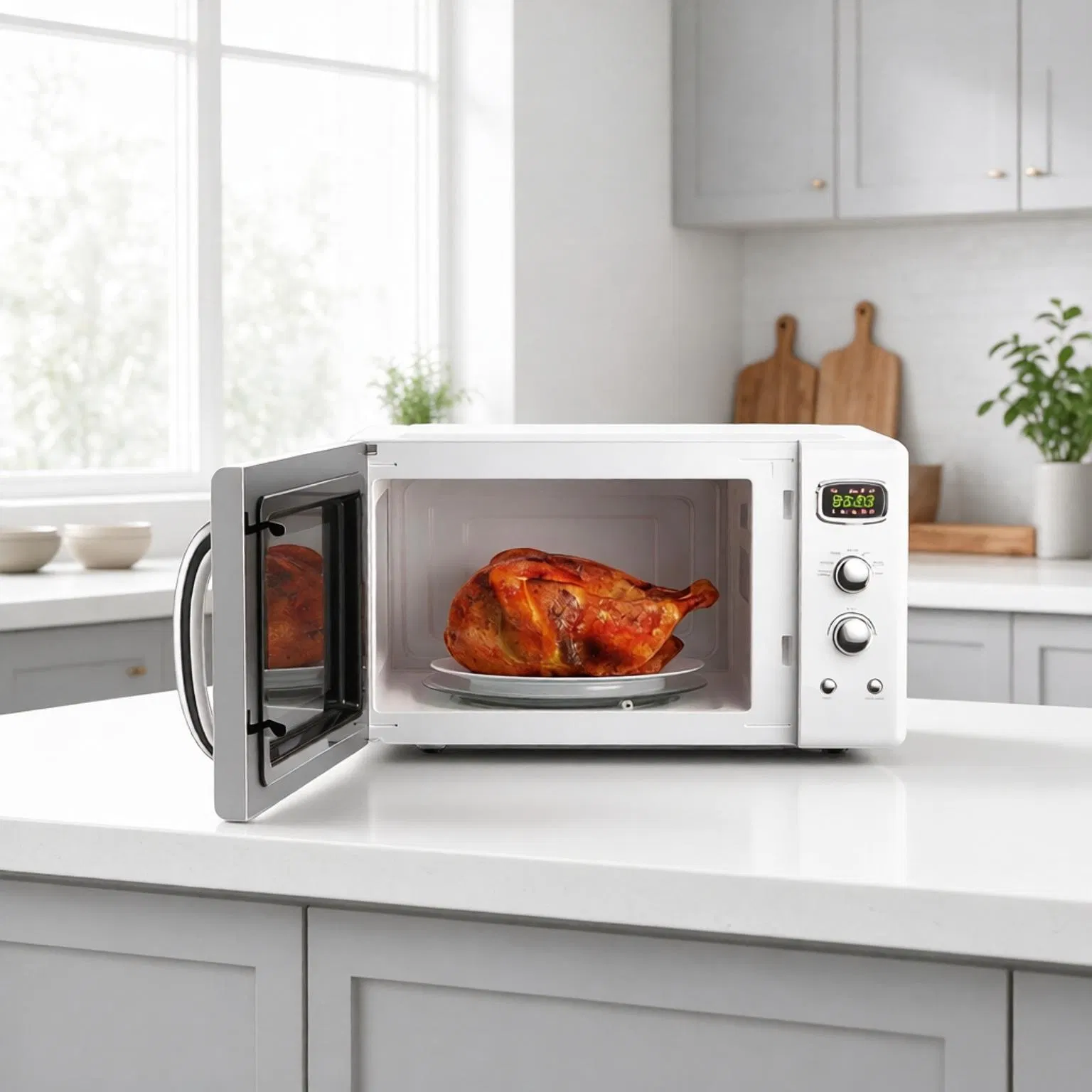 Retro Countertop Compact Microwave Oven, 0.9 Cu.ft Capacity ,Stainless Steel ,Finish Kitchen Appliance, for Home Use$248.99View on Mallflare
Highlights
- Inverter magnetrons deliver continuous variable power (e.g., 1,000 W output at any percentage) versus transformer units that pulse full power on/off, which prevents edge overcooking on delicate foods.
- Cavity volume tiers are standardized at roughly 0.7, 0.9, 1.1, 1.6, and 2.2 cu ft; a 1.1 cu ft unit fits a 12-inch dinner plate, while 1.6+ cu ft accommodates a 9x13-inch baking dish or a whole chicken.
- Sensor cooking uses a humidity sensor in the exhaust path to terminate cycles automatically; models without sensors rely on fixed time/weight presets that require manual adjustment.
- Interior finishes determine longevity: stainless steel and gray enamel resist chipping and grease staining, whereas thin acrylic/coated cavities scratch and discolor near the waveguide cover.
Best use cases
- Best fit: a 1.1 cu ft, 1,000 W inverter unit with sensor reheat for a two-person kitchen where the primary jobs are reheating plated meals, defrosting, and popping popcorn—skip 0.7 cu ft models that cannot fit a standard dinner plate.
- Best fit: a 1.6–2.2 cu ft, 1,200–1,250 W model with a 15-inch turntable for families cooking whole chickens, casseroles, and large leftovers—avoid compact 700 W units that stall on dense foods.
- Best fit: a 0.9 cu ft, 900 W unit with a flatbed (no turntable) design for tight counters, RVs, or dorm rooms where square footage and even heating on rectangular containers matter—skip if you routinely heat tall stockpots or wide platters.
- Wrong fit: a 700 W, 0.7 cu ft mechanical-dial microwave for anyone reheating dense leftovers daily; it adds 30–50% more time and heats unevenly compared to a 1,000 W inverter model.
Buying tips
- Match wattage to cavity: 700–800 W suits 0.7 cu ft, 900–1,000 W suits 0.9–1.1 cu ft, and 1,200+ W suits 1.6–2.2 cu ft; lower wattage in a large cavity produces slow, uneven heating.
- Measure your largest plate and baking dish before choosing volume: a 12-inch plate needs at least 1.1 cu ft; a 9x13-inch dish needs 1.6 cu ft or a flatbed with 13-inch usable width.
- Choose an inverter model if you regularly defrost meat or melt butter/chocolate—continuous power prevents the cooked edges and frozen center typical of pulsed transformer units.
- Confirm the door hinge and control panel clearance: countertop units need 2–3 inches of side and rear ventilation gap, and a right-hinged door must open away from your primary workspace.
Specs
| Power Source | 120 V / 15 A grounded |
|---|---|
| Wattage Tier | 700-800 / 900-1000 / 1200+ W |
| Cavity Volume | 0.7 / 0.9 / 1.1 / 1.6 / 2.2 cu ft |
| Heating Type | Inverter vs transformer |
Related searches
What to check before buying
- Measure the counter depth and width plus 2–3 inches of rear/side clearance; verify the door swing clears adjacent cabinets or walls.
- Check your largest dinner plate diameter and tallest covered dish against the turntable diameter and cavity height (typically 8–10 inches).
- Confirm a standard 120 V, 15 A grounded outlet is within cord reach (most cords are 3–4 ft) and not shared with a high-draw appliance.
- Verify the model includes the turntable ring and roller guide, or a flatbed base, plus a removable waveguide cover for cleaning.
FAQ
Data sources: eBay / Amazon listings and product attribute feeds. Updated Nov 27, 2026.
Some links on this page are affiliate links. If you buy after clicking one, we may earn a commission at no extra cost to you. This does not change which products appear here or their order. Affiliate disclosure.