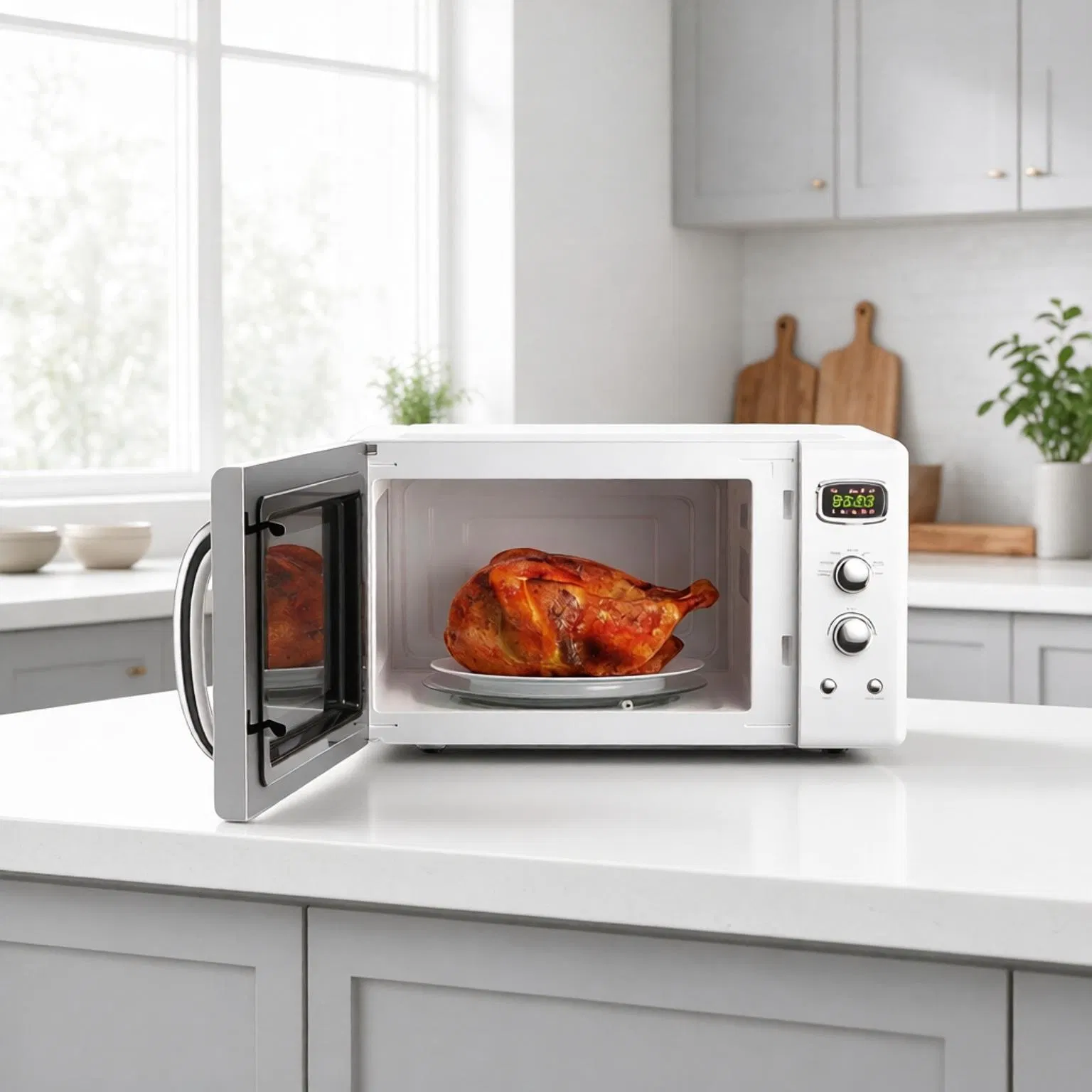

Photos from current listings. Actual item, color, and included accessories may vary.
Stainless Steel Microwave Oven Buying Guide
A stainless steel microwave oven is a countertop or over-the-range unit where the front frame, cavity, and often the outer cabinet use stainless steel for heat resistance, easier cleaning, and a commercial look. The core trade-off is between true stainless (magnetic 430 or 304 grades) and stainless-look plastic or painted steel, which affects durability, fingerprint visibility, and magnetic-mount compatibility. The decision rule: buy only when the door frame and cavity are listed as stainless steel, the unit meets your wattage and size envelope, and the control type matches your household; skip any listing that says 'stainless-look' or omits cavity material.
Key takeaways
- Cavity material grades separate durable units: 430-series stainless is magnetic and common on budget models, while 304-series is more corrosion-resistant on premium and commercial-style units.
- Wattage tiers of 900–1000W heat evenly for most households; 1200W+ units boil water faster but require a dedicated 20A circuit on some over-the-range models.
- Control architecture changes usability: mechanical dials survive power surges and simplify operation, while membrane or touch panels add presets but are the first failure point on low-tier units.
At a glance
- Category
- Microwave Ovens
- Last updated
- Nov 27, 2026
Current offers
Highlights
- Cavity material grades separate durable units: 430-series stainless is magnetic and common on budget models, while 304-series is more corrosion-resistant on premium and commercial-style units.
- Wattage tiers of 900–1000W heat evenly for most households; 1200W+ units boil water faster but require a dedicated 20A circuit on some over-the-range models.
- Control architecture changes usability: mechanical dials survive power surges and simplify operation, while membrane or touch panels add presets but are the first failure point on low-tier units.
- Finish construction matters: true stainless door frames resist steam and grease, whereas stainless-look plastic film can peel near the vent and discolors around the door seal over time.
Best use cases
- Best fit: a 0.9–1.1 cu ft countertop unit with a stainless door frame and cavity for apartments and small kitchens—skip 1.6+ cu ft units that crowd counter space and need a 20A circuit.
- Best fit: an over-the-range stainless model with 300–400 CFM venting when replacing a hood—skip low-CFM OTR units that recirculate grease back into the kitchen.
- Best fit: a 1200W stainless countertop model for reheating dense leftovers and frozen meals fast—skip 700–800W budget units if you routinely cook raw vegetables or thick cuts.
- Wrong fit: stainless-look plastic cabinets in steamy, unvented kitchens; choose a true stainless cavity with an easy-clean enamel coating instead to avoid film peeling.
Buying tips
- Measure the cutout and clearance first: countertop units need 2–3 in of side and top clearance, and OTR models require a 30-in wide, 12–18 in deep cabinet above the range.
- Match wattage to your circuit: 1000W and below runs on a standard 15A kitchen circuit, while 1200W+ OTR or inverter models often need a dedicated 20A line.
- Check the cavity material explicitly: 'stainless steel cavity' beats 'stainless steel front'—the front is a trim panel, and the cavity determines stain and odor resistance.
- Pick control type by household: mechanical dials for elderly users or power-flaky areas, touch panels for preset-heavy cooking, and verify the panel has a physical door-release button to avoid membrane wear.
Specs
| Cavity Material | 430 vs 304 stainless steel |
|---|---|
| Wattage Tier | 700–800W / 900–1000W / 1200W+ |
| Unit Type | Countertop / Over-the-range / Built-in |
| Control Type | Mechanical dial / Touch membrane / Inverter |
Related searches
What to check before buying
- Measure your counter depth and cabinet opening: standard countertop units are 12–15 in tall and 20–24 in wide, and OTR units need a 30-in range below.
- Confirm your kitchen circuit amperage (15A vs 20A) and outlet placement, since high-wattage stainless models draw 12–15A and can trip shared circuits.
- Check door swing and hinge side against adjacent walls or cabinets; most stainless models are left-hinge, and reversible hinges are rare on OTR units.
- Verify venting for OTR: ducted outside requires a 3.25 x 10 in or 6-in round duct, while ductless needs a charcoal filter and annual replacement.
FAQ
Data sources: eBay / Amazon listings and product attribute feeds. Updated Nov 27, 2026.
Some links on this page are affiliate links. If you buy after clicking one, we may earn a commission at no extra cost to you. This does not change which products appear here or their order. Affiliate disclosure.