
Photos from current listings. Actual item, color, and included accessories may vary.
Alkaline Water Machine Buying Guide
An alkaline water machine is a point-of-use water treatment system that elevates pH and adds beneficial minerals, typically via reverse osmosis followed by a remineralization stage. The core trade-off is between RO systems that strip contaminants but require mineral re-adders, versus non-RO ionizers that alkalize but may not reduce dissolved solids. Choose a system with certified contaminant reduction and a dedicated mineral cartridge if you want both purity and alkaline output.
Median $129.19
Key takeaways
- 6-stage RO systems combine sediment, carbon, RO membrane, and alkaline mineral cartridges; 5-stage units often omit post-RO mineral or polishing stages.
- 100 GPD RO membranes produce roughly 0.28 gallons per hour, sufficient for household drinking and cooking but slow to fill large containers.
- NSF/ANSI 372 certifies lead-free materials and low lead content in wetted components; it does not validate pH increase or mineral addition.
At a glance
- Category
- Water Filtration
- Last updated
- Nov 27, 2026
Current offers
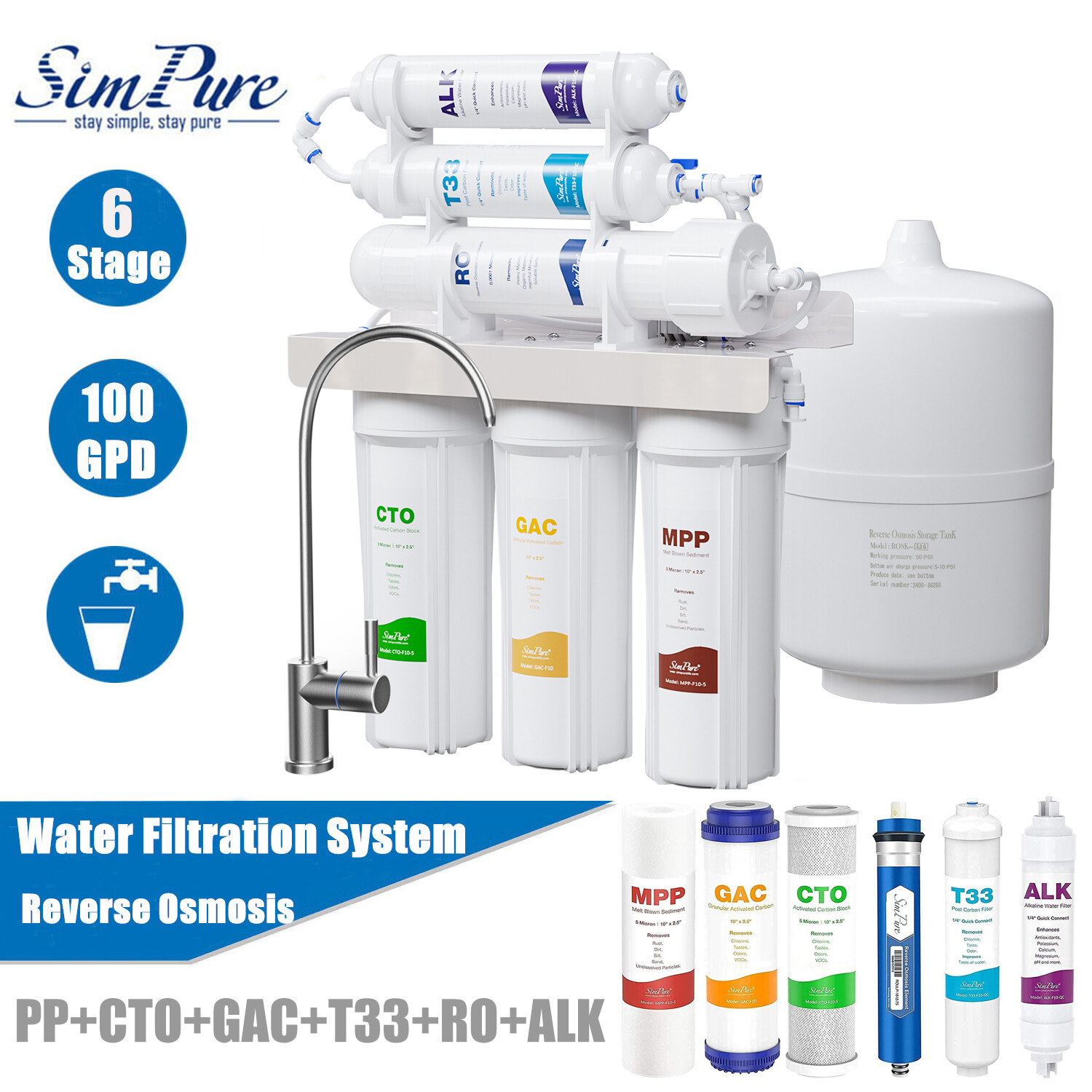 100 GPD 6 Stage Alkaline Reverse Osmosis Drinking Water Filter System Purifier$128.79Last checked Nov 18, 2026View on eBay
- 6 Stage 100GPD Alkaline RO Reverse Osmosis Drinking Water Filter System Purifier$128.79View on eBay
- 6 Stage 100 GPD Reverse Osmosis System Alkaline Drinking Water Filter Purifier$129.19View on eBay
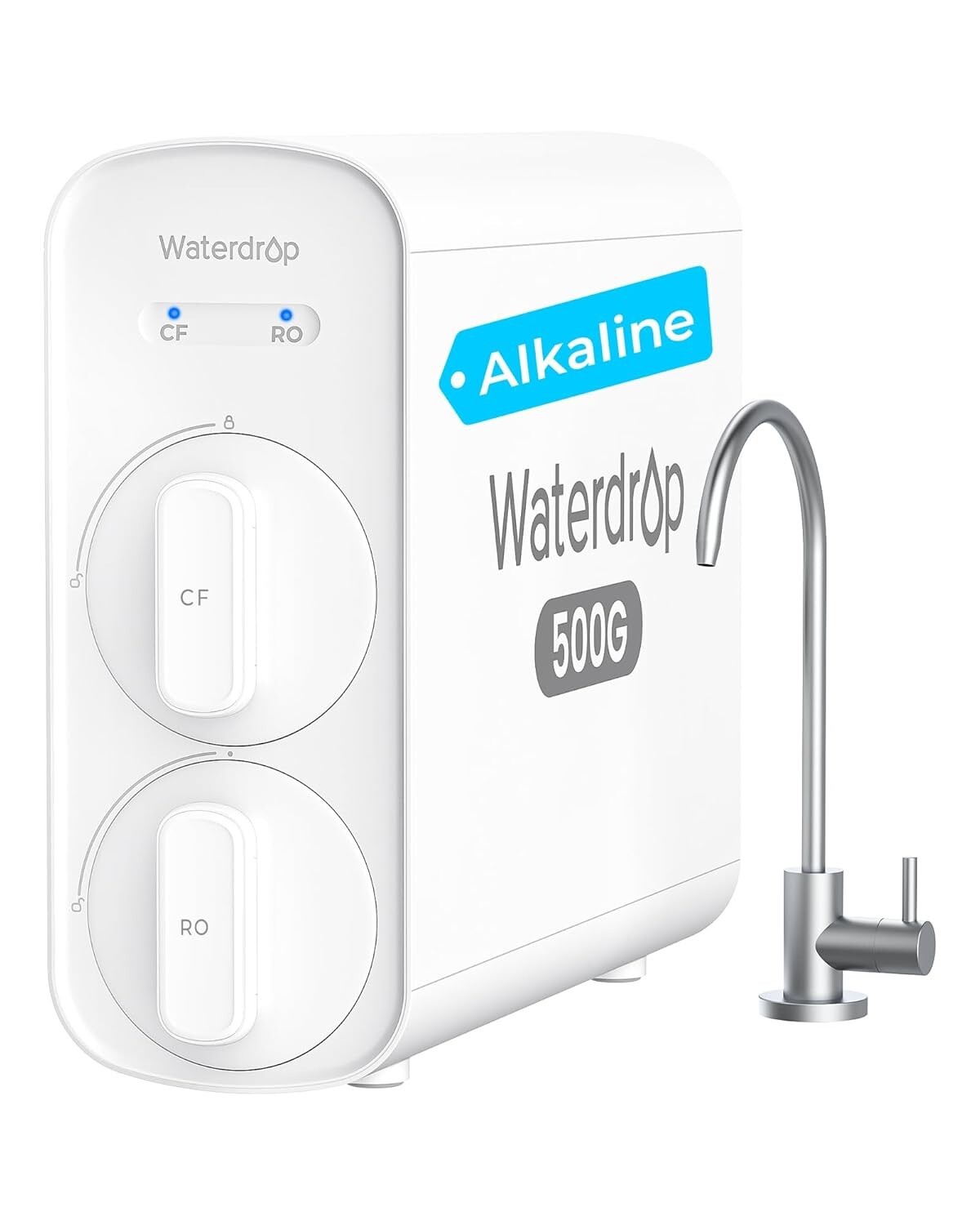 Waterdrop G5P500A Alkaline Mineral pH+ Reverse Osmosis Water Filter, Reduces TDS$199.99View on eBay
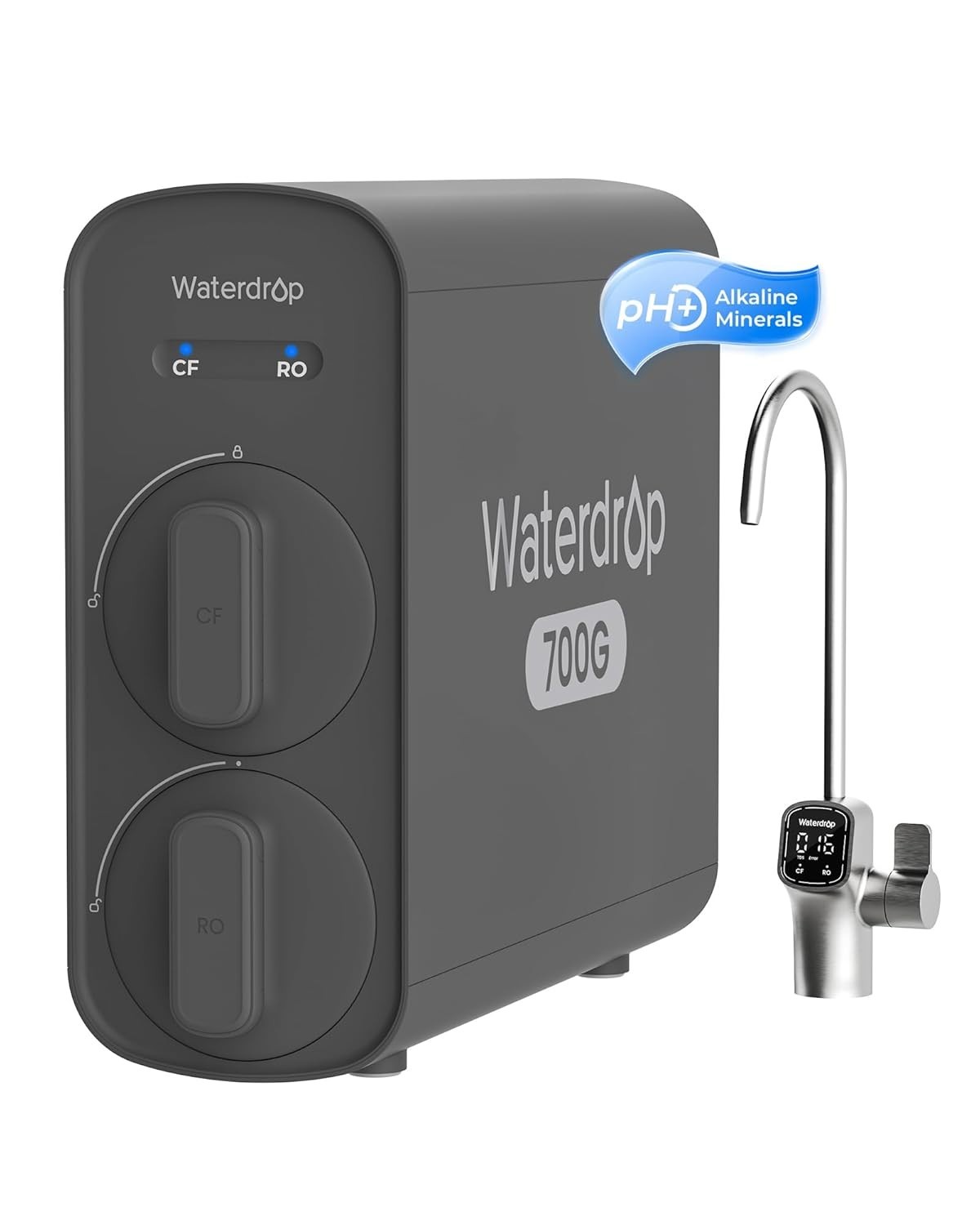 Waterdrop G5P700A Alkaline Mineral pH+ Reverse Osmosis Water Filter,NSF/ANSI 372$286.99Last checked Nov 14, 2026View on eBay
Highlights
- 6-stage RO systems combine sediment, carbon, RO membrane, and alkaline mineral cartridges; 5-stage units often omit post-RO mineral or polishing stages.
- 100 GPD RO membranes produce roughly 0.28 gallons per hour, sufficient for household drinking and cooking but slow to fill large containers.
- NSF/ANSI 372 certifies lead-free materials and low lead content in wetted components; it does not validate pH increase or mineral addition.
- Tankless RO systems like Waterdrop G5P series use booster pumps and integrated alkaline filters, eliminating pressure tanks and reducing installation footprint.
Best use cases
- Best fit: Under-sink 6-stage RO with alkaline cartridge for households on chlorinated municipal water seeking both contaminant reduction and pH elevation; skip if you have very hard water without a softener.
- Best fit: Tankless alkaline RO (e.g., G5P500A/G5P700A) for kitchens with limited cabinet space and standard under-sink electrical outlet; skip if you lack a nearby GFCI-protected outlet.
- Best fit: Countertop ionizer for renters who want alkaline water without plumbing modifications; skip if your water source has high TDS or sediment, as ionizers require pre-filtered feed water.
- Wrong fit: Whole-house alkaline systems for apartments or single-fixture needs; skip and choose an under-sink or countertop unit to avoid oversized capacity and complex installation.
Buying tips
- Match GPD to household size: 100 GPD supports 3–4 people for drinking and cooking; larger households or high daily use should step up to 200–400 GPD.
- Verify the alkaline stage uses a mineral cartridge (calcium, magnesium) rather than a simple pH booster; mineral cartridges add measurable TDS and improve taste.
- Check that pre-filters are standard 10-inch or quick-connect cartridges for easy replacement; proprietary cartridges increase long-term cost and reduce availability.
- For tankless RO, confirm the system includes a booster pump and requires a standard 110–120V outlet; tank-based RO operates on line pressure alone.
Specs
| Stage Count | 5-stage vs 6-stage (alkaline) |
|---|---|
| RO Capacity | 100–400 GPD |
| Tank Type | Tankless vs pressure tank |
| Certification | NSF/ANSI 372 lead-free |
Related searches
What to check before buying
- Measure under-sink cabinet width, height, and depth: tankless units need roughly 6–8 inches width and 16–18 inches height; tank systems need space for a 3–4 gallon pressure tank.
- Test feed water TDS and hardness: RO membranes perform best under 500 ppm TDS and 10 grains per gallon hardness; soften hard water above 10 gpg to protect the membrane.
- Confirm electrical access: tankless and ionizer units require a grounded 110–120V outlet within cord reach; tank RO systems need no power.
- Check faucet compatibility: most under-sink systems include a dedicated drinking water faucet requiring a 1/2-inch or 3/8-inch hole; confirm countertop drilling is allowed.
FAQ
Data sources: eBay / Amazon listings and product attribute feeds. Updated Nov 27, 2026.
Some links on this page are affiliate links. If you buy after clicking one, we may earn a commission at no extra cost to you. This does not change which products appear here or their order. Affiliate disclosure.