
Photos from current listings. Actual item, color, and included accessories may vary.
Drinking Water Filtration System Buying Guide
Drinking water filtration systems fall into two architectures: reverse osmosis (RO) that forces water through a semi-permeable membrane to strip dissolved solids, and hollow-fiber ultrafiltration (UF) that screens particles and cysts while leaving minerals. The core trade-off is rejection power versus waste, flow rate, and installation complexity — RO removes 90-99% of TDS but needs a drain line and produces reject water, while UF needs no drain and no tank but will not soften hard water. Buy RO for dissolved contaminants and better taste; buy UF when you have good municipal water and want sediment/cyst protection with minimal plumbing.
Median $109.33
Key takeaways
- RO stages: sediment pre-filter, carbon block, RO membrane (50-100 GPD typical), post-carbon polishing; a 5th stage is usually a mineral or alkaline cartridge that adds no contaminants removal.
- UF hollow-fiber membranes are rated 0.01-0.1 micron — they block bacteria and cysts but pass dissolved minerals, so TDS and hardness remain unchanged.
- RO rejection is 90-99% of TDS plus heavy metals and nitrate; UF rejection is near zero for dissolved ions, so a TDS meter will read almost the same before and after.
At a glance
- Category
- Water Filtration
- Last updated
- Nov 27, 2026
Current offers
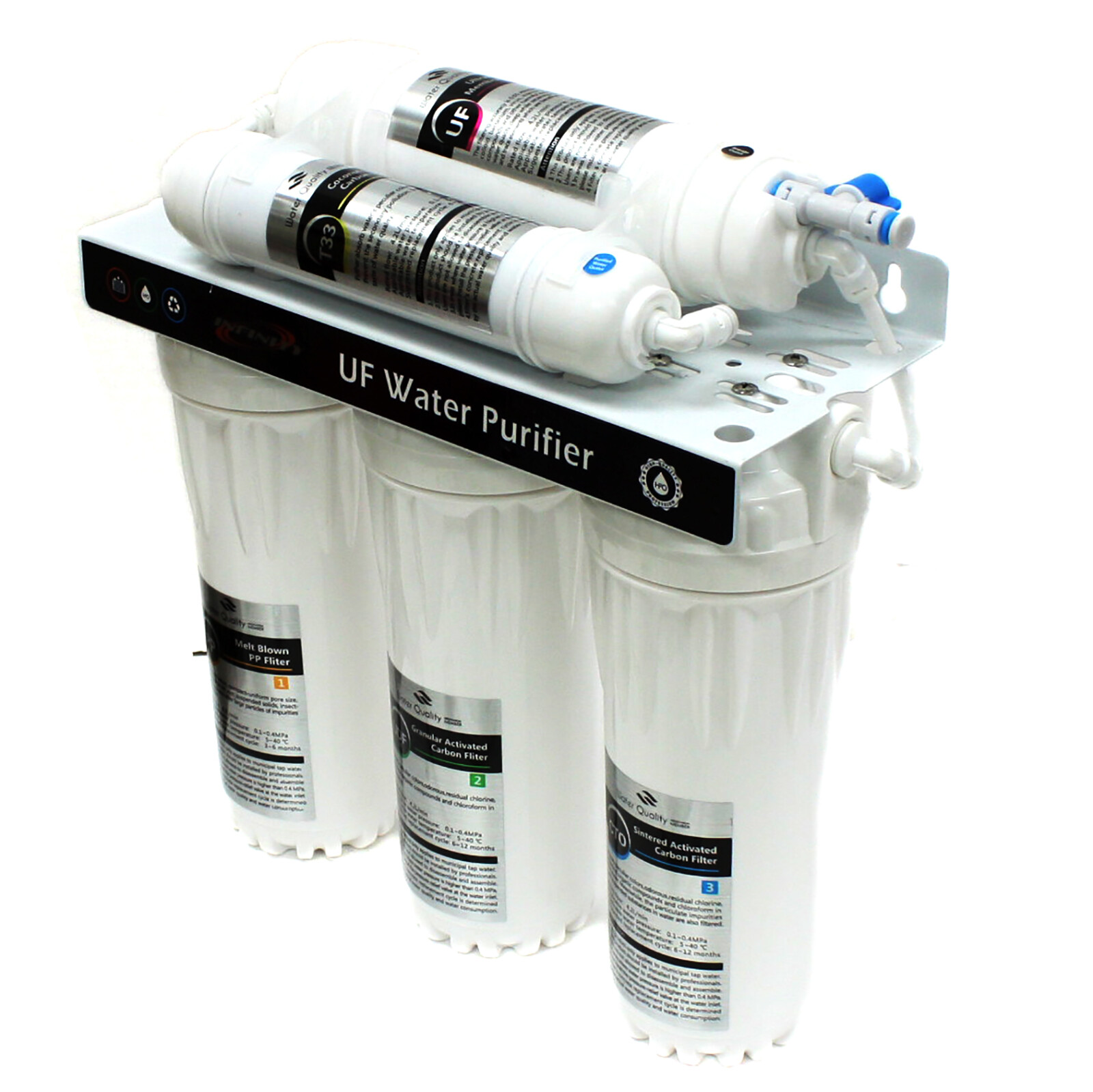 5 Stage Home Drinking Water Filter Purifier Ultra-filtration Fiber Hollow System$68.99View on eBay
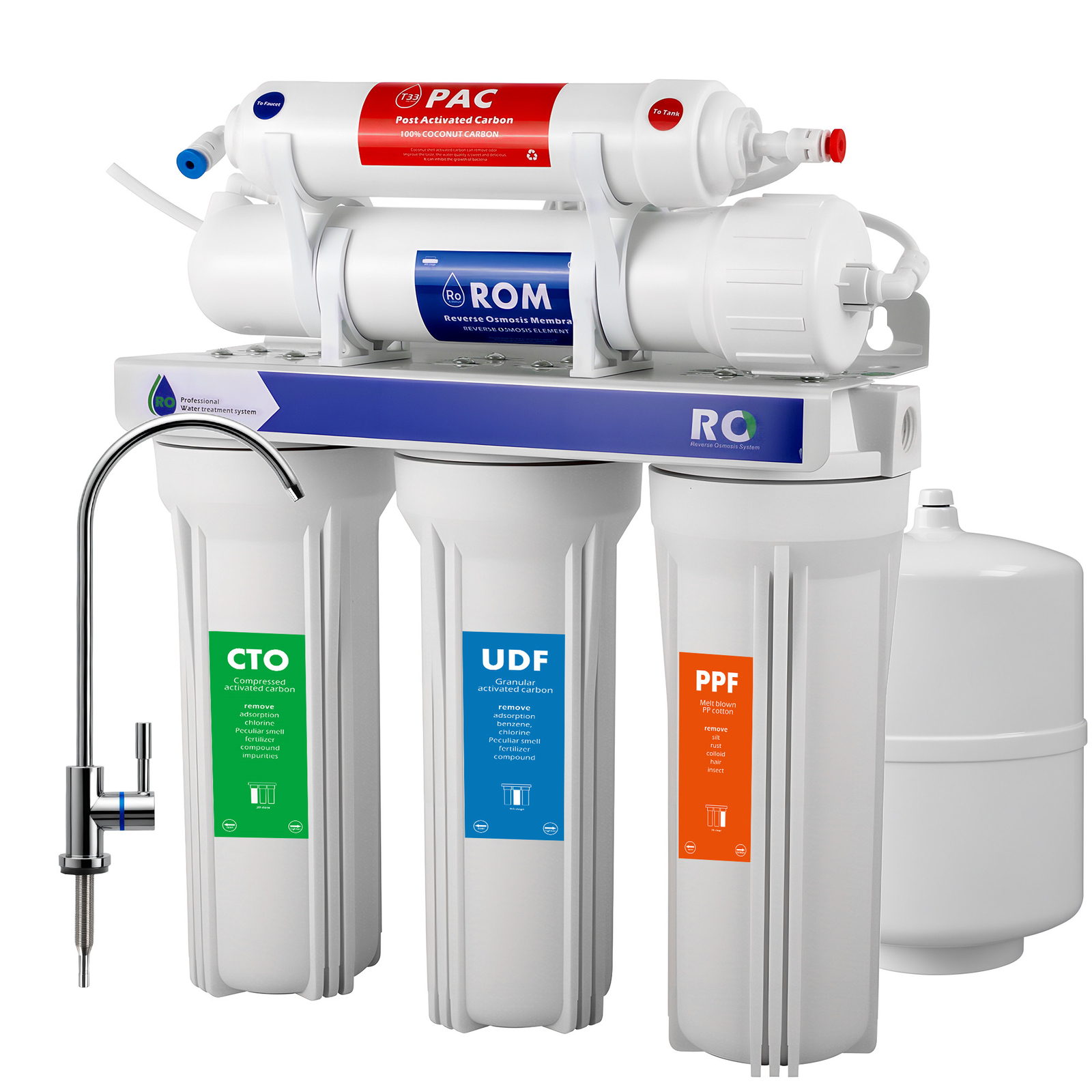 5 Stage Reverse Osmosis Water Filtration System Purifier Home Drinking 75 GPD$109.33View on eBay
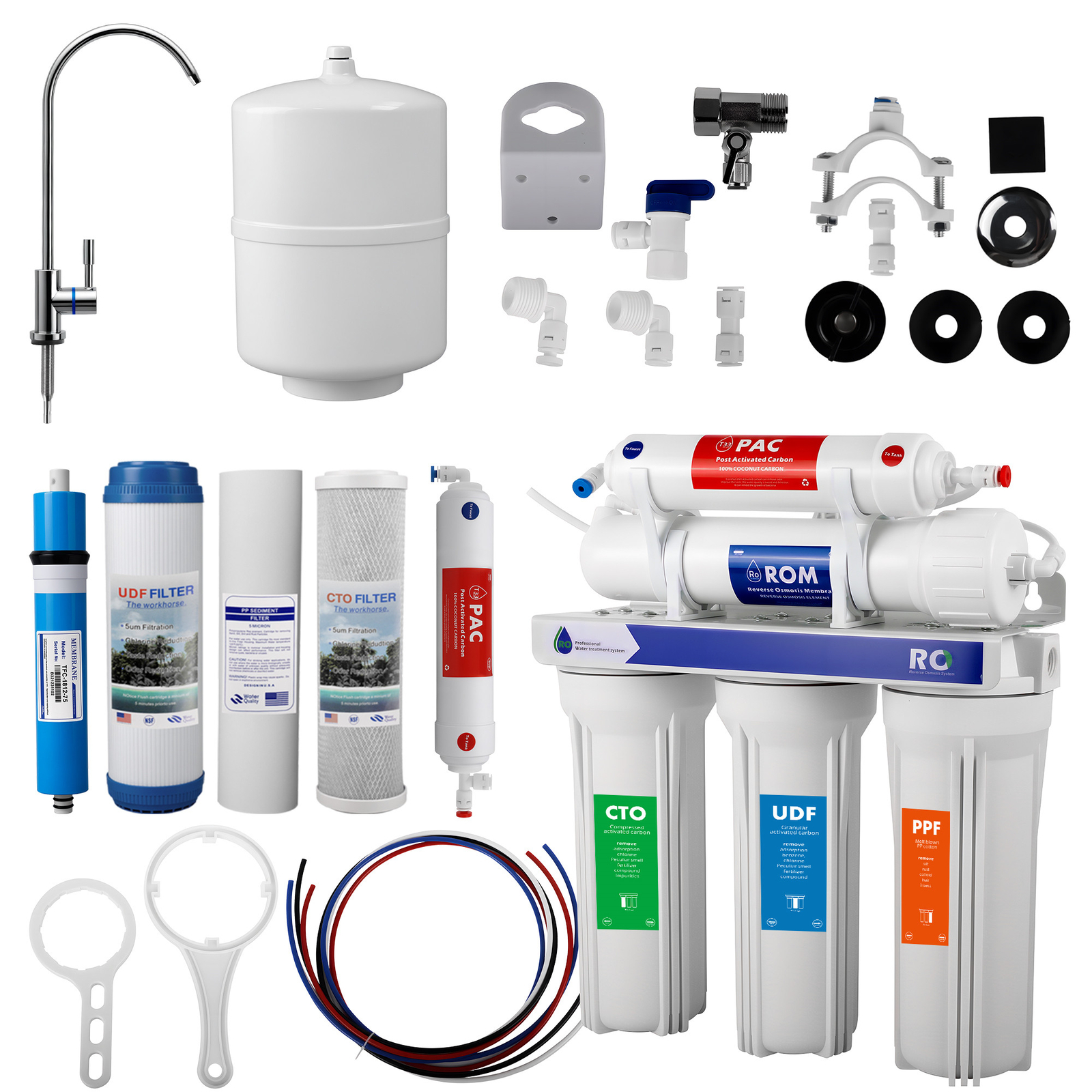 5 Stage Reverse Osmosis Water Filtration System Home Drinking Purifier 75 GPD$115.50Last checked Nov 19, 2026View on eBay
Highlights
- RO stages: sediment pre-filter, carbon block, RO membrane (50-100 GPD typical), post-carbon polishing; a 5th stage is usually a mineral or alkaline cartridge that adds no contaminants removal.
- UF hollow-fiber membranes are rated 0.01-0.1 micron — they block bacteria and cysts but pass dissolved minerals, so TDS and hardness remain unchanged.
- RO rejection is 90-99% of TDS plus heavy metals and nitrate; UF rejection is near zero for dissolved ions, so a TDS meter will read almost the same before and after.
- Standard 10-inch cartridges and a 3/8-inch or 1/4-inch quick-connect feed define most under-sink systems; tankless RO units trade a pressure tank for higher flow and continuous output.
Best use cases
- Municipal water with hardness, nitrate, or lead concerns: pick a 5-stage RO at 75 GPD or higher with a post-carbon stage — skip UF, which cannot remove dissolved metals.
- Cabin, boat, or rental with no drain access: pick a hollow-fiber UF system with 0.01-0.1 micron rating — skip RO, which needs a drain and continuous feed pressure.
- Well water with sediment and cysts but acceptable TDS: UF plus a sediment pre-filter is the right tier; skip RO only if hardness and iron are already handled.
- High-volume family kitchen (4+ people): pick tankless RO or a 100 GPD membrane with a 3.2-gallon tank — skip 50 GPD units that refill slowly under peak draw.
Buying tips
- Size RO by recovery: 50 GPD suits 1-2 people, 75 GPD suits 3-4, 100 GPD+ suits larger homes; undersizing causes the tank to run dry at breakfast.
- Check membrane type: TFC (thin-film composite) handles chlorinated municipal water only with a carbon pre-filter; chlorine destroys TFC, so never skip the carbon stage.
- Require standard 10-inch cartridges and a standard RO membrane housing — proprietary cartridges lock you into one supplier and raise long-run cost.
- Confirm feed pressure: RO needs 40-80 psi; below 40 psi add a booster pump, and above 80 psi add a pressure regulator to protect the membrane.
Specs
| Filtration Type | RO membrane vs hollow-fiber UF |
|---|---|
| RO Capacity | 50 / 75 / 100 GPD |
| Micron Rating | 0.01-0.1 µm UF; 0.0001 µm RO |
| Cartridge Standard | 10-inch standard vs proprietary |
Related searches
What to check before buying
- Measure under-sink clearance: tank systems need roughly 18 inches of height and 12 inches of width; tankless units need a wall outlet and about 6 inches of depth.
- Confirm a 1/2-inch or 3/8-inch cold-water supply valve and, for RO, a drain saddle or air-gap faucet port at the sink.
- Verify electrical: tankless RO and booster pumps need a nearby GFCI outlet; passive UF and tank RO need no power.
- Check faucet drilling: most systems include a 1/2-inch or 3/8-inch drinking-water faucet requiring a 7/8-inch to 1-3/8-inch hole in the sink or counter.
FAQ
Data sources: eBay / Amazon listings and product attribute feeds. Updated Nov 27, 2026.
Some links on this page are affiliate links. If you buy after clicking one, we may earn a commission at no extra cost to you. This does not change which products appear here or their order. Affiliate disclosure.