
Photos from current listings. Actual item, color, and included accessories may vary.
Home Water System Buying Guide
A home water system is a point-of-use or whole-house treatment train that removes sediment, chlorine, heavy metals, and dissolved solids before water reaches your glass or appliances. The core architectural fork is reverse osmosis (RO) versus hollow-fiber ultrafiltration (UF): RO strips dissolved ions and needs a drain line, pressure tank, and remineralization stage, while UF keeps minerals but cannot remove dissolved contaminants. Buy RO if you need TDS and lead reduction; buy UF or carbon-only if you have good municipal water and want mineral retention with low wastewater.
Median $112.41 · New listings
Key takeaways
- RO membranes are rated by daily output (GPD) and rejection rate; a 75 GPD membrane removes 95-99% of TDS, while UF hollow-fiber cartridges remove particles and bacteria but pass dissolved minerals and salts.
- Stage count is not quality: 5-stage RO typically means sediment, two carbon blocks, RO membrane, and post-carbon; 8-stage units add UV, alkaline, or remineralization cartridges that improve taste but not contaminant rejection.
- Under-counter RO needs a dedicated 1/4-inch or 3/8-inch feed line, a drain saddle, and 12-18 inches of vertical cabinet clearance for the pressure tank; countertop RO needs only a standard faucet adapter and a nearby outlet.
At a glance
- Category
- Water Filtration
- Last updated
- Nov 27, 2026
Current offers
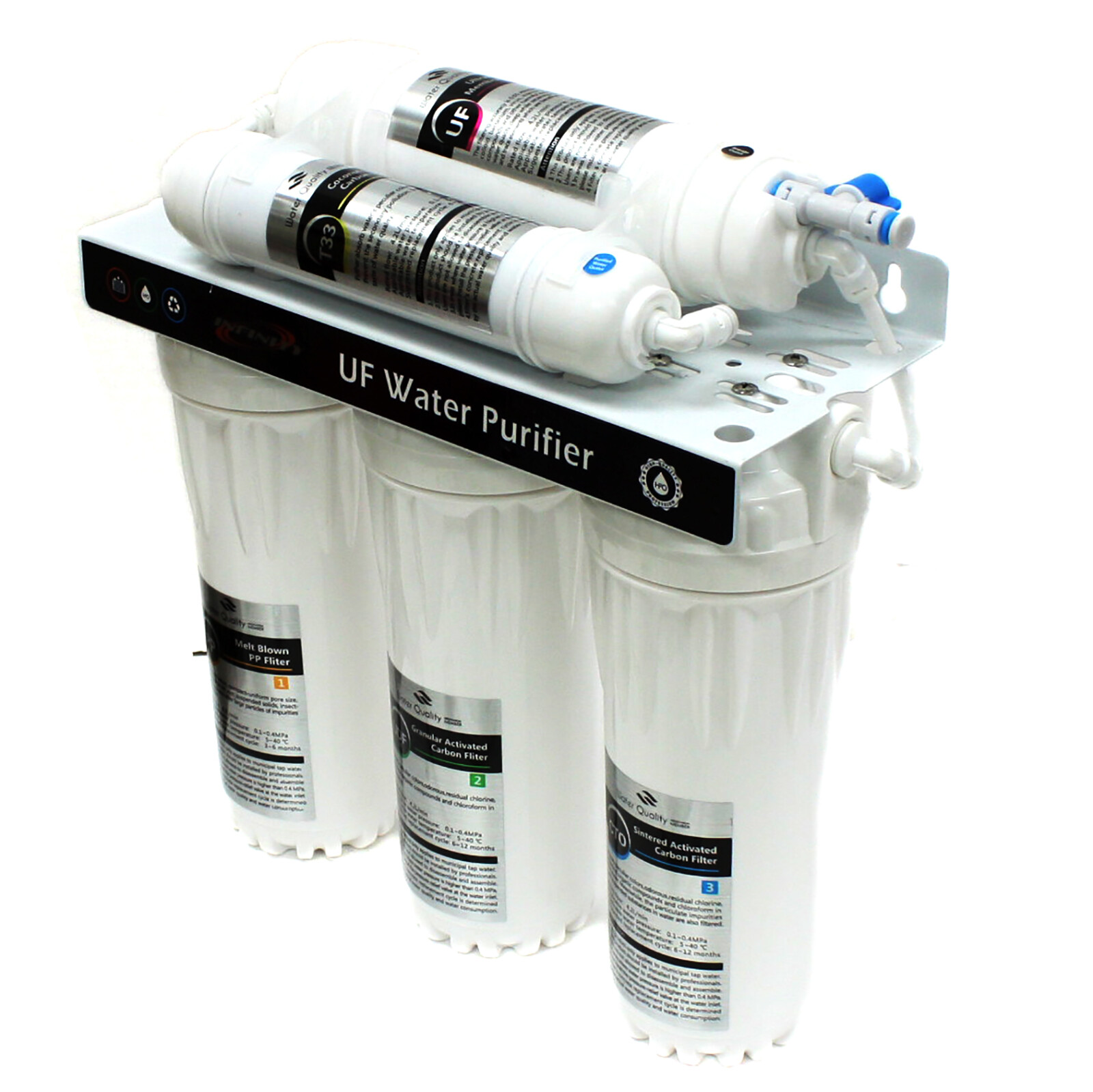 5 Stage Home Drinking Water Filter Purifier Ultra-filtration Fiber Hollow System$68.99View on eBay
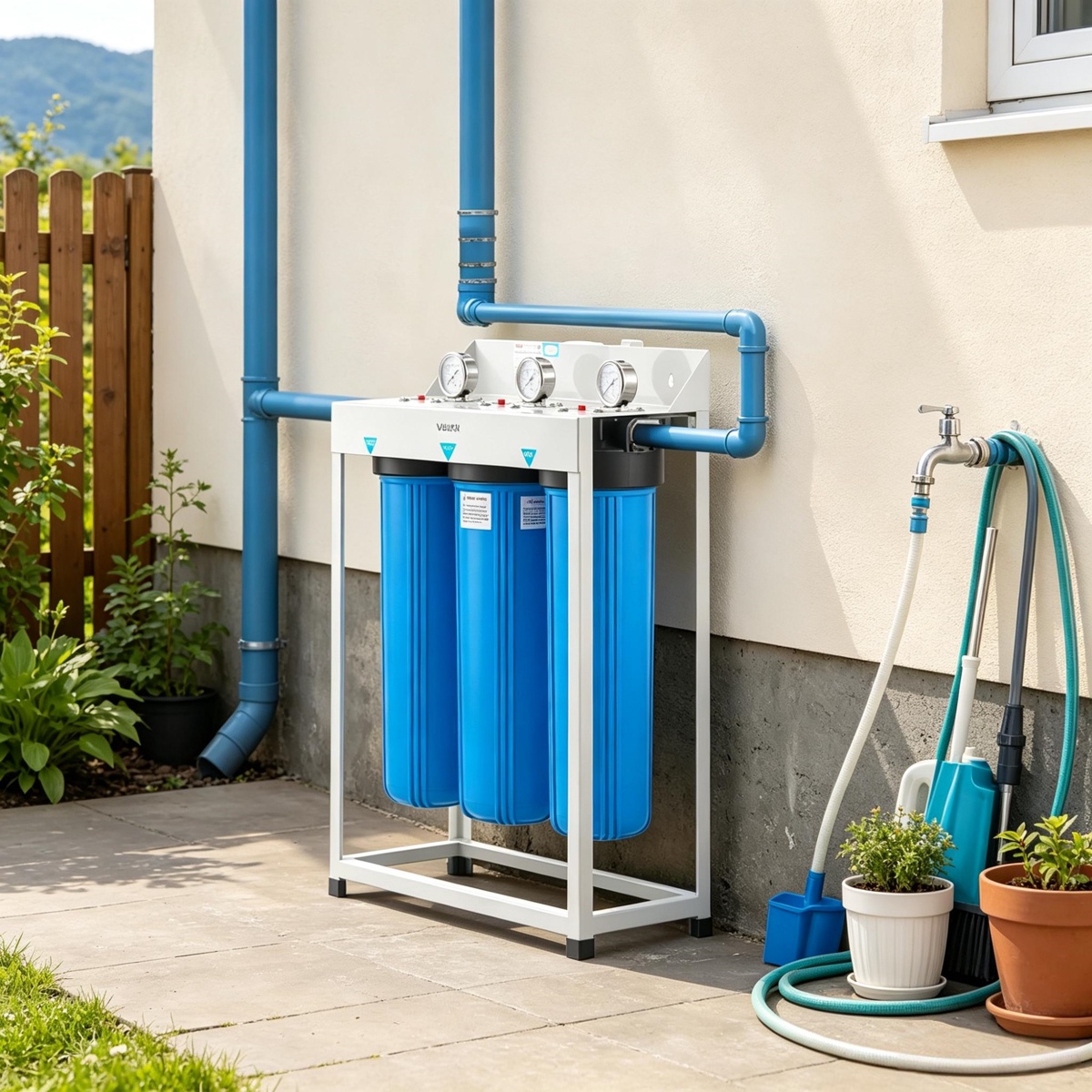 Whole House Water Filter System, 4.5" x 20" Home Purifier$625.99View on Mallflare
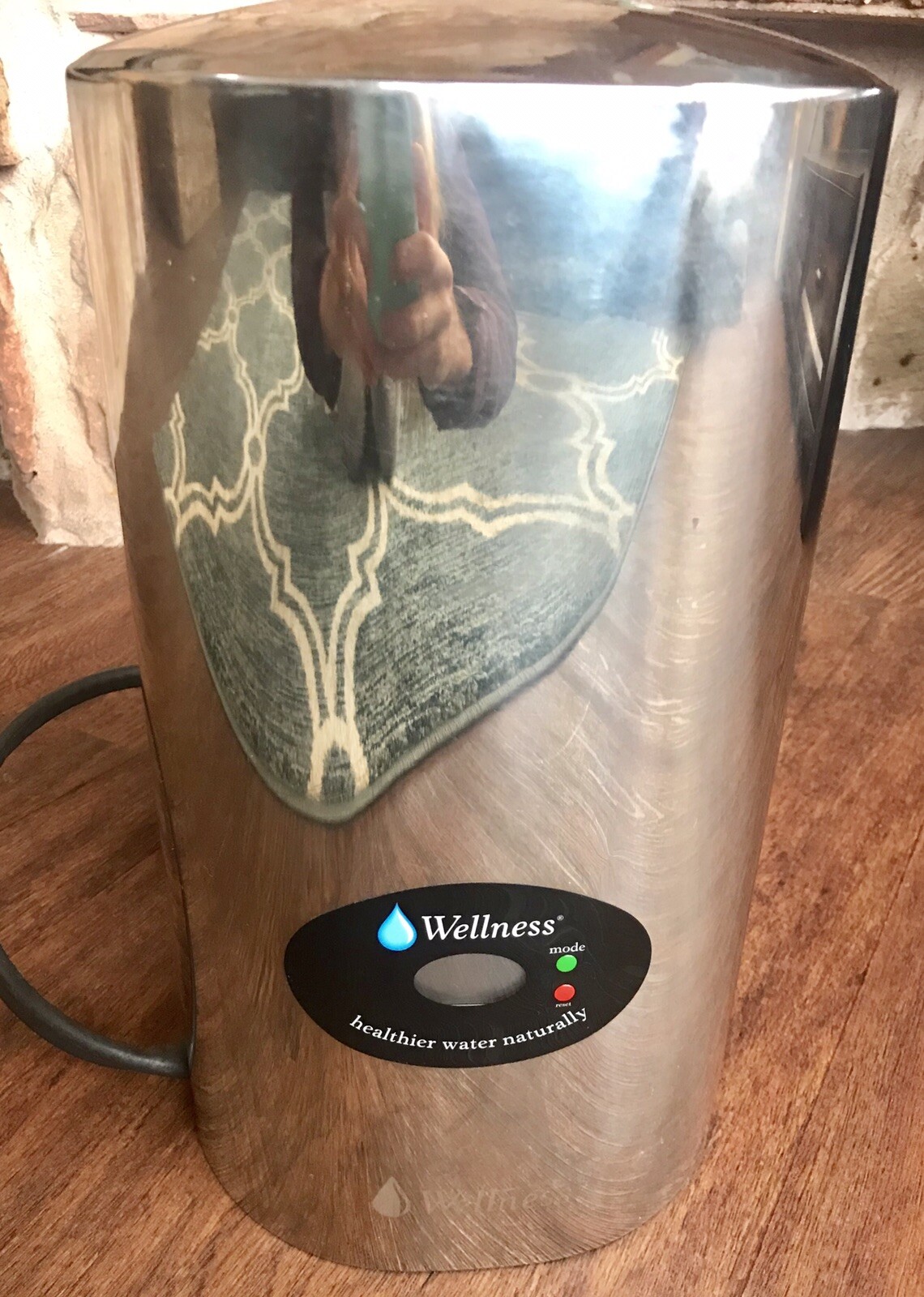 Wellness Kitchen S-III Under Counter Home Water Filtration System W/ Filters$99.00Last checked Nov 22, 2026View on eBay
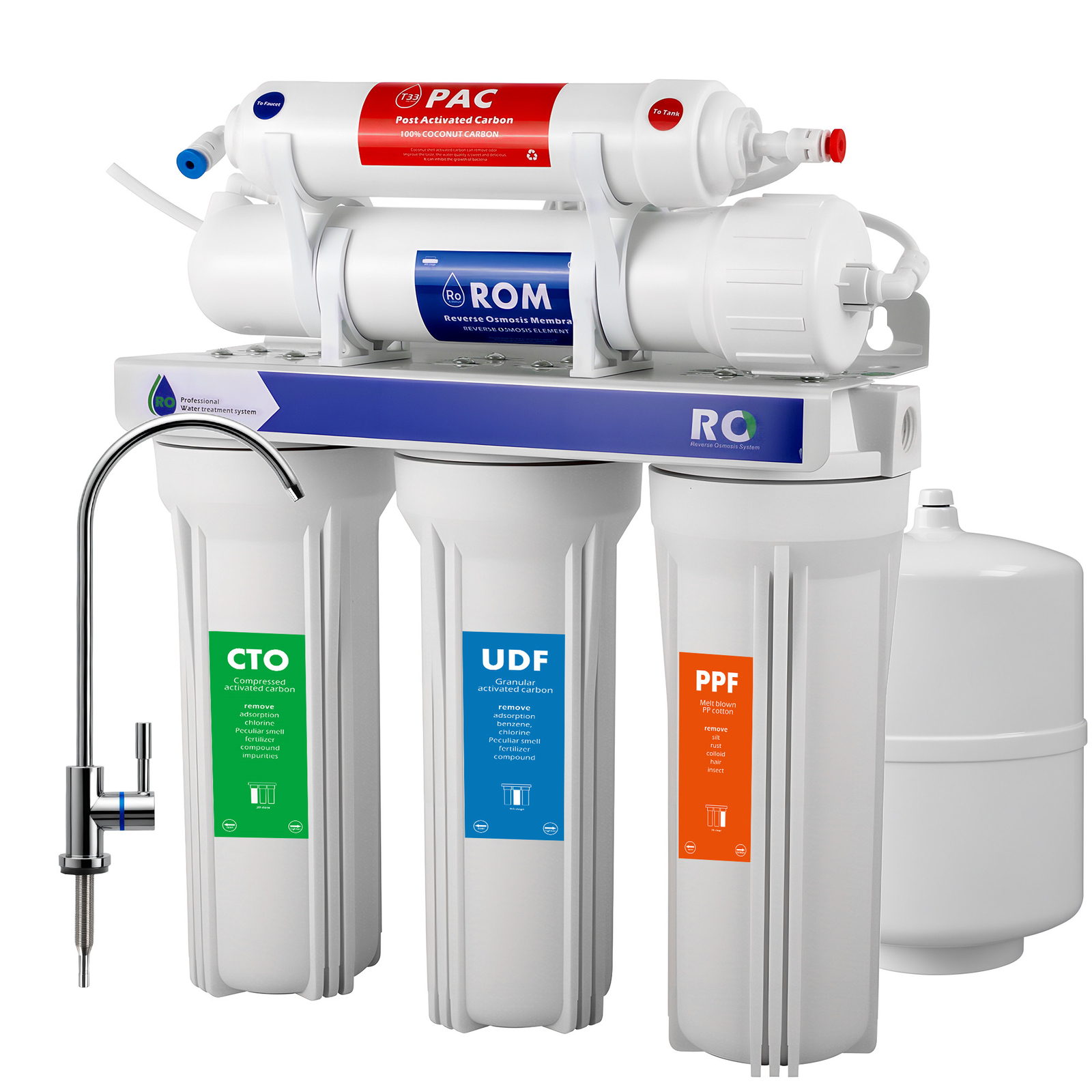 5 Stage Reverse Osmosis Water Filtration System Purifier Home Drinking 75 GPD$109.33View on eBay
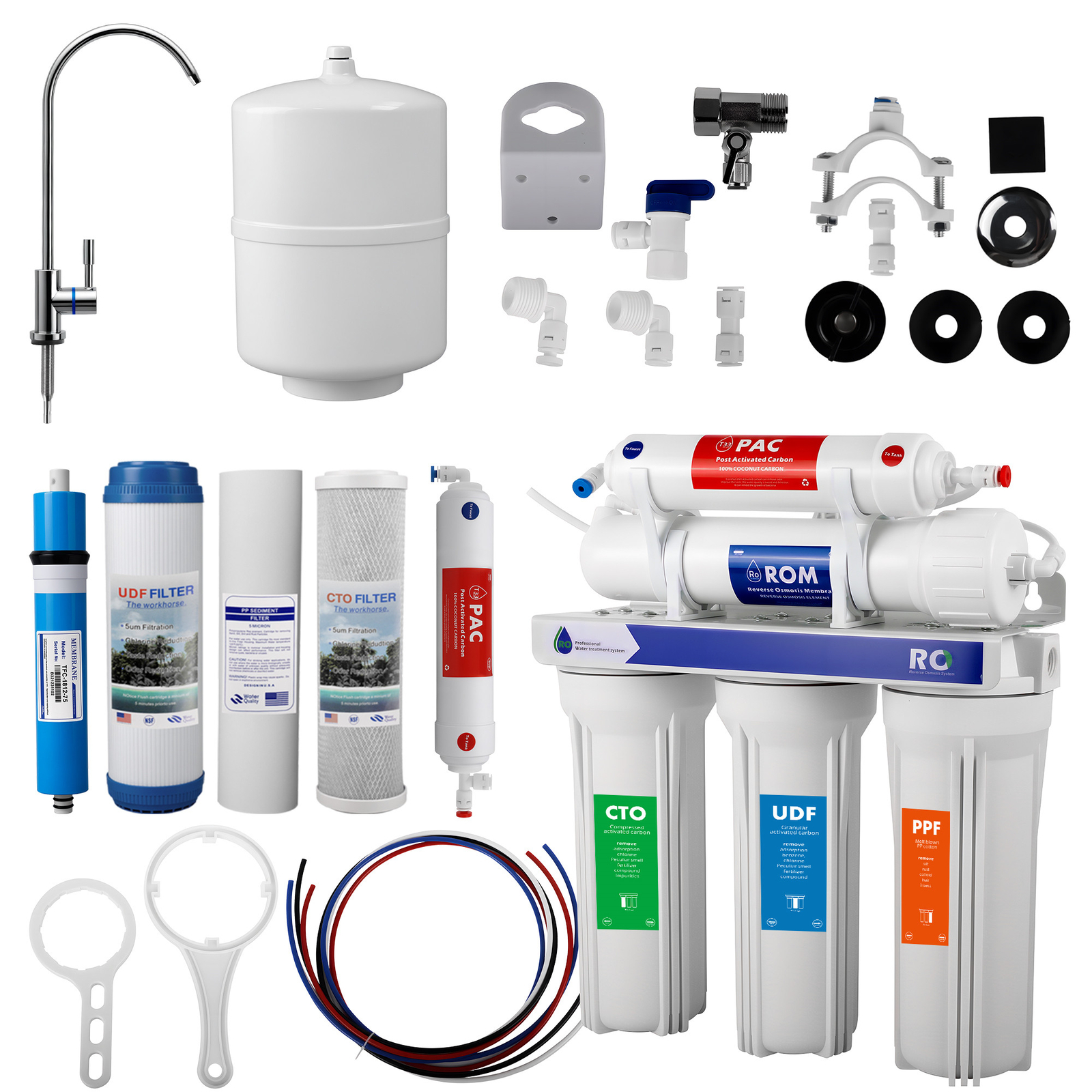 5 Stage Reverse Osmosis Water Filtration System Home Drinking Purifier 75 GPD$115.50Last checked Nov 19, 2026View on eBay
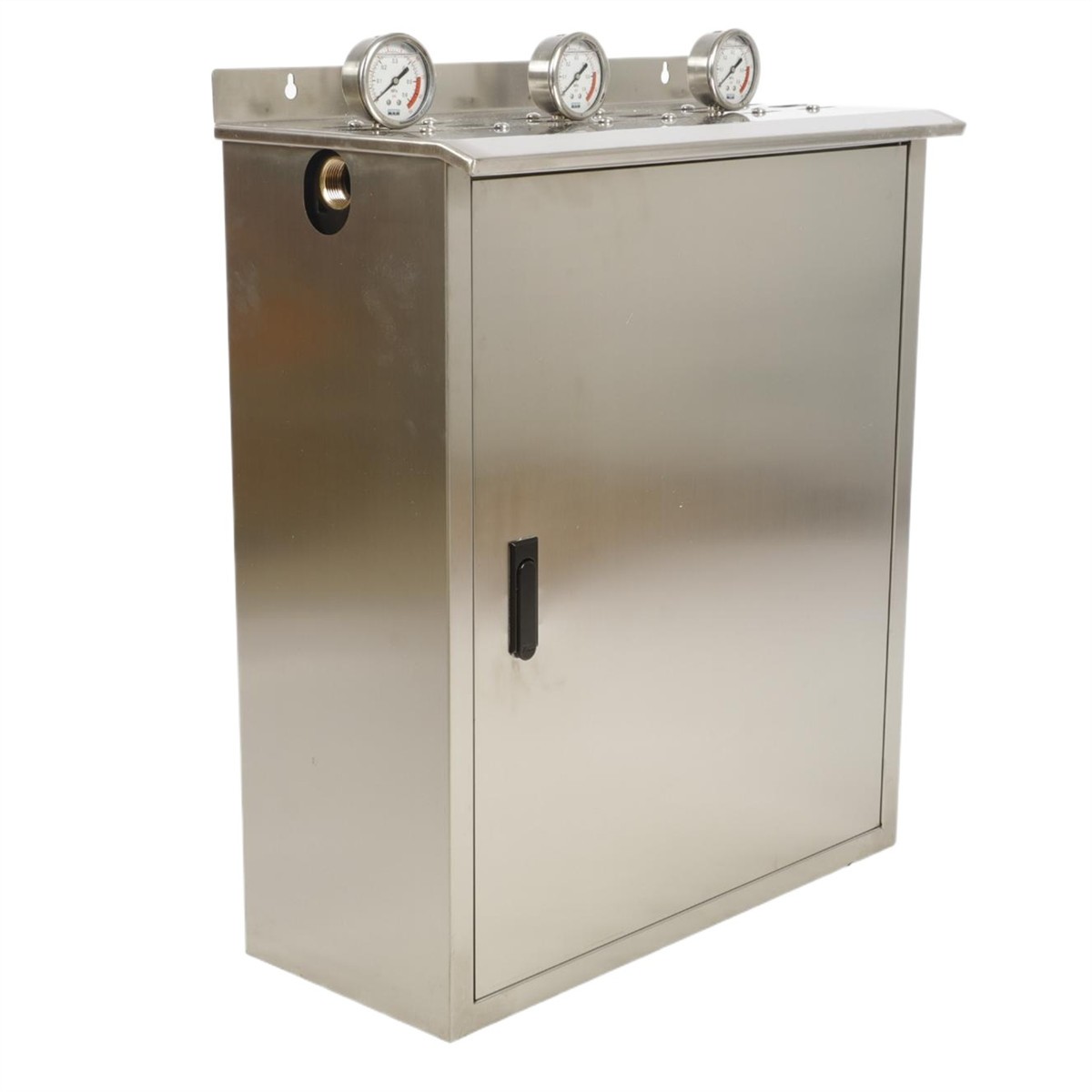 3-Stage Whole House Water Filter System 20"x4.5" Big Blue Home Water Filtration$320.00New · Last checked Nov 24, 2026View on eBay
Highlights
- RO membranes are rated by daily output (GPD) and rejection rate; a 75 GPD membrane removes 95-99% of TDS, while UF hollow-fiber cartridges remove particles and bacteria but pass dissolved minerals and salts.
- Stage count is not quality: 5-stage RO typically means sediment, two carbon blocks, RO membrane, and post-carbon; 8-stage units add UV, alkaline, or remineralization cartridges that improve taste but not contaminant rejection.
- Under-counter RO needs a dedicated 1/4-inch or 3/8-inch feed line, a drain saddle, and 12-18 inches of vertical cabinet clearance for the pressure tank; countertop RO needs only a standard faucet adapter and a nearby outlet.
- Tankless RO systems eliminate the pressure tank and deliver on-demand flow at 400-800 GPD, but require higher feed pressure and produce more wastewater per gallon than tank-based 75 GPD units.
Best use cases
- Best fit: municipal water with detectable lead, nitrate, or high TDS (>250 ppm) — choose a 5-stage or 8-stage RO with a 75 GPD membrane and a storage tank; skip UF-only systems because they pass dissolved contaminants.
- Best fit: apartment or rental kitchen where plumbing modification is not allowed — choose a countertop RO with a faucet diverter; skip under-counter tank systems that require drilling the counter and drain saddle.
- Best fit: well water with sediment and bacteria but acceptable TDS — choose a UF hollow-fiber system with a 5-micron prefilter; skip RO because the membrane fouls quickly on turbid feed and wastes water on backflush.
- Wrong fit: whole-house demand (showers, laundry) — point-of-use RO at 75 GPD cannot supply multiple fixtures; specify a whole-house sediment/carbon train or a dedicated high-flow tankless RO for kitchen-only use.
Buying tips
- Size RO output to household drinking demand: 75 GPD tank-based units recover slowly and suit 1-4 people; households above 4 people or high daily use should step to 100 GPD or tankless 400+ GPD to avoid a waiting tank.
- Match membrane and housing to your feed water: chlorinated municipal supply needs carbon prefilter blocks to protect the RO membrane from chlorine degradation; well water needs a sediment prefilter at 5 microns or finer.
- Check fitting and tubing standards: under-counter systems should use 1/4-inch quick-connect or 3/8-inch compression fittings with NSF-61 or NSF-58 certified components; countertop units must include a diverter that fits standard M22 or 55/64-inch faucet threads.
- Prefer standard-size cartridges (10-inch or 11-inch) over proprietary cartridges; standard sediment and carbon blocks are cross-compatible and cost less to replace, while proprietary cartridges lock you into one vendor's consumable line.
Specs
| Filtration Type | RO vs UF vs carbon block |
|---|---|
| Stage Count | 5-stage standard / 8-stage enhanced |
| Membrane Output | 75 GPD tank / 400-800 GPD tankless |
| Install Type | Under-counter vs countertop |
Related searches
What to check before buying
- Measure under-cabinet clearance: tank-based RO needs 12-18 inches of vertical space plus 10-12 inches width; tankless RO needs 16-20 inches width but no tank, so measure both before choosing.
- Confirm feed water pressure: RO membranes need 40-80 psi; below 40 psi add a booster pump, above 80 psi add a pressure-reducing valve to protect housings and fittings.
- Verify electrical and drain access: UV or tankless RO stages need a grounded outlet within cord reach, and under-counter RO needs a drain saddle or standpipe connection for wastewater.
- Check faucet compatibility: countertop systems require a removable aerator with standard thread; if your faucet has a pull-out sprayer or non-standard thread, plan a diverter adapter before buying.
FAQ
Data sources: eBay / Amazon listings and product attribute feeds. Updated Nov 27, 2026.
Some links on this page are affiliate links. If you buy after clicking one, we may earn a commission at no extra cost to you. This does not change which products appear here or their order. Affiliate disclosure.