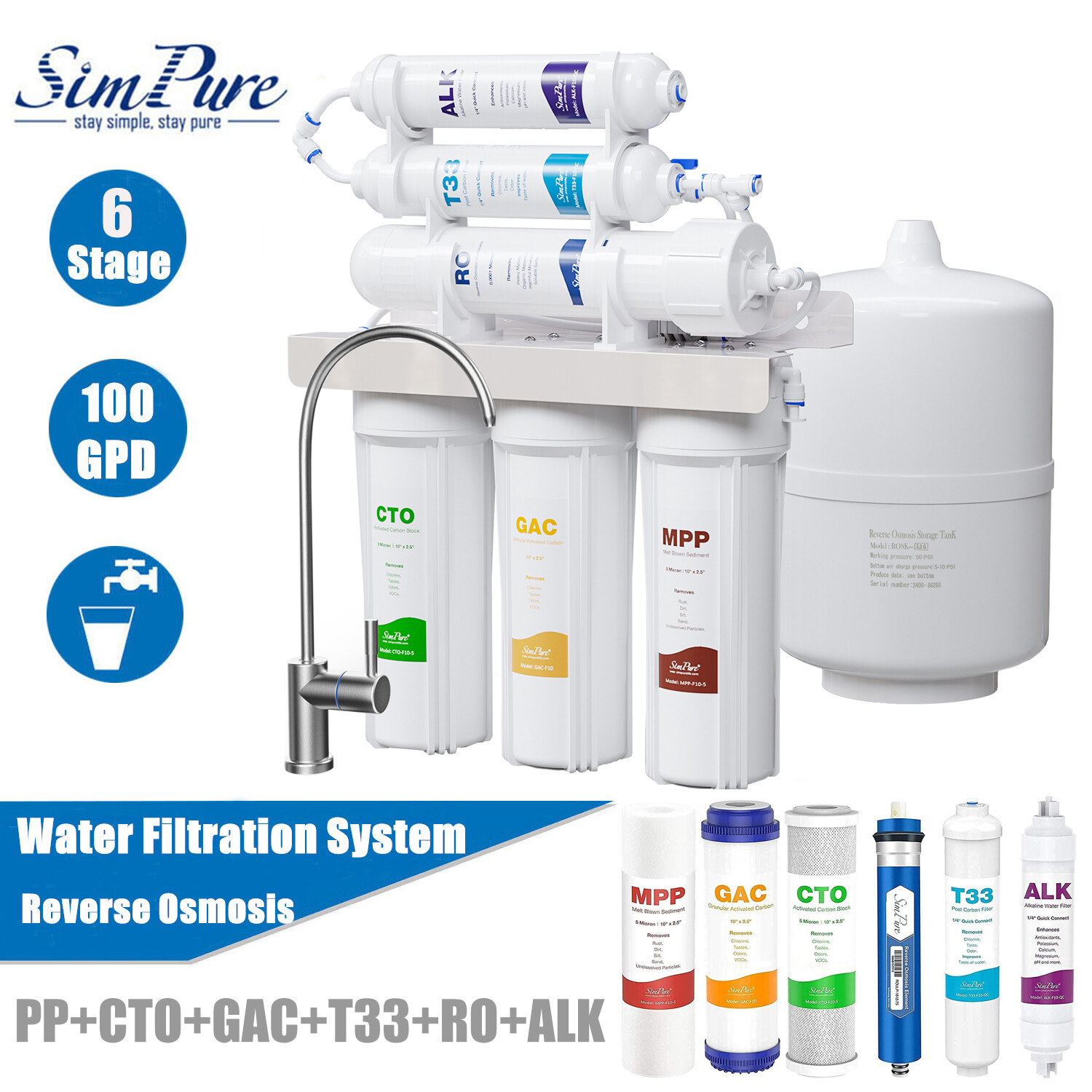

Photos from current listings. Actual item, color, and included accessories may vary.
Ro Water Purifier Buying Guide
An RO water purifier is a multi-stage system that uses a semipermeable membrane to remove dissolved solids, heavy metals, and contaminants from drinking water, typically paired with sediment and carbon pre-filters plus post-filtration for taste. The primary trade-off is membrane throughput (GPD) and stage count versus installation complexity and wastewater ratio: higher-GPD systems need stable feed pressure, while more stages add contaminant coverage but also maintenance. The clear decision rule is to choose a system rated for your water source's TDS and your daily volume, with a standard 10-inch filter housing format for easy replacement, and skip budget units that omit a pressure gauge or use proprietary cartridges.
Key takeaways
- Membrane throughput is rated in gallons per day (GPD): 50–75 GPD is standard under-sink; 100 GPD and above suits larger households or light commercial use but requires adequate feed pressure (40–80 psi).
- Stage count indicates treatment train: 4-stage covers sediment, carbon block, RO membrane, and post-carbon; 5–6 stages add alkaline/reminalization or UV, which improves taste and pH but adds replacement cost.
- Standard 10-inch filter housings accept widely available sediment and carbon blocks, while proprietary quick-connect cartridges lock you into brand-specific replacements.
At a glance
- Category
- Water Filtration
- Last updated
- Nov 28, 2026
Current offers
Highlights
- Membrane throughput is rated in gallons per day (GPD): 50–75 GPD is standard under-sink; 100 GPD and above suits larger households or light commercial use but requires adequate feed pressure (40–80 psi).
- Stage count indicates treatment train: 4-stage covers sediment, carbon block, RO membrane, and post-carbon; 5–6 stages add alkaline/reminalization or UV, which improves taste and pH but adds replacement cost.
- Standard 10-inch filter housings accept widely available sediment and carbon blocks, while proprietary quick-connect cartridges lock you into brand-specific replacements.
- Wastewater ratio (permeate to brine) typically ranges from 1:1 to 1:4; systems with a flow restrictor or pump can reduce waste, and a tankless design saves under-sink space but needs higher feed pressure.
Best use cases
- Best fit: a 4–5 stage 50–75 GPD system with standard 10-inch housings for a typical 3–4 person household on municipal water with TDS under 500 ppm—choose this for low maintenance cost and easy filter sourcing.
- Best fit: a 6-stage 100 GPD alkaline system with remineralization for buyers on well water or high-TDS sources (500–1000 ppm) who want improved taste and pH; pair with a booster pump if feed pressure is below 40 psi.
- Wrong fit: skip tankless or high-GPD systems if your feed pressure is unstable or below 40 psi—they underperform and waste water; choose a standard tank-based system with a permeate pump instead.
- Wrong fit: avoid systems with proprietary cartridges or no pressure gauge for long-term use; standard housings and a gauge let you monitor membrane health and source filters competitively.
Buying tips
- Match GPD to household size: 50–75 GPD for 1–3 people, 100 GPD for 4–5 people, and 150+ GPD for larger homes or multiple taps—undersizing leads to slow recovery and tank depletion.
- Check feed pressure before buying: most RO membranes require 40–80 psi; below 40 psi requires a booster pump, and above 80 psi requires a pressure regulator to protect the membrane.
- Prefer standard 10-inch housings (2.5-inch or 4.5-inch diameter) for sediment and carbon stages; these accept generic replacements, while proprietary cartridges often cost more and limit choice.
- Verify the system includes a post-carbon or remineralization stage if you dislike flat taste; RO removes minerals, and a remineralizer adds calcium and magnesium back for better mouthfeel.
Specs
| Membrane GPD | 50–75 / 100 / 150+ GPD |
|---|---|
| Stage Count | 4-stage / 5-stage / 6-stage |
| Housing Type | Standard 10-inch / Proprietary |
| Feed Pressure | 40–80 psi (pump below 40) |
Related searches
What to check before buying
- Measure under-sink clearance: tank-based systems need roughly 18 inches height and 12 inches width; tankless units need a power outlet and more feed pressure.
- Test your water TDS and hardness: TDS above 500 ppm may need a higher-rejection membrane or dual-membrane setup; hardness above 10 gpg suggests a softener before the RO to protect the membrane.
- Confirm plumbing compatibility: standard 3/8-inch or 1/4-inch quick-connect fittings and a feed water adapter for your faucet type; check if a dedicated RO faucet is included.
- Check electrical needs for UV or booster pump stages: these require a nearby outlet, and tankless systems often need continuous power.
FAQ
Data sources: eBay / Amazon listings and product attribute feeds. Updated Nov 28, 2026.
Some links on this page are affiliate links. If you buy after clicking one, we may earn a commission at no extra cost to you. This does not change which products appear here or their order. Affiliate disclosure.