
Photos from current listings. Actual item, color, and included accessories may vary.
Under Sink Water Filter Buying Guide
An under-sink water filter is a point-of-use system installed on the cold-water supply line beneath the kitchen sink, ranging from simple carbon blocks to multi-stage reverse osmosis. The core trade-off is filtration capability versus footprint, flow rate, and maintenance: carbon and ultrafiltration units preserve flow and fit tight cabinets, while RO systems remove dissolved contaminants but need a drain line, tank or pump, and periodic membrane changes. Buyers should choose by contaminant target and cabinet clearance—not by marketing stage count—because a well-specified 2-stage carbon block beats a cramped, poorly serviced 5-stage unit.
Median $110.19
Key takeaways
- Filtration tiers differ by pore size: carbon block and KDF target chlorine, taste, and heavy metals; 0.01-micron ultrafiltration removes bacteria and cysts but not dissolved salts; RO membranes reject dissolved solids, nitrates, and fluoride.
- RO systems split into tank-based (stored volume, slower recovery) and tankless (on-demand pump, 600–800 GPD ratings), and tankless models require a nearby electrical outlet under the sink.
- Cartridge capacity is rated in gallons—typically 800 gal for compact carbon units and 8,000–15,000 gal for high-capacity or multi-stage systems—so annual cartridge cost and replacement frequency vary widely.
At a glance
- Category
- Water Filtration
- Last updated
- Nov 27, 2026
Current offers
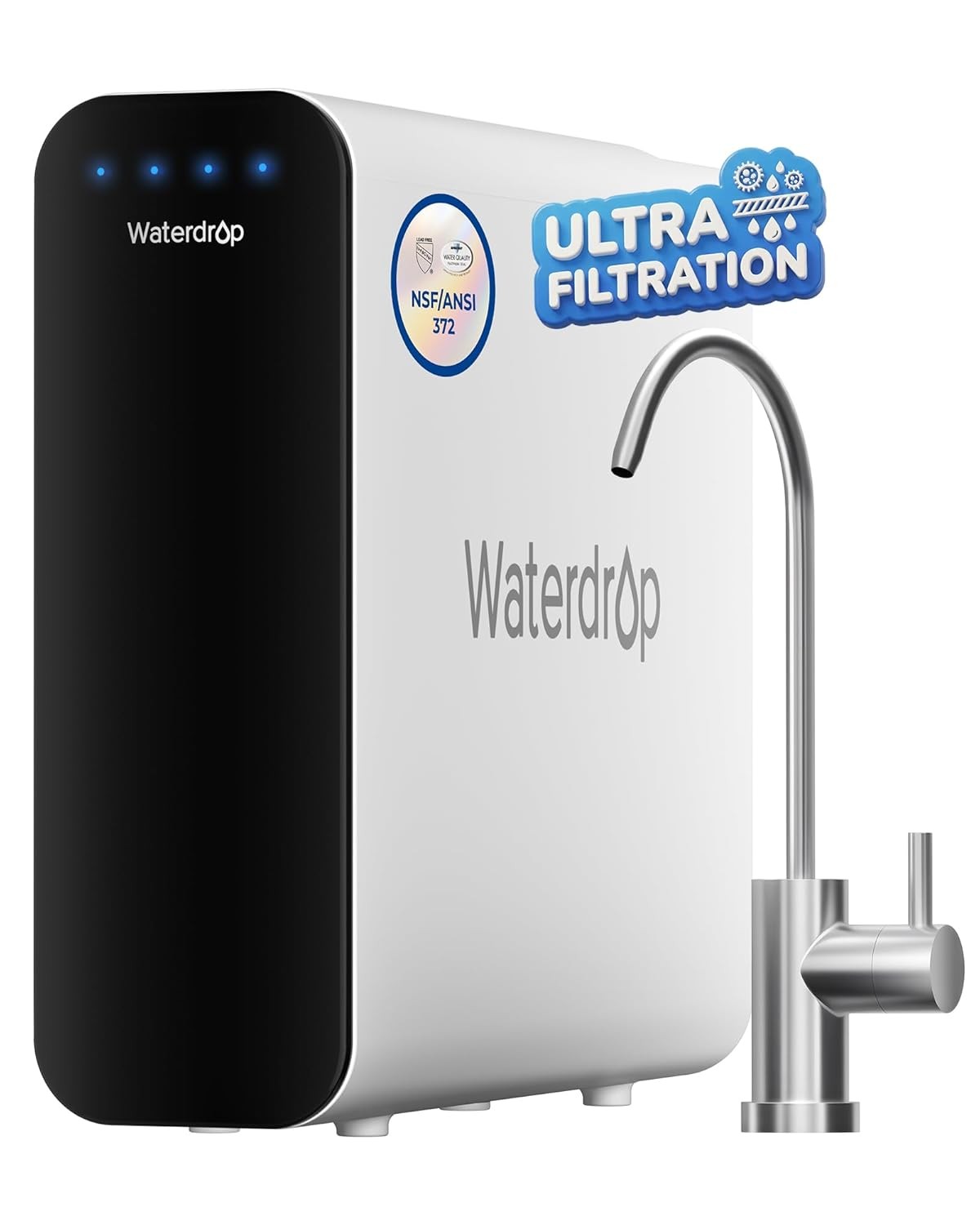 Waterdrop Refurbished TSU 0.01μm Ultra-Filtration Under Sink Water Filter System$99.99Last checked Nov 19, 2026View on eBay
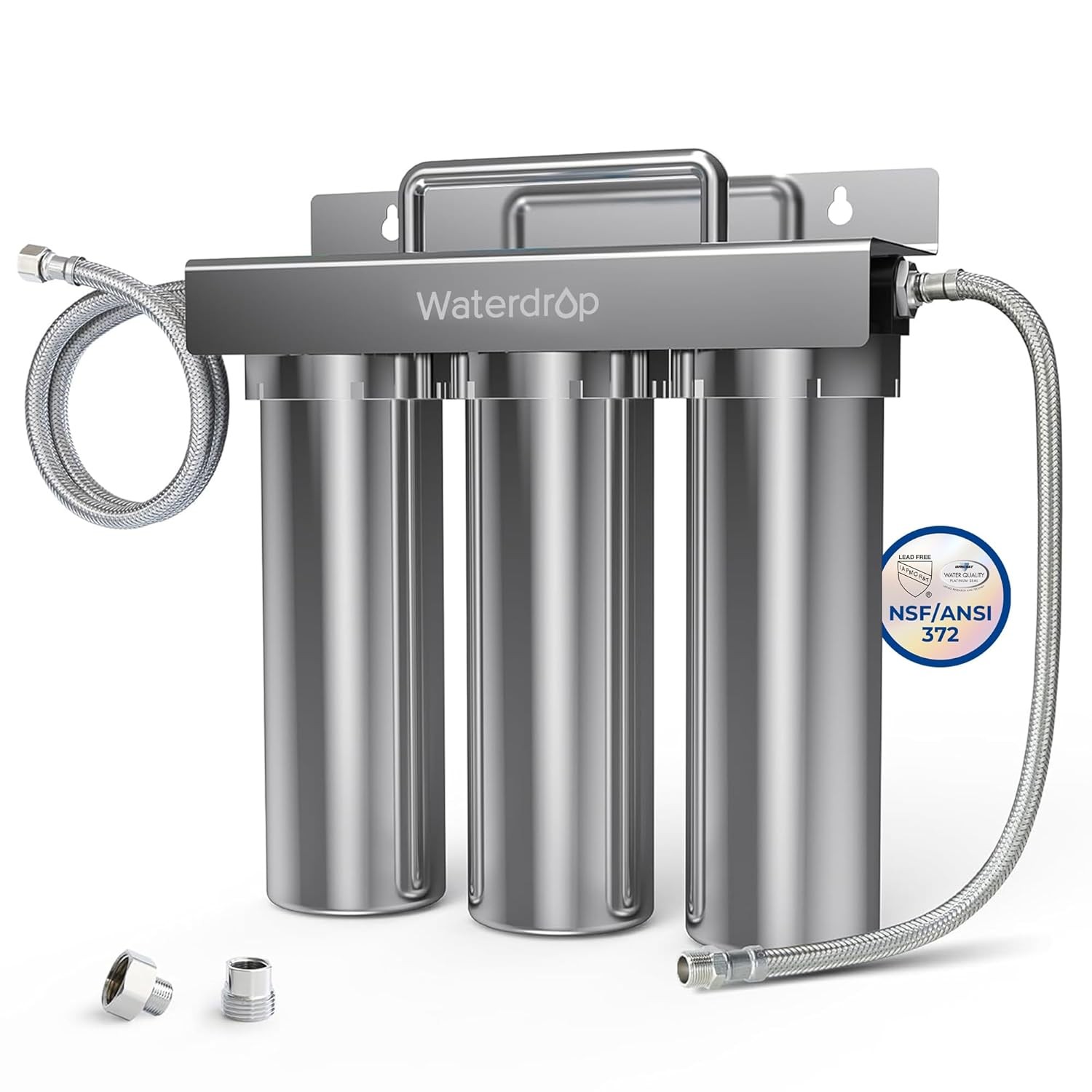 Waterdrop Refurbished TST-UF 0.01μm Ultra-Filtration Under Sink Water Filter$104.85View on eBay
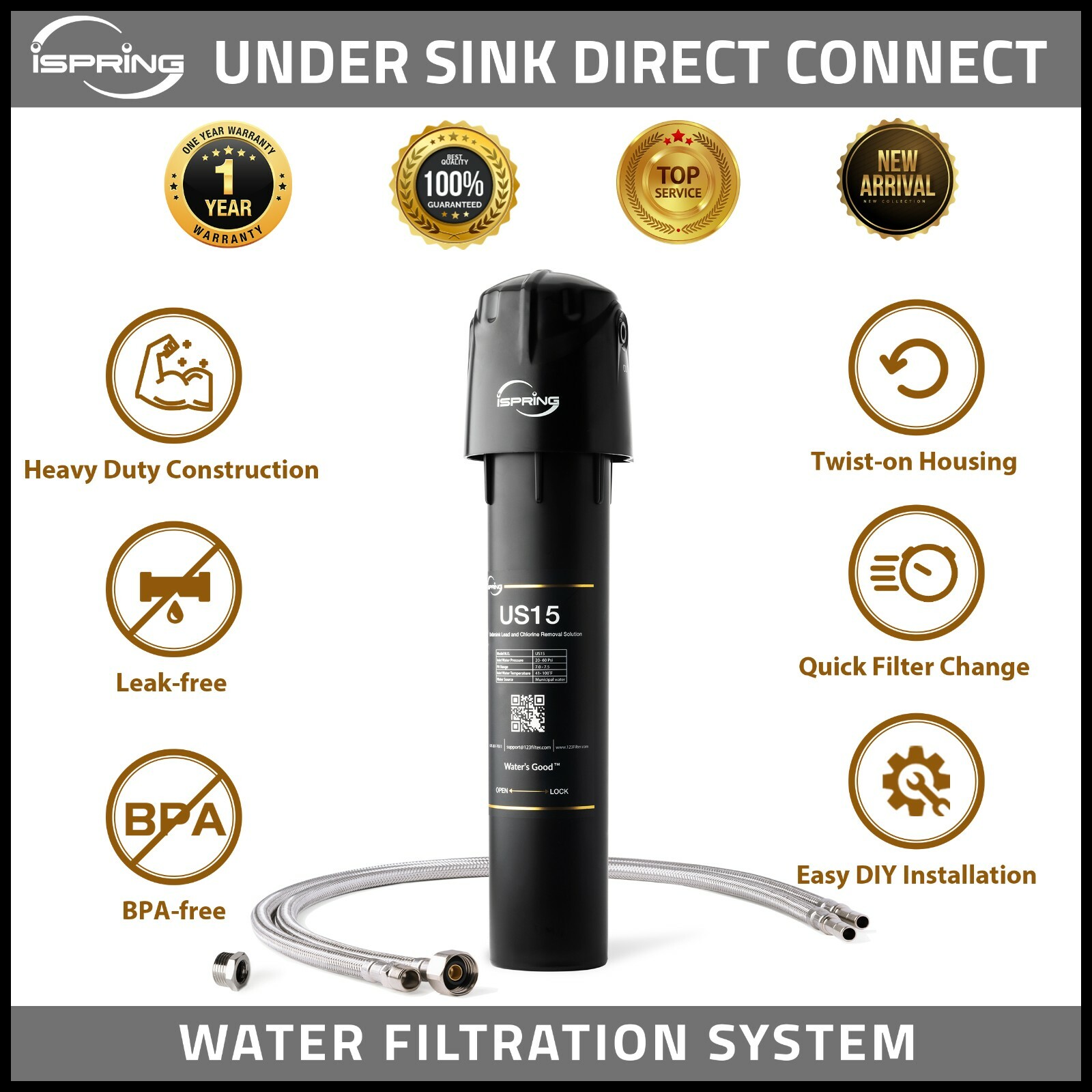 iSpring Under Sink Water Filter System, Leak-Free, Reduce Chlorine Heavy Metals$110.19View on eBay
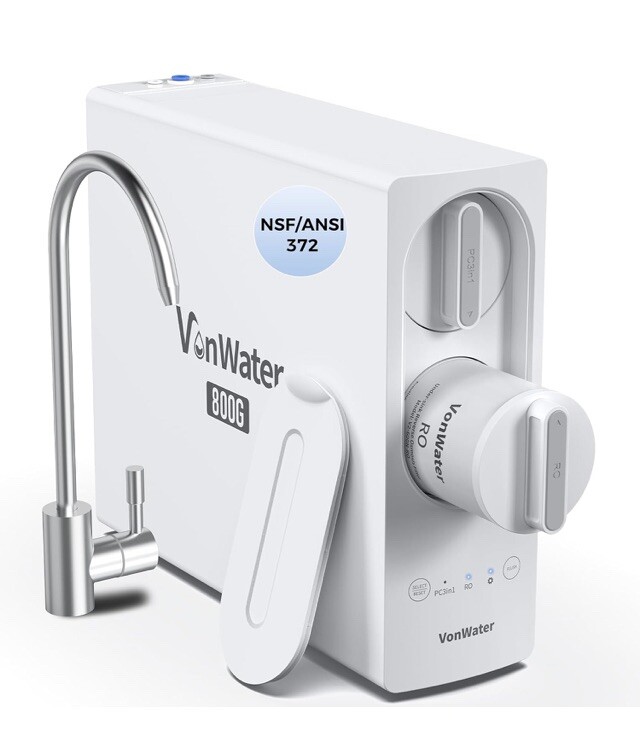 800GPD Tankless Reverse Osmosis Water Filter System high Flow UnderSink-VonWater$151.20Last checked Nov 19, 2026View on eBay
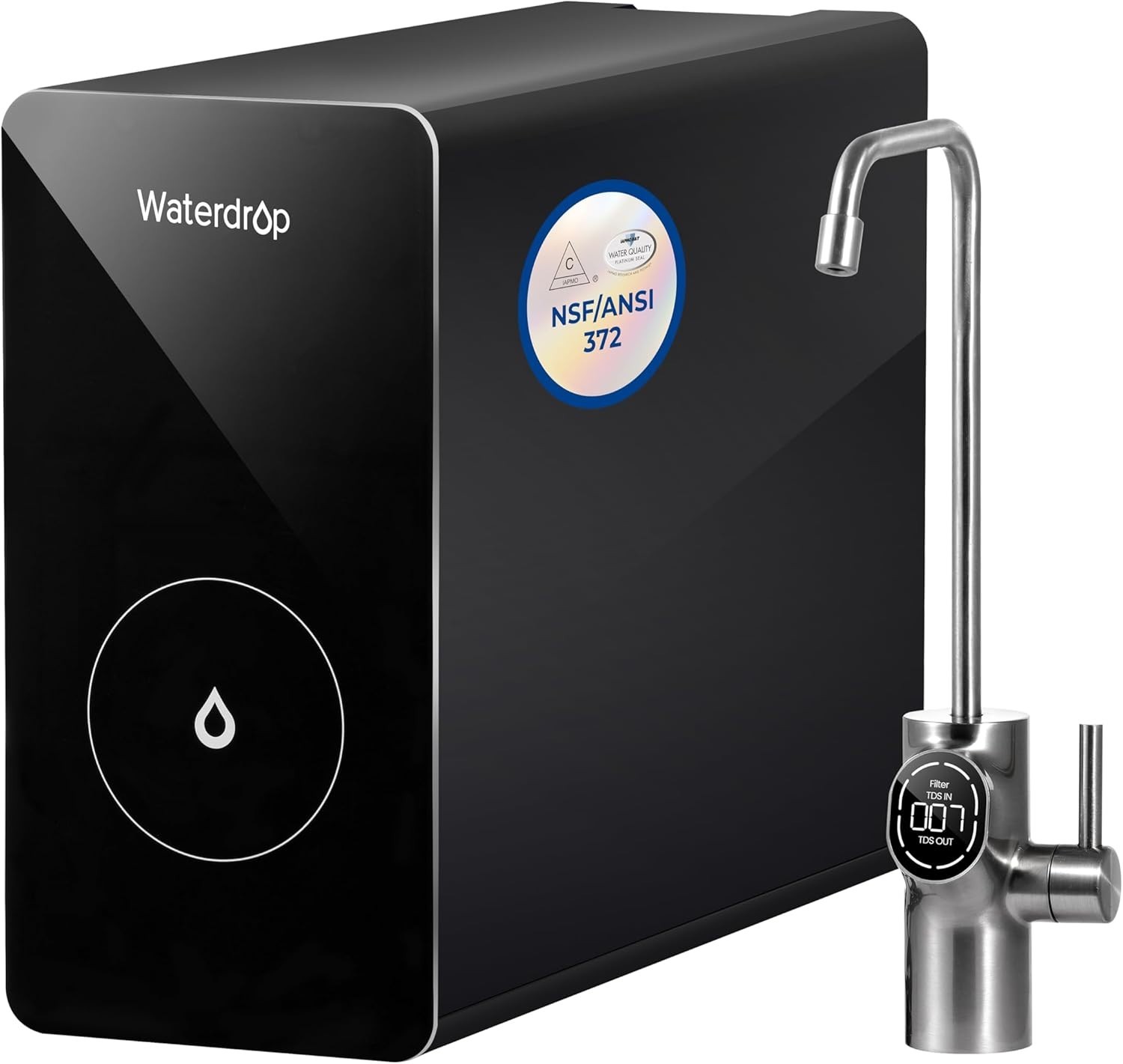 Waterdrop D6 Reverse Osmosis Water Filter, 600 GPD Under Sink Reverse Osmosis$179.00Last checked Nov 18, 2026View on eBay
Highlights
- Filtration tiers differ by pore size: carbon block and KDF target chlorine, taste, and heavy metals; 0.01-micron ultrafiltration removes bacteria and cysts but not dissolved salts; RO membranes reject dissolved solids, nitrates, and fluoride.
- RO systems split into tank-based (stored volume, slower recovery) and tankless (on-demand pump, 600–800 GPD ratings), and tankless models require a nearby electrical outlet under the sink.
- Cartridge capacity is rated in gallons—typically 800 gal for compact carbon units and 8,000–15,000 gal for high-capacity or multi-stage systems—so annual cartridge cost and replacement frequency vary widely.
- Housing material and fittings determine durability: lead-free, BPA-free plastic and stainless-steel housings resist cracking, while standard 10-inch Big Blue housings accept widely available 4.5-inch sediment cartridges.
Best use cases
- Choose a 2-stage carbon/KDF or 0.01-micron ultrafiltration system if you want better taste and chlorine removal while keeping full sink flow and a small cabinet footprint.
- Choose a tankless 600–800 GPD RO system only if you need dissolved-contaminant removal (TDS, nitrates, fluoride) and have a powered outlet plus drain access under the sink.
- Skip RO for rental kitchens or cabinets without drain/electrical access; a cartridge filter is the practical fit, and skip tiny 800-gal compact units for large households with high daily draw.
Buying tips
- Match cartridge capacity to household size: 800-gal units suit 1–2 people, while 8,000–15,000-gal systems reduce replacement frequency for families of 4 or more.
- For RO, confirm a minimum 40–60 psi line pressure; tankless models use a booster pump, but tank-based systems lose output below roughly 40 psi.
- Standardize on 10-inch housings with 4.5-inch Big Blue cartridges if you want broad replacement availability and lower long-term cartridge cost.
- Check fitting size before buying: most under-sink systems use 3/8-inch feed and outlet connections, and adapters are needed for 1/2-inch pipe.
Specs
| Filtration Type | Carbon block / UF / RO |
|---|---|
| Micron Rating | 0.01 μm UF; 5 μm sediment |
| Cartridge Capacity | 800–15,000 gal rated |
| Housing Standard | 10-in Big Blue / 3/8-in fittings |
Related searches
What to check before buying
- Measure cabinet interior height, width, and depth—RO tanks and 3-stage housings often need 18 inches of vertical clearance.
- Confirm a nearby GFCI electrical outlet for tankless/booster-pump RO systems, and a drain saddle or air gap for RO wastewater lines.
- Verify incoming line pressure with a gauge; below 40 psi favors tankless pumped RO or a permeate pump.
- Check your faucet: dedicated filter faucets require a 1/2- or 13/16-inch mounting hole, and some systems include or require a separate drinking-water tap.
FAQ
Data sources: eBay / Amazon listings and product attribute feeds. Updated Nov 27, 2026.
Some links on this page are affiliate links. If you buy after clicking one, we may earn a commission at no extra cost to you. This does not change which products appear here or their order. Affiliate disclosure.