
Photos from current listings. Actual item, color, and included accessories may vary.
Under Sink Water Purifier Buying Guide
Under-sink water purifiers range from simple carbon block filters that reduce chlorine and taste issues to multi-stage RO systems that remove dissolved solids, heavy metals, and emerging contaminants. The primary trade-off is filtration capability versus installation complexity, wastewater generation, and maintenance cadence: carbon and UF systems are compact and drain-free, while RO delivers the highest purity but needs a drain connection, storage tank, and periodic membrane replacement. The decision rule: choose a compact carbon/UF system for chlorinated municipal water with acceptable TDS, and step up to a tankless or tanked RO system when you need dissolved-solids, nitrate, or heavy-metal reduction.
Median $107.52
Key takeaways
- Filtration tiers: 0.01-micron UF blocks bacteria and cysts but not dissolved ions; RO membranes (0.0001 micron) remove TDS, nitrates, and heavy metals with 50-75% wastewater rejection.
- Cartridge capacity: 8,000-15,000 gallon rated life covers roughly 1-3 years for a family of four; RO membranes typically last 2-3 years before replacement.
- Housing build: lead-free, BPA-free polypropylene and stainless-steel housings resist pressure cycling; brass or metal inlet fittings reduce thread cracking versus plastic.
At a glance
- Category
- Water Filtration
- Last updated
- Nov 27, 2026
Current offers
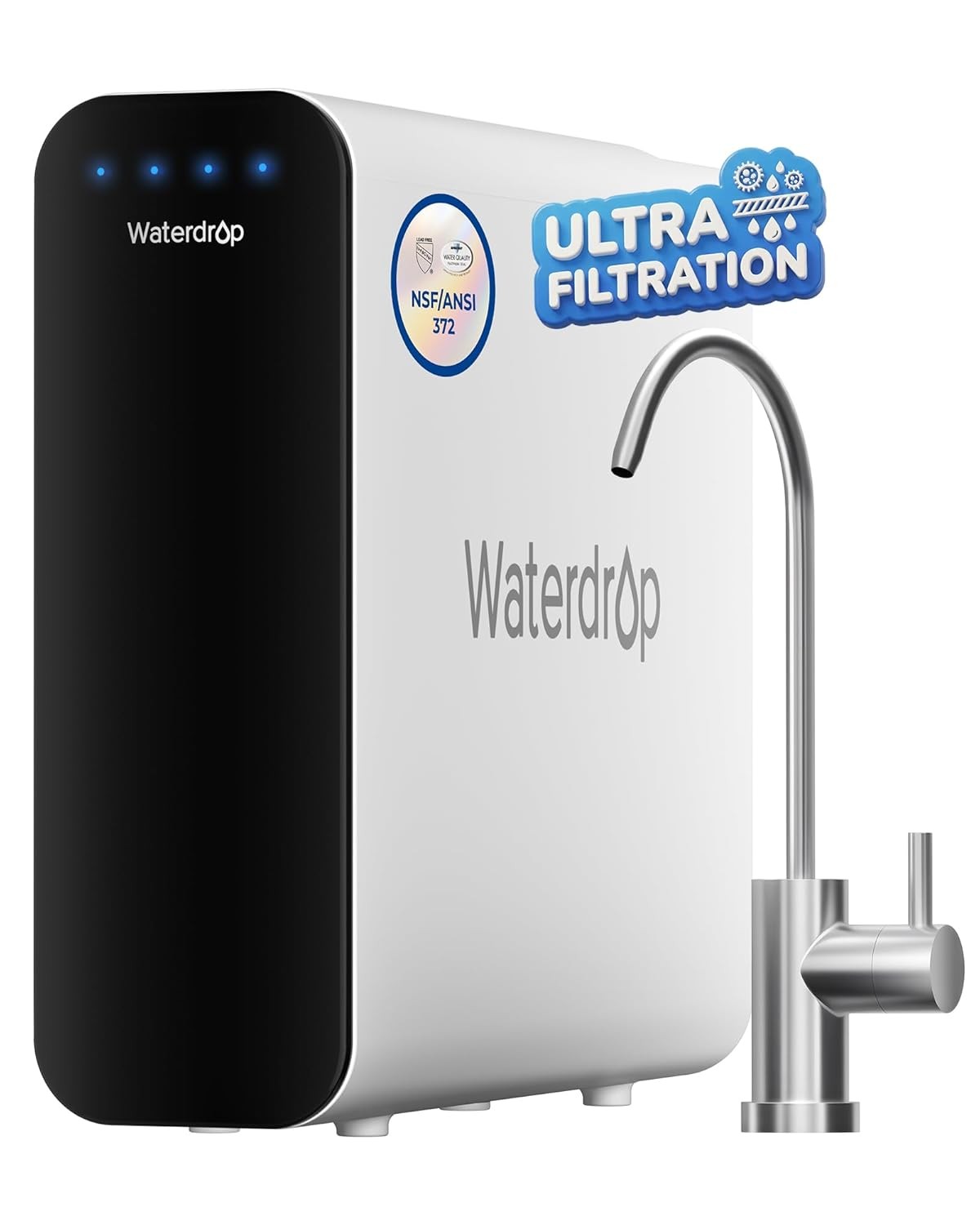 Waterdrop Refurbished TSU 0.01μm Ultra-Filtration Under Sink Water Filter System$99.99Last checked Nov 19, 2026View on eBay
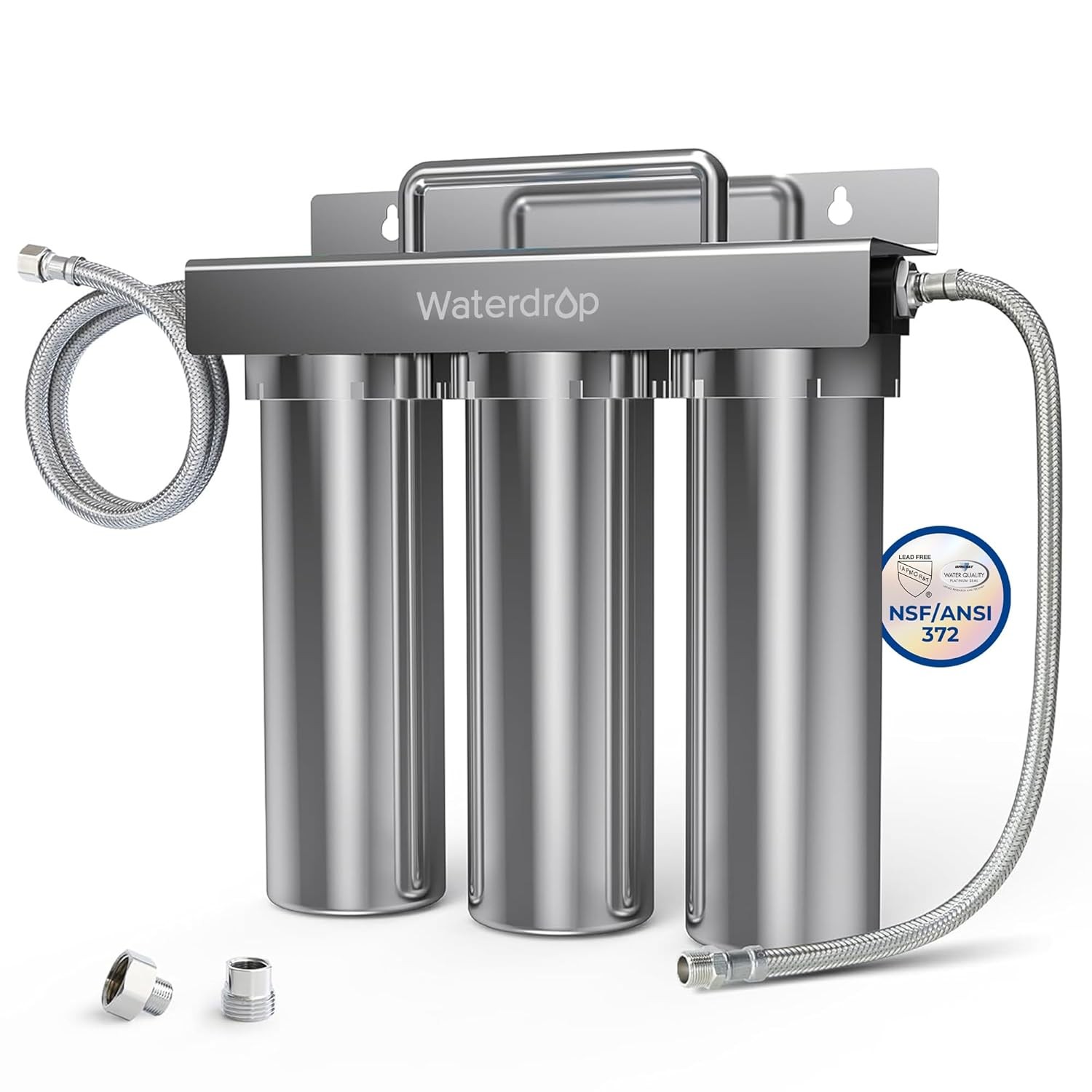 Waterdrop Refurbished TST-UF 0.01μm Ultra-Filtration Under Sink Water Filter$104.85View on eBay
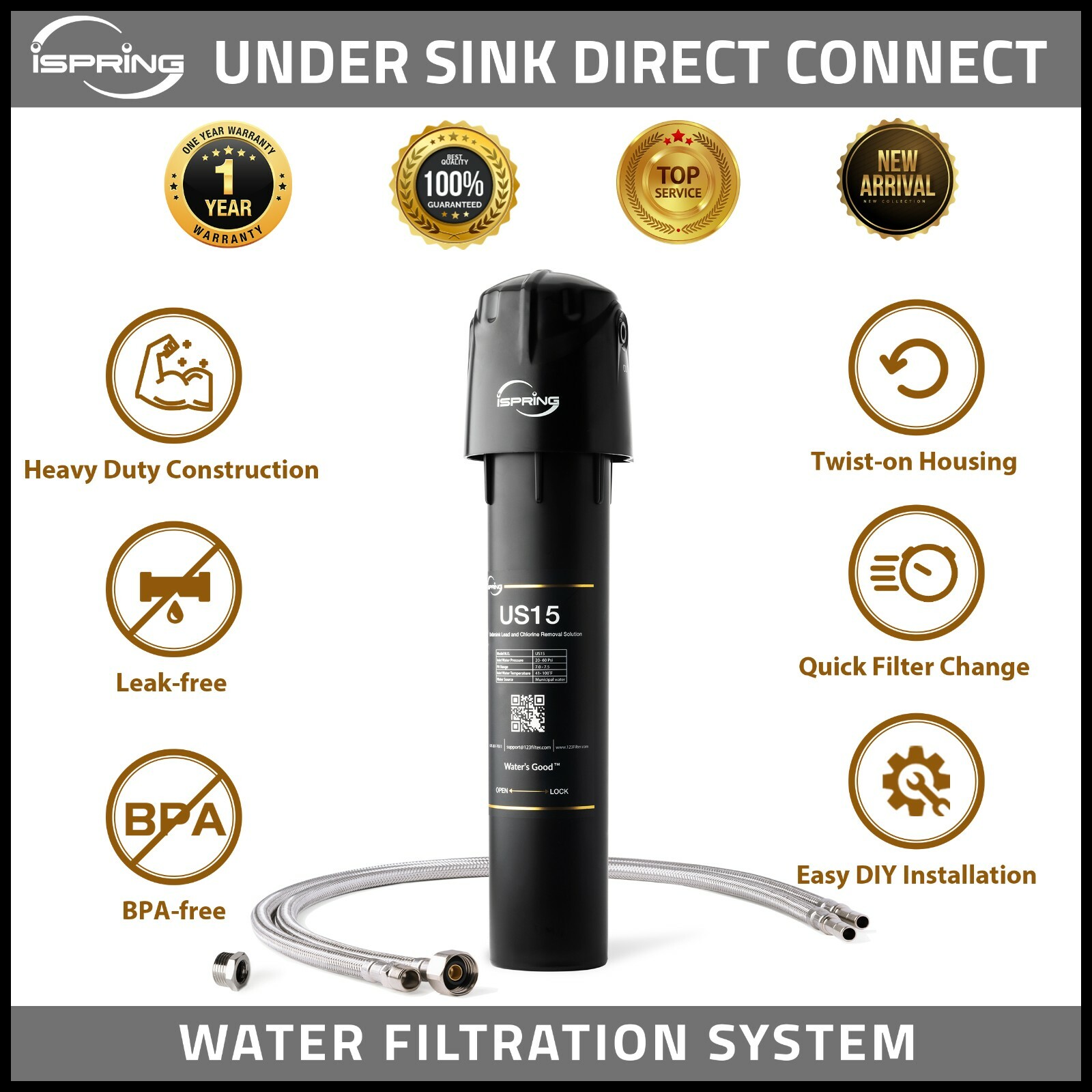 iSpring Under Sink Water Filter System, Leak-Free, Reduce Chlorine Heavy Metals$110.19View on eBay
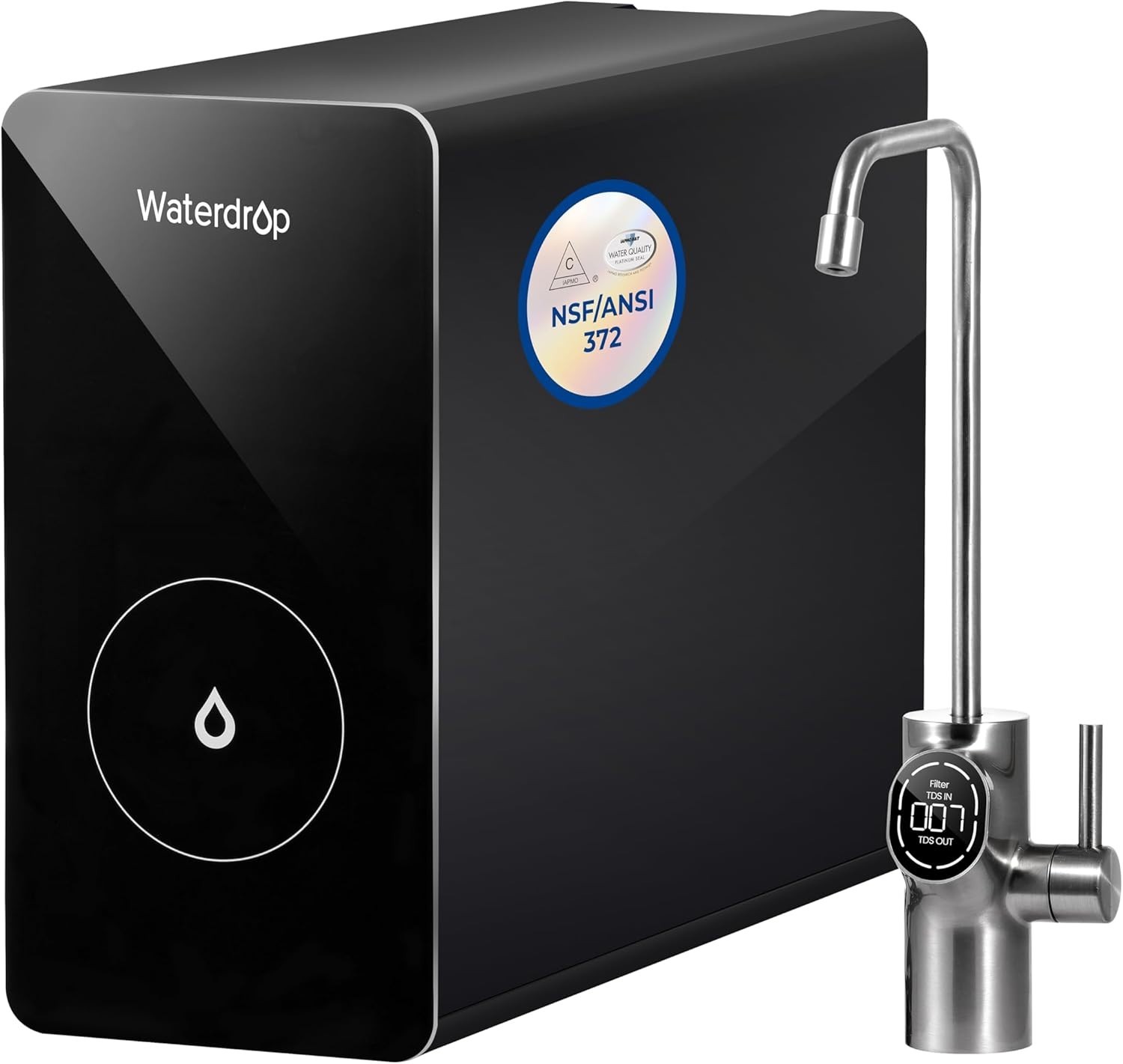 Waterdrop D6 Reverse Osmosis Water Filter, 600 GPD Under Sink Reverse Osmosis$179.00Last checked Nov 18, 2026View on eBay
Highlights
- Filtration tiers: 0.01-micron UF blocks bacteria and cysts but not dissolved ions; RO membranes (0.0001 micron) remove TDS, nitrates, and heavy metals with 50-75% wastewater rejection.
- Cartridge capacity: 8,000-15,000 gallon rated life covers roughly 1-3 years for a family of four; RO membranes typically last 2-3 years before replacement.
- Housing build: lead-free, BPA-free polypropylene and stainless-steel housings resist pressure cycling; brass or metal inlet fittings reduce thread cracking versus plastic.
- Flow and pressure: most under-sink systems need 40-80 psi supply and deliver 0.5-1.5 GPM; tankless RO units rated 600 GPD output about 0.4 GPM on demand.
Best use cases
- Best fit for renters or DIY installs: a two- or three-stage carbon/UF system with 3/8-inch push-fit connectors—no drain line, no tank, and cartridge swaps every 6-12 months.
- Best fit for municipal water with hard water or high TDS: a 600 GPD tankless RO under the sink, paired with a remineralization stage if you dislike flat-tasting water.
- Wrong fit: whole-house sediment-only housings under the sink—they remove rust and grit but leave chlorine, lead, and TDS untouched; skip them for drinking-water points.
- Wrong fit: RO systems on well water without a sediment pre-filter—silt fouls the membrane fast; add a 5-micron pre-filter or choose a UF system instead.
Buying tips
- Match cartridge life to household size: 8,000 gallons suits two people, 15,000 gallons suits four or more; budget for annual filter costs over the system's life.
- Confirm connection standard: 3/8-inch compression or push-fit for the feed line and 1/4-inch for the faucet; RO systems also need a 1.25-1.5-inch drain saddle and a 110-220V outlet for tankless pumps.
- For RO, check the wastewater ratio: 1:1 to 2:1 rejection is efficient; older units at 4:1 waste four gallons per gallon purified.
- Prefer systems with standard-sized cartridges (10-inch or 11-inch) over proprietary shapes—they are cheaper and easier to source at replacement time.
Specs
| Filtration Stage | Carbon / UF / RO (0.0001-0.01 μm) |
|---|---|
| Cartridge Life | 8,000-15,000 gal / 6-12 months |
| Housing Material | Lead-free PP / stainless steel |
| Feed Pressure | 40-80 psi (booster below 40) |
Related searches
What to check before buying
- Measure under-sink clearance: most systems need 16-18 inches of vertical space and 12 inches of width; tankless RO saves the tank but still needs a power outlet.
- Test your water first: TDS above 250 ppm or hard water above 7 gpg favors RO; chlorine-only issues are handled by carbon blocks.
- Verify feed pressure with a gauge: below 40 psi requires a booster pump for RO; above 80 psi needs a pressure-reducing valve to protect housings.
- Check faucet drilling: RO and dedicated-filter systems need a 0.5-1.375-inch hole in the sink or counter; air-gap faucets require a larger footprint.
FAQ
Data sources: eBay / Amazon listings and product attribute feeds. Updated Nov 27, 2026.
Some links on this page are affiliate links. If you buy after clicking one, we may earn a commission at no extra cost to you. This does not change which products appear here or their order. Affiliate disclosure.