
Photos from current listings. Actual item, color, and included accessories may vary.
Water Filter Jug Buying Guide
A water filter jug is a countertop pitcher using granular activated carbon or carbon-block cartridges to reduce chlorine, taste, and odor—and in certified models, lead and other metals. The core trade-off is cartridge certification and capacity versus refill frequency: NSF/ANSI 42 covers aesthetic chlorine/taste only, while NSF/ANSI 53 adds health claims like lead reduction. The decision rule is simple: buy a jug whose cartridge carries NSF 42 plus 53 (or WQA equivalent) and whose reservoir fits your daily drinking volume, and skip any pitcher that only claims 'improves taste' without certification.
Median $28.69
Key takeaways
- Certification tiers separate real filters from taste-only ones: NSF/ANSI 42 for chlorine/taste/odor, NSF/ANSI 53 for lead, cysts, and VOCs—models like the Waterdrop 200-gallon pitcher carry NSF 42 & 53 certification.
- Carbon-block cartridges (Brita Elite, Waterdrop) last roughly 120-200 gallons or 2-6 months, versus 30-40 gallons for basic granulated carbon, directly cutting cost per liter and plastic waste.
- Reservoir capacity drives refill cadence: 7-cup pitchers suit one or two people, while 10-cup models like the Brita Pacifica serve families and fit wider fridge doors at roughly 10 x 5 x 10 inches.
At a glance
- Category
- Water Filtration
- Last updated
- Nov 27, 2026
Current offers
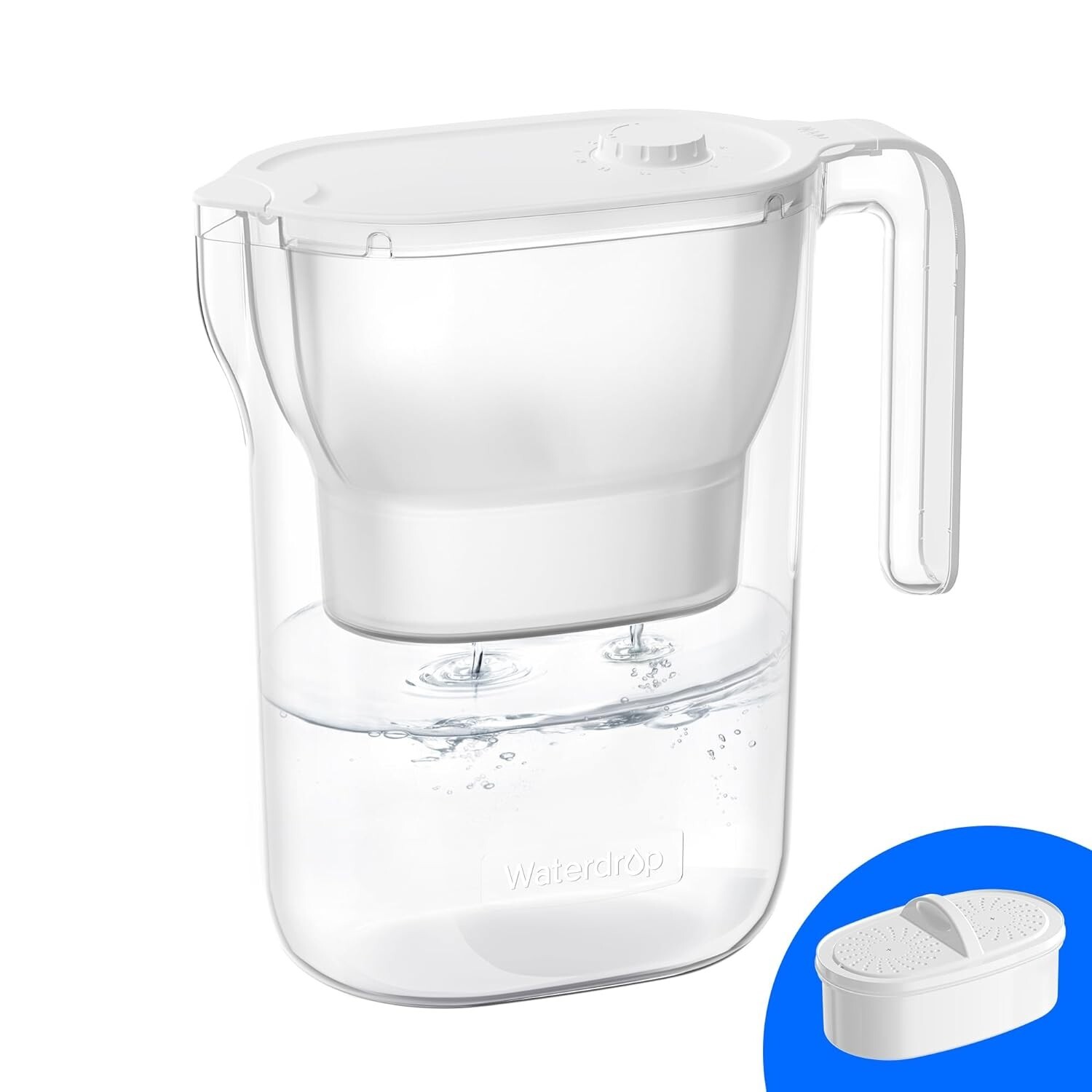 Waterdrop 200-Gallon Long-Life Water Filter Pitcher, NSF Certified,7-Cup, White$14.99Last checked Nov 19, 2026View on eBay
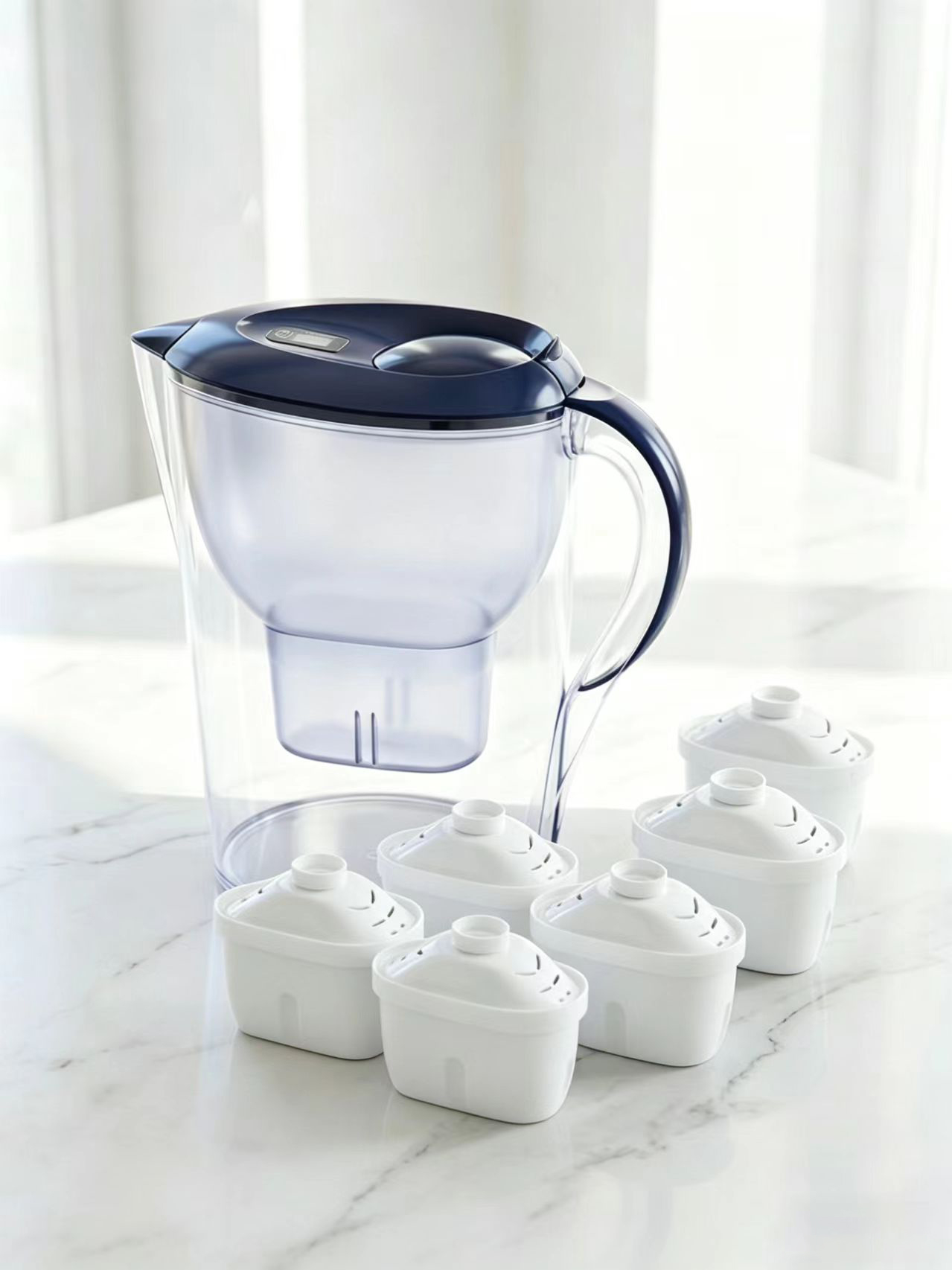 10-Cup 3.5L BPA-Free Water Filter Pitcher With 4 Filters, Reduces TDS For Clean Drinking Standard Fridge Size$30.99View on Mallflare
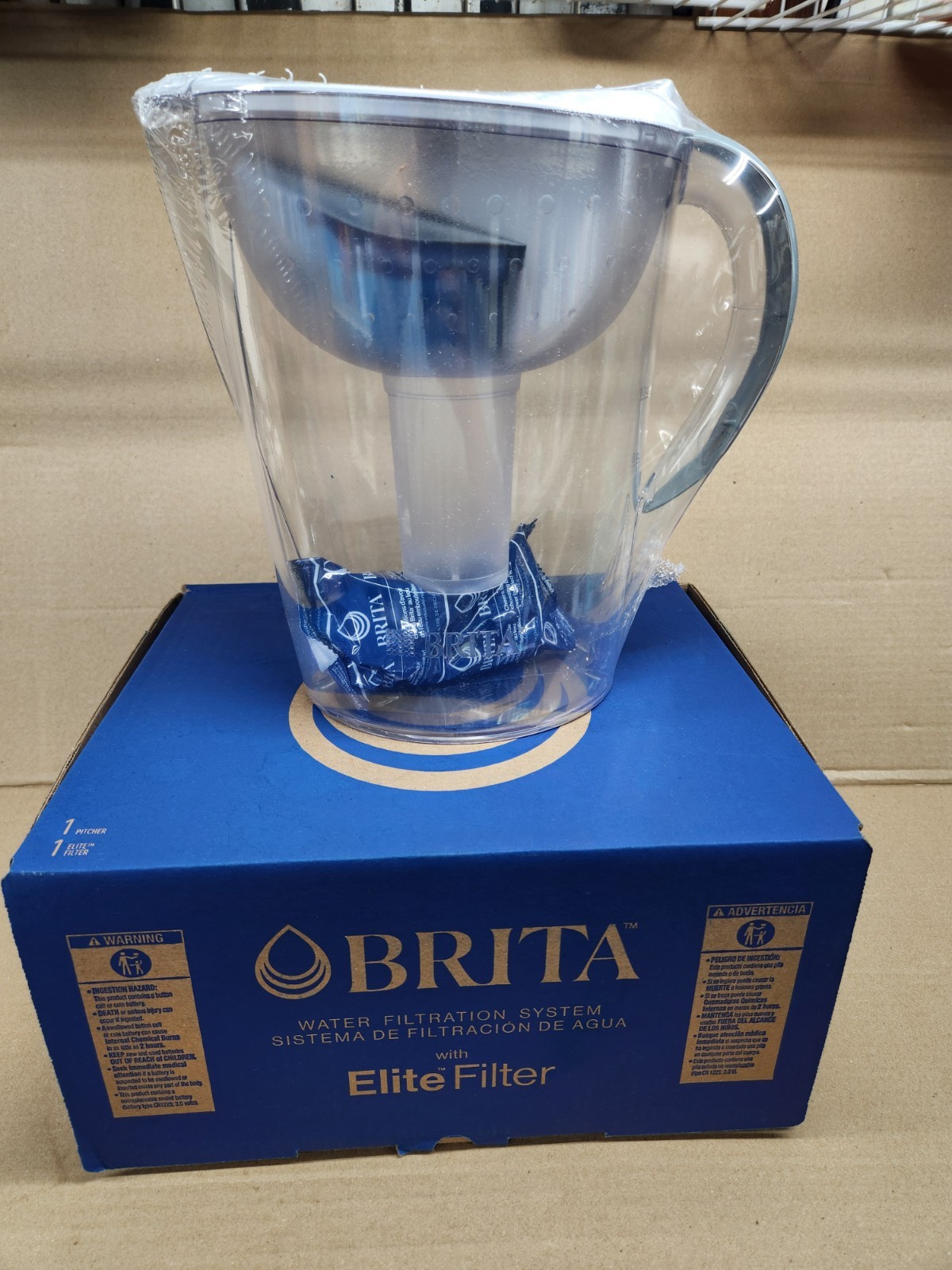 Brita 10 Cup Water Filter Pitcher White Pacifica with 1 Elite Filter BPA Free$26.39View on eBay
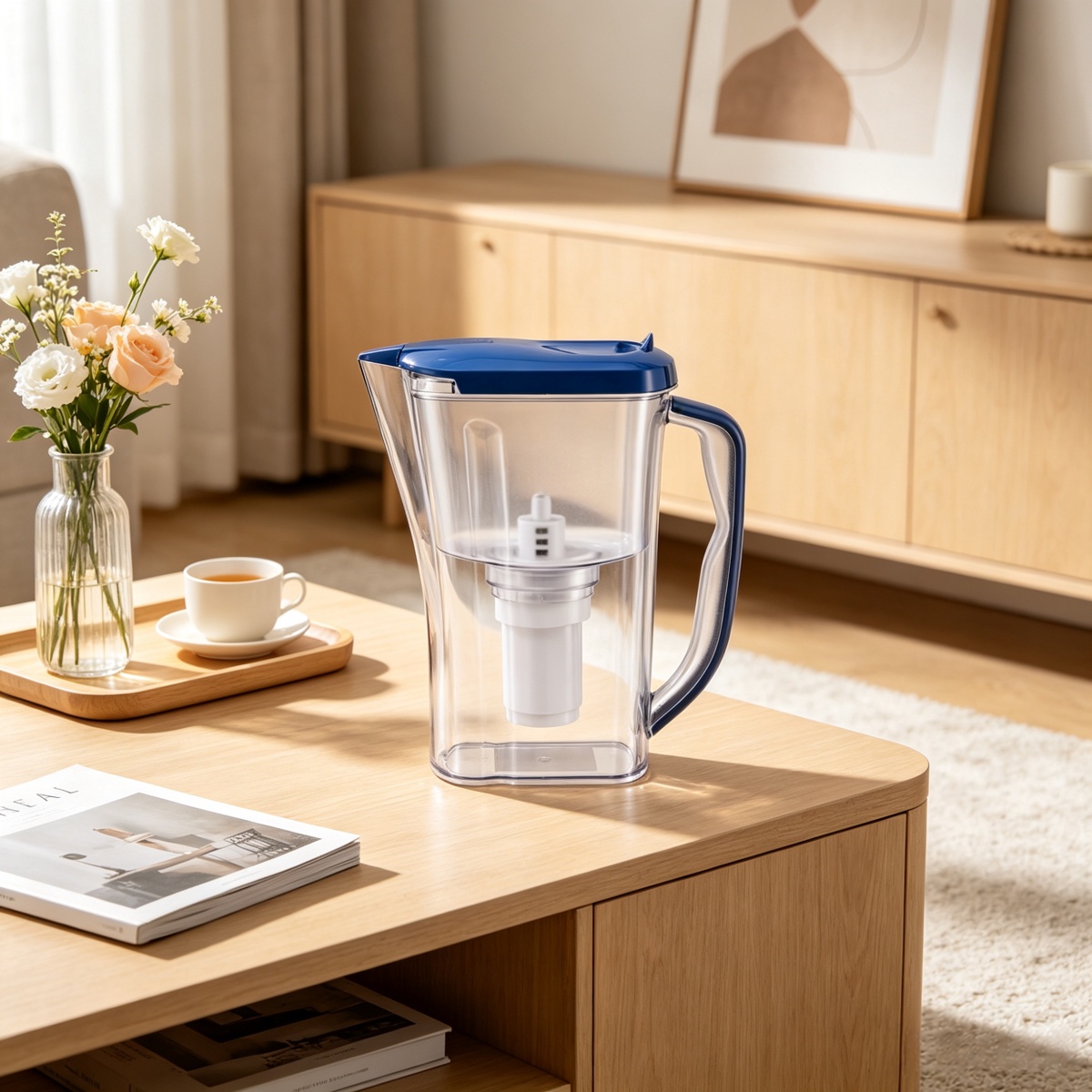 9 Cup 5-Stage Water Filter Pitcher, BPA-Free with Change Indicator, Reduces Limescale, Lead, Chlorine & Odors$59.99View on Mallflare
Highlights
- Certification tiers separate real filters from taste-only ones: NSF/ANSI 42 for chlorine/taste/odor, NSF/ANSI 53 for lead, cysts, and VOCs—models like the Waterdrop 200-gallon pitcher carry NSF 42 & 53 certification.
- Carbon-block cartridges (Brita Elite, Waterdrop) last roughly 120-200 gallons or 2-6 months, versus 30-40 gallons for basic granulated carbon, directly cutting cost per liter and plastic waste.
- Reservoir capacity drives refill cadence: 7-cup pitchers suit one or two people, while 10-cup models like the Brita Pacifica serve families and fit wider fridge doors at roughly 10 x 5 x 10 inches.
- Cross-compatibility is model-specific: Brita-compatible 3-packs fit standard Brita pitchers, but Elite, Standard, and Longlast cartridges are not interchangeable across all housings—match the cartridge family to the pitcher's lid design.
Best use cases
- Best fit: a 10-cup NSF 53-certified pitcher (e.g., Brita Pacifica with Elite filter) for a family of 3-4 who wants lead reduction and fewer refills; skip 5-7 cup jugs that empty in a single meal.
- Best fit: a long-life 200-gallon carbon-block pitcher for a single user or couple replacing bottled water daily; skip budget granulated-carbon jugs that need a new cartridge every 4-6 weeks.
- Best fit: Brita-compatible multi-pack cartridges for existing Brita pitcher owners cutting replacement costs; skip generic cartridges if your pitcher model requires a specific Elite or Longlast housing fit.
- Wrong fit: buying any jug for well water with bacteria, nitrates, or PFAS—pitchers are not designed for microbiological or high-contaminant removal; use under-sink reverse osmosis instead.
Buying tips
- Match cartridge certification to your concern: choose NSF 42 + 53 if you need lead or cyst reduction; NSF 42 alone only fixes chlorine taste and odor.
- Size the reservoir by daily use: allow about 8 cups per person per day—a 7-cup jug serves 1-2 people, a 10-cup pitcher serves 3-4 before refilling.
- Calculate cartridge economics by rated gallons, not months: a 200-gallon cartridge at 1 gallon/day lasts about 6 months; a 40-gallon cartridge lasts barely a month.
- Confirm the cartridge family before buying multipacks: standard Brita, Brita Elite, and Longlast cartridges differ in housing fit, and cross-brand 'compatible' packs only fit the standard round housing.
Specs
| Certification | NSF/ANSI 42 vs 42+53 |
|---|---|
| Cartridge Life | 30-40 gal vs 120-200 gal |
| Reservoir Capacity | 5-7 cups vs 10-12 cups |
| Housing Material | BPA-free plastic, dishwasher-safe |
Related searches
What to check before buying
- Measure your fridge door shelf and counter space: 10-cup pitchers run roughly 10 inches tall and 10 inches wide, so confirm clearance before buying the larger tier.
- Check your faucet and water source: pitchers are for municipally treated water; test for lead or check your utility report first if you rely on NSF 53 claims.
- Verify the pitcher ships with a starter cartridge and note the replacement cartridge model number so you can buy correct multipacks later.
- Confirm BPA-free housing and dishwasher-safe parts if the jug will be shared with children or used for daily fridge storage.
FAQ
Data sources: eBay / Amazon listings and product attribute feeds. Updated Nov 27, 2026.
Some links on this page are affiliate links. If you buy after clicking one, we may earn a commission at no extra cost to you. This does not change which products appear here or their order. Affiliate disclosure.