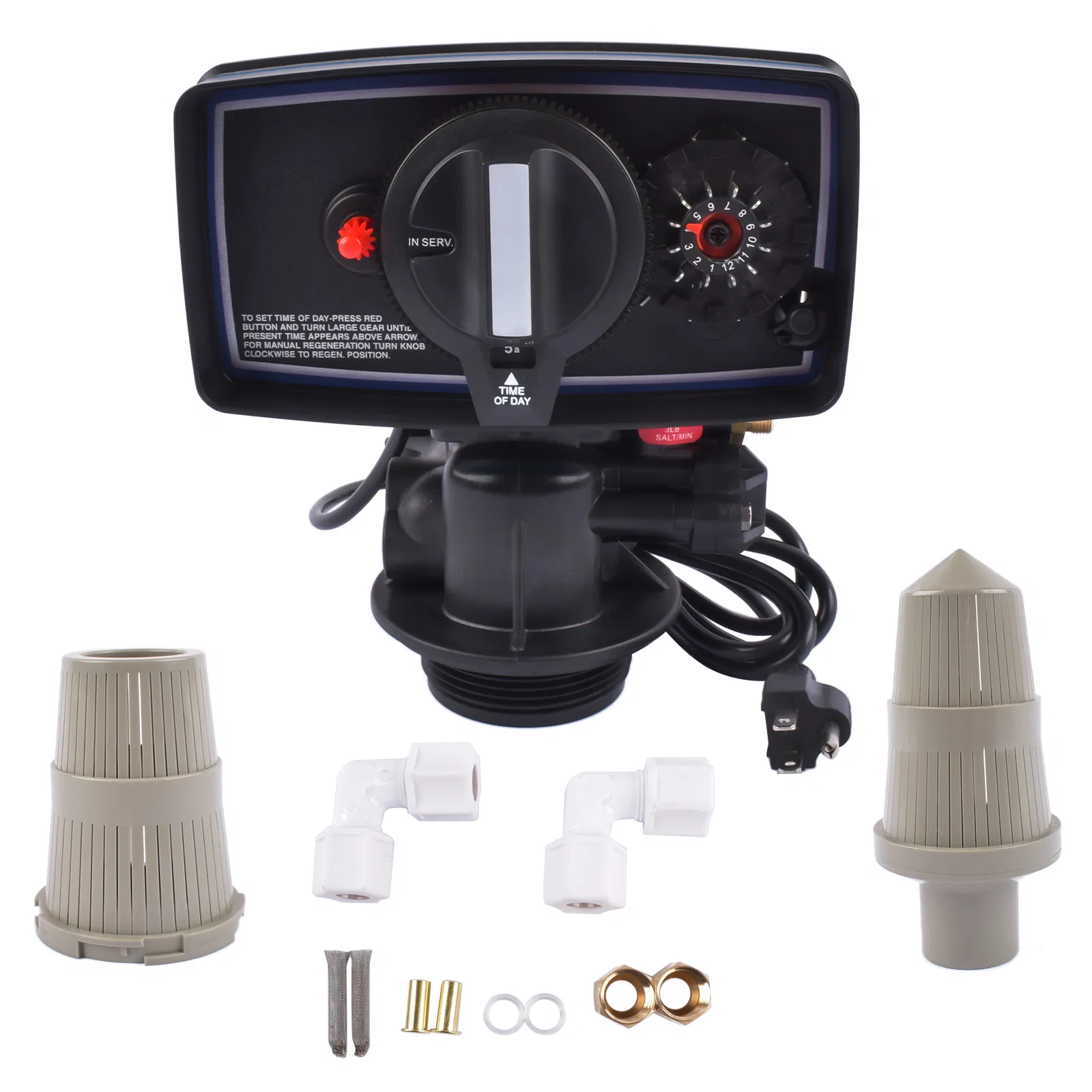

Photos from current listings. Actual item, color, and included accessories may vary.
Water Softener System Buying Guide
A water softener system removes calcium and magnesium hardness ions through ion-exchange resin, trading sodium or potassium chloride salt for scale-free water. The core trade-off is between demand-initiated regeneration with metered valves and time-based regeneration, plus cabinet vs two-tank construction. Choose a metered, demand-initiated unit sized by grains-per-gallon capacity and peak flow for whole-home protection; skip time-clock or undersized units for well water with iron or high hardness.
Key takeaways
- Demand-initiated metered valves regenerate only when resin capacity is depleted, cutting salt use 20-30% versus time-clock regeneration.
- Resin capacity is rated in grains (e.g., 24,000 / 32,000 / 48,000 / 64,000); salt dose per regeneration rises from 6 lb to 15 lb per cubic foot at higher capacities.
- Two-tank systems separate brine tank from resin tank, allowing taller resin columns and easier service than compact cabinet units.
At a glance
- Category
- Water Filtration
- Last updated
- Nov 28, 2026
Current offers
Highlights
- Demand-initiated metered valves regenerate only when resin capacity is depleted, cutting salt use 20-30% versus time-clock regeneration.
- Resin capacity is rated in grains (e.g., 24,000 / 32,000 / 48,000 / 64,000); salt dose per regeneration rises from 6 lb to 15 lb per cubic foot at higher capacities.
- Two-tank systems separate brine tank from resin tank, allowing taller resin columns and easier service than compact cabinet units.
- Fine-thread 9''-11'' filter housings use 1'' or 3/4'' NPT connections; bypass valves and drain lines are mandatory companion parts.
Best use cases
- Whole-home well water with hardness under 25 gpg and iron under 2 ppm: pick a metered 48,000-grain two-tank softener with a 1'' bypass.
- City water with moderate hardness (5-15 gpg) in a tight utility closet: choose a compact cabinet 24,000-32,000-grain metered unit.
- High iron (2-5 ppm) or manganese: skip standard softener resin alone; use an iron filter ahead of the softener to protect resin.
- Rental or single-fixture scale control: skip whole-home softeners entirely; use a point-of-use scale inhibitor or under-sink softener.
Buying tips
- Size grains by: hardness (gpg) x daily gallons x 7 days ÷ regeneration frequency; a family of four at 10 gpg needs roughly 32,000-40,000 grains weekly.
- Match peak flow to fixtures: 1'' valves handle 12-15 gpm; 3/4'' valves handle 8-10 gpm; undersized valves cause pressure drop during simultaneous showers.
- For well water, confirm resin is 8-10% crosslinked cation gel and that the unit supports a separate iron filter; standard softener resin fouls above 2 ppm iron.
- Choose a metered valve with a digital display and programmable hardness; time-clock valves waste salt and water when demand varies.
Specs
| Regeneration Type | Metered demand-initiated vs time-clock |
|---|---|
| Resin Capacity | 24,000-64,000 grains |
| Configuration | Two-tank vs cabinet |
| Connection Size | 3/4'' or 1'' NPT |
Related searches
What to check before buying
- Measure the installation footprint: two-tank units need 18-24'' width and 60-72'' height; cabinet units need 15-18'' square and 40-48'' height.
- Confirm plumbing connection size and thread: 3/4'' or 1'' NPT, and whether the existing loop has a bypass valve and drain access.
- Test raw water hardness and iron before sizing; hardness above 25 gpg or iron above 2 ppm requires a different configuration.
- Verify electrical: most metered valves use a 120V AC adapter; confirm an outlet within cord length and a floor drain or standpipe for backwash.
FAQ
Data sources: eBay / Amazon listings and product attribute feeds. Updated Nov 28, 2026.
Some links on this page are affiliate links. If you buy after clicking one, we may earn a commission at no extra cost to you. This does not change which products appear here or their order. Affiliate disclosure.