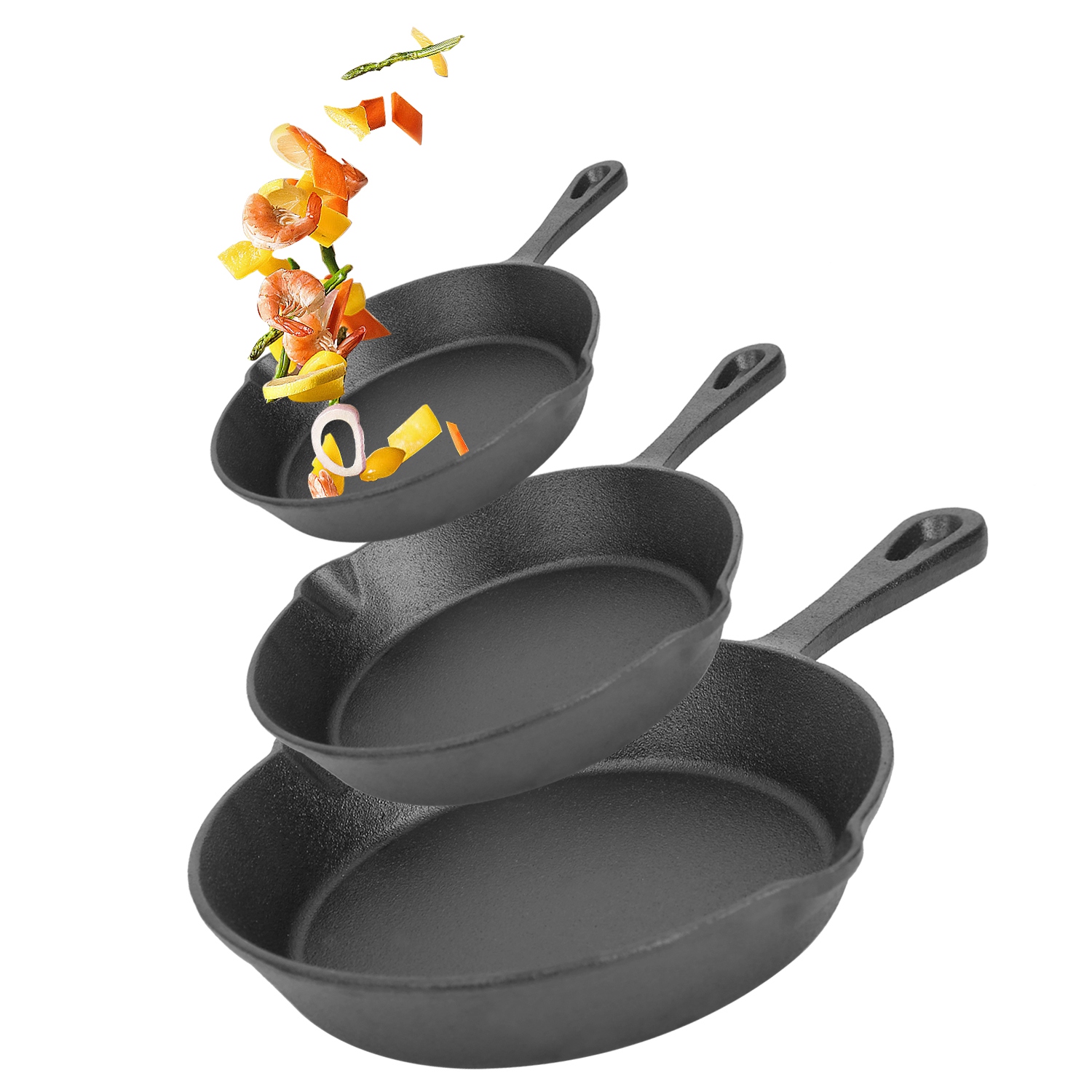

Photos from current listings. Actual item, color, and included accessories may vary.
Baking Pan Set Buying Guide
A baking pan set is a coordinated collection of metal pans (typically steel, aluminum, or cast iron) designed for oven baking, roasting, and sometimes stovetop-to-oven use. The primary trade-off is between heat conductivity and durability: aluminized steel and cast iron offer even heating and long life, while thin carbon steel and nonstick coatings prioritize release and price but wear faster. Choose a set whose material and gauge (thickness) match your primary baking tasks—light-colored aluminum for delicate pastries, dark steel for crisp crusts, cast iron for searing and high-heat retention.
Key takeaways
- Aluminized steel (steel core with aluminum-silicon coating) resists rust and conducts heat more evenly than plain carbon steel, making it the benchmark for commercial sheet pans.
- Pan gauge (thickness) determines warp resistance: 26-gauge (0.45 mm) is standard for home bakers, while 18-gauge (1.2 mm) commercial pans resist warping at 230°C+ and last decades.
- Cast iron sets (like the 6/8/10-inch skillets in the sample) offer unmatched heat retention for searing and baking, but require seasoning and weigh 2–3× more than steel pans of equal size.
At a glance
- Category
- Cookware & Cutlery
- Last updated
- Nov 28, 2026
Current offers
Highlights
- Aluminized steel (steel core with aluminum-silicon coating) resists rust and conducts heat more evenly than plain carbon steel, making it the benchmark for commercial sheet pans.
- Pan gauge (thickness) determines warp resistance: 26-gauge (0.45 mm) is standard for home bakers, while 18-gauge (1.2 mm) commercial pans resist warping at 230°C+ and last decades.
- Cast iron sets (like the 6/8/10-inch skillets in the sample) offer unmatched heat retention for searing and baking, but require seasoning and weigh 2–3× more than steel pans of equal size.
- Nonstick coatings (PTFE or ceramic) simplify release but degrade above 260°C and scratch with metal utensils; uncoated aluminum or steel sets are dishwasher-safe and can be reseasoned.
Best use cases
- Best fit: Home bakers making cookies, sheet cakes, and roasted vegetables should choose a 3-piece aluminized steel set (half-sheet, quarter-sheet, and round cake pan) for even browning and warp resistance.
- Best fit: High-heat searing and stovetop-to-oven cooking (steak, cornbread, roasted chicken) call for a cast iron skillet set with 6-, 8-, and 10-inch pans, as in the sample offer.
- Wrong fit: Buyers seeking nonstick convenience for delicate fish or eggs should skip uncoated steel and cast iron; instead pick a PTFE-coated set and replace it every 2–3 years as the coating wears.
- Wrong fit: Those with glass-top stoves should avoid cast iron sets with rough bottoms that can scratch the glass; choose smooth-bottom carbon steel or aluminum instead.
Buying tips
- Match pan size to oven width: a half-sheet pan (18×13 inches) fits most home ovens, while a quarter-sheet (9×13 inches) suits toaster ovens and small batches.
- For even baking without hotspots, choose light-colored aluminum pans for cakes and dark or cast iron for breads and roasted vegetables; dark finishes brown faster and may require lowering oven temperature by 10–15°C.
- Check the gauge: 18-gauge (1.2 mm) steel pans resist warping at 230°C, while 26-gauge (0.45 mm) pans may warp above 200°C; thicker is better for high-heat roasting.
- Cast iron sets should specify pre-seasoned (vegetable oil baked on) for immediate use; unseasoned cast iron requires oven seasoning before first use.
Specs
| Material | Aluminized steel vs carbon steel vs cast iron |
|---|---|
| Gauge / Thickness | 18-gauge (1.2 mm) to 26-gauge (0.45 mm) |
| Oven Safety | Up to 230°C nonstick; 290°C+ uncoated |
| Piece Count | 3-piece sets (sheet + round + square) |
Related searches
What to check before buying
- Measure your oven's interior width and depth: a half-sheet pan needs at least 18×13 inches of usable rack space, and cast iron skillets with handles require extra clearance.
- Confirm your stovetop type: induction requires magnetic pans (cast iron and some carbon steel work; aluminum does not), while glass-top stoves need smooth-bottom pans to avoid scratches.
- Check maximum oven temperature: nonstick coatings are rated to 230–260°C, while cast iron and uncoated steel are safe to 290°C+; never broil nonstick pans.
- Verify dishwasher safety: uncoated aluminum and cast iron should be hand-washed to preserve seasoning, while aluminized steel and stainless steel are often dishwasher-safe.
FAQ
Data sources: eBay / Amazon listings and product attribute feeds. Updated Nov 28, 2026.
Some links on this page are affiliate links. If you buy after clicking one, we may earn a commission at no extra cost to you. This does not change which products appear here or their order. Affiliate disclosure.